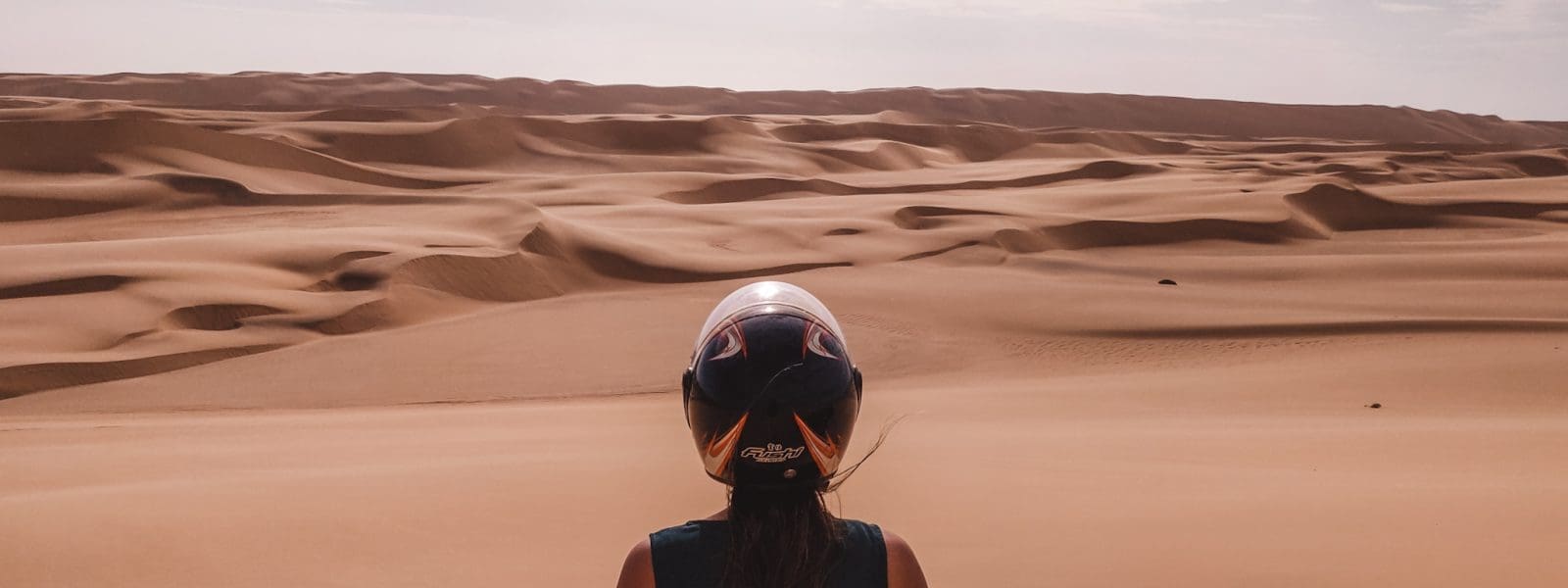
Swakopmund might just be the most surprising stop on your journey through Namibia. This coastal town charms you with its German-style buildings, inviting coffee bars, fresh seafood, and sand dunes that reach right into the streets. You’ll wander past half-timbered houses and German street signs while the desert wind carries soft sand through the air. It feels a bit like Europe, yet you’re standing in the middle of Africa. That unusual mix is exactly what makes Swakopmund so memorable.
After days of long drives, spotting wildlife, or camping deep in the bush, this is the ideal place to relax and recharge. Sip a great cup of coffee, try sandboarding down the dunes, or head out on a boat to watch seals and dolphins glide through the waves. Swakopmund might not be a must-see like Etosha or Sossusvlei, but that’s exactly why it’s such a refreshing and welcome change.
In this blog, we’ll take you through the best things to do, where to stay, and all the reasons why you won’t want to skip this charming little town.

Why Swakopmund is worth a visit
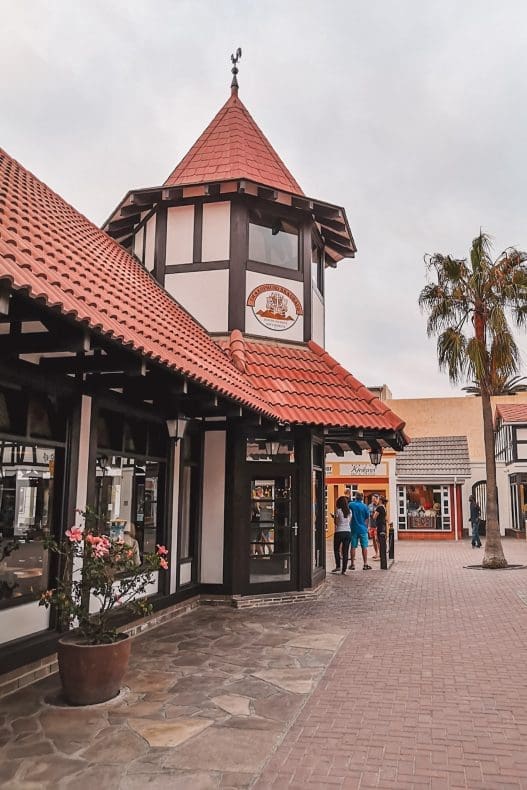
Swakopmund is one of those places in Namibia where you instantly feel that it’s unlike anywhere else in the country. Instead of wildlife parks or endless gravel roads, you’re walking through streets lined with half-timbered buildings, German bakeries, and cosy coffee bars. Yet all around you is the desert, with sand drifting right up to the doorstep. It’s this unusual combination that gives the town its special charm.
Swakopmund is a favourite stopover for many road trippers. After days of driving through wide open landscapes and raw, untouched nature, it feels refreshing to arrive somewhere with choices. You can go sandboarding, hop on a quad bike, head out on a boat trip, or simply take a day to unwind. Sip a coffee on a sunny terrace, relax with a book on the beach, or stroll through the historic town centre. Everything is possible, and nothing is expected.
Swakopmund brings comfort without losing its edge. There are excellent restaurants, charming hotels, and peaceful campsites, but you’re also just minutes away from rugged nature. Whether you’re after adventure or simply some time to slow down, this town gives you space to breathe. And that’s what makes Swakopmund more than just a convenient stop. It’s a place that quietly makes your journey feel more complete.
Where is Swakopmund located in Namibia?
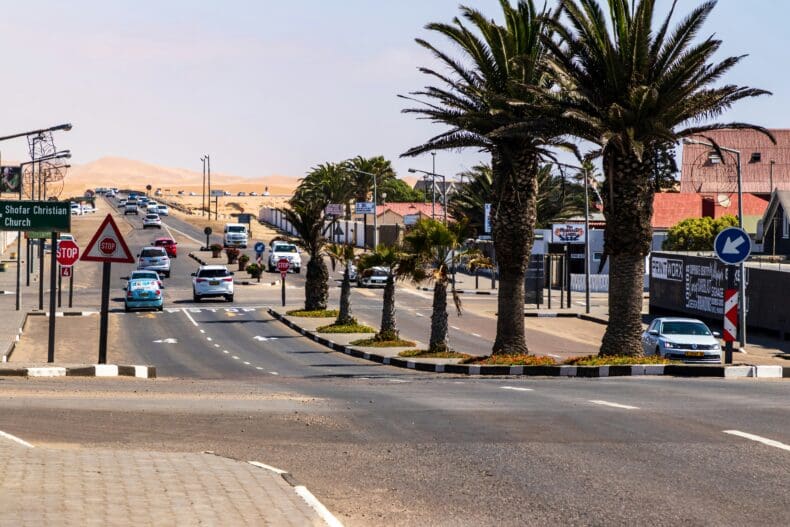
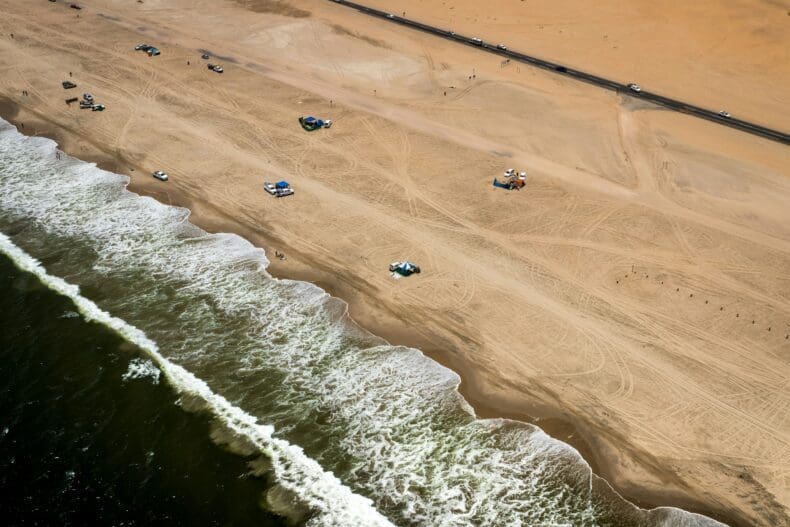
Swakopmund sits on Namibia’s west coast, right where the desert touches the ocean. It lies between Windhoek and the Atlantic, and the drive from the capital takes about three and a half hours. Thanks to its central position, Swakopmund fits easily into most Namibia travel itineraries. Many travellers arrive from the north, after exploring Etosha National Park, or from the south, after visiting the iconic dunes of Sossusvlei.
There is some public transport between Windhoek and Swakopmund, but it’s not something you should count on. The options are limited and often unreliable, and it’s easy to end up stuck in a place with no onward connections. Namibia is vast, and many of its highlights are nearly impossible to reach without your own vehicle. That’s why renting a car is almost a must if you want to experience the country to the fullest. It gives you the freedom to stop where you like, adjust your route, and explore off-the-beaten-path places you’d otherwise miss.
Thankfully, Swakopmund is easy to reach by car, and the drive itself is far from boring. Along the way, you’ll pass through wide desert landscapes, golden dunes, and, with a bit of luck, even catch sight of your first flamingos.
Recommended read: renting a car and driving in Namibia.
Where to Stay in Swakopmund
Swakopmund is the perfect place to unwind after days of rugged, empty landscapes and to enjoy everything this quirky German desert town has to offer. And of course, that includes finding a great place to stay. Here’s some we can highly recommend.
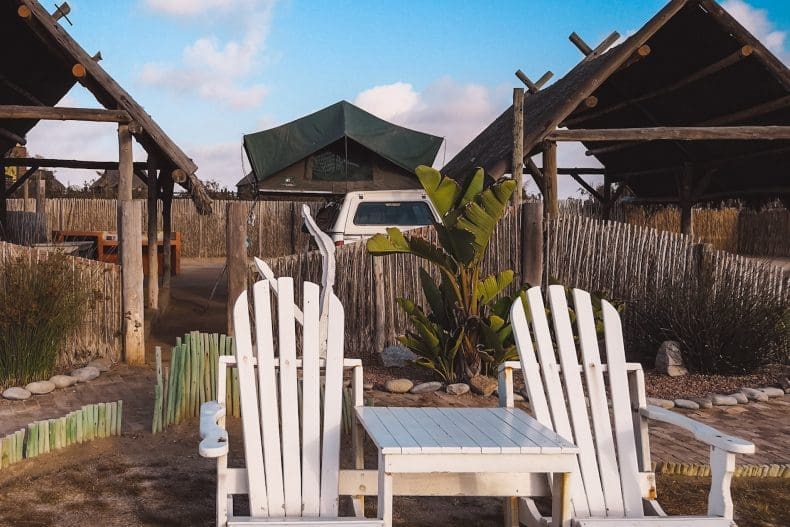
Camping in Swakopmund: Tiger Reef Campsite
If you’re travelling through Namibia with a rooftop tent like we were, you’ll probably be on the lookout for a good campsite. Fortunately, the decision is easy, since there are only two options. Tiger Reef Campsite is the only one located right in Swakopmund and directly on the beach. The other is a bit further out of town.
The campsite is laid out around a grassy area with deck chairs, where we loved to settle down in the late afternoon with a Coke or a cold beer. The camping spots are arranged around the lawn and each has a covered section for shade. For added privacy, they’re separated by wooden fencing. At the reception, you’ll find not only free Wi-Fi but also an incredibly friendly team who made us feel right at home. We enjoyed it so much that we immediately booked an extra night.
https://www.booking.com/affiliate/prelanding_sdkHotels and Hostels in Swakopmund
Swakopmund has no shortage of great places to stay. From stylish hotels by the sea to cosy guesthouses with a homely touch, there’s something here for every traveller.
#1 Fancy Fritz B&B is tucked away on a quiet street just steps from the beach and the town centre. The rooms are colourful and beautifully decorated, with plenty of plants, eye-catching artwork, and a warm, inviting atmosphere.
#2 Fritz Manor Bed and Breakfast offers a blend of sleek design and comfort in a calm setting within walking distance of the ocean. Guests especially appreciate the spacious rooms, modern interiors, and laid-back vibe.
#3 Atlantic Garden Boutique Hotel sits right on the beach, with sea views and a lush green garden. The rooms are bright, airy, and spacious, and it’s just a five-minute stroll to the Jetty or the heart of town.
#4 Hansa Hotel Swakopmund is set in a historic building from 1905, right in the heart of town. Expect classic charm, soft carpets underfoot, and a generous breakfast served in a stately dining room.
#5 Driftwood Guesthouse is just a few minutes from the beach and feels light and breezy from the moment you arrive. This small, modern guesthouse is loved for its welcoming atmosphere and tasty breakfasts.
#6 Desert Sands Boutique B&B sits just outside the town centre in a peaceful residential area. The spacious rooms include a kitchenette, making it ideal if you want to cook your own meals or stay a little longer.
#7 Strand Hotel Swakopmund is right on the seafront near the Mole and offers multiple restaurants, its own brewery, and sweeping views of the ocean. The rooms are stylish and comfortable, and the promenade is just a short stroll away.
Tourist Map of Swakopmund
[googlemaps https://www.google.com/maps/d/u/1/embed?mid=1USg-uRjXUeIgVNkFNgvrx7C4304O2S4&ehbc=2E312F&w=790&h=480]The 12 Best Things to Do in Swakopmund
#1 German Architecture
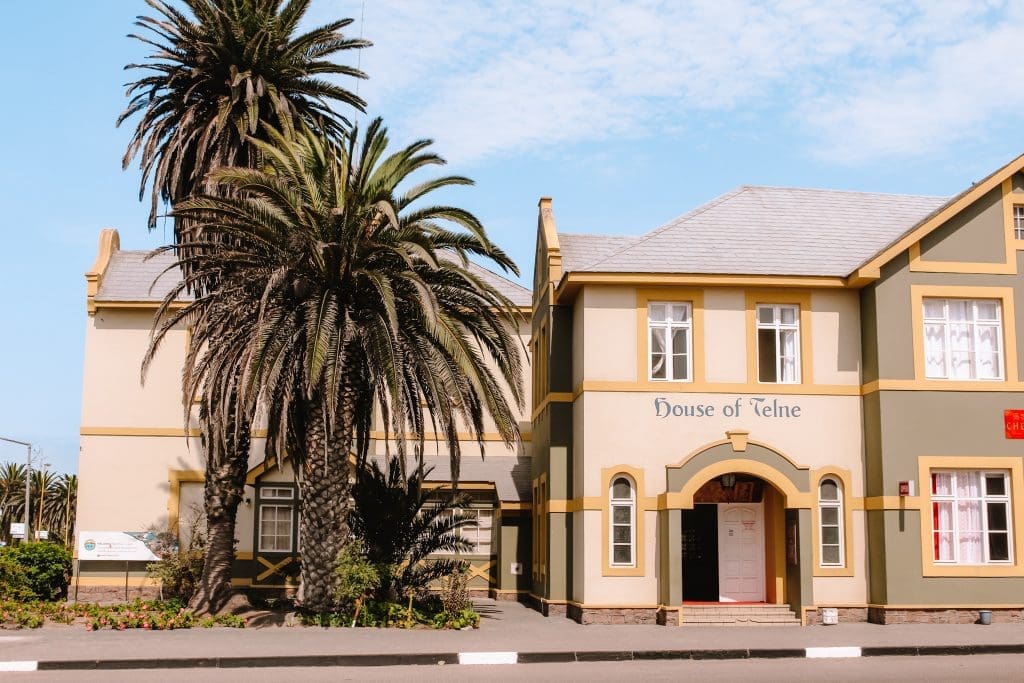
Swakopmund was founded in 1892 by German colonists. It was intended to serve as a port for what was then German South West Africa, since the nearby Walvis Bay was under British control. In just a few years, Swakopmund became an important entry point for goods and people arriving from Europe. Today, the town’s German roots are still clearly visible in its streets. You’ll see half-timbered houses, elegant Art Nouveau buildings, decorative facades, and street signs written in German. Many of the buildings are over a hundred years old and remain in excellent condition.
A walk through the centre feels like entering a small German town. You’ll pass the old railway station, the former prison, the grand Woermannhaus with its lookout tower, and the eye-catching Hohenzollern building. The latter stands out with its pale yellow front and the statue of Atlas holding a globe on his shoulders.
Swakopmund also has German-style restaurants, bakeries, and beer halls. At the Brauhaus, you can order schnitzel, bratwurst, and enjoy locally brewed beer. Some residents still speak German, and a local newspaper is even printed in the language. Swakopmund is one of the few places in Africa where the colonial past is still so clearly and closely felt.

#2 Sandboarding and Quad Biking in the Desert
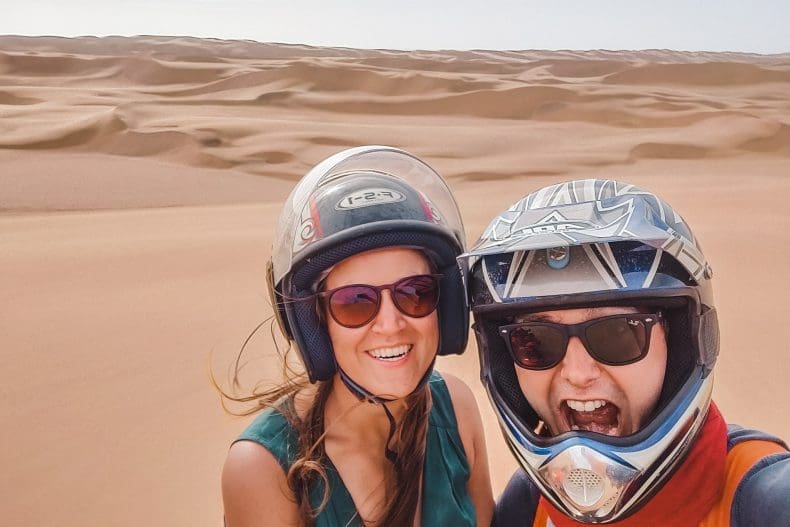
Swakopmund sits right on the edge of the Namib Desert, and from the town, the towering dunes are already in sight. This makes it an ideal base for active adventures in the sand. Sandboarding and quad biking are among the most popular activities and are offered daily by local tour operators. The dunes between Swakopmund and Walvis Bay are just a few minutes’ drive away and easy to reach.
Sandboarding means racing down the dunes on a specially designed board. You can either stand up, like on a snowboard, or lie flat on your stomach, which gives you even more speed. Either way, you’ll need to climb back up after each ride, and that can be a serious workout in the soft, hot sand. To stay fast, you’ll also need to re-wax your board after every run. Most tours include all the equipment and a guide, but if you prefer to go on your own, you can simply rent a board in the town centre.
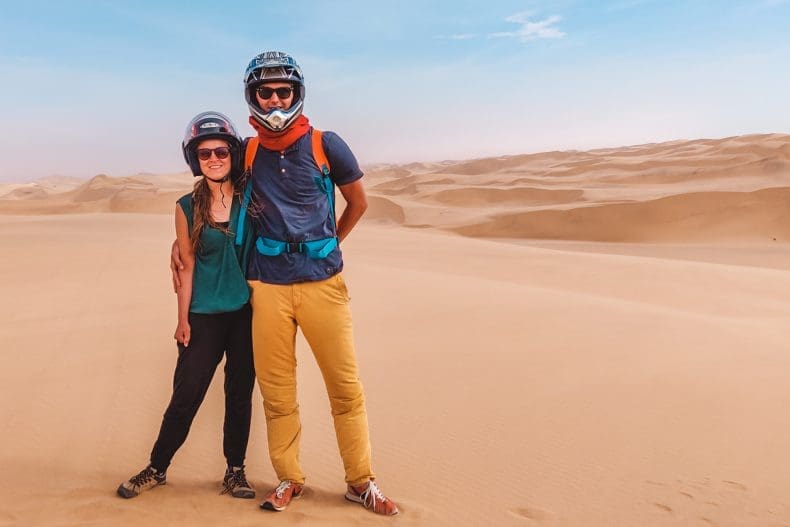
Quad biking is less physically demanding but just as exciting. With a guide leading the way, you’ll ride through an endless sea of dunes filled with steep drops, narrow ridges, and open flats. The guide knows the terrain well and will help you avoid getting stuck, as long as you follow their tracks. No prior experience is needed. After a short safety briefing, you’ll head off in a small group to explore the desert. It’s one of the most thrilling ways to get close to the dunes and a great change of pace after long days on the road or hiking. Just bring your sunglasses and wear clothes you don’t mind getting dirty, because the sand will get everywhere.

#3 Dune 7
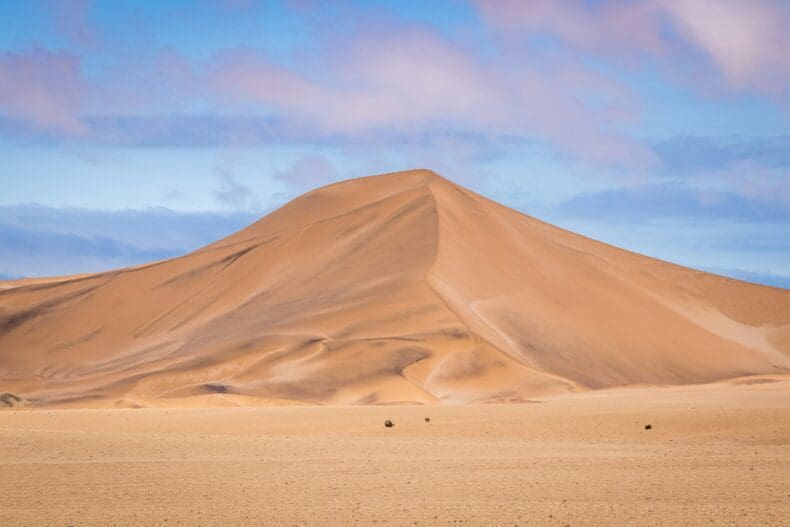
Dune 7 sits just south of Swakopmund, right on the edge of Walvis Bay. Standing at 383 meters, it’s the tallest dune in the area. Despite its height, the name actually comes from its location as the seventh dune from the mouth of the Tsauchab River. Dune 7 is easy to reach from the main road and has a small parking area with shaded spots and picnic tables. There are no restrooms or shops, but it’s still a popular stop for both travellers and locals.
The climb to the top is no walk in the park. The soft sand makes each step a workout, and on hot days the effort feels even greater. Still, the reward is well worth it. From the summit, you’ll be treated to wide-open views of the Namib Desert, the ocean, and the harbour of Walvis Bay. Early morning or sunset is the perfect time to visit, when the light is at its best and the heat is more manageable. Stay a while to enjoy the view, or race straight back down. Some visitors bring a board to slide down the slope, while others are happy to rest and take in the silence.
Dune 7 is free to visit and easy to combine with a trip to Walvis Bay or Sandwich Harbour. You likely won’t stay for hours, but it’s one of those iconic places that really deserves a spot on your list if you’re nearby.
#4 Beach and Swakopmund Jetty
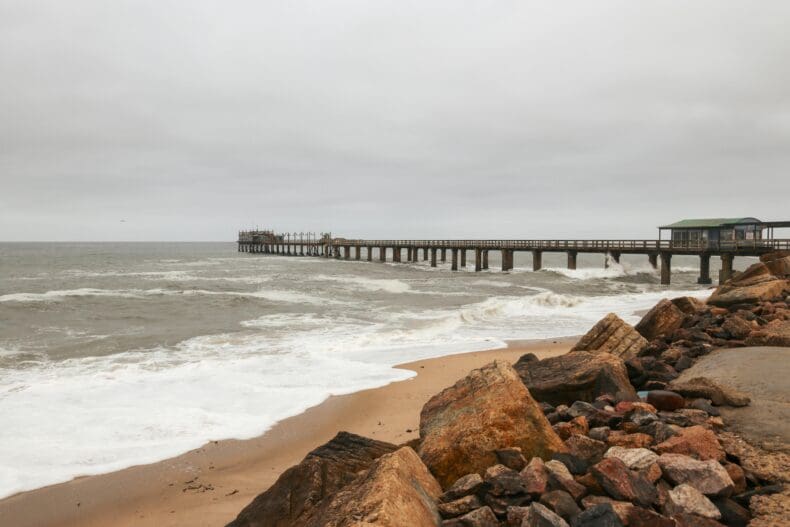
Swakopmund sits right on the Atlantic Ocean and is one of the few places in Namibia where you can truly spend time by the sea. It’s not your typical beach destination. The water is cold, the waves are powerful, and the wind often picks up. Still, the beach is a lovely place to unwind, take a long walk, or simply watch the ocean roll in.
The most iconic spot by the water is the Jetty, an old pier built in the early twentieth century as a docking point for ships. These days, you can stroll all the way to the end of the pier, where the restaurant Jetty 1905 offers stunning views over the sea. Out at the tip, the wind rushes past your face and the waves crash below your feet. At sunset, the view becomes even more spectacular.
A little further south is Tiger Reef Beach Bar, set right on the sand. It’s a relaxed and friendly place to enjoy a cold beer or a cocktail while listening to the sound of the waves. You can lie directly on the beach or grab a spot on one of the wooden benches looking out over the ocean. The beach is small but easy to reach. You won’t find umbrellas or sunbeds here, but you will find salty air, wide open views, and a rugged stretch of coast that feels refreshingly real. Swimming is possible, though the strong current and cold water mean you’ll need to be cautious.
#5 Sandwich Harbour
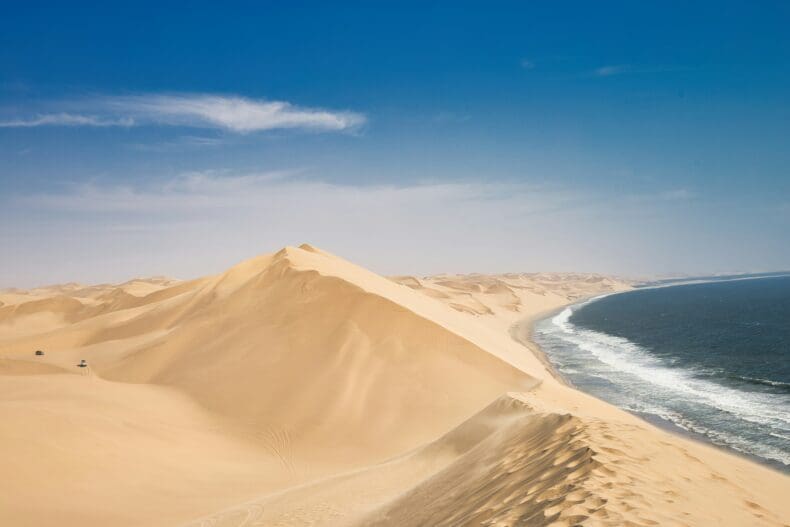
Sandwich Harbour sits on the southern edge of Walvis Bay and is one of the most spectacular natural spots in Namibia. This is where massive sand dunes drop straight into the Atlantic Ocean. Nowhere else in the country is the contrast between desert and sea as dramatic as it is here. The area can only be reached with a 4WD vehicle and only during low tide, which is why most travellers choose to join a guided tour with an experienced driver.
The journey to Sandwich Harbour is an adventure in its own right. You drive along winding sand tracks, past shimmering salt flats and through endless, empty dune landscapes. Along the way, you may see flamingos feeding in shallow lagoons and pass the striking pink salt lake, tinted deep red by algae. When you arrive, the dunes rise like mountains and fall steeply into the ocean below. This is where the road ends. You get out, hike up a dune, and take in a sweeping view of the wild, untouched coastline that feels like nowhere else on Earth.
Sandwich Harbour lies within the Namib-Naukluft National Park, and a permit is required for entry. This is usually included in organised tours. Most trips leave from Walvis Bay, although pick-up from Swakopmund is also an option. Because of the tides and the shifting, soft sand, the route can be tricky to navigate and is not recommended for self-driving unless you have proper off-road experience. With a guide, you can sit back and enjoy the ride, stopping along the way for photos, stunning viewpoints, and sometimes even a simple picnic lunch laid out on a blanket in the sand.
#6 Walvis Bay
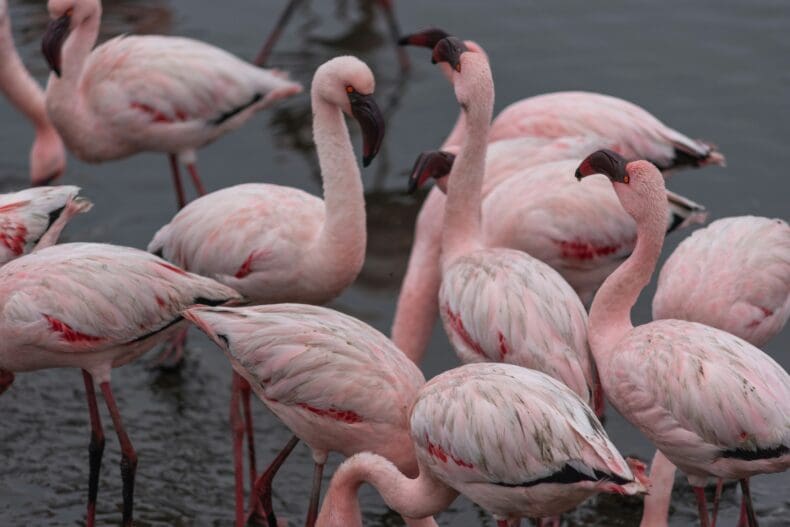
Walvis Bay is located about half an hour south of Swakopmund and serves as Namibia’s main port. While the town itself is more functional than charming, the surrounding landscapes are nothing short of spectacular. It’s a great destination for nature lovers and birdwatchers. The lagoon at Walvis Bay is one of the best places in Southern Africa to see flamingos. In the right season, you may also spot pelicans and even the occasional penguin.
The drive from Swakopmund to Walvis Bay is a scenic experience on its own. The road runs between the ocean and a line of towering sand dunes, offering stunning contrasts all the way. Along the route, you’ll pass Dune 7, the tallest dune in the area. If you’re up for a challenge, the climb to the top rewards you with sweeping views, especially beautiful in the late afternoon light.
From Walvis Bay’s harbour, boat tours leave every day. Aboard a catamaran or motorboat, you’ll cruise along the coast looking out for seals, dolphins, and sometimes whales. Some tours add a touch of luxury with sparkling wine and fresh oysters served on board. For those in the mood for something more active, kayaking trips take you right into the middle of seal colonies, making for a truly memorable experience. Most excursions last around three to four hours and usually begin in the morning.
#7 Welwitschia Drive
Just under half an hour from Swakopmund, the Welwitschia Drive takes you into a strange and fascinating world. This dusty route winds through a surreal landscape of ancient craters, dry riverbeds, and rare desert plants. As you follow the road through the northern part of Namib-Naukluft National Park, you’ll come across thirteen marked stops, each with something unique to see. The star attraction is the welwitschia, a plant found nowhere else on Earth, quietly growing in the same spot for hundreds of years.
The welwitschia is unlike anything you’ve seen before. It has only two leaves, but they never stop growing. Torn by wind and weather, they twist and fray into long, ribbon-like strips that sprawl across the ground in a tangled mess. Some specimens are more than a thousand years old. The largest one is protected behind a low fence to keep it safe from trampling.
Still, the welwitschia is only part of what makes this route so memorable. You’ll also pass through the so-called moon landscape, a vast grey valley that feels more like a film set than real life. Along the way, you’ll see lichen-covered rocks, traces of an old campsite, and lookout points with endless views across the barren plains. A permit is required to enter the Namib-Naukluft National Park, which you can get at the NWR office in Swakopmund. A 4WD is useful, but in dry conditions a regular car will usually do just fine. Make sure to bring enough water, as you won’t find any services or shops along the way.


#8 Namib-Naukluft National Park
Namib-Naukluft National Park is vast, so vast that it’s hard to take it all in during a single visit. From Swakopmund, the northern part of the park is easy to reach, offering peaceful and unexpected stops like Bloedkopje and Tinkas. This isn’t a place for crowds or tour buses. It’s a raw and quiet desert, unlike anywhere else you’ve ever been.
Bloedkopje is a rocky outcrop with a striking reddish-brown glow, especially when the sun begins to set. The climb to the top is short but can be challenging in the midday heat. Once you reach the summit, you’re greeted with sweeping views over a wide and empty desert that seems to stretch on forever. At the foot of the hill, there are a few basic campsites, each with a concrete table and a spot to make a fire. There’s no running water here, but what you will find is complete stillness and space to breathe.
Tinkas lies further into the park and is the starting point for the Nature Walk, a four-hour trail that winds past dry riverbeds, eroded rock formations, and the quiet remains of colonial graves. Look for the painted gemsbok symbols along the route to stay on track. This is another peaceful spot to camp, right in the heart of the desert. Make sure to organise your permit in advance at the NWR office in Swakopmund. The beauty of this part of the park is the freedom it gives you. There are no fixed trails or busy sights. Just you, the wild landscape, and more sand than you ever imagined.

#9 Skeleton Coast
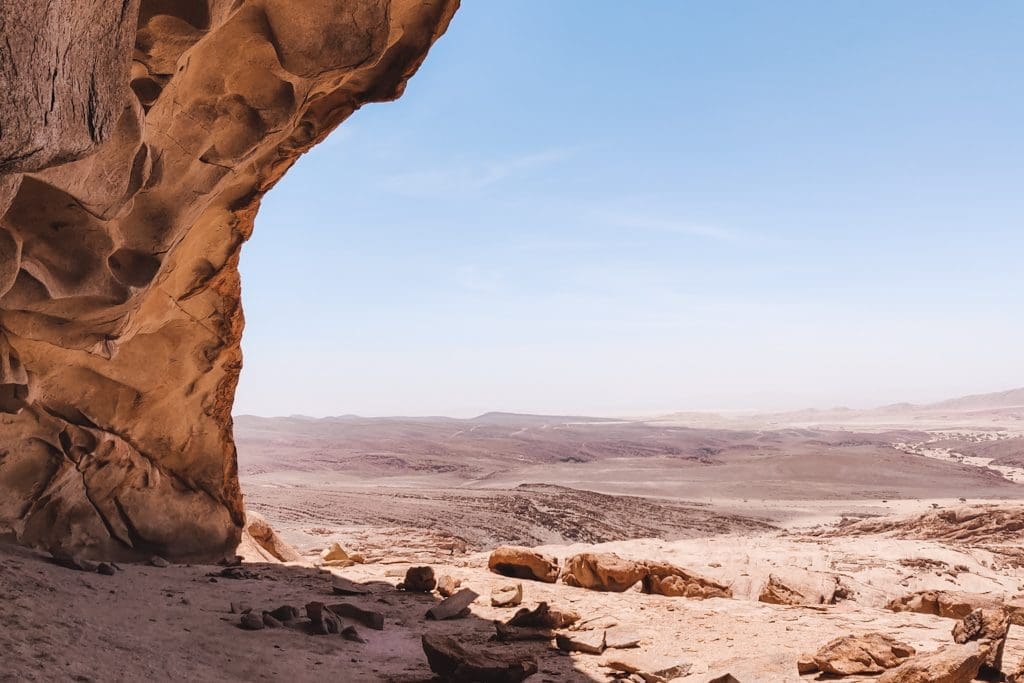
As soon as you leave Swakopmund and head north, the landscape begins to shift. Houses disappear, traffic thins out, and the sense of emptiness grows. This is where the Skeleton Coast begins, a vast stretch of shoreline known for its sweeping sand dunes, dense fog, and the scattered remains of ships that met their end here. The name speaks for itself. For those who once washed up along these shores, the chances of survival were slim.
Even so, it’s a journey worth making. The first part of the drive takes you along a well-kept salt road. You’ll pass empty beaches, weathered signposts, and eventually reach the wreck of the Zeila. This ship lies close to the coast and is still clearly visible, with waves pounding its rusted frame each day. Farther north, more shipwrecks can be found, though many are now partly swallowed by the sand.
The Skeleton Coast makes for an easy day trip up to Cape Cross. Beyond that point, you enter the official national park and will need a permit. The landscape becomes even wilder and more remote, with no services or signs of life. It feels like stepping into another world, and that’s exactly what makes this one of the most unforgettable parts of Namibia.

#10 Cape Cross
About an hour and a half north of Swakopmund lies Cape Cross, a place you’ll smell before you see it. This is home to the largest seal colony in Africa, and there are thousands of them. Fat, blubbery seals lie in heaps, barking, yawning, shoving, and fighting for a sunny spot. During mating season, their numbers can reach into the hundreds of thousands. And yes, the smell is unmistakable.
Even so, it’s an experience you won’t want to miss. A wooden boardwalk winds right through the colony, placing you face to face with the chaos. In December and January, the beach is full of pups, tiny seal babies tumbling over each other and making a lot of noise as they try to find their mothers.
Among all the wildlife stands a piece of history. This is where Portuguese explorer Diogo Cão placed a stone cross in 1486, marking the first European landing on this part of the coast. A replica still stands today as a reminder of that moment. To enter the reserve, you will need a permit, which can be purchased at a small office along the way. Cape Cross is easy to combine with a drive along the Skeleton Coast, although it is more than worth the trip on its own.

#11 Slowtown & Two Beards Coffee Roastery
Swakopmund might just be Namibia’s coffee capital. It’s not the kind of place where you’d expect to find great coffee, tucked between the desert and the sea, but that’s part of its charm. After days of camping and cooking over a gas flame, a proper cappuccino feels like a little luxury. And you can get just that at Slowtown or Two Beards.
Slowtown is a familiar name across Namibia, and in Swakopmund, you’ll find the roastery itself right in the heart of town. The scent of freshly roasted beans drifts down the street before you even step inside. Once in, you’ll find all your favourite options from home: espressos, flat whites, cappuccinos. It’s a welcoming place to sit down, recharge, refill your water bottle, or pick up some beans to take with you on the road.
Two Beards is a little farther from the centre and feels more like a destination than just a coffee stop. It’s part coffee bar, part roastery, and part laid-back lunch spot, with a relaxed atmosphere and a small terrace to soak up the sun. The baristas are passionate about what they do and always happy to talk about their favourite brewing techniques.

#12 Food Scene in Swakopmund
Swakopmund offers something you won’t find in many other parts of Namibia: real variety. You’re not limited to cooking your own meals or relying on whatever your lodge has on the menu. Here, you can simply walk into town and choose exactly what you feel like eating.
In the mood for German food? The Brauhaus is the place to go. Set in a traditional half-timbered building, this lively spot serves up schnitzels, bratwurst, and generous mugs of beer. It may attract its fair share of tourists, but the atmosphere is warm and the food hits the spot.
If seafood is more your style, head to The Tug or Jetty 1905. Both sit right on the edge of the ocean, offering sweeping views of the waves and the setting sun. The menu features oysters, fresh fish, and other seafood dishes that are as fresh as can be.
For breakfast or lunch, the town centre is dotted with charming cafés like Cordes & Co and Raith’s Deli. You’ll find smoothies, toasted sandwiches, fresh juices, and quality coffee. Everything you need for a relaxed start to the day or a laid-back afternoon break.