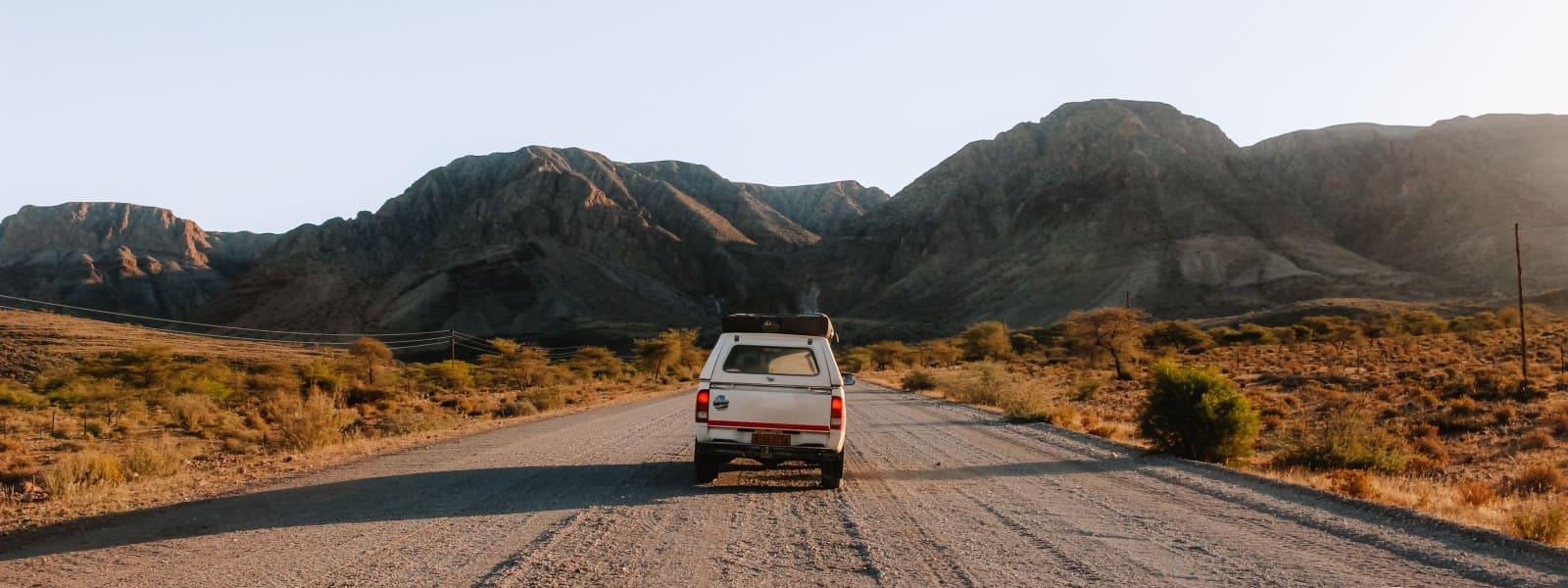
A road trip through Namibia depends on your car. The country is huge, public transport barely exists and the best places are hours of driving apart. We rented a 4×4 with a rooftop tent in January and the two of us covered more than 5,000 kilometres in three weeks.
We were a little nervous beforehand. In the end the driving turned out to be easy and relaxed, although we did spend an afternoon with a dead battery next to a shipwreck on the Skeleton Coast.
This guide covers everything about renting a car in Namibia: whether you need a 4×4, what to look for when you book, which licence to bring, what the roads are like and what to do when the car breaks down. All with our own experiences mixed in.


Why rent a car in Namibia?
Namibia isn’t the first country you think of for a road trip? Think again. A rental car shows you far more of the country than anything else. The alternative is an organised group tour, and we much prefer making our own plans.
Namibia is about 20 times the size of the Netherlands, our home country, with only a small population. After Mongolia it is the most sparsely populated country in the world. So expect very little public transport, long roads and tiny villages. Apart from an organised tour or an expensive taxi, driving yourself is usually the only way to reach the best places in Namibia.
How many days you need the car and how far you drive each day depends on your route. We wrote ours out in full.
→ See our Namibia itinerary for a self-drive road trip


Is driving in Namibia safe?
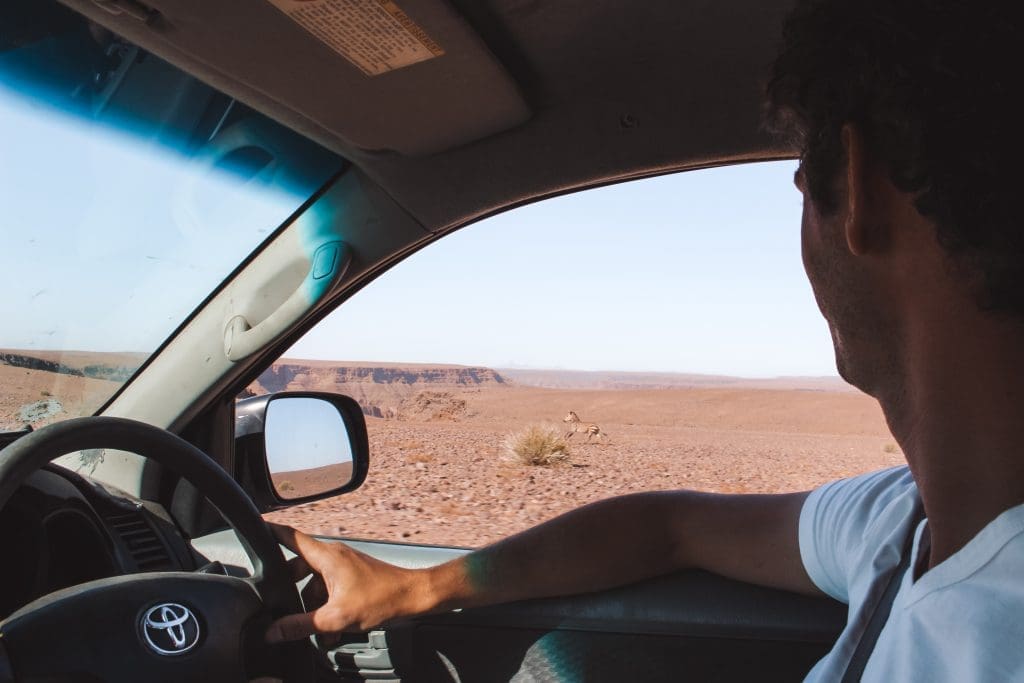
We never felt unsafe on the road. There is little traffic and the roads are easy to read. Accidents do happen though, and they are often single-vehicle accidents: driving too fast on gravel, a moment of lost attention or a collision with wildlife. Official advice such as the UK government’s travel advice for Namibia warns about poor driving standards, rough roads outside the towns and animals on the road. So drive calmly, match your speed to the road and leave plenty of time for each driving day.
We prepared well and our rental company gave us a whole list of extra safety tips. Here they are.
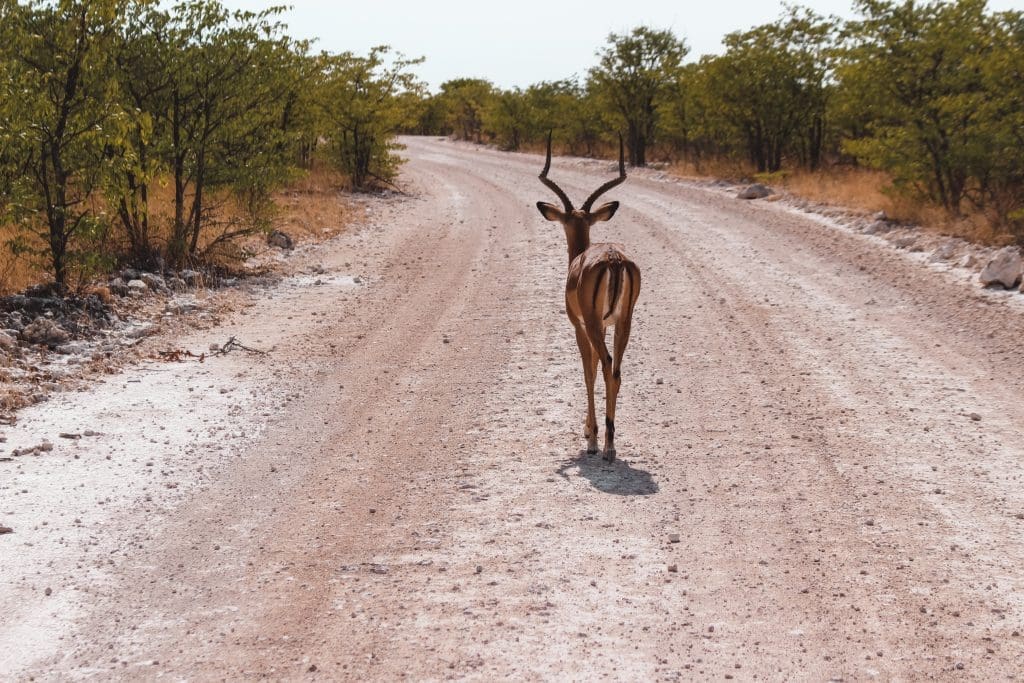
The most important one: don’t drive after dark. There are no street lights, a gravel road can suddenly turn bad and animals cross the road mostly at dusk and around sunrise. Kudu, springbok and cattle simply walk onto the road, also along tarred roads, because fences are far from everywhere. Many rental companies also exclude insurance cover after dark. Make sure you reach your campsite or lodge well before sunset.
Tourist rental cars stand out and are sometimes a target for thieves, mainly in the capital Windhoek. Leave nothing visible in the car, keep windows closed and doors locked in town and don’t leave the car unattended at a petrol station. Our rental company also warned us about supermarket car parks: after locking the car with the remote, always check that the doors are really locked, because the signal can be blocked.
Because the country is so sparsely populated and the roads are long, it can take a while before you see another car. If you break down, help may be some time away. Know how to change a tyre and learn the basics of your car. And always carry more than enough water. We had at least two full five-litre containers of drinking water in the car at all times, and usually much more.
Buy a local SIM card at the airport and save your rental company’s phone numbers. Don’t expect miracles, as many places have no signal at all. If you want to be reachable everywhere, rent a satellite phone with your car.
For your peace of mind: many rental cars have a tracker that lets the company follow the car. Ours told us they raise the alarm when you are parked in an odd place for too long, and that they are notified straight away after an accident so they can call the emergency services.
→ Read our practical travel tips for Namibia


Do you need a 4×4 in Namibia?
You can reach most of Namibia’s highlights in a normal car. The main B-roads are tarred and most gravel roads are well maintained. We would still recommend a 4×4. It gave us the freedom we were after: we could go wherever we wanted without worrying about the state of a road.
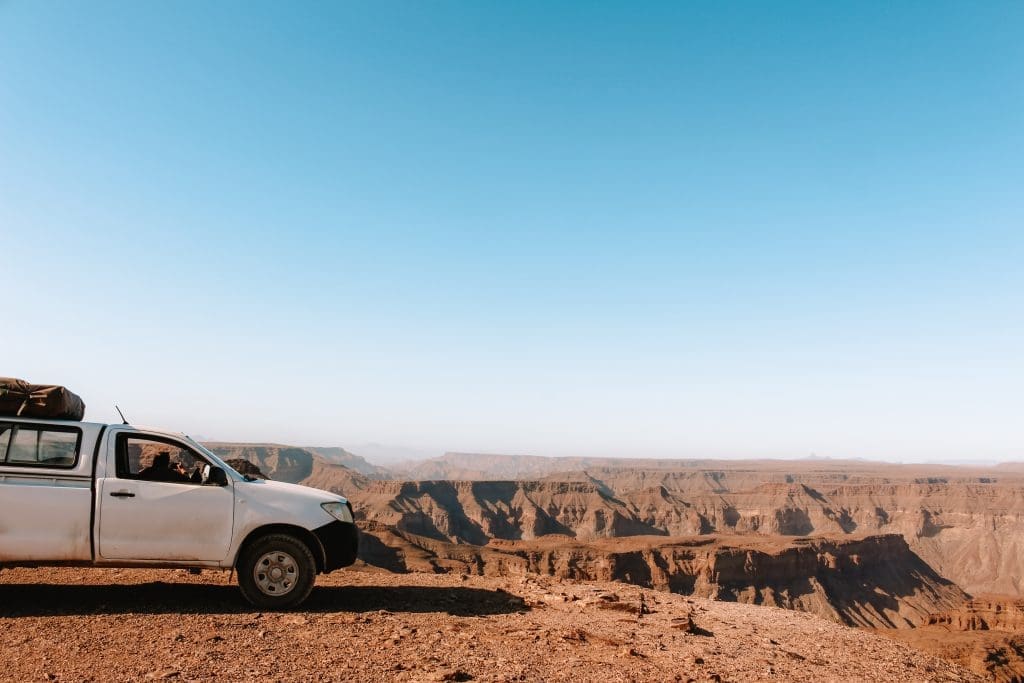
Now and then we took a different, prettier route, and we got closer to the best spots, for example in Sossusvlei, on the Brukkaros volcano and at the viewpoints of the Fish River Canyon.
Where do you really need four-wheel drive? For the deep sand on the last stretch to Sossusvlei, where you otherwise switch to a shuttle. And for remote areas such as the dry riverbeds of Damaraland and Khaudum in the north-east. If you stick to the classic route past Etosha, Swakopmund and Sesriem, you can manage without.
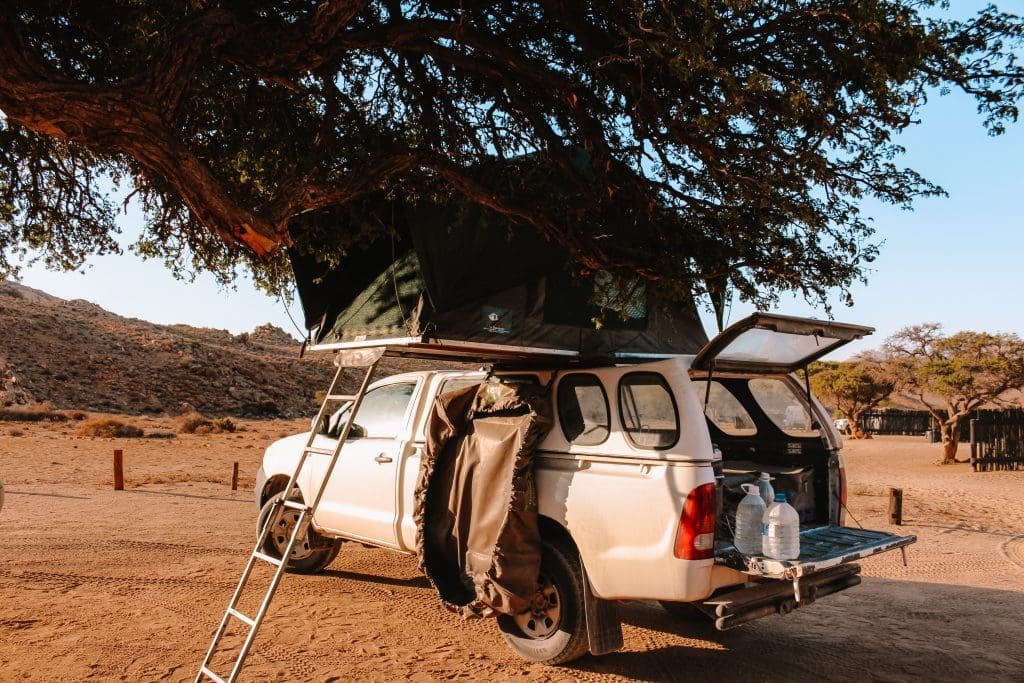
A 4×4 is also the car that carries a rooftop tent, which we found the best way to camp in Namibia.
Did you know a 4×4 normally just drives in two-wheel drive? In many rental cars, ours included, you switch on four-wheel drive yourself. There is one setting for flat, loose surfaces and one with extra power that gets you up almost any slope. You drive slowly in those settings and you are not supposed to use them for long.
Good to know: rental cars in Namibia are manual by default. An automatic often costs extra.
→ Read all about camping in Namibia with a rooftop tent
What to look for when renting a car in Namibia
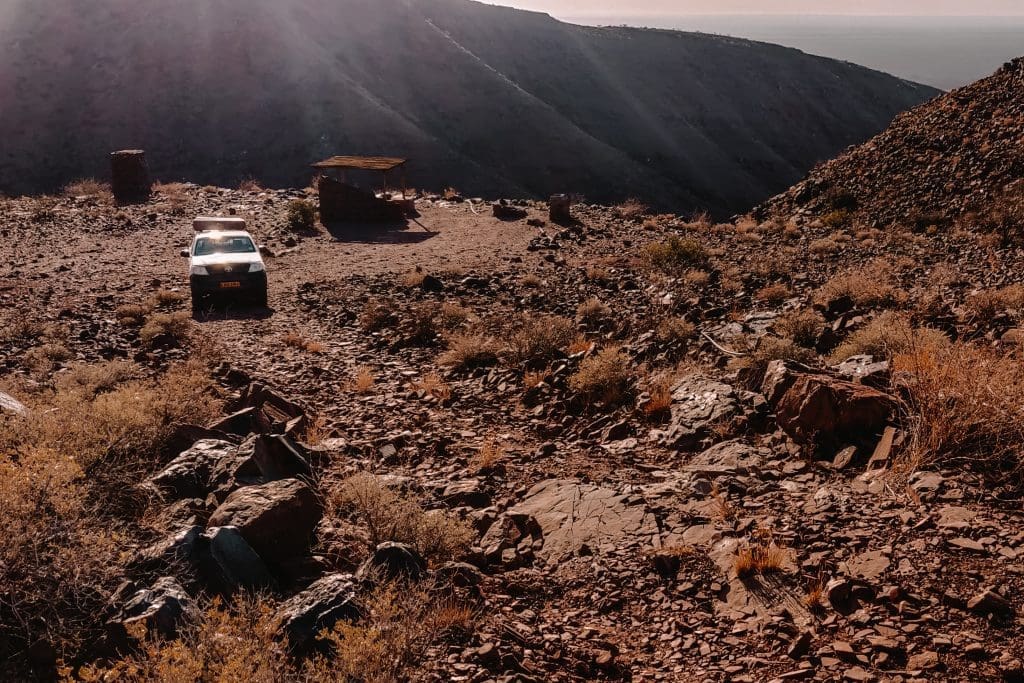
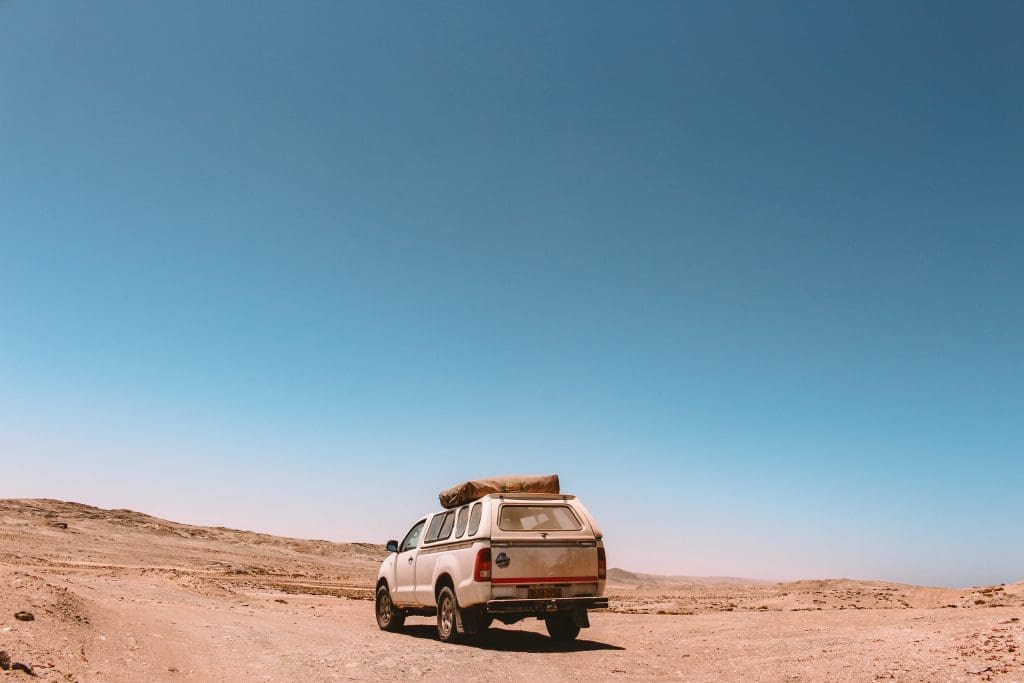
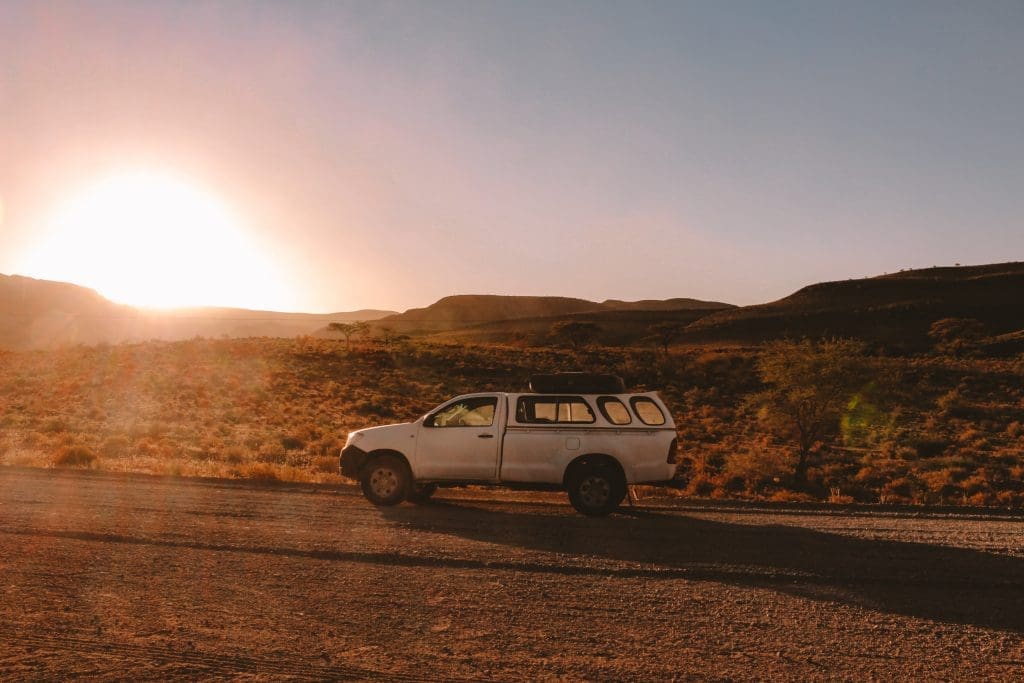
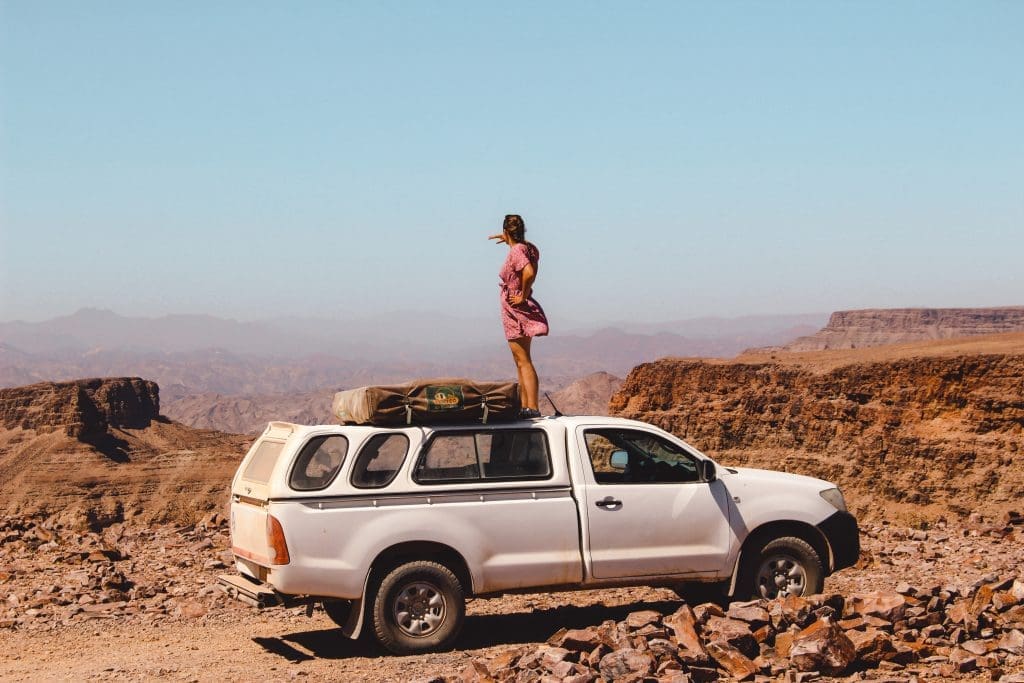
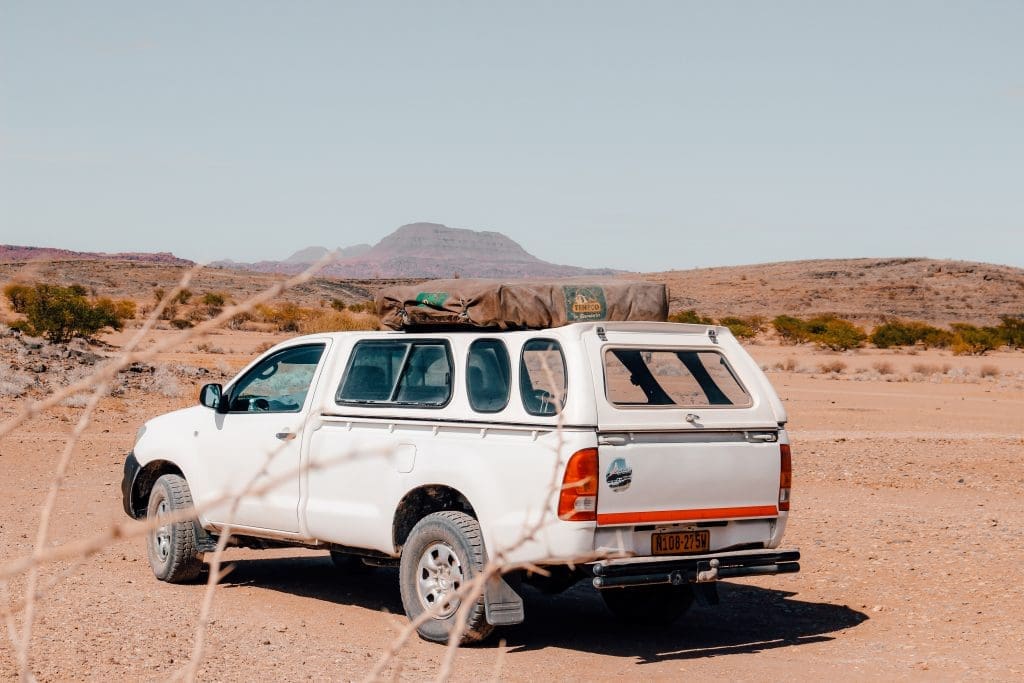
The most popular car among rental companies and locals? The four-wheel-drive Toyota Hilux. This pickup has a reputation for being indestructible and you will see it all over the country.
So nearly every rental car is the same model and the difference is in the details. An important choice is between a single and a double cab. A single cab only has a driver and passenger seat, a double cab also has a back seat. You need one if there are more than two of you, also because only a double cab can carry two rooftop tents. But a back seat is handy for two people as well. In our single cab we missed a clean, easy-to-reach place for our backpacks and a few things for the road.
Look at the load area too. Ours was one big, dusty space where everything ended up in a pile: backpacks, camping gear, spare tyres. Not very practical. The alternative is a fitted load area with pull-out drawers, which of course comes at a price.
Read the insurance terms carefully. With many companies the standard cover comes with a high excess, which you can reduce with a more extensive package. Tyres, windscreens and the underside of the car are often excluded, while that is where most gravel damage happens. Also check whether single-vehicle accidents are covered, because that is not a given. We chose the most extensive option, as we had been warned about the roads. We never needed it.
Then the spare tyres. A puncture is the most common problem on gravel and the usual advice is to carry two spares. Tyres are usually not covered by the insurance, but we could buy extra ones from the rental company and so we did.
The deposit is nearly always blocked on a credit card in the main driver’s name, so bring one. The minimum age and the number of years you must have held your licence differ per company.
What else affects the price? The age of the car: the older, the cheaper, but also the greater the chance of problems. Newer cars more often have a practical load area as well. Extras such as an electric coolbox, GPS or satellite phone cost more. Our rental included two nights in Windhoek, full camping equipment, extensive insurance and extra tyres.
→ Read more about your travel budget for Namibia

Where to rent a car in Namibia?
Going for a 2WD and sleeping in lodges? Check out Discover Cars. It compares the big rental companies in one go, so you’ll quickly see what a car costs for your dates. Want to camp with a rooftop tent like we did? With Namibia Nomads you book a complete road trip: a fully equipped 4×4, rooftop tent, your overnight spots and a roadbook. You still do the driving and pick your own stops, they just take care of the planning.
→ Compare rental cars in Namibia with Discover Cars
→ Discover the 4×4 road trip with rooftop tent by Namibia Nomads
Most rental companies are based in Windhoek, where the international flights arrive. Many travellers spend their first night in the city and pick up the car the next day. That works well, because you start your first driving day rested. For that first night, have a look at our guide on where to stay in Windhoek.
At pick-up you check the car thoroughly. If all goes well, you walk around the whole vehicle with someone from the company and a detailed form. It doubles as a tour of the car, so you learn how everything works. Take photos and ask every question you have. We set up the rooftop tent together with the rental company. That way you see it is in good condition and you know how it works (very easy, by the way).
Ask your rental company for road maps of Namibia as well. Ours had two: one for the north and one for the south. They are useful for planning your route and for when you have no signal, although you should download offline maps too. The maps show which parks you drive through, the road names, the type of road and where the petrol stations are.
Which driving licence do you need in Namibia?
Bring your own licence and, to be safe, an international driving permit. Sources differ on whether it is required. A licence printed in English is generally accepted, but if yours is in another language you will want the permit. Not every rental company asks for it, but with both in your pocket you are always fine. The permit does not replace your normal licence, so take them together.
Many travellers now also need a visa for Namibia, which you apply for online in advance or get on arrival. Rules for licences and visas change from time to time, so look them up again shortly before you leave.
Can you take a rental car across the border?
Want to combine your road trip with Botswana or South Africa? That is possible with many rental cars, but never without asking. You request it when you book and the rental company gives you a letter of authorisation to show at the border. Expect a surcharge from the rental company and fees at the border itself. Not every neighbouring country is allowed: most companies exclude Angola.
When to rent a car in Namibia?
High season runs roughly from June to September. Those are the dry months and it gets busy. A 4×4 with a rooftop tent for that period needs to be booked well ahead and costs more. Outside it, things are quieter and often cheaper.
We drove in January, in low season. January does fall in the rainy season, which lasts until about April. Gravel roads can get slippery or damaged and dry riverbeds can fill up. In those months, slow down on gravel, don’t drive through flowing water and ask at your campsite or lodge what the road ahead is like.
How do you get used to driving on the left in Namibia?
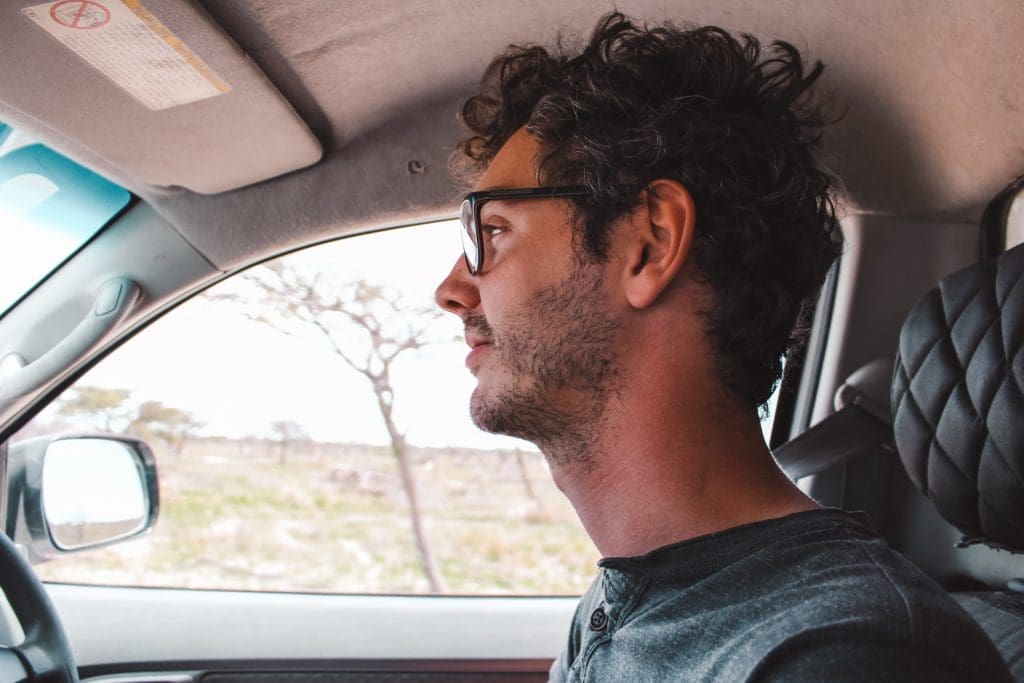
In Namibia you drive on the left and the steering wheel is on the right. We got used to it faster than we expected. For the first two days we helped each other by saying out loud at every turn whether it was a short turn (to the left) or a wide turn (to the right). Yes, really. But it helped!
Changing gear with the left hand wasn’t hard either. It surprised us how natural it felt almost straight away.
The one problem that kept coming back? The windscreen wipers. Like the indicator, they sit on the other side of the steering wheel, so at many junctions our wipers went on. Oops. And back home in the Netherlands we needed a few days to get used to driving on the right again.
What are the roads like in Namibia?
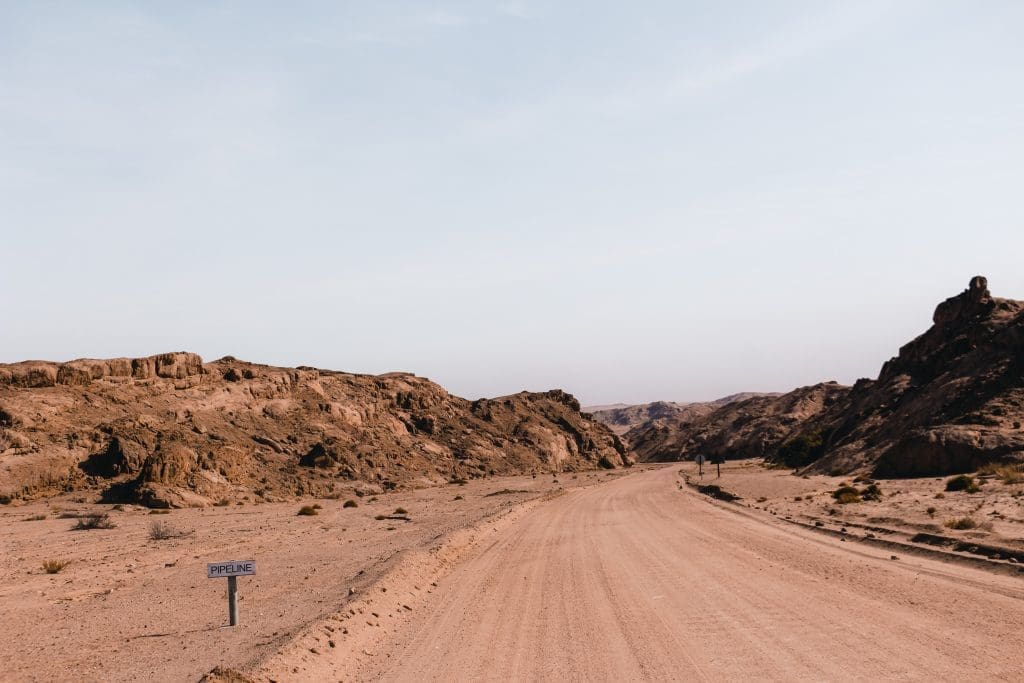
Better than we expected! It helps that every road has a letter. It not only tells you whether it is a main road, but mostly what quality to expect.
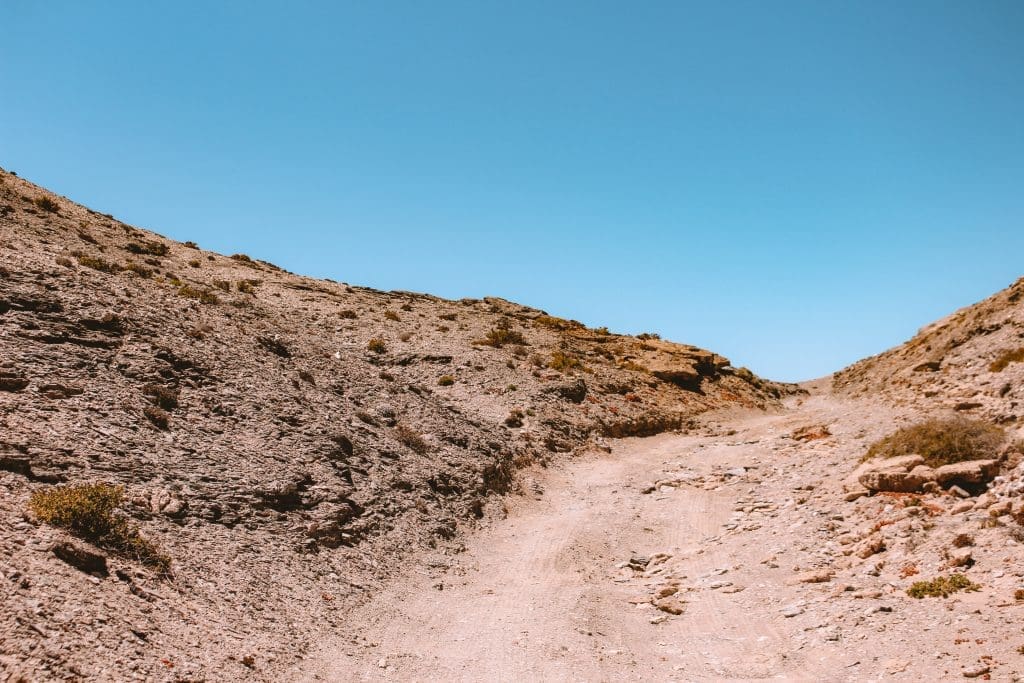
The B-roads are Namibia’s main roads: smooth tarmac in good condition, where you make quick progress. The C-roads are the better gravel roads and the ones you will probably drive most. D-roads are narrower gravel roads, although you don’t always notice the difference: some D-roads are in better shape than a C-road. E-roads are gravel with potholes and rocks. Many rental companies don’t allow them.
How fast can you go? In towns and villages 60 km/h, on tarred roads outside them 120 km/h. On gravel 100 km/h is the upper limit, depending on the signs and the road. In practice your rental company sets the maximum, for safety and for insurance cover. Many companies stick to 80 km/h on gravel, we were allowed 90. Our car had a tracker that passed our speed on to the rental company and made an unbearable beeping sound as soon as we went too fast. Sadly the tracker didn’t know that some roads had just been upgraded.
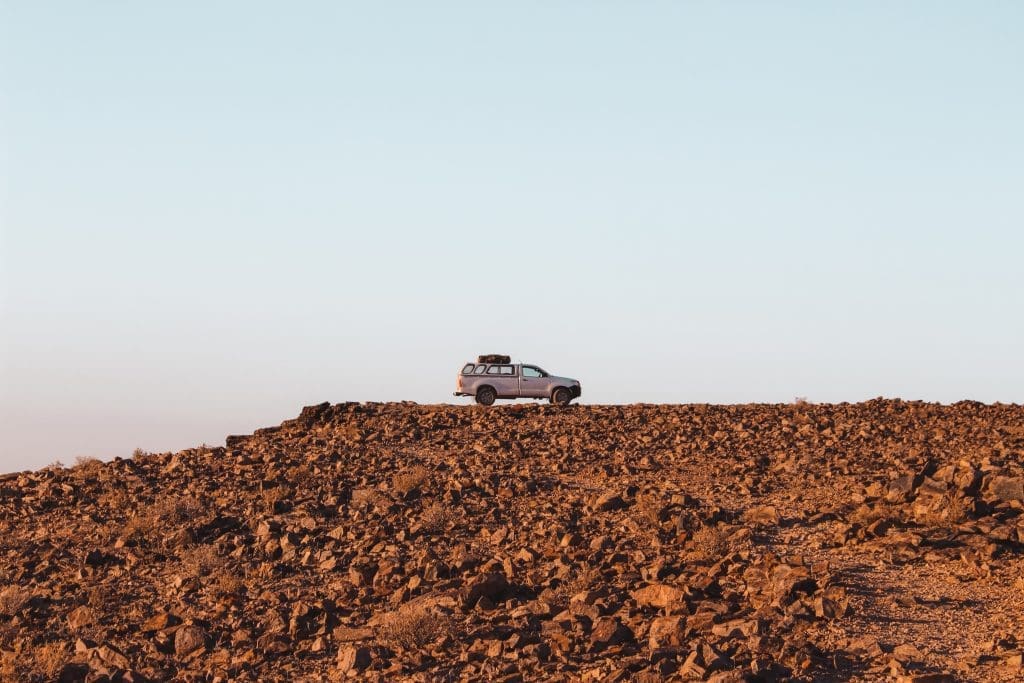
The quality of the road doesn’t just decide your speed, but also your tyre pressure. The main rule: the worse the road, the lower the pressure. Your rental car will probably come with a pump, so you can lower or raise the pressure when you switch between tarmac and gravel. Or when you want to drive your 4×4 through the deep sand of Sossusvlei. You can also have it done at a petrol station. Do give the attendant a tip for the help.
What we mostly want to warn you about is how good the roads are. They are long, straight and flat, so your attention drifts and before you know it you are driving too fast. Stay alert, because out of nowhere there is a hole in the road or a springbok in front of you. You may also see nobody for hours and drive comfortably in the middle of the road, until an oncoming car appears right behind a hill. Also in the middle of the road.
Which roads did we find the most beautiful? We wrote a separate blog about those.
→ Discover the 8 most scenic drives in Namibia


What to do when you have car trouble in Namibia?
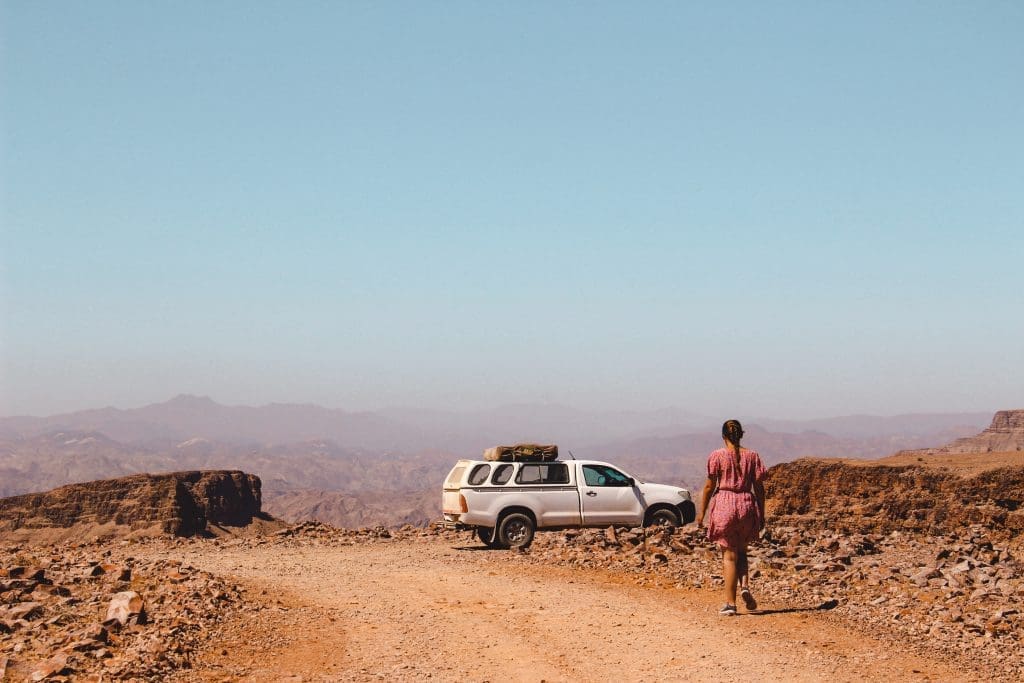
Car trouble is said to be unavoidable on a Namibia road trip. We heard horror stories about at least one flat tyre a week. So we read up on it and practised changing a Toyota Hilux tyre with the rental company. It turned out we didn’t need to. We neatly returned all the extra tyres we had bought.
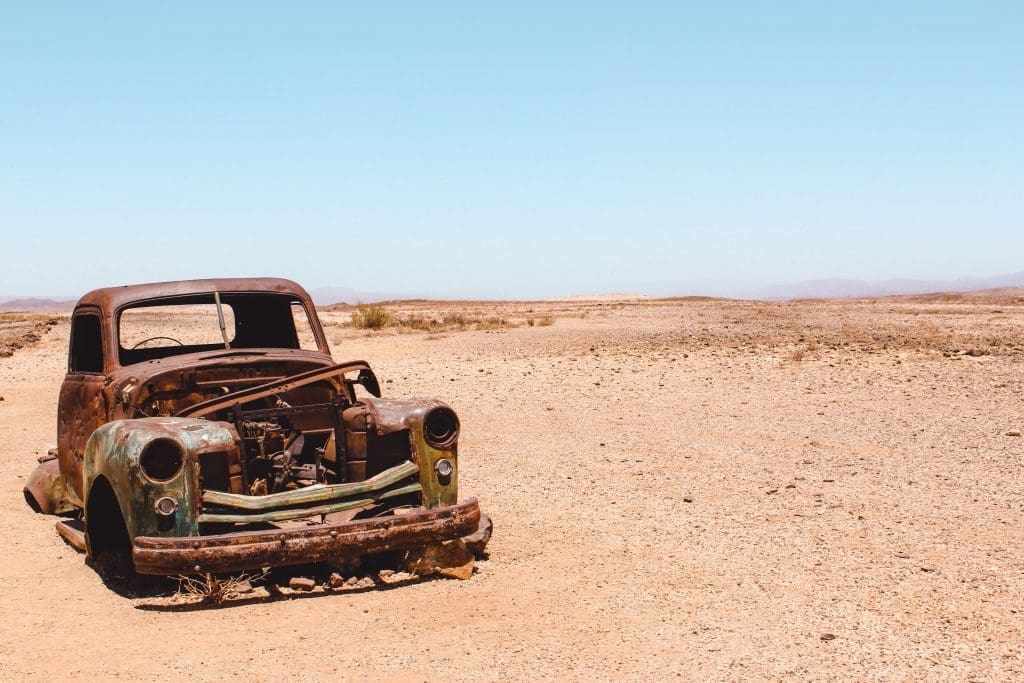
So no car trouble at all? Oh yes, there was. We were the lucky renters of a pickup with a dead battery. It was simply worn out. We first noticed it in Torra Bay, on the Skeleton Coast, where hardly anyone ever comes. Luckily it happened at the campsite, so at our destination, and after an hour the car spontaneously started again. It started the next morning too. Later that day it gave up for good, when we stopped at a shipwreck along the Skeleton Coast. You could hardly pick a more dramatic location, right?
Of course we hadn’t seen any other traffic all day. Of course we had no signal there, despite the local SIM card. But we were well prepared. In the middle of the day in high summer it was too hot to walk for a few hours to the nearest place on the map, but we had plenty of water. Our bed was on the roof and we had food as well. We would wait that afternoon to see if anyone came by. If not, we would start walking the next morning while it was still cool.

And we got lucky. After an hour and a half someone drove past. This hero got our old battery going again with jump leads. Not for long, mind you, because on the drive of a few hours to the nearest garage the car cut out several more times. At the garage it was fixed quickly: old battery out, new one in. The bill went straight to the rental company.
We already gave our breakdown tips in the safety section. Learn to change a tyre and get to know your car, arrange a local SIM card or even a satellite phone and carry enough water. Always enough water! And above all: don’t stress. We wouldn’t have minded spending the night at that great spot on the coast. Sooner or later someone would come by, or it would cool down enough to walk and get help.
You can also buy more certainty: the newer the car, the more you pay and the smaller the chance of trouble. To save money we chose a somewhat older model. We knew this could happen and were fine with that.


Where can you fill up in Namibia?
Worth knowing: a 4×4 often has two fuel tanks. Namibia is vast and sparsely populated, so you won’t pass a petrol station every hour. Ours held 140 litres in total: one tank of 80 litres and one of 60.
Not that you always need two full tanks between two petrol stations. Our rule of thumb: as soon as you start on the second tank, fill up at the next station. How do you know you are on the second tank? Only then does the gauge on the dashboard slowly start to drop. In remote areas and in the parks there are few pumps, in Etosha for example only at a few camps. Fill up there whenever you can.
Every petrol station has an attendant who fills up for you. You can also have your tyre pressure adjusted. Fuel prices are largely set by the government, so you will see little difference between stations. In a remote spot you pay slightly more at most because of the transport.
The road maps from your rental company show all the petrol stations. Just don’t be fooled by the place names. What we took for a village on the map sometimes turned out to be only a petrol station with a campsite or lodge at most. Solitaire and Betta are good examples. It is so empty here that you can drive for hours without passing anything. A petrol station or a big ranch already counts as a highlight on the map.
Camping or lodges: where do you sleep on your road trip?
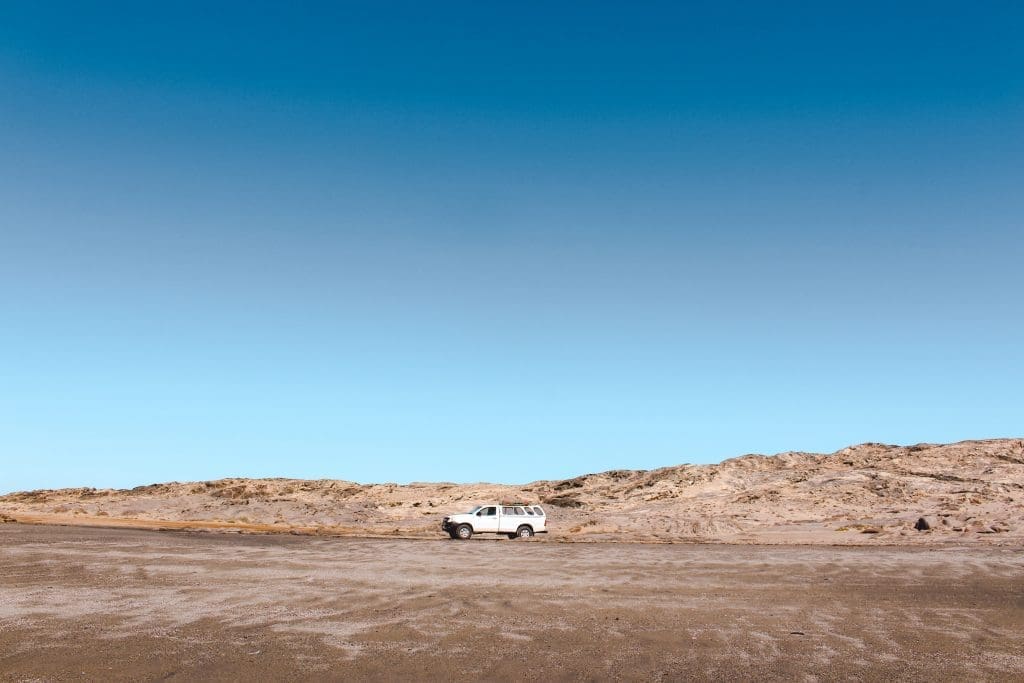
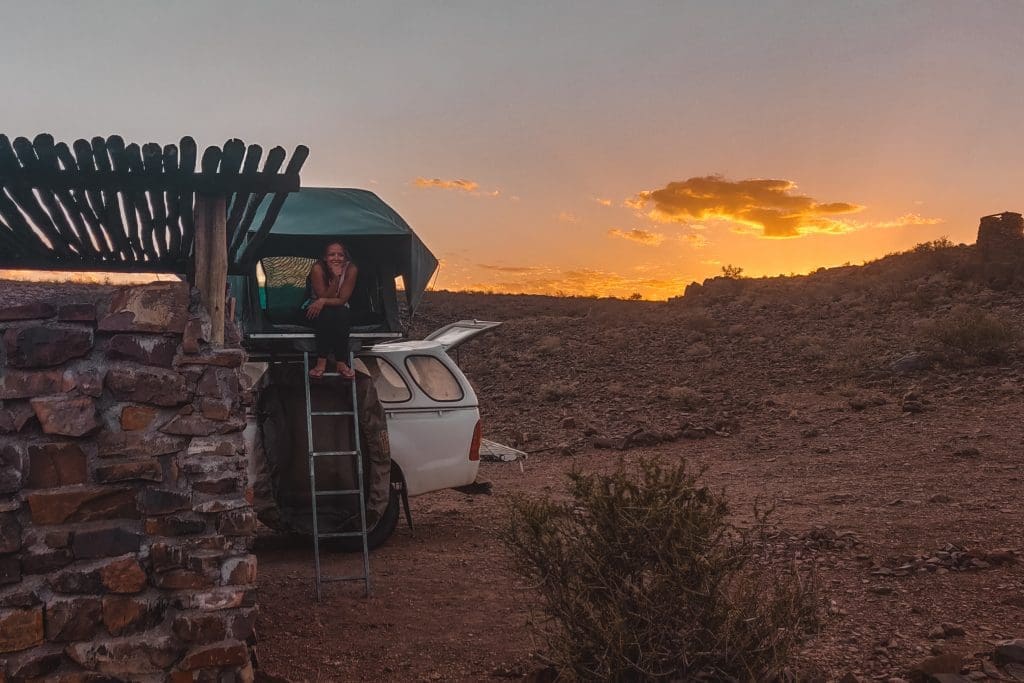
With a rental car you have two options: camping with a rooftop tent or driving from lodge to lodge. We chose the rooftop tent and loved the freedom it gave us. Even when our battery died in the middle of nowhere, we weren’t worried. Our bed was on the roof, after all. We could stop as often as we liked, take detours and reach places we would never have seen otherwise. Read: we slept on a volcano!
Didn’t we miss the comfort of a lodge? Not for a moment. Because it was low season, the lodges of NWR, the state organisation that runs the camps in the national parks, were discounted and sometimes even cheaper than a campsite. We tried that for one evening and never again. We missed our tent!
If you do prefer a real bed, Namibia has plenty of special lodges to choose from. You won’t need a rooftop tent then.
→ Discover the 11 best campsites in Namibia
→ See the 29 most unique places to stay in Namibia

Extra (packing) tips for your road trip
Bring a car charger so you can charge your phone and other electronics on the road. Music, a podcast or an audiobook makes the long drives more fun, but check beforehand what kind of car radio your rental car has. We brought audio cables, but our car turned out to be too old even for those. In the end we bought a cheap little speaker somewhere.
Download offline maps to your phone at home or somewhere with Wi-Fi. We used those of Google Maps and maps.me. Note that maps.me isn’t really made for driving, so it is not the best navigation for a road trip. For hikes we swear by it. Keep the paper road maps from your rental company in the car as well, so you can always see what type of road is ahead. Road signs are usually in English, so you don’t need to learn Afrikaans to find your way.
Driving in Namibia is a dusty business, certainly with a big open load area without compartments like ours. Leave the small window at the front of the load area, on the cab side, slightly open. It keeps out a lot of dust.
Make sure there is a first aid kit in the car. And buy a few five-litre bottles of water at one of your first supermarket stops. Tap water is drinkable in most towns in Namibia, so you can refill them along the way. Do ask at lodges and campsites, as the water there sometimes comes from their own borehole. That way you always have enough water in the car.
Enjoy our travel tips? Add The Orange Backpack as a preferred source on Google and you'll see us more often in your search results.
More tips for your Namibia road trip
Everything you need to book your trip, in one place. From desert lodges to a 4x4 with a rooftop tent.
 Our pickNamibia is made for a self-drive trip. Staying in lodges? Compare rental cars with Discover Cars. Rather camp? Book a road trip with a 4x4 and rooftop tent from Namibia Nomads, route and campsites sorted.
 Lodges and hotels in Namibia: from a desert lodge near Sossusvlei to a safari camp right outside Etosha. Pick your spot or browse all of Namibia on Booking.com
 Dunes that tumble straight into the ocean? Book the Walvis Bay boat trip with a 4x4 ride to Sandwich Harbour with GetYourGuide.
 Prefer everything arranged? Browse Namibia tours on TourRadar.
 No flight yet? Compare flights to Windhoek.
 Discover all our blogs about Namibia