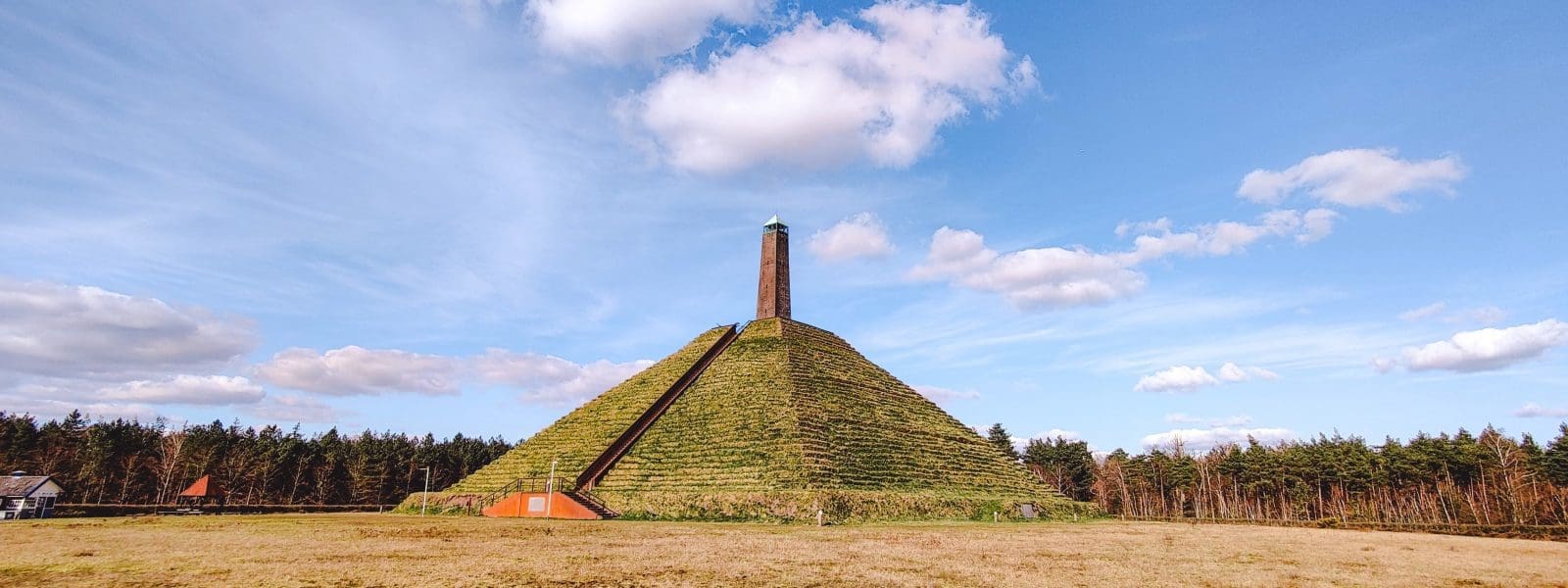
A pyramid in the Netherlands? You’ll find one on the Utrecht Hill Ridge: the Pyramid of Austerlitz, built in 1804. We’ve stood in front of the famous pyramids of Egypt and climbed Mayan pyramids in Mexico, Belize and Guatemala, yet the one pyramid in our own country had somehow escaped us. Time to fix that. It turns out to be a quirky monument in the province of Utrecht, with a backstory that’s just as unusual.
Where is the Pyramid of Austerlitz?
The pyramid sits on one of the highest points of the Utrecht Hill Ridge (Utrechtse Heuvelrug), in the woods near the village of Woudenberg. It’s roughly halfway between Utrecht and Amersfoort, so an easy half-hour drive from either city.
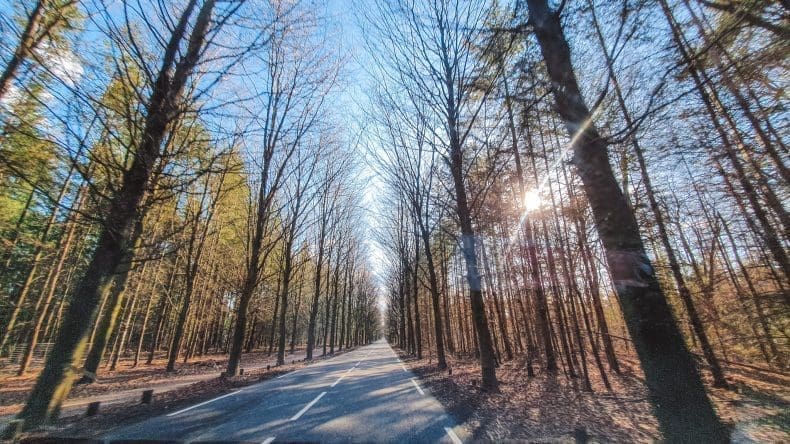
We stopped here during a scenic drive across the Utrecht Hill Ridge, a route through forest and heathland with plenty of other good stops along the way. The pyramid was one of our favourites, and it pairs nicely with a walk in the woods around it.
The history of the pyramid: a monument for Napoleon
The pyramid is a tribute to the French emperor Napoleon Bonaparte. Napoleon didn’t just rule France, he controlled a large part of Europe, including the Netherlands: in 1806 he made his brother Louis Napoleon the very first King of Holland. Two years earlier, French general Marmont and his troops had set up camp on the Utrecht Hill Ridge, and that’s where this story starts.
Marmont’s soldiers didn’t have much to do, because the English attack they were waiting for never came. So in 1804 the general came up with a project to fight the boredom: he had his men build a pyramid. His inspiration? The Egyptian pyramids he had seen during Napoleon’s campaign in Egypt.
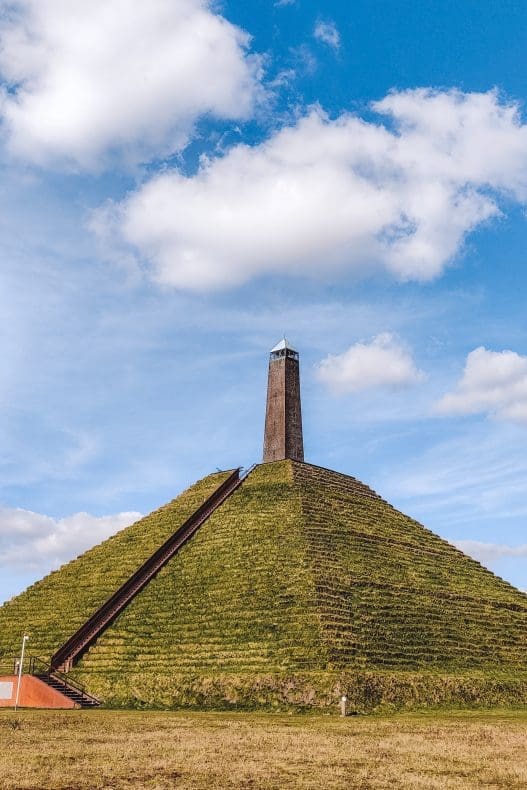
They didn’t hang about: the pyramid was finished in just 27 days. Marmont picked one of the highest spots on the ridge, which in his view was the exact centre of the Netherlands. The men built it from plain earth and turf, which gave it a stepped shape. A wooden obelisk went on top, another nod to Egypt, and a ditch about 90 metres across was dug all the way around.
At first it was called the Marmontberg (Marmont’s Hill). In 1806, though, the new king Louis Napoleon renamed it the Pyramid of Austerlitz, in honour of his brother’s victory at Austerlitz in what is now the Czech Republic.
Marmont put three soldiers in charge of guarding the monument, and wooden huts were built for them next to the pyramid. They were pulled down again in 1836. The wooden obelisk didn’t last long either and was removed as early as 1808; a stone obelisk replaced it later. Marmont eventually sold the pyramid and the land around it, and the monument is still privately owned today.
Visiting the Pyramid of Austerlitz
#1 Climb the pyramid
A staircase of 81 steps takes you to the top of the pyramid. From the car park it’s a 10 to 15-minute walk up the hill to the foot of the monument. Where the ditch used to be there’s now a hedge, and you’ll find the entrance on the right. There’s a small entrance fee for the climb; check the official website for up-to-date information.
#2 Playground and visitor centre
Local families mainly know this spot for the playground next to the car park, a handy reward for little legs after the climb. The visitor centre is here too, with more background on the pyramid and the French period in Dutch history.
#3 Walking around the pyramid
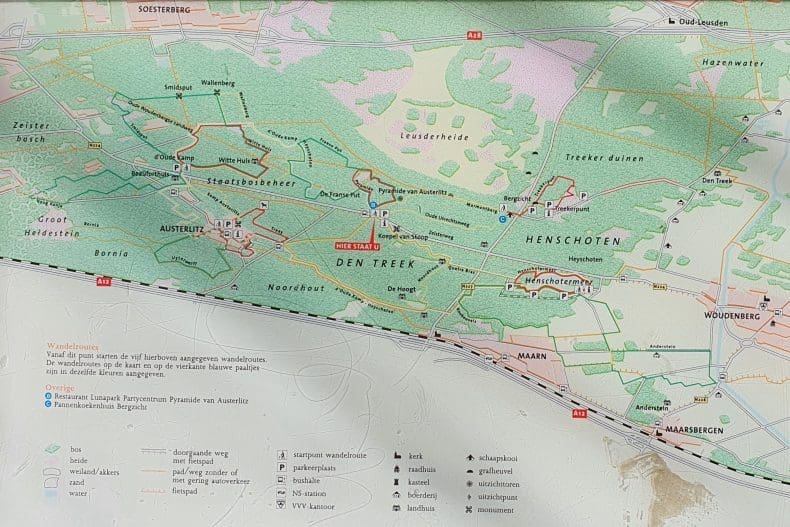
The pyramid itself is private property, but the forest around it is free to explore. Several walking routes start here, and you’ll find them all on the map at the car park: