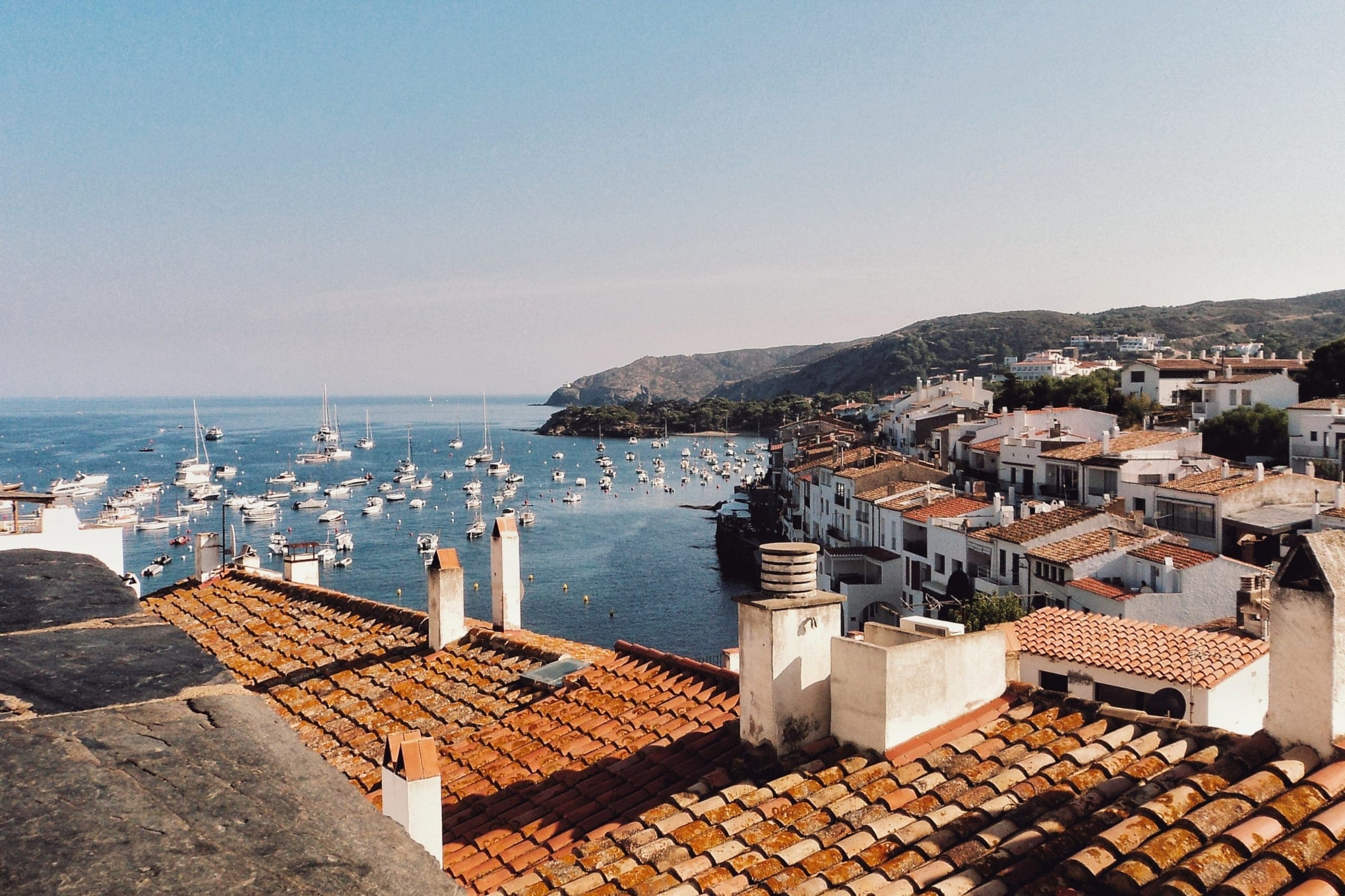
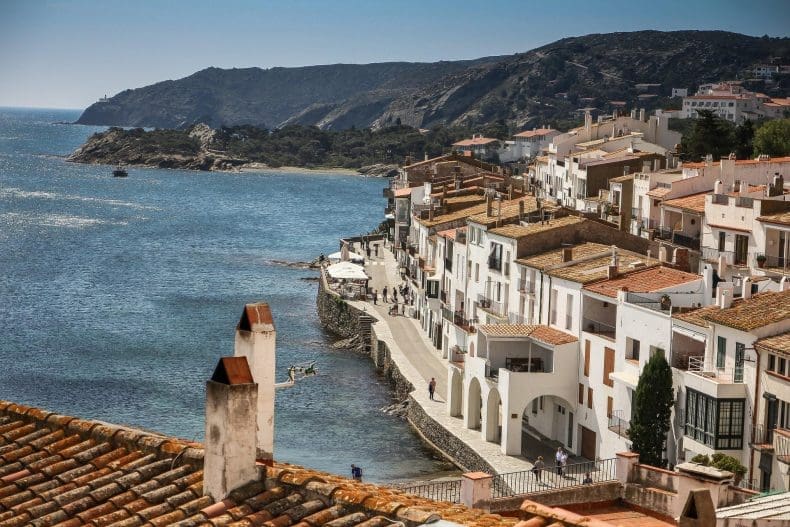
Over two hundred kilometres of rocky coves and sandy beaches, a Mediterranean climate and medieval villages tucked behind the coast: that’s the Costa Brava. This north-eastern corner of Spain is one of the most beautiful coastlines in Europe. You come for sun, sea and sand, but just as much for the culture, the remarkable gardens and the cliff-top walks.
As a child I often went camping here with my parents, and we spent most of our days on the Catalan beaches. Years later we came back ourselves, this time for the rugged coastline and the historic towns. In this guide you’ll find our pick of the most beautiful places on the Costa Brava, from a bucket-list museum to a coastal walk and the prettiest coves.
→ Discover all 15 Spanish costas
How do you get to the Costa Brava and how do you get around?
Driving to the Costa Brava
The Costa Brava lies in the north-east of Spain, in Catalonia. The coast runs from the French border at Portbou down to Blanes. The Pyrenees start at the border, and the coast is really one of their foothills. That’s why rugged cliffs and idyllic sandy beaches keep taking turns here.
Coming from elsewhere in Europe, a road trip to the Costa Brava is very doable. From our home in the Netherlands it’s around 13 hours’ drive, and on our camper trip we split the journey in two so we didn’t spend too long behind the wheel in one go.
Flying or taking the train to the Costa Brava
Short on time? Then flying makes sense. Most international flights land in Barcelona, which is well connected to the rest of Europe and usually has the most choice and the cheapest flights. Girona and Reus have airports too, but there are fewer routes.
Even better for the planet? Take the train. The TGV from Paris Gare de Lyon runs straight to Barcelona and stops at Figueres and Girona on the way, so you can step off right in the Costa Brava. You skip check-in and airport queues, there’s no fuss about luggage and you get to watch France roll past the window.
Pick up a rental car for the Costa Brava when you arrive so you can head straight out to explore. Public transport in Spain isn’t bad, but with your own wheels you get far more out of your time here and can easily hop between the many villages and coves the Costa Brava is famous for.
Hiking the Costa Brava: the Camí de Ronda
Walkers are in for a treat on the Camí de Ronda. These are old paths that hug the coast from cove to cove. Customs officers once used them to keep an eye on the shore and catch smugglers. Today they’re one of the best ways to discover the Costa Brava.
You can walk the entire coast: the Camí de Ronda from Blanes to Portbou is roughly 240 kilometres, split into multi-day stages with the coastal towns as natural overnight stops. For much of the way it follows the GR92, a long-distance trail that crosses all of Catalonia, so you’ll spot its red-and-white waymarks as you go.
Fancy something shorter? Walk a stretch between two villages, such as the 12 or so kilometres from Tossa de Mar to Lloret de Mar, or the 23 kilometres between Begur and Palamós, and catch the bus back.
Where to stay on the Costa Brava
On the Costa Brava you basically choose between a town or historic village, or a spot right by the sea. Three places we’re happy to recommend:
#1 Hotel Històric is right in the heart of Girona’s old town, a hundred metres from the cathedral. The rooms still have their 18th-century stone walls and wooden beams.
#2 Hotel Turissa in Tossa de Mar has an outdoor pool, and you’re a five-minute stroll from the beach and the medieval town walls.
#3 Hotel Aiguaclara is a family-run hotel in a 19th-century colonial mansion in the centre of Begur. Every room is decorated differently, and Begur’s beaches are just a few minutes’ drive away.
Travelling with a camper, caravan or tent? You’ll find plenty of seaside campsites along the Costa Brava. For camper spots, we use the Park4Night app ourselves, where you can filter by facilities and read reviews from other travellers.
Our Costa Brava tips on the map
The most beautiful places on the Costa Brava
#1 Girona
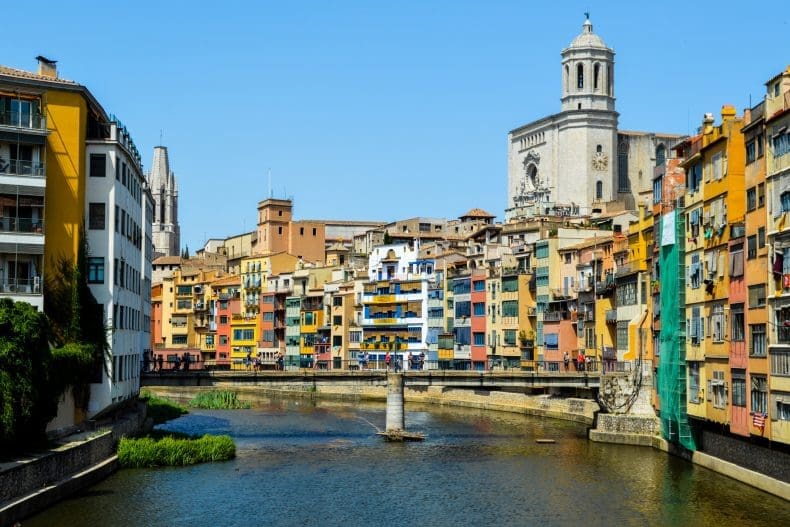
For us, historic Girona is the number one place to visit on the Costa Brava. The city is about a hundred kilometres north of Barcelona, and its classic postcard view is the Onyar river, lined with colourful houses that almost lean over the water. Walk across the bridges, because that’s where you get the best look at those façades. The red iron one, the Pont de les Peixateries Velles, was built by Gustave Eiffel’s company a few years before he put up the Eiffel Tower in Paris.
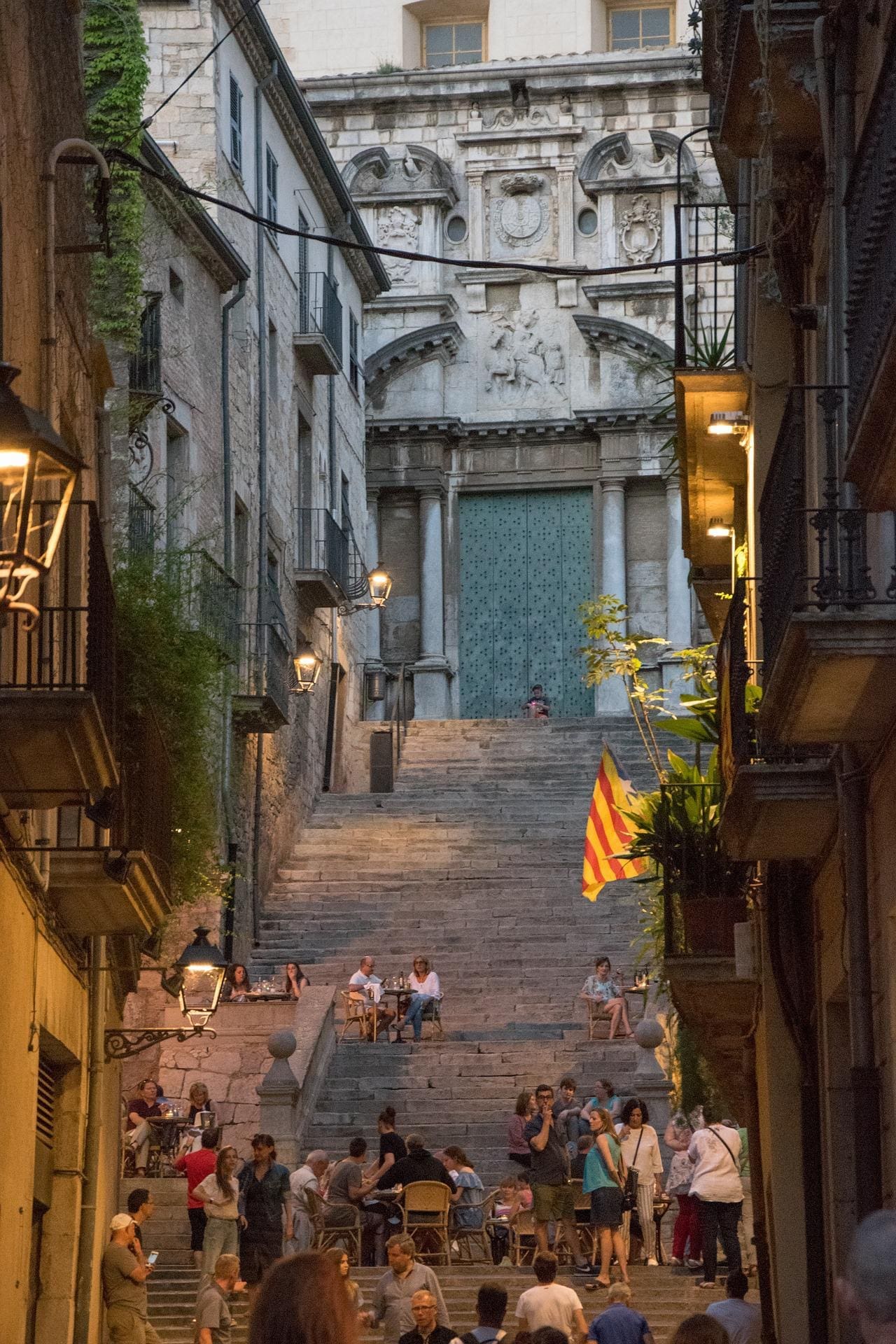
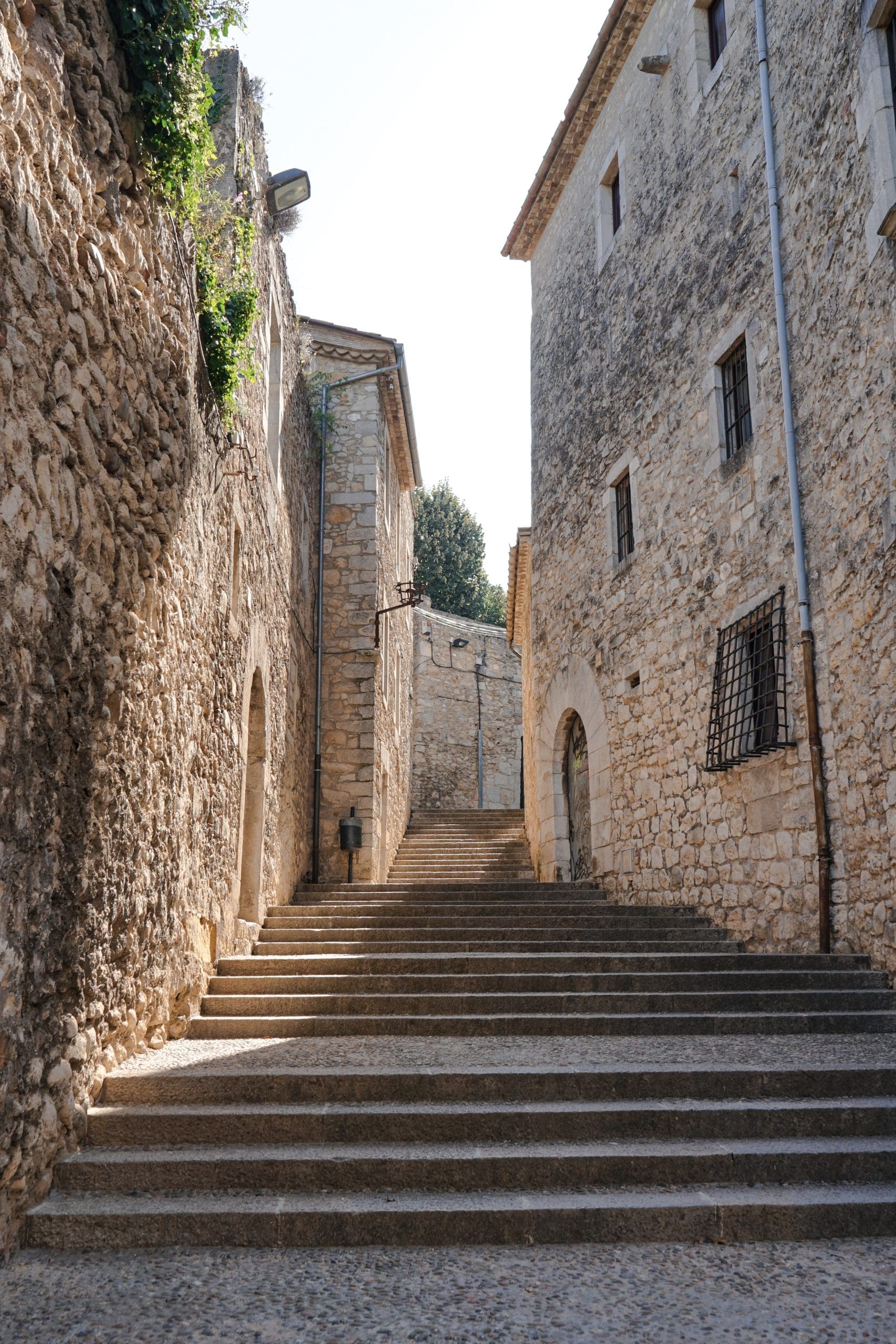
The old town sits on a hill and takes you straight back to the Middle Ages, with narrow lanes, stone staircases, cosy restaurants and lively little squares. Towering over it all is the cathedral, built on one of the highest points in the city. Don’t miss the old city walls either: the Passeig de la Muralla runs along the top, with views across the rooftops.
Game of Thrones fans will recognise plenty here. In 2015, scenes for season six were filmed in Girona. The cathedral’s grand staircase became the Great Sept of Baelor in King’s Landing, and the alleys of the old town stood in for Braavos and Oldtown. Just like in Seville and Córdoba, you can wander straight through the sets. Real fans can book a Game of Thrones tour of Girona.
#2 Historic villages on the Costa Brava
Besides resorts like Blanes and Lloret de Mar, the Costa Brava is dotted with villages and towns with medieval centres. Our favourites are Pals, Tossa de Mar and Begur.
Pals lies a little inland, not far from the beach of Platja de Pals. Its centre is a maze of cobbled lanes and centuries-old houses, and wandering is the best way to explore it. If you love ceramics, you won’t leave empty-handed.
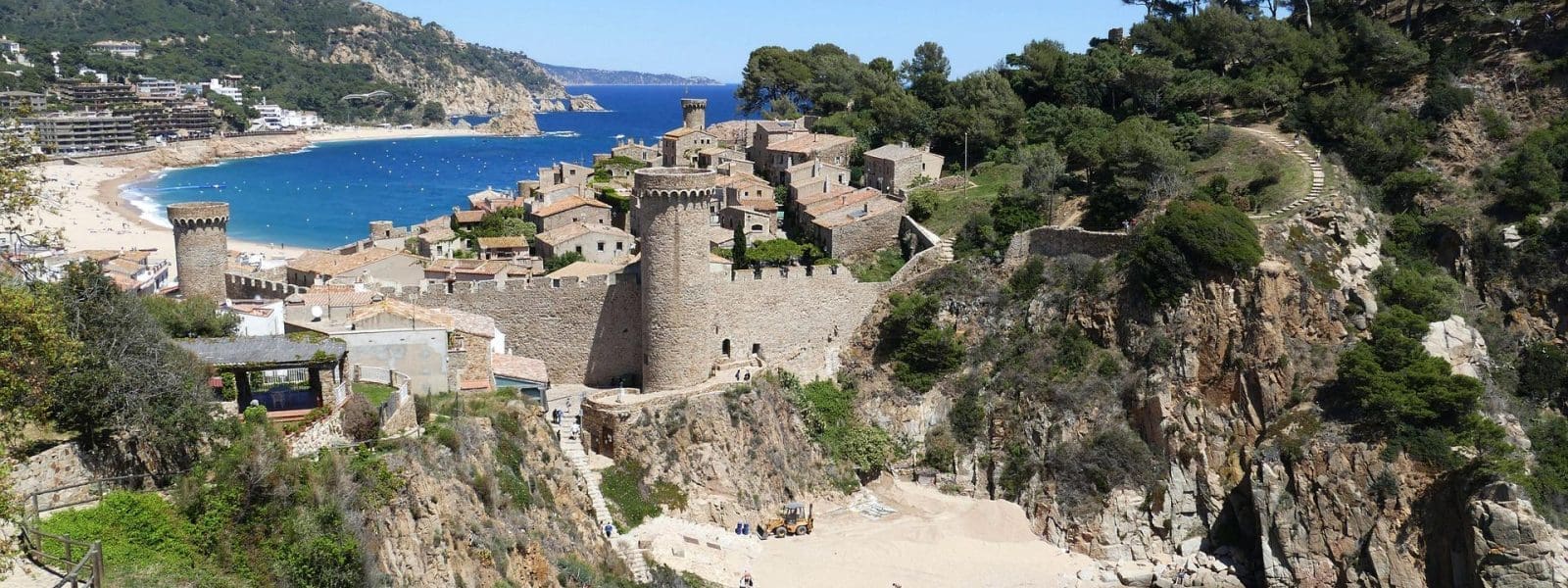
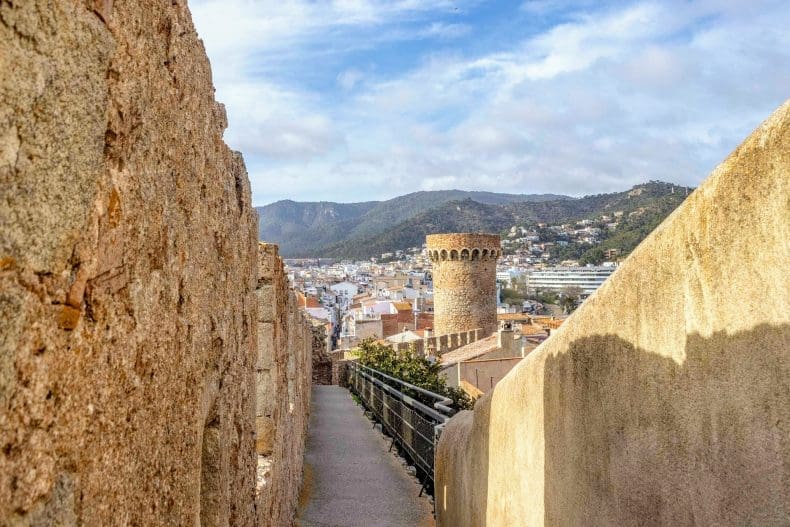
Tossa de Mar is Lloret de Mar’s little sister and one of the prettiest villages on the coast. Above the beach rise the 14th-century walls of the Vila Vella, built to keep pirates out, and several of the towers are still standing. From the top you look out over the sea and the village.
Begur is another highlight. Some of the region’s best beaches are close by, but the village itself is just as much fun. Instead of little stone cottages, you’ll find grand colonial houses with plastered walls: the Casas de Indianos, built by locals who made their fortune in Cuba. Climb up to the castle ruins above the village. There isn’t much left of the castle, but the view stretches all the way to the Medes Islands offshore.

#3 The best beaches on the Costa Brava
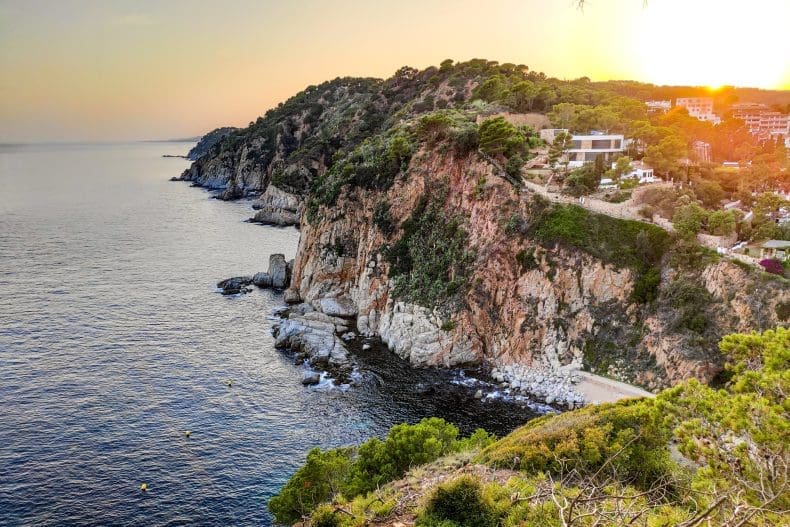
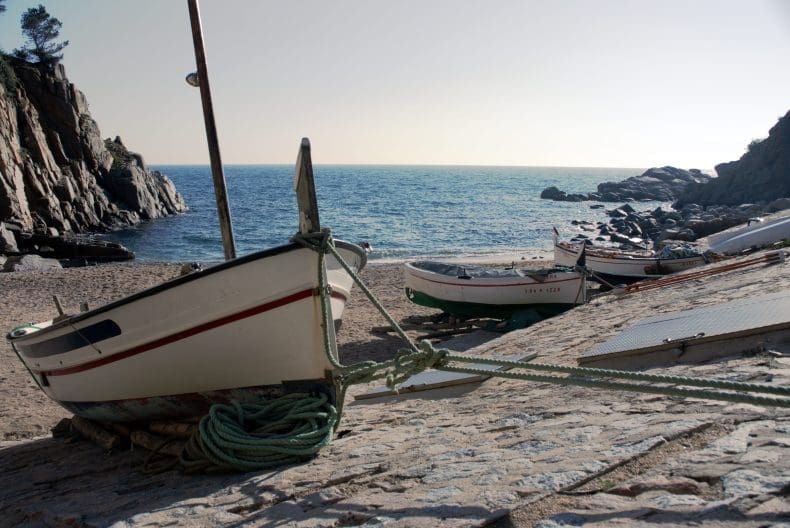
The Costa Brava, literally the wild coast, gets its name from the jagged rocks that run right into the sea. Tucked between them are idyllic coves and long sandy beaches, and not just near the well-known resorts.
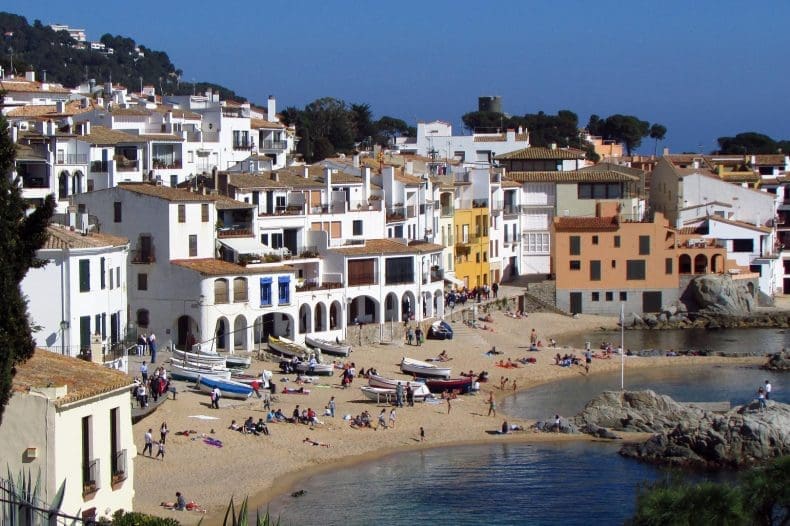
Our tips are Cala s’Alguer near Palamós, with its colourful fishermen’s huts, Cala Pola near Tossa de Mar and Platja de Sant Francesc near Blanes. Platja del Castell, not far from Palamós, is special too: one of the few undeveloped beaches left on this coast.
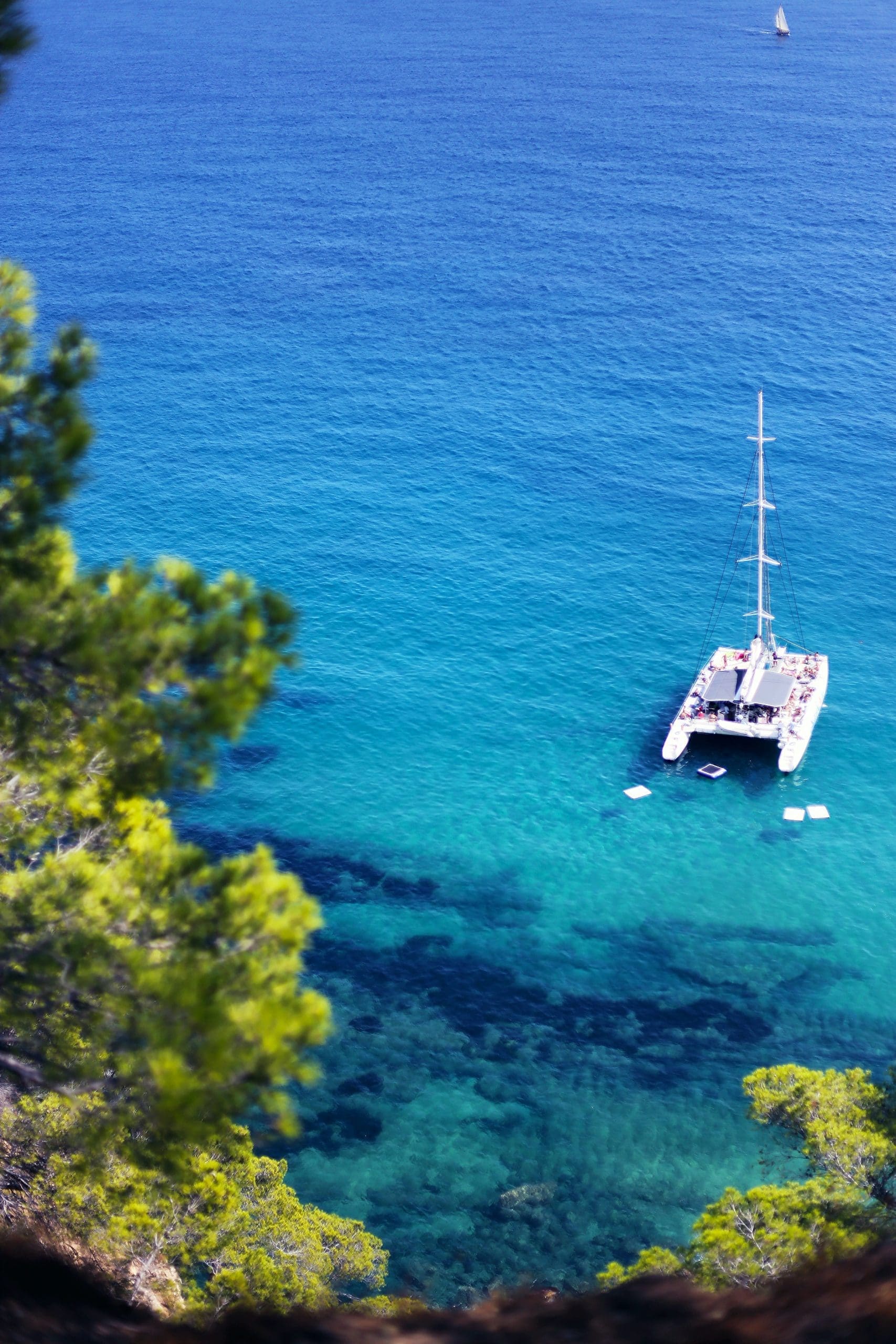
Around Begur you’ll find the most idyllic coves on the Costa Brava, as it’s quieter here than further south. Sa Tuna is a small beach framed by white houses, rocks and pine trees. A little further on lies Aiguablava, Catalan for blue water, and it lives up to the name.


#4 The botanical gardens of Blanes
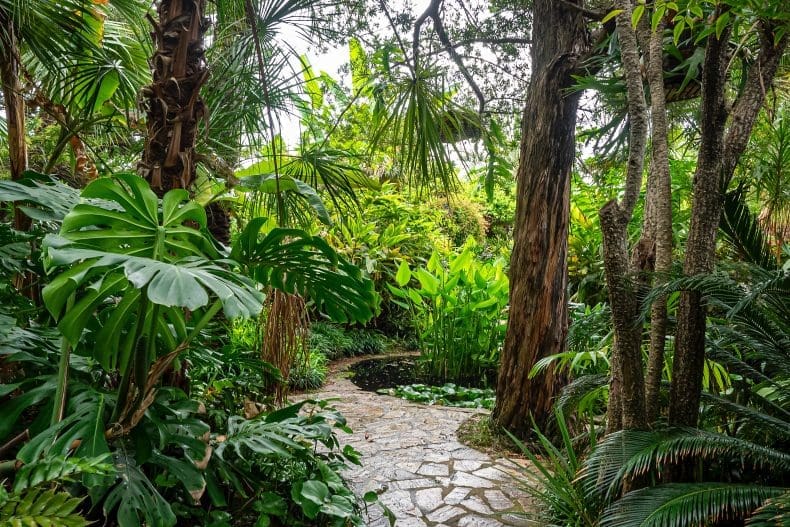
Most people know Blanes as a beach resort, but it also has an old centre and some remarkable botanical gardens. On the southernmost tip of the Costa Brava lies the best known of them: Marimurtra.
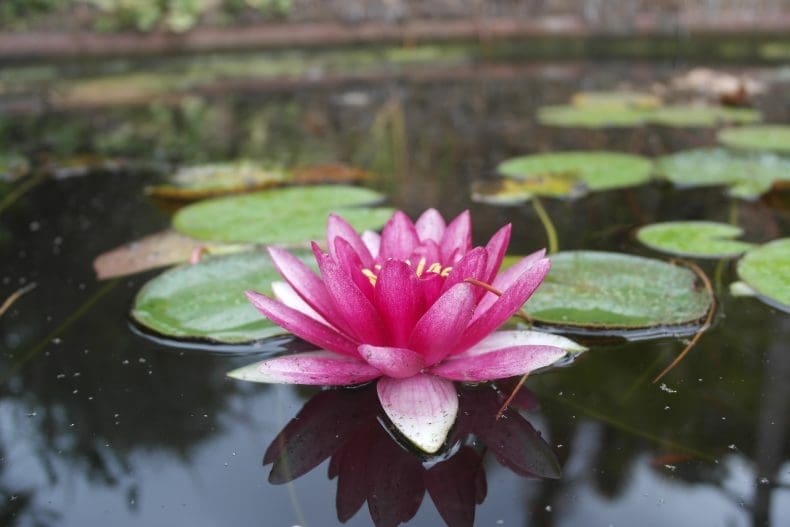
The Marimurtra botanical garden sits on the cliffs at the edge of Blanes. Plant lover Carl Faust created it around a hundred years ago, with thousands of species across five hectares and sweeping views over the jagged coast. Be sure to walk to the Templet de Linné, a little temple above the sea named after the Swedish botanist Linnaeus. The gardens are listed as cultural heritage by the Catalan government.
Right next to the garden is one of the loveliest coves on the Costa Brava, Platja de Sant Francesc, so a visit to Marimurtra pairs perfectly with an afternoon on the beach.
Still not had your fill of gardens? Head to Lloret de Mar for the Santa Clotilde Gardens, also perched on a hill above the sea. About a century ago, a classical landscape garden with fountains, stairways and avenues was laid out here on the site of an old vineyard. It’s a romantic place for a walk, with the deep blue sea as a backdrop.
#5 The Dalí Theatre-Museum in Figueres
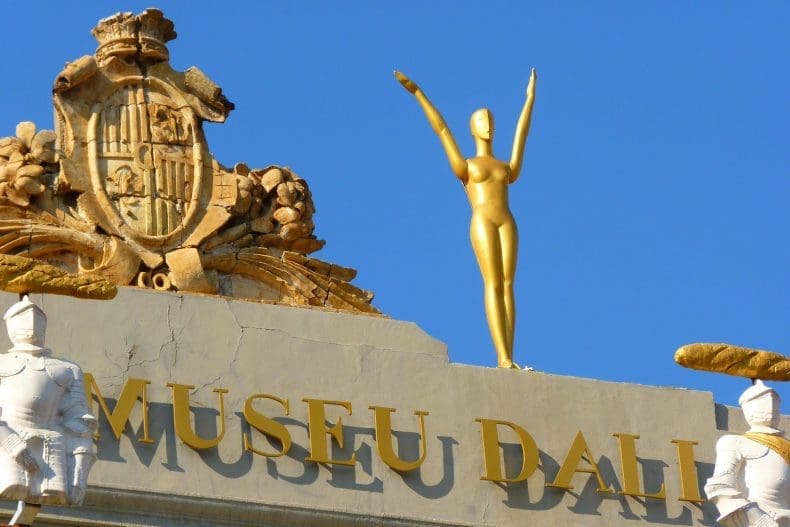
Very few artists have a museum they designed themselves, and Salvador Dalí is one of them. The master of surrealism was born in Figueres, and that’s where you’ll find the Dalí Theatre-Museum, home to a huge collection of his work.
The museum is housed in the town’s old theatre, where a fourteen-year-old Dalí first exhibited his work. After the building was destroyed in the Spanish Civil War, he rebuilt it together with the town in the sixties and seventies. That makes it one of the few museums dedicated to an artist during his own lifetime. Dalí created pieces especially for it and was buried there after his death, in a crypt beneath the old stage.
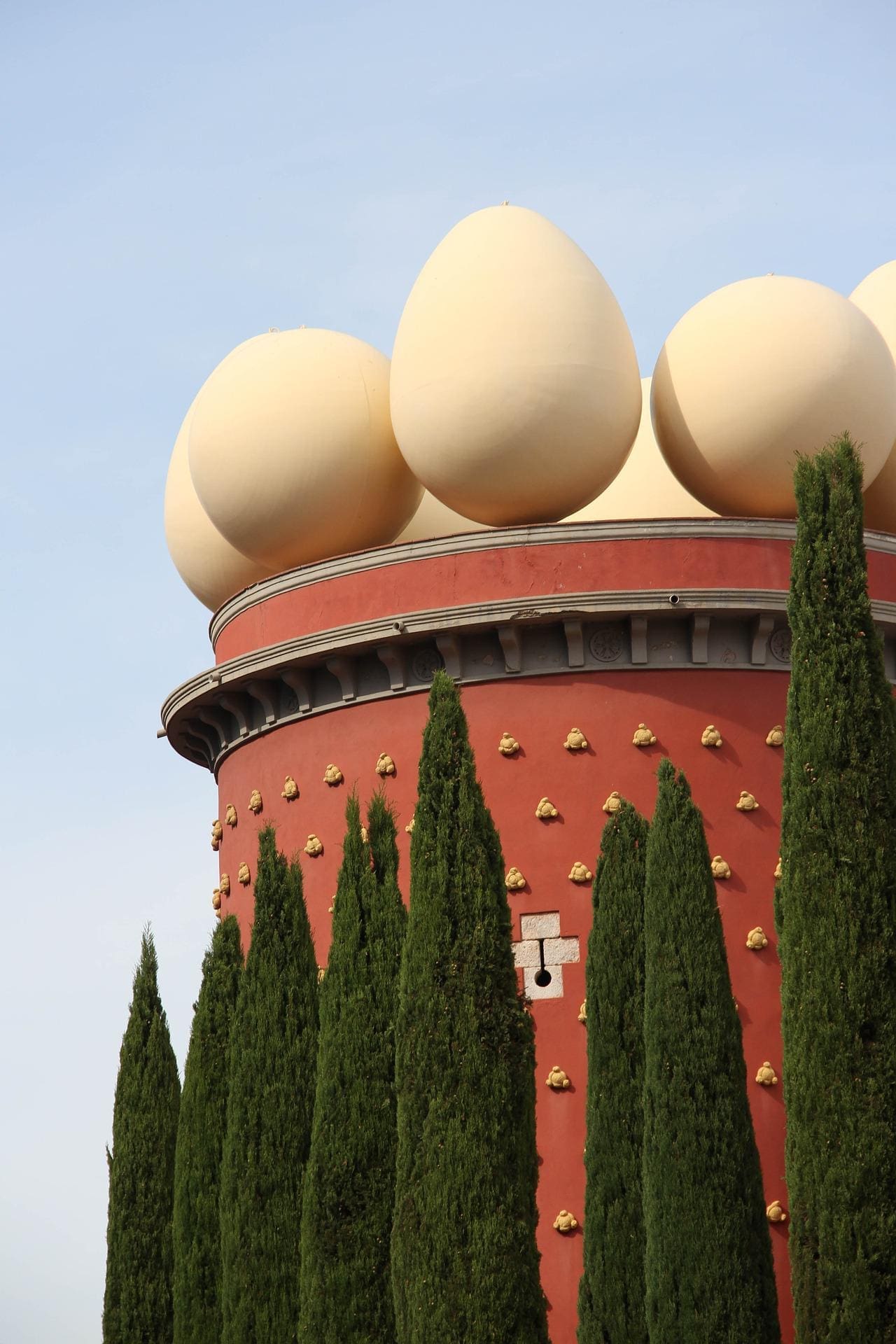
The building is a surreal artwork in itself. Dalí was given free rein, and it shows: a glass dome, red walls studded with golden bread rolls and giant eggs on the roof. A visit to the Dalí museum in Figueres is easily one of the most unusual things to do on the Costa Brava!
Outside July and August the museum is closed on Mondays, and it can get busy in high season, so it’s best to book tickets ahead. Want to see more of Dalí? Then complete the Dalí Triangle: besides the museum in Figueres, visit the castle in Púbol that he bought for his wife Gala and his home in Portlligat near Cadaqués. For the house, you do need to book a time slot in advance.

Enjoy our travel tips? Add The Orange Backpack as a preferred source on Google and you'll see us more often in your search results.
More tips for your trip to the Costa Brava
 Our pickHotels on the Costa Brava: from a medieval town to a spot right by the beach
 Road-tripping the Costa Brava? Rent a car at Barcelona airport with Discover Cars and compare the big rental companies in one go.
 Fancy doing it by camper, like we did? Rent a campervan with Campervan Planet, with pick-up points all over Spain.
 No flight yet? Compare flights to Barcelona, in our experience the cheapest way to get to the Costa Brava.
 Game of Thrones fan? Walk past the Game of Thrones filming locations in Girona on a guided tour with GetYourGuide.
 Discover all our blogs about Spain