If there’s one destination that belongs on your bucket list, it’s Namibia. One moment you’re face to face with an elephant in Etosha, a few days later you’re wandering through an abandoned diamond town slowly disappearing under the sand. The best activities in Namibia are all about nature, adventure and people: a safari among giraffes and lions, sandboarding down the dunes near Swakopmund or kayaking with seals in Walvis Bay.
We travelled through the country in January in a 4×4 with a rooftop tent and did as much as we could ourselves. We drove ourselves through Etosha, went quad biking and sandboarding in the dunes, and paddled a rented canoe on the Orange River. In this guide you’ll find the 15 best things to do in Namibia, from a hot-air balloon flight over the desert to a bushwalk with the San, with practical tips for each one.
→ Discover the 20 best places to visit in Namibia
→ Discover 29 unique places to stay in Namibia
Best activities in Namibia: 15 bucket-list experiences
#1 Safari in Etosha National Park: self-drive or with a guide
Etosha National Park is without a doubt one of the highlights of Namibia. The park is built around a vast white salt pan ringed by dozens of waterholes, where zebras, giraffes, elephants and, with a bit of luck, lions or rhinos come to drink. Especially in the dry months, the animals gather there in huge numbers.
We did a four-day self-drive safari in Etosha, and it was fantastic. You drive at your own pace, decide how long to linger at each waterhole and simply soak it all in. Because it was January, there were baby elephants, giraffes and antelopes everywhere. The roads are fine in a normal rental car, and in the camps you can get out for a break or lunch.
That said, a guide will spot more than you. Local guides read tracks, hear alarm calls and know exactly where to look. We saw that ourselves: one morning two safari vehicles pulled up next to us, and the guides waved at us to keep driving. A little further on stood a group of elephants. If you only have a day or two in Etosha, a guided game drive gets more out of your time.
Tours with transport and an experienced guide are easy to book ahead. Check out the Etosha National Park safaris here.
Our tip: book your rental car through Discover Cars. It compares all the big rental companies in one go, so you can easily find the best deal.

#2 Hot-air balloon flight over the Namib Desert at Sossusvlei
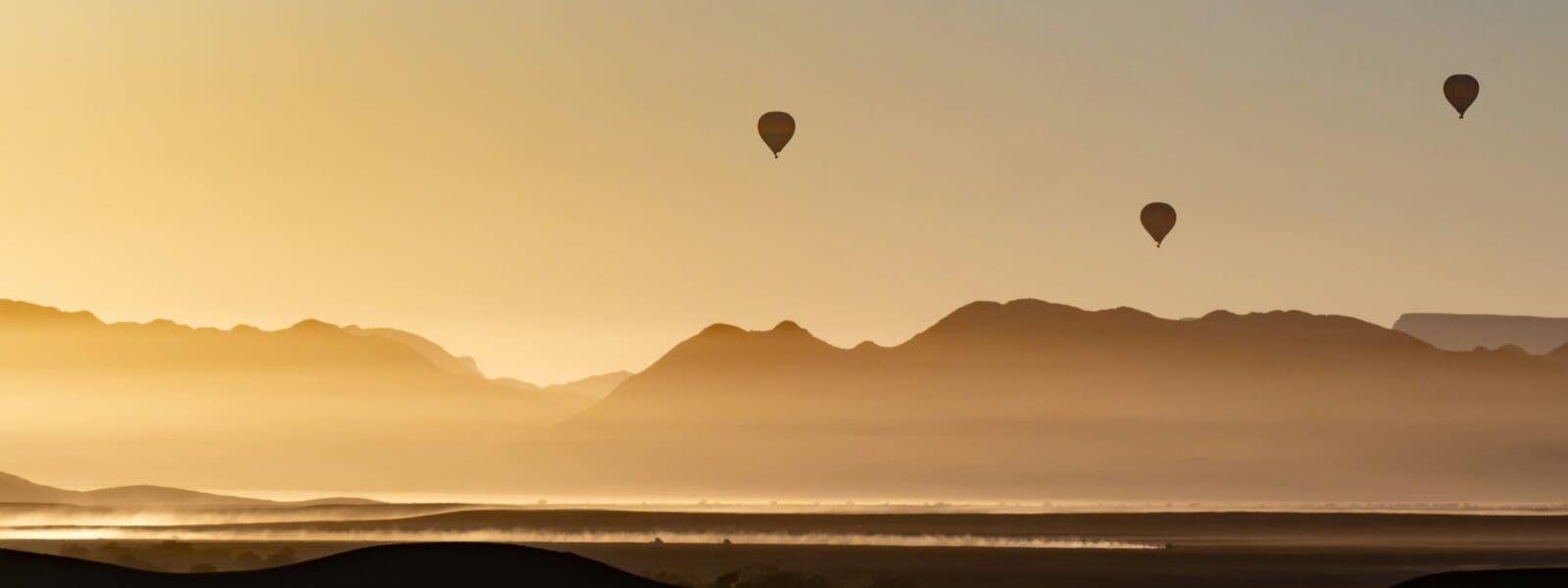
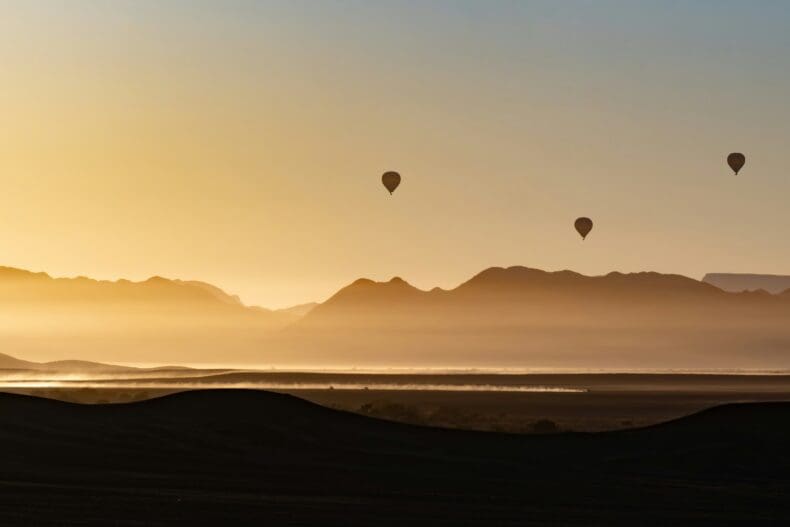
A balloon flight over the Namib Desert shows you the landscape around Sossusvlei from a whole new angle. The day starts in the dark, because the balloon lifts off around sunrise. As the sky slowly brightens, you drift over red and orange dunes that roll on to the horizon. From up there you can make out the dune ridges, dry riverbeds and white clay pans like Deadvlei glowing in the morning light.
The flight itself lasts about an hour. After landing, a lavish breakfast awaits in the desert, complete with a glass of bubbly. Flights are run by Namib Sky Balloon Safaris, and many lodges in the area can book them for you. Allow three to four hours for the whole morning.
#3 Multi-day hike through the Fish River Canyon
The Fish River Canyon in southern Namibia is one of the largest canyons in the world. We gazed into it from the viewpoints near Hobas, and even from the rim it’s overwhelming. Hikers can also head down: the classic trail follows the riverbed for about 85 kilometres from Hobas to Ai-Ais, past towering rock walls and with no facilities along the way. You carry your own food, water and gear and sleep in the canyon.
The hike takes four to five days and is only allowed in the cooler months, roughly from May to mid-September. In summer the canyon is far too hot, which is why the trail was closed when we were there in January. You book through Namibia Wildlife Resorts (NWR), with a group of at least three, and everyone needs a recent medical certificate. The minimum age is twelve.

#4 Sandboarding near Swakopmund
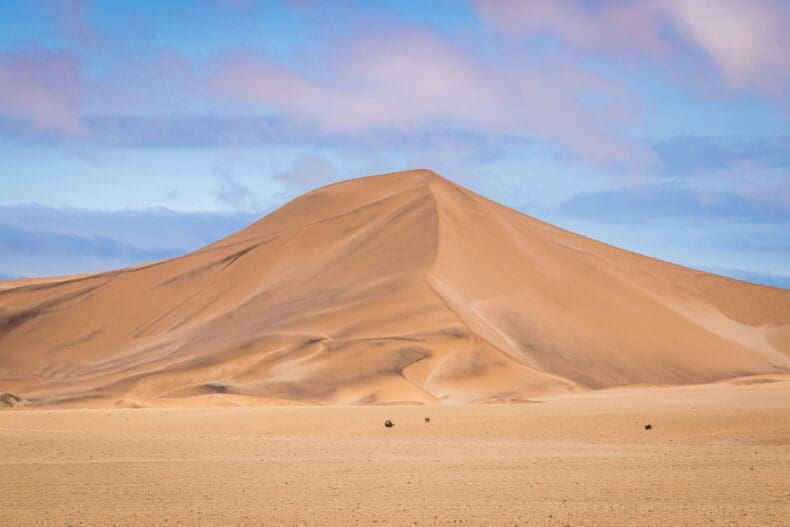
Sandboarding near Swakopmund is one of the most fun active things to do on the Namibian coast. You slide down the steep dune faces on a board. It feels a bit like snowboarding without the snow, and anyone can give it a go, even if you’ve never stood on a board. Fair warning though: we found it a lot more tiring than we expected!
You first drive out to the dunes between Swakopmund and Walvis Bay, where you get a quick lesson in how to stand, steer and stop. Then you trudge up the dune with your board and slide down from the top. Our guides made it look a lot more graceful than we managed! From the top you look out over the dunes and the ocean. Sandboarding is easy to combine with quad biking or a 4×4 drive through the dunes.
Not keen on slogging back up every time? On this sandboarding tour a shuttle takes you back to the top after every run, which saves a lot of energy. Or combine sandboarding with a 4×4 tour to Sandwich Harbour.
#5 Visit a Himba village
A visit to the Himba is one of the most special cultural experiences in Namibia. The Himba live mainly in the remote north-west, in the Kunene region, also known as Kaokoland. They’re known for their red-brown skin and hair: they cover themselves in a mix of butterfat and red ochre, which protects them from the fierce sun and insects.
On a visit you see how the Himba live, how they build their huts and prepare food, and you hear more about their traditions and clothing. Always go with a local guide who speaks the language, and choose a tour where the community itself benefits. That keeps it a genuine encounter rather than a show for tourists.
For an organised visit, check out this Himba village tour.

#6 Camping under the stars at Spitzkoppe
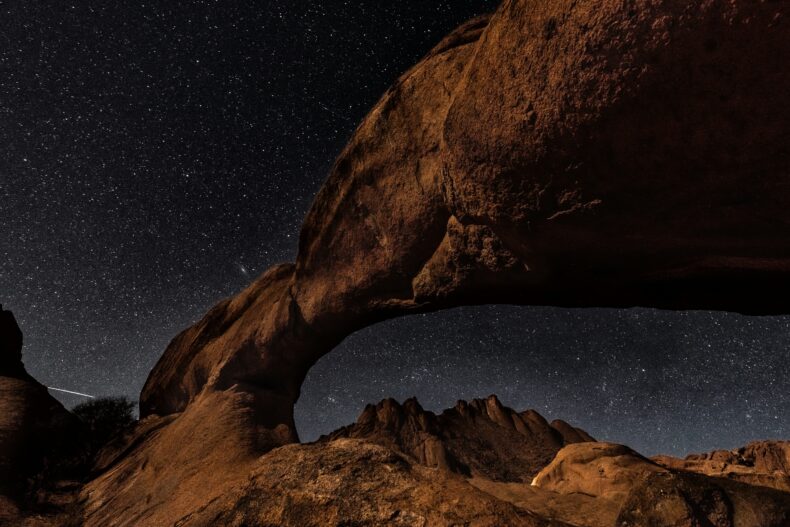
Spitzkoppe is a cluster of granite peaks rising out of the plains, often called the Matterhorn of Namibia. The huge rock pillars and rounded boulders stand out against the horizon and turn deep red at sunset. Sadly we never made it there ourselves, and we still regret it.
The best way to experience Spitzkoppe is to camp there. At night it’s completely silent and the sky is so clear you can see thousands of stars. By day you can walk to rock paintings, natural stone arches and viewpoints, and the rocks look their best in the early morning light.
The pitches at Spitzkoppe Rest Camp are scattered between the rocks. There’s no water or power at the pitches themselves, but you’ll find hot showers and toilets at reception. You can book ahead, which is a good idea in high season. You sleep in a tent or a rooftop tent, and most travellers rent a 4×4 with camping gear for that. Namibia Nomads rents out fully equipped 4x4s with rooftop tents and also helps you plan your route.
Rather have it all arranged? There are organised camping trips with transport, gear and a guide included. Check out the two-day camping trip to Spitzkoppe.
#7 Kayaking with seals in Walvis Bay
Kayaking among the seals in the Walvis Bay lagoon is something you won’t forget in a hurry. With a guide you drive by 4×4 to the narrow Pelican Point peninsula, home to a huge colony of Cape fur seals. As soon as you paddle out, the curious animals come right up to your kayak. They’re not lured in and decide for themselves how close they come. The water is usually calm in the morning, and with flamingos, pelicans and salt pans all around, the picture is complete. No kayaking experience needed.
Fancy paddling with the seals? Check out the Walvis Bay kayak tour here.
#8 Skydiving over Swakopmund
Love a good dose of adrenaline? Then skydiving over Swakopmund is a spectacular choice. You jump above the spot where the Namib Desert meets the Atlantic Ocean. It’s a tandem jump, so you’re strapped to an experienced instructor and don’t need any experience yourself. During free fall, sea, dunes and desert rush past below you, and once the parachute opens you float gently down with that view at your feet.
Want to jump from Swakopmund? Check out the tandem skydive over Swakopmund.
#9 Canoeing or rafting on the Orange River
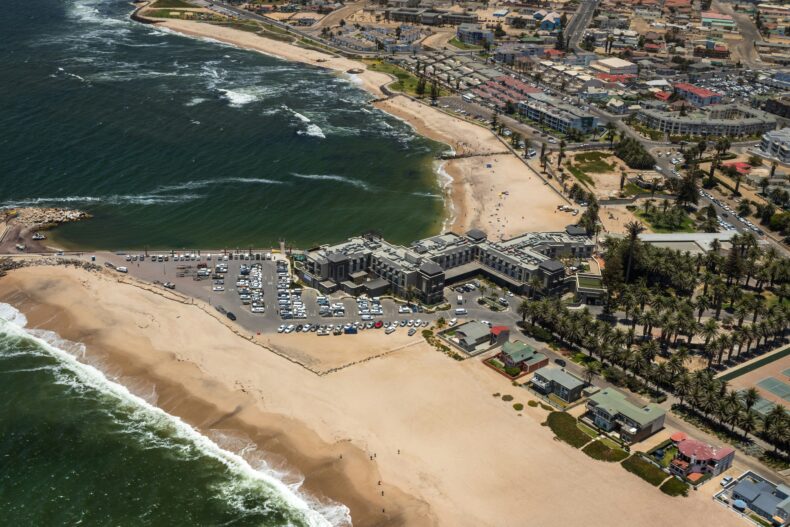
The Orange River forms the border with South Africa and winds through the very south of Namibia. After days in the dry desert, it’s a welcome change: green banks, rugged mountains all around and birds everywhere along the water. We stayed at Felix Unite in Noordoewer and rented a canoe there to paddle a stretch of the river. The water is usually calm, so beginners can easily join in.
Want more time on the water? Book a multi-day canoe or rafting trip of two to five days, camping on the riverbanks along the way. These are run by outfitters such as Felix Unite, Amanzi Trails and Bundi. Or simply rent a boat on the spot, like we did.

#10 Guided tour of the Kolmanskop ghost town
Kolmanskop was one of the big highlights of our trip. This abandoned diamond town near Lüderitz boomed in the early 20th century after diamonds were found here in 1908. When bigger finds were made elsewhere, the residents moved away, and ever since the desert has been slowly reclaiming the town. Sand pours in through doors and windows and fills the houses, the ballroom and the old hospital.
Kolmanskop lies inside the restricted diamond area, so you need a permit. Your entry ticket doubles as your permit; you can buy it online, at the gate or at Desert Deli in Lüderitz. You can join a guided tour of 45 minutes to an hour in English or German, and we definitely recommend it. Photographers can get a special permit that also lets you in around sunrise and sunset.

#11 Bushwalk with the San near Windhoek
A walk with the San feels like a short masterclass in surviving in the wild. The San have lived in southern Africa for tens of thousands of years and know everything about tracks, edible plants, natural medicine and animal behaviour.
With a San guide you walk through the bush, follow old paths and hear stories passed down for generations. You see how they find water, how they make tools from stone and how they use the stars to find their way. The walks usually take half a day, in small groups and at an easy pace, with plenty of time to try reading tracks yourself.
Want to plan a walk with the San? Check out the San bushwalk from Windhoek.
#12 Quad biking near Swakopmund
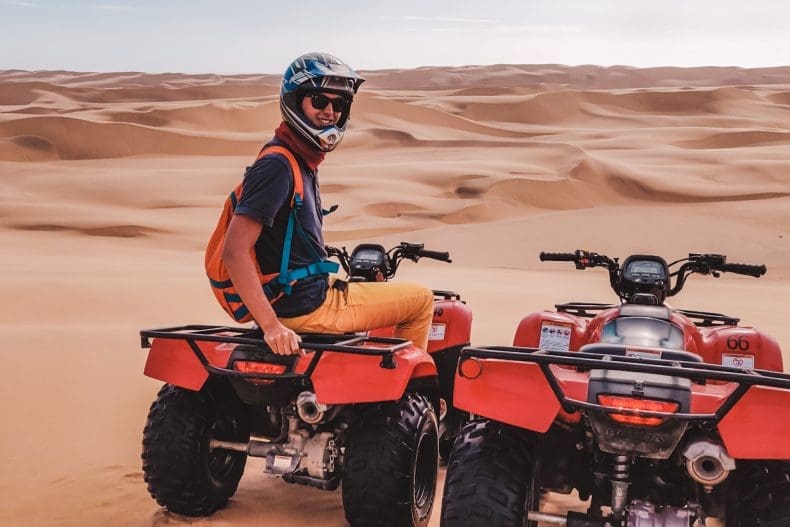
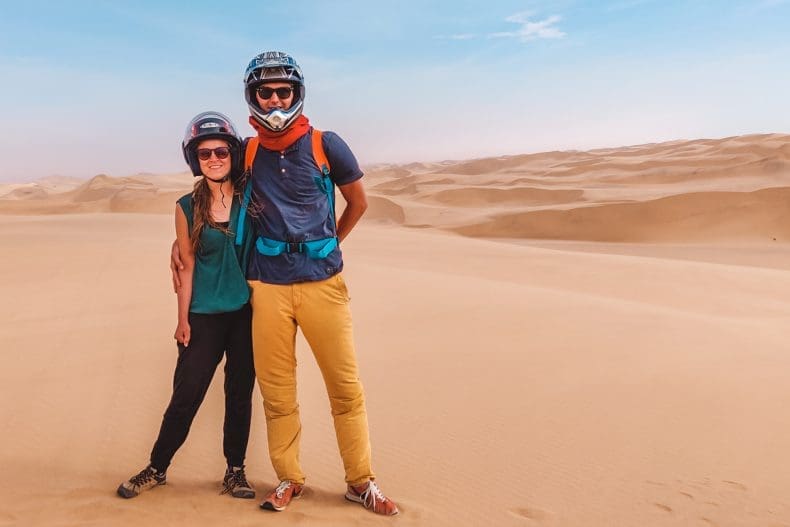
Quad biking is a gloriously rugged way to explore the dunes around Swakopmund and Walvis Bay. After a briefing on the quads and the safety rules, you ride along sandy tracks and through rolling dune fields, past sand hills, dry riverbeds and open plains. I found it pretty nerve-racking, but then I’m no daredevil behind the wheel. We followed a guide the whole way, who showed us exactly how to tackle each slope safely while keeping up a decent pace.
Many tours combine quad biking with other desert activities, like sandboarding or spotting flamingos at the Walvis Bay salt pans. You pick it up quickly, as long as you follow the instructions and take the steeper dunes carefully.
Quad biking around Swakopmund? Check out the dune quad tour here.
→ Discover the 12 best things to do in Swakopmund
#13 Catamaran cruise from Walvis Bay
A catamaran cruise from Walvis Bay is a relaxed half day on the water, with views of dunes, sea and wildlife. From the harbour you sail along the coast and the lagoon, passing groups of fur seals, pelicans and often dolphins too. In the right months, flamingos turn the shallows pink. The lagoon is sheltered, so the water is usually calm and it’s a great trip with kids as well. Some tours combine the cruise with a drive to Sandwich Harbour, where the dunes plunge straight into the ocean.
Want to head out on the lagoon? Check out the Walvis Bay catamaran cruise.
#14 Katutura township tour in Windhoek
Windhoek is a quiet capital, but in neighbourhoods like Katutura you can feel the country’s recent history. The name comes from Otjiherero and refers to the forced removal of Windhoek’s black residents to this area in 1959, under apartheid. Today Katutura is a lively district full of markets, music and small businesses.
With a local guide you walk the streets and the market, see fresh produce and handmade crafts, and meet people who are proud of their neighbourhood. You hear how the community organises itself and what residents dream of. It gives you a different picture of Namibia than lodges and national parks alone.
Want to get to know this side of Windhoek? Check out the Windhoek city and township tour.
#15 Sunrise on a dune at Sossusvlei
Our best morning in Namibia started in pitch darkness. Because we were camping in Sesriem, we were allowed into the park before sunrise. Lots of people head to Dune 45, but we drove straight through to the Deadvlei car park and climbed a dune there. Even in the dark you’ll be sweating buckets, and a litre of water disappears in no time.
As the sun came up, the dunes around us turned from dark red to bright orange. Then we walked down to Deadvlei: a white clay pan dotted with blackened, centuries-old dead trees, surrounded by some of the highest dunes in the world. It was just the two of us, without another tourist in sight.
For this experience, sleep inside the park or right by the gate in Sesriem so you get there in time. Take plenty of water and head back before the midday heat becomes unbearable.
→ Discover our 25 practical tips for Sossusvlei

Enjoy our travel tips? Add The Orange Backpack as a preferred source on Google and you'll see us more often in your search results.
Plan your trip to Namibia
Everything you need to book your trip, in one place. From desert lodges to a 4x4 with a rooftop tent.
 Our pickLodges and hotels in Namibia: from a desert lodge near Sossusvlei to a safari camp right outside Etosha. Pick your spot or browse all of Namibia on Booking.com
 Namibia is made for a self-drive trip. Staying in lodges? Compare rental cars with Discover Cars. Rather camp? Book a road trip with a 4x4 and rooftop tent from Namibia Nomads, route and campsites sorted.
 Dunes that tumble straight into the ocean? Book the Walvis Bay boat trip with a 4x4 ride to Sandwich Harbour with GetYourGuide.
 Prefer everything arranged? Browse Namibia tours on TourRadar.
 No flight yet? Compare flights to Windhoek.
 Discover all our blogs about Namibia


