
Namibia might be the most varied country in all of Southern Africa. One moment you’re driving through vast, towering sand dunes, and the next you’re following winding roads through lush river valleys. You’ll pass endless open plains, dramatic mountain ranges, and a powerful, restless ocean. Along the way, expect to see wild animals, remote villages, strange and fascinating plants, and landscapes that feel like they belong on another planet. Whether it’s your first time visiting or you’ve been before, Namibia’s sights will keep surprising you.
In this blog, we’ve listed the most stunning places to visit in Namibia. You’ll find famous highlights like Sossusvlei and Etosha National Park, along with lesser-known treasures such as the Brukkaros volcano and the Caprivi Strip. This guide is ideal if you’re planning a route or looking to fine-tune your itinerary. It brings together everything you’ll want to see, do, and experience in one place. Let our stories and tips inspire you, and discover why Namibia is a destination you’ll never forget.
Start planning your adventure through Namibia with these helpful guides:
- The perfect Namibia itinerary for a self-drive road trip
- 12 Ways Namibia Took Us by Surprise
- Renting a Car in Namibia: Self-Drive, Road Conditions and Tips
- Don’t Miss These Natural Wonders of Namibia
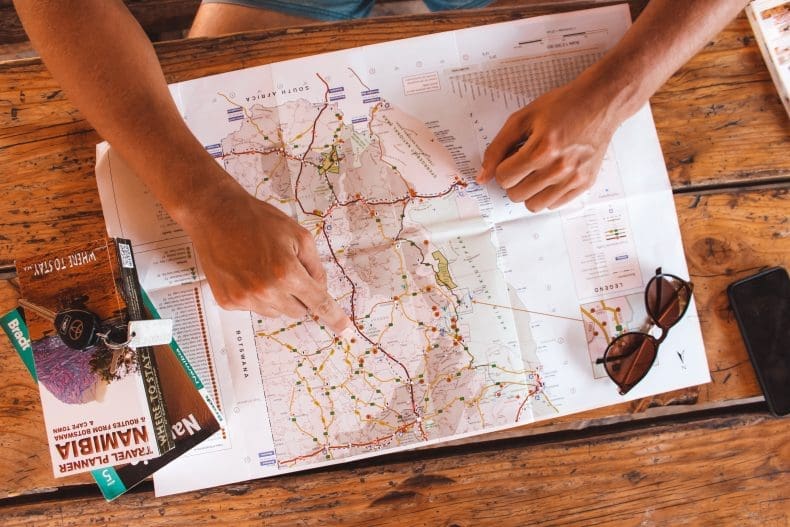
Tourist Map of Namibia
[googlemaps https://www.google.com/maps/d/u/1/embed?mid=1HfQcdmP9GB3Z1vLmPYLEpr_TZFliQCqu&ehbc=2E312F&w=790&h=480]The 20 Most Beautiful Places to Visit in Namibia
#1 Sossusvlei & Deadvlei
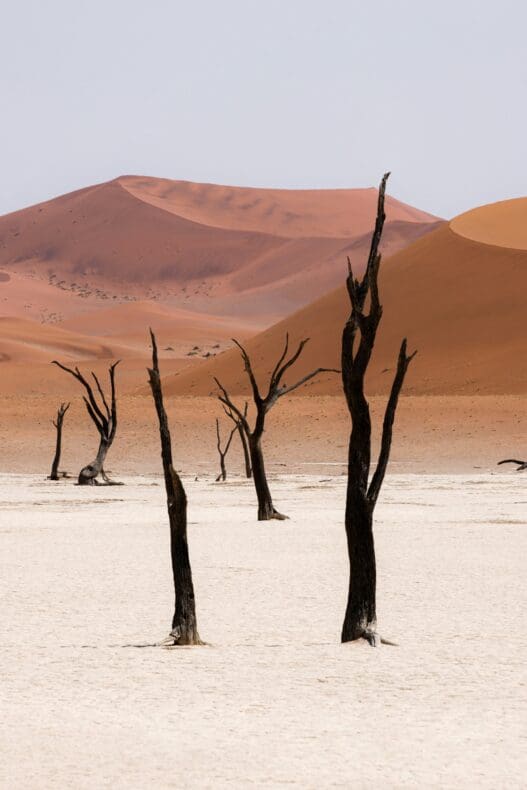
Sossusvlei is one of Namibia’s most iconic sights—the place that appears in almost every postcard and travel photo. Picture endless red sand dunes, bright white clay pans, and the dark, twisted skeletons of ancient trees standing eerily still. One of the most unforgettable spots is Deadvlei, located just beyond the famous Dune 45. The trees here have been dead for centuries, yet they remain upright thanks to the dry desert climate. The contrast between the glowing orange dunes, the blackened trees, and the pale, cracked ground makes this one of the most photogenic places in all of Africa.
If you want to watch the sunrise from the top of a dune, you’ll need an early start. Staying overnight in Sesriem, right by the park entrance, is a smart option if you want to beat the crowds. The last five kilometers to Deadvlei are only accessible by 4×4 or on foot, so plan ahead. We arrived at Deadvlei early in the morning, climbed one of the towering dunes, and were the first to slide down into the white pan that day. It was a magical beginning to our trip and without question one of the highlights of the entire journey.
Read more in our Sossusvlei travel guide, where you’ll find practical tips, the best places to watch the sunrise and sunset, information on campsites and lodges near the entrance, and the most stunning spots inside the national park.


#2 Fish River Canyon
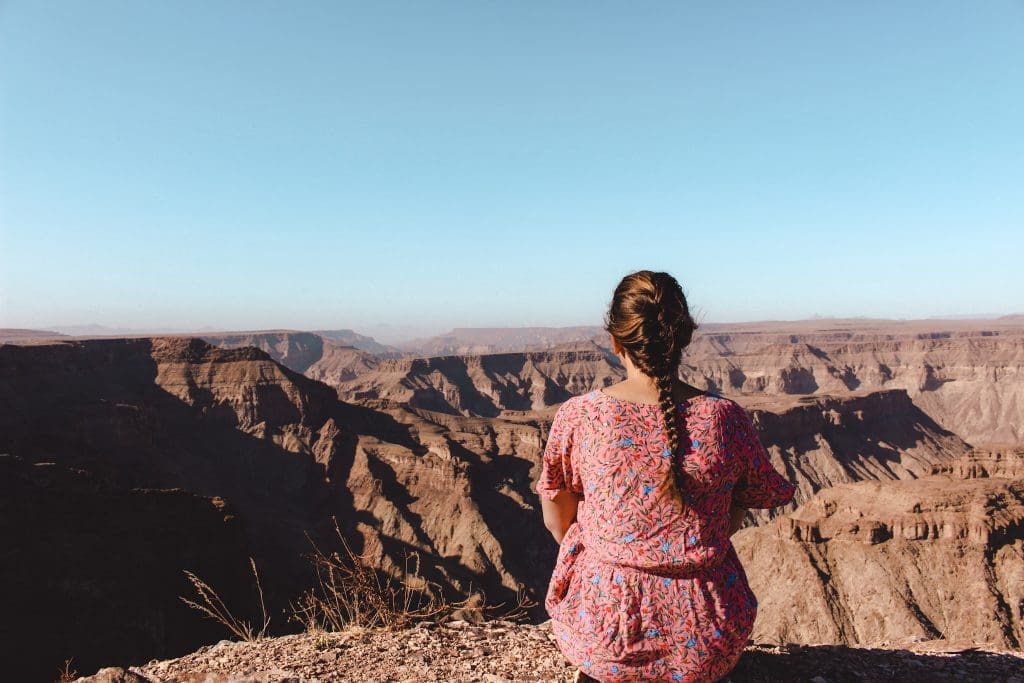
The Fish River Canyon is a breathtaking gorge in the south of Namibia. It stretches for 160 kilometers and reaches depths of up to 500 meters, making it the largest canyon in Africa. From the edge, you can look out across sharp rock cliffs, twisting bends, and a vast, empty landscape that seems to go on forever. The most popular viewpoint is near Hobas, especially at sunset when the soft light turns the canyon a warm, glowing orange.
If you’re just here to enjoy the view, you can easily drive all the way to the edge. But for those seeking more adventure, there is a five-day hike that leads right through the canyon itself. This demanding trek requires a permit and finishes at Ai-Ais, where you’ll find natural hot springs and a simple lodge. The hike takes some planning, but it’s a one-of-a-kind way to fully experience the wild beauty of the area. Even if you don’t do the hike, Ai-Ais is still a lovely place to stay, with thermal baths and a campsite by the river.
Read more: our in-depth Fish River Canyon travel guide includes everything you need to know about the canyon, hiking routes, top campsites and lodges, and much more.

#3 Etosha National Park
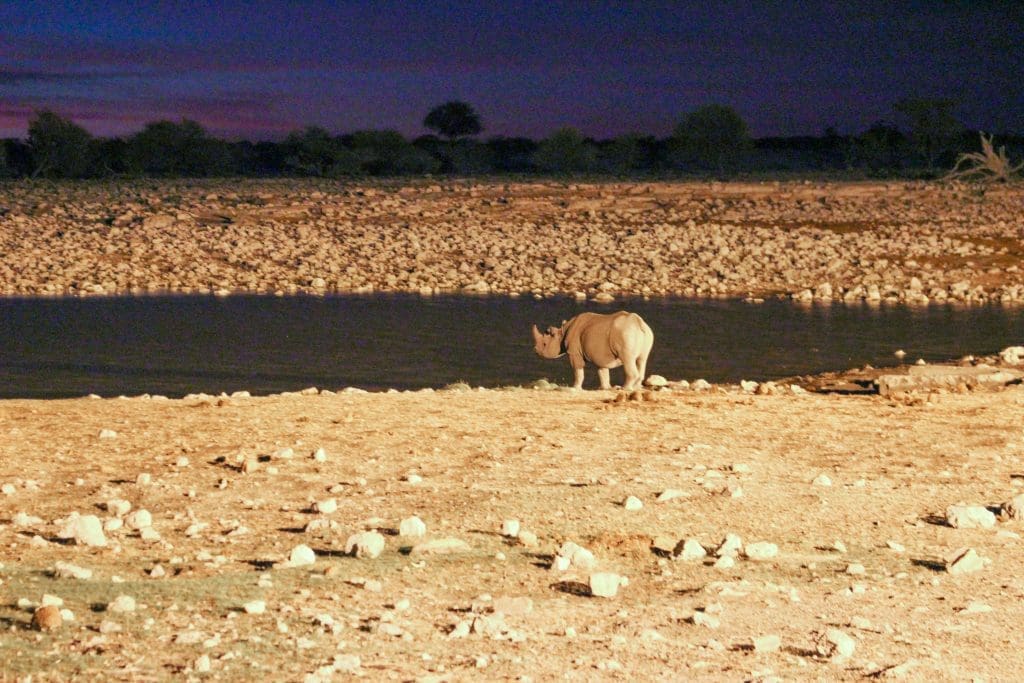
Etosha is Namibia’s best-known wildlife park and a perfect choice for a self-drive safari. The open, dry landscape makes it easy to spot animals, especially during the dry season when elephants, zebras, giraffes, and even rhinos gather around the waterholes. In the middle of the park lies a massive salt pan, which is where Etosha gets its name. In the Ovambo language, it means “great white place.”
Most travellers choose to explore the park with a rental car. The roads are in good condition, and you’re likely to see plenty of wildlife along the way. While animals do sometimes come close, they are often at a bit of a distance. If you want to take quality photos, a basic lens won’t be enough. Be sure to pack a good zoom lens so you can capture clear shots of lions and their cubs, even from far away.
Spending the night in one of the park’s rest camps, such as Okaukuejo, is a great idea. These camps often have floodlit waterholes where you can watch wildlife well into the evening. With a bit of luck, you might see rhinos or even a whole herd of elephants.
Read more: explore 25 practical tips for your visit, learn everything you need to know about camping in Etosha National Park, or dive into our four-day travel journal from a self-drive safari through the park.

#4 Spitzkoppe
Spitzkoppe sits between Swakopmund and Windhoek and is one of the most iconic rock formations in Namibia. This dramatic granite peak towers hundreds of meters above the surrounding landscape and shifts in color as the light changes throughout the day. The scenery is especially stunning at sunrise and sunset. It’s a fantastic place for hiking, climbing, exploring ancient rock art, and spending the night at basic campsites nestled between the boulders.
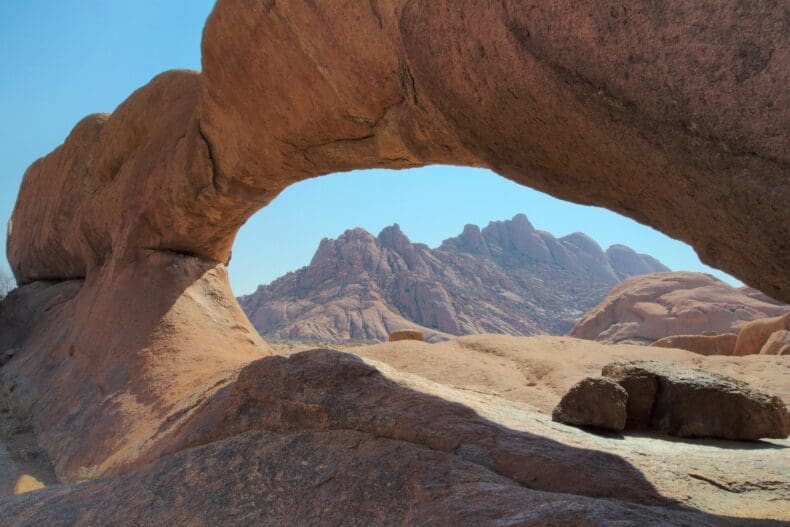
A favorite photo spot, and perhaps the most photographed landmark in Namibia, is the natural rock arch. In the early morning, you can watch the sun rise through the arch, casting a golden glow across the rocks. With no fences or marked trails, you’re free to wander and discover the area on your own. The San rock paintings found here offer a fascinating glimpse into the lives of the region’s earliest inhabitants.
There are no facilities at the site, so be sure to bring plenty of water, food, and camping gear. At night, you’ll sleep beneath a sky full of stars, far from artificial light and other people. It’s the perfect place to enjoy peace, nature, and a bit of adventure.
#5 Waterberg Plateau National Park
The Waterberg Plateau is a dramatic flat-topped mountain located north of Windhoek. Its red sandstone cliffs rise around 200 meters above the surrounding plains, creating a natural stronghold filled with wildlife, rare plants, and breathtaking viewpoints. The area is surprisingly lush, with green forests and deep ravines, offering a refreshing change from the dry and dusty landscapes found elsewhere in Namibia. It’s a great destination for hiking, and from the edge of the plateau, you’ll enjoy wide, panoramic views stretching far across the plains below.
The park is home to baboons, klipspringers, and even rhinos. The plateau is also an important historical site. In 1904, a major battle was fought here between German colonial forces and the Herero people, leading to devastating consequences. Today, visitors can explore memorials and information displays that share the story of this painful chapter in Namibia’s history.
We spent the night at the park’s main camp, which offers both a comfortable lodge and a scenic campsite. The walk from the camp to the viewpoint is short but fairly steep, and we found it absolutely worth the climb. The light is at its most beautiful early in the morning or late in the afternoon, when the red cliffs seem to glow with warmth.

#6 Naukluft National Park
The Naukluft Mountains are often passed by, yet they are one of the most surprising and rewarding places to visit in Namibia. Here, you’ll discover steep rocky cliffs, lush gorges, clear mountain streams, and an incredible sense of stillness. Although the park is part of the greater Namib-Naukluft area, it feels completely different from the sweeping sand dunes of Sossusvlei. This is a true hiker’s paradise, with well-marked trails and a landscape that constantly changes as you walk.
We hiked the Olive Trail, a scenic route of just over ten kilometers that takes you through dramatic viewpoints, tight canyons, and even a short section where you use a chain to pull yourself up a rocky ledge. Along the way, we spotted mountain zebras, baboons, and enjoyed breathtaking views over the rugged terrain. For an overnight stay, there’s a simple campsite near the park’s main headquarters. With so little traffic and very few other visitors, it often feels like you have the entire landscape to yourself. It’s the perfect spot for anyone who enjoys nature, quiet, and a bit of adventure.

#7 Swakopmund
Swakopmund feels more like a German seaside town than a city on the edge of the desert. You can wander past charming half-timbered houses, enjoy freshly baked apfelstrudel from a local bakery, and spot street signs written in German. The cool sea breeze, mild climate, and sandy beach make it the perfect place to unwind after the heat and dust of inland Namibia.
Tip: be sure to check out our guide on the best things to do in Swakopmund.
This town has everything you might need: excellent restaurants, cozy cafés, a variety of shops, and even a beach bar right by the ocean. But Swakopmund is also the ideal spot for a bit of adventure. You can go sandboarding or take a quad bike into the nearby dunes—or try both, like we did. Day trips to Walvis Bay or the Welwitschia Drive are easy to arrange and definitely worth your time. Many travellers end up staying here longer than planned, and it’s easy to understand why. Swakopmund isn’t just beautiful and relaxing, it’s also the perfect base for exploring Namibia’s Atlantic coast.

#8 Walvis Bay
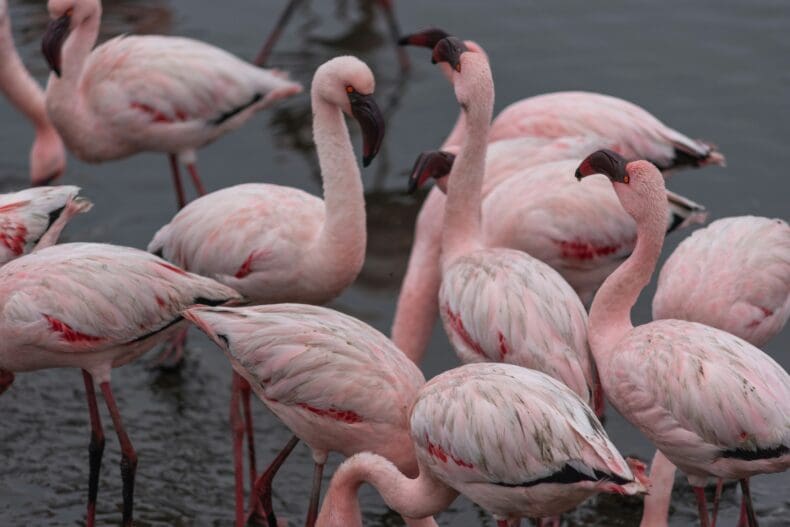
Walvis Bay lies just south of Swakopmund and is all about birdlife, sea lions, and sweeping sand dunes. The town’s large lagoon is a paradise for flamingos, pelicans, and many other birds. During the right season, the water turns into a shimmering sea of pink. It’s just a short walk from the town center, making it easy to visit on foot.
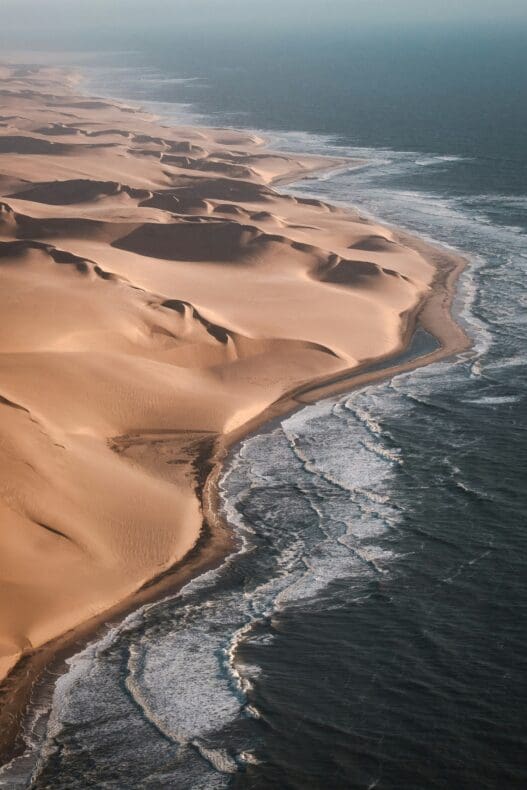
For those who want to explore further, a boat cruise or kayaking trip is a great way to get out on the water. Dolphins and sea lions are commonly seen, and with a bit of luck, you might even spot a whale. Just beyond the town is one of Namibia’s most spectacular sights: Sandwich Harbour. This is where massive sand dunes roll straight into the Atlantic Ocean, creating a dramatic and unforgettable landscape. Reaching it on your own requires a 4×4 and a bit of courage, but with a local guide, it’s a relaxed and safe experience.
Walvis Bay is ideal for a day trip, or for staying overnight if you want more time to enjoy the wild, coastal scenery.
#9 Kolmanskop
Kolmanskop is a ghost town deep in the desert. Once a booming diamond settlement, it featured grand homes, a hospital, a theatre, and even an ice factory. In the early 1900s, German colonists built a European-style village in the middle of the Namibian sands. But when more promising diamond fields were discovered elsewhere, the town was abandoned almost overnight.
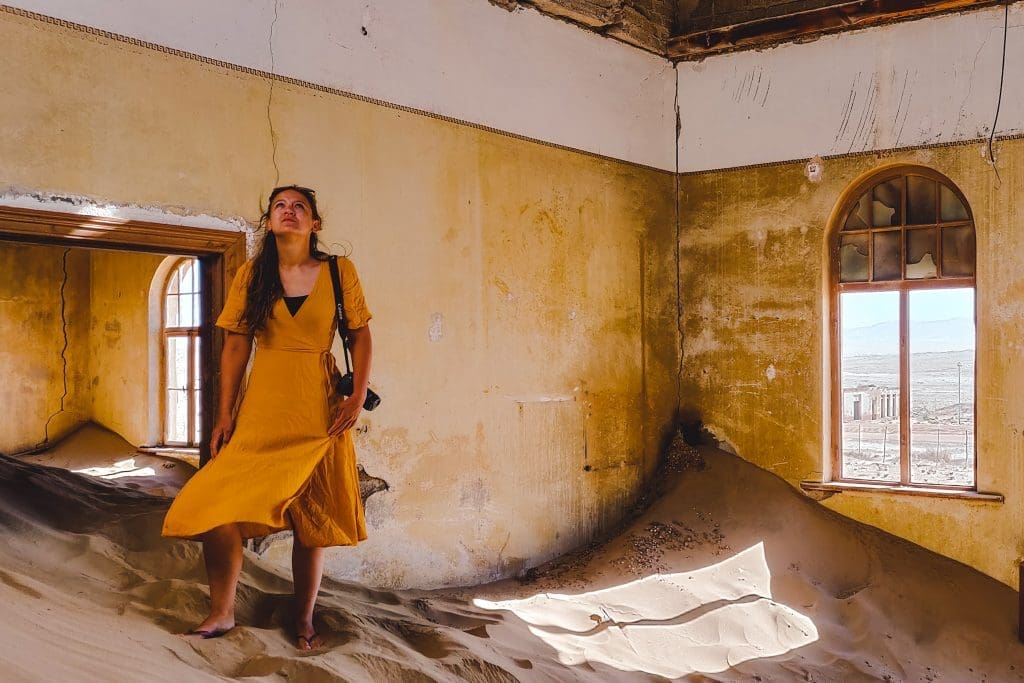
Today, visiting Kolmanskop feels like stepping into an open-air museum. The buildings are still standing, though many are slowly being swallowed by the desert. Sand drifts through broken windows and piles up in corners where furniture still remains. You’ll see rusted bed frames, old bathtubs, and walls lined with peeling, faded wallpaper. It feels as if the residents might return at any moment, though they’d face a serious cleanup. Daily guided tours offer fascinating stories about the town’s past and the diamond industry that once thrived here.
Kolmanskop lies just outside Lüderitz and is easy to reach by car. It’s best to visit early in the morning, when the soft light creates beautiful shadows and there are fewer visitors. It’s one of the most hauntingly beautiful and photogenic places in all of Namibia.
Read more: things to do in Kolmanskop
#10 Skeleton Coast
The Skeleton Coast is perhaps the most mysterious part of Namibia. This long, lonely stretch of shoreline is scattered with shipwrecks, cloaked in mist, and filled with a haunting sense of isolation. Over the centuries, countless ships have met their end here, often with tragic results. It’s no wonder sailors once called it the “Coast of Skeletons.” The landscape is stark, sandy, and wild, yet it leaves a powerful and lasting impression.
One of the highlights along the coast is Cape Cross, where thousands of seals gather on the beach. You’ll see them resting, swimming, or fighting for space in a noisy, chaotic scene. The smell is strong, the sounds are loud, but the experience is unforgettable and well worth the visit. If you venture further along the coast, you’ll find the rusting remains of old shipwrecks, slowly disappearing beneath layers of sand and salt. Even the drive to get there is an adventure in itself. With hardly any traffic, the wide-open landscape often feels completely your own.
You can spend the night in remote spots like Torra Bay, though it’s a good idea to check in advance if it’s open. The Skeleton Coast is unlike anywhere else, which is exactly why it deserves a place on every Namibia itinerary.

#11 Namib National Park
Namib National Park is one of the oldest deserts in the world, and it covers far more than just Sossusvlei. This vast, untouched landscape stretches from wide-open plains and rugged rock outcrops to towering sand dunes that reach all the way to the Atlantic Ocean. It’s the kind of place where you truly feel like you’ve stepped off the map.
Read more: everything you need to know about hiking and camping in Namib National Park.
Camping here is an experience in itself. You can pitch your tent at simple, designated sites with no facilities. There are no toilets, no showers—only a concrete table, a rubbish bin, and the most incredible star-filled sky you’ll ever see. The most well-known campsites are around Blutkoppe, Homeb, and Tinkas. During the day, you can hike, scramble over rocks, or simply enjoy the peace and silence of the desert. Be sure to arrange your camping permit in advance in either Windhoek or Swakopmund. Namib National Park is raw, remote, and ideal for travellers who enjoy exploring on their own.
#12 Damaraland & Twyfelfontein
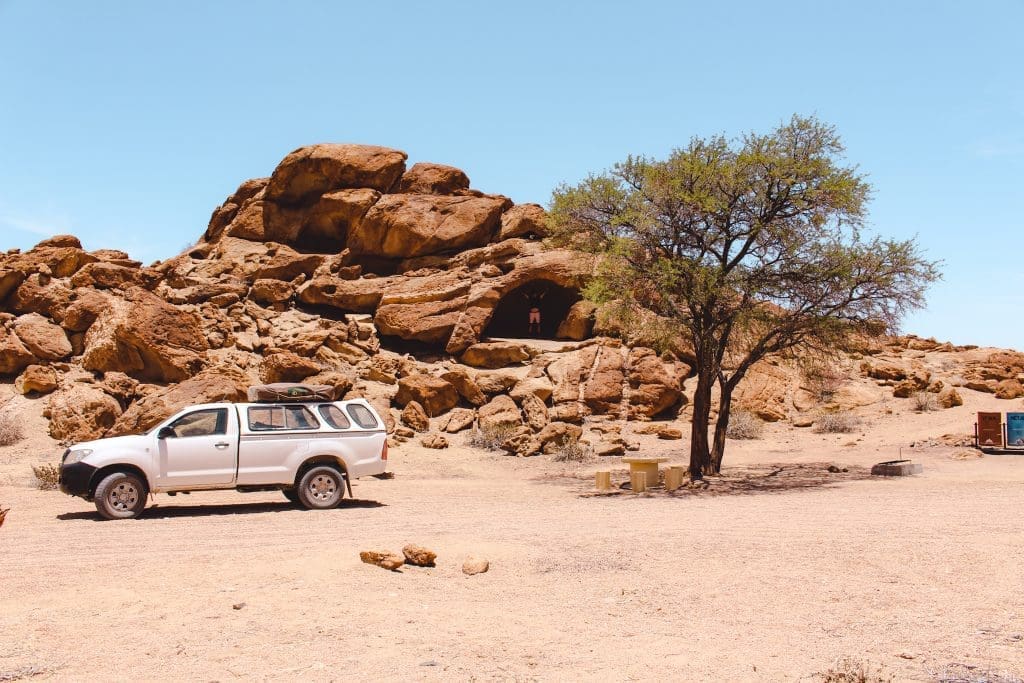
Damaraland is a vast, dry region filled with rugged rocky hills, dusty dirt roads, and surprisingly abundant wildlife. This is the home of desert-adapted elephants, perfectly suited to survive in this harsh environment. As you drive through the rough terrain, you not only get a chance to spot fascinating animals but also to connect with a rich ancient culture. The unique mix of wild nature and deep history makes this region truly one of a kind.
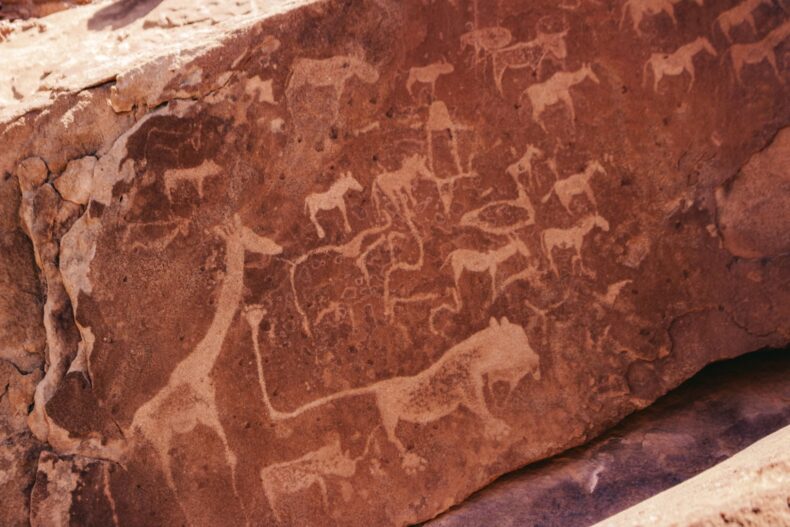
The most famous spot in Damaraland is Twyfelfontein. Here, you’ll discover rock engravings that date back thousands of years. These incredible carvings were made by the San people and show animals, hunting scenes, and mysterious symbols. Local guides lead tours that explain the meaning behind these artworks and share stories about life in those ancient times.
Not far from Twyfelfontein, you can visit the Organ Pipes, a striking formation of jagged volcanic rock, and Burnt Mountain, which turns a glowing red when the sun sets. All these sites are close to each other and easily reached with a 4×4 vehicle. Damaraland might feel remote and untouched, but that’s exactly what makes it so special. It’s a place for quiet moments, endless open spaces, and timeless stories carved into the earth.
#13 Caprivi Strip
The Caprivi Strip is a long, narrow stretch of land in northeastern Namibia, nestled between Botswana, Angola, and Zambia. Visiting this region feels like crossing into another world. Everything here is greener, wetter, and more peaceful than the rest of Namibia. Instead of dusty desert, you’ll find rivers weaving through palm trees and wetlands bustling with wildlife.
This area is home to national parks such as Bwabwata and Mudumu, where elephants, hippos, and crocodiles roam freely. The best way to explore these parks is by boat or with a local guide, though self-driving is also an option. The Caprivi Strip is still off the beaten path, making it a hidden gem for travelers seeking a quieter experience. It also serves as a handy route if you’re heading on to Victoria Falls or Chobe National Park.
With its winding waterways, rich birdlife, and diverse wildlife, the Caprivi Strip offers a stunning and unexpected highlight for any journey through Namibia.
#14 Brukkaros-vulkaan
Brukkaros Volcano sits in southern Namibia and is perfect for travelers who love quiet landscapes, wide views, and a touch of adventure. From a distance, it might look like an ordinary mountain, but as you drive closer, you’ll find yourself entering the heart of an ancient, extinct crater. To reach the old campsite halfway up the volcano, a 4×4 is essential.
Read more: camping on the Brukkaros Volcano.
At the campsite, you can pitch your tent in a basic spot marked by a few stone walls and a fire pit. There are no facilities here, but what you get in return is total stillness, a sky filled with stars, and unforgettable views. From this peaceful base, you can hike up to the rim of the crater. At the top, you’ll come across the ruins of an old observatory, once used by scientists in the 1920s to study the sun from this remote location. Although the volcano has been dormant for millions of years, its dramatic shape is still clearly defined. Brukkaros is rugged and slightly remote, but that’s exactly what makes it such a memorable place to visit.


#15 Welwitschia Drive
The Welwitschia Drive is a quiet and scenic route through Namib National Park, about an hour’s drive from Swakopmund. As you follow the road, you’ll pass through striking desert scenery, unusual rock formations, and, most impressively, rare plant life that exists nowhere else on Earth. The route is clearly signposted and includes thirteen numbered stops, each offering a glimpse into the area’s unique landscapes, geology, and vegetation.
The main highlight is the welwitschia plant. This resilient species survives in extreme desert conditions, grows incredibly slowly, and can live for over a thousand years. It may look like a tangled mess of dried-out leaves, but it’s very much alive and still growing. You’ll also encounter lichen fields—fragile, crust-like plants that are slowly disappearing due to dust and off-road driving. To help protect them, it’s important to stick to the designated paths at all times.
The drive combines perfectly with camping in Namib National Park. You’ll need to arrange a permit in advance in Swakopmund. It’s an ideal day trip for those looking to escape the busy towns and immerse themselves in Namibia’s raw, otherworldly beauty.

#16 Lüderitz
Lüderitz is a coastal town where the desert meets the ocean. After hours of driving through endless emptiness, this colorful little town suddenly appears, filled with German-style charm. Wide streets, elegant old buildings, steep-roofed churches, and cafés serving schnitzel give it a unique blend of European flair in an African setting.
Travel tip: best things to do in Lüderitz
Lüderitz is a lovely place to spend a day exploring. You can hop on a boat tour to spot penguins on Halifax Island, wander through the historic center, or head to the lighthouse on the nearby peninsula. There, you’ll also find a pink salt lake, hidden bays, and scenic viewpoints looking out over the Atlantic. A 4×4 comes in handy, as many roads in the area are unpaved. With its cool sea breeze and mild temperatures, it’s the perfect place to take a break after the heat of the desert. Lüderitz may be quiet and compact, but it has plenty of charm and is well worth a visit.


#17 Kalahari Desert
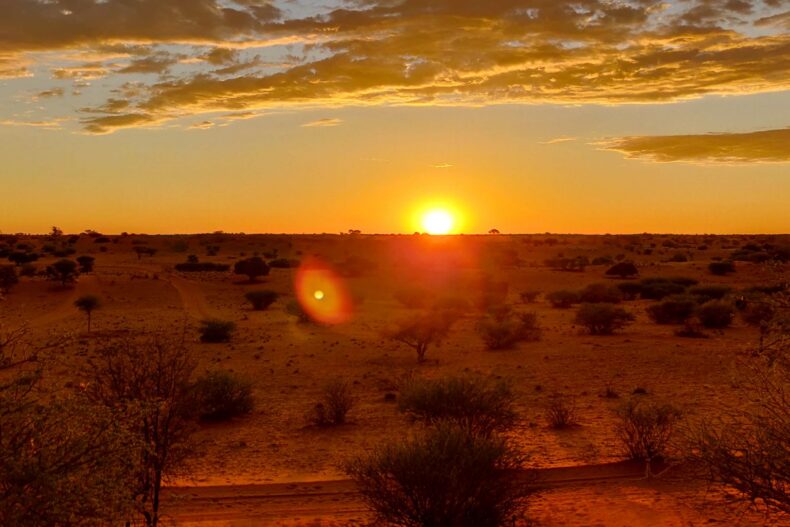
The Kalahari Desert stretches across a vast part of eastern Namibia and looks quite different from what many imagine. Instead of towering dunes, you’ll find soft red sand dotted with grasses, low shrubs, and the occasional tree. The landscape is wide and open, filled with stillness—and that calm, silent beauty is exactly what makes it so remarkable. Wildlife thrives here, including gemsbok, springbok, ostriches, and sometimes even lions.
Scattered along the edges of the Kalahari are small lodges and private nature reserves where you can spend the night and go on game drives. You can also join guided walks with San trackers, who share how their ancestors have lived in this dry, remote region for generations. The sunsets in the Kalahari are truly unforgettable. As the sun sinks toward the horizon, the light softens, the colors grow bolder, and the silence deepens.
The Kalahari is a perfect place to begin or end your journey through Namibia. It might be less famous than some of the country’s other deserts, but it’s every bit as captivating.
#18 Cape Cross Seal Colony
Cape Cross is home to tens of thousands of seals that sprawl across the beach throughout the year. During breeding season, even more arrive, and the air fills with a chorus of squeaks, growls, and barks. The smell can be overwhelming at first, but it quickly fades into the background as you walk among the animals along raised wooden boardwalks.
You’ll spot tiny pups nursing from their mothers, bulky males jostling for space and dominance, and playful youngsters diving into the waves. The colony is only about an hour’s drive from Swakopmund and makes a great stop on a journey along the Skeleton Coast. Aside from the wildlife, there’s also a monument marking the spot where Portuguese explorer Diogo Cão first came ashore in the 15th century.
It may be a quick visit, but it leaves a lasting impression — a place where you can witness wild nature from just a few steps away.

#19 Solitaire
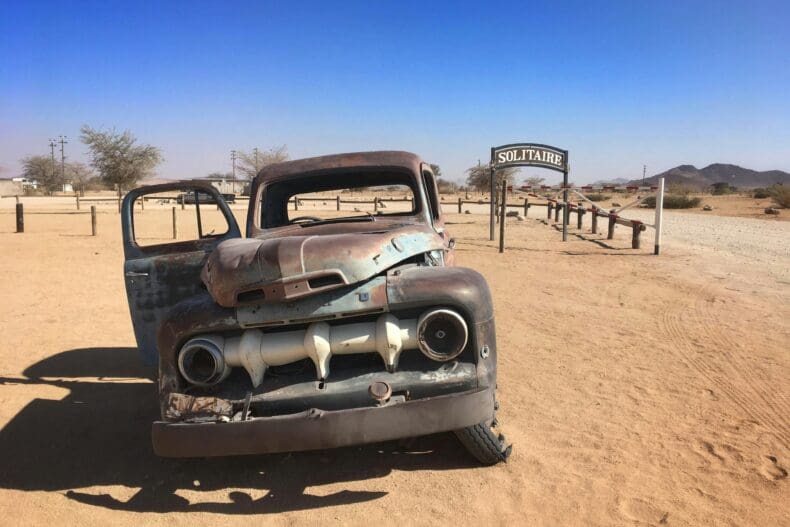
Solitaire is little more than a gas station, a bakery, and a few rusted car wrecks scattered across the desert. Still, this tiny outpost has become one of Namibia’s most iconic stops. Just about everyone pulls over here—for fuel, a coffee break, and, most importantly, a slice of the bakery’s legendary apple pie.
The vibe is relaxed and slightly surreal. The old car wrecks rest quietly in the sand, like faded memories of travelers who came before. You can spend the night at a nearby lodge or camp just outside the village, though most people don’t. For many, Solitaire is simply a short but welcome pause on the long journey to or from Sossusvlei. Not much goes on here, and that’s part of what makes it so special. It’s the kind of place where you stop, slow down, and take a moment to soak in the stillness of the wide-open desert.
#20 Orange River near Noordoewer
At Namibia’s far southern tip, along the border with South Africa, the Orange River winds through a surprisingly green and peaceful valley. After days of traveling through dry and dusty landscapes, arriving at the river feels like stepping into an oasis. The water flows calmly, the banks are lined with leafy trees, and the views are wide and beautiful.
The small village of Noordoewer is a popular overnight stop for travellers heading across the border or exploring southern Namibia. It’s the perfect place to paddle a canoe, take a dip, or simply relax beside the water. Even a short outing on the river brings a sense of calm, but if you’re looking for more adventure, you can join a multi-day canoe trip and camp along the riverbanks. In the early morning, you’ll often spot birds and wildlife moving quietly along the edges of the water.
The Orange River is the only river in Namibia that flows year-round. It’s a gentle, green escape that brings a peaceful close to any journey through the country’s wild and rugged interior.


