
Diever is one of the most picturesque villages in Drenthe, and it sits right between two national parks: Drents-Friese Wold and Dwingelderveld. That puts you in the middle of a stunning landscape of forest, heathland and drifting sand.
With its characterful village centre, inviting terraces, unusual historic sites and nature all around, it’s no surprise this is a popular holiday spot in the north of the Netherlands. From a Second World War hideout to a hunebed, and from lookout towers to sheepfolds: as locals, we know exactly which places are worth your time.
In this guide, you’ll find our insider tips on the main sights, the best things to do in Diever and the most special places to visit during your holiday.
→ Discover the best things to do in Drenthe with kids
→ Explore 20 things to do in Drenthe


Where to Stay in Diever
If you want to sleep surrounded by nature, Diever and its surroundings are a great choice. One of the best-known places is Camping Diever, right on the edge of Drents-Friese Wold. Besides regular pitches, it has some unusual places to stay, such as an igloo and a Boomhut XXL (an extra-large treehouse). The best part: there are rabbits hopping around all over the site. From the campsite, you can walk or cycle straight into the forest.
On the edge of Diever you’ll also find Landgoed ’t Wildryck. This park has spacious houses and bungalows right in the middle of Drents-Friese Wold, with an indoor pool and plenty of greenery around you. A good option if you’d like a bit more comfort but still want to stay in the heart of nature.
RCN de Noordster in Dwingeloo is popular too. This holiday park lies right next to Dwingelderveld and has more facilities, such as indoor and outdoor playgrounds and an outdoor swimming pool. That makes it a particularly good pick if you’re travelling with kids.
Looking for something smaller? There are several B&Bs in and around Diever, many of them in converted farmhouses or detached houses. Think of B&B Diever, Landhotel Diever, B&B Aangenaam and Burgers & Buitenlui.
Many places fill up quickly in high season, so booking ahead is a good idea.


Best Things to Do in Diever
#1 The Brink of Diever
The Brink is the old heart of Diever. Everything comes together here: the church, the old administrative buildings and the typical layout of a classic Drenthe farming village. For centuries, thatched farmhouses stood in a snug circle around a grassy green full of oak trees, the brink itself, with raised fields on one side and wide grasslands on the other.
The Pancratius Church in the middle of the Brink immediately catches your eye. Its oldest parts date back to the eleventh or twelfth century. The choir was added in the fourteenth century and the side aisles in the sixteenth, making it one of the oldest churches in Drenthe. I once saw its fairly plain interior during Heritage Day, when historic buildings open their doors.
Look around and you’ll also spot the old town hall and the Schultehuis, where the local administrator used to work. So you’re quite literally walking through the village’s old seat of government. There are also two terraces and a snack bar, and in summer lots of cyclists grab a soft-serve ice cream here to eat on the Brink.
Shopping tip: the nicest little shops in Diever are around the Brink too. Our favourites? By Wemke for beautiful stones and craft supplies, the Wereldwinkel (fair trade shop) for souvenirs and accessories, and Bij Hare Majesteit for tableware and home accessories.

#2 Shakespeare Theatre Diever
The Shakespeare Theatre is what Diever is really known for in Drenthe. Shakespeare’s plays have been performed here every year since 1946. The tradition started just after the war with a small theatre group founded by local doctor Dirk Broekema.
The first performances were simple: a stage of sand, no fixed seating and forest all around. That idea has stuck, even though the theatre is far more professional these days. You still sit outdoors, surrounded by trees, while it slowly gets dark during the show.
The theatre draws thousands of visitors every year, which has made it a well-known attraction across the Netherlands. Want to go? Then sort out your tickets in advance, as many summer evenings sell out fast. The woodland setting makes it a very different experience from an ordinary night at the theatre.
#3 Hunebed D52
Hunebed D52 lies on the edge of Diever and is one of the oldest places you can visit here. This prehistoric burial chamber was built between 3400 and 3050 BC by the Funnel Beaker culture, some of the first farmers in the region.
The hunebed is about 14.5 metres long and 4.8 metres wide. You can see fourteen supporting stones and six capstones, and the structure is still easy to make out, so you immediately get a sense of how a tomb like this was put together. What makes this one interesting is its story through the ages. In the nineteenth century, part of it lay under a barn in a field. Only in 1871 was the land bought and restoration started, and it has been restored several more times since.
You can simply walk up to it, with no entrance fee or fencing. It’s in a quiet spot, too, so it’s easy to combine with a short walk from Diever.

#4 OERmuseum Diever
The OERmuseum in Diever is a great follow-up to the hunebed. Here you dive deeper into prehistory and get more context for what you’ve just seen outside. This small village museum focuses mainly on the Ice Ages and the first people to live in Drenthe.
Inside, you’ll see finds from the region, such as flint tools and everyday objects. The museum also explains how Drenthe’s landscape was formed: think boulders, drifting sand and the influence of the ice sheets. That helps you understand Drents-Friese Wold and the hunebedden a lot better.
The museum is in the centre of Diever on the Brink and small enough to see in about an hour.


#5 De Wigwam World War II Hideout
Onderduikershol De Wigwam (the Wigwam hideout) lies hidden in the Berkenheuvel woods just outside Diever. You’d walk straight past it if you didn’t know it was there, but don’t worry, plenty of signs in the area point the way. In the winter of 1943-1944, Diever’s resistance group dug a hiding place into a sandy hill here. They reinforced the walls and ceiling with pine trunks and then neatly covered everything with sand again.
The name came from one of the resistance members, who read a lot of stories about Native Americans. The hideout served as a base for resistance work and as a hiding place for people in danger, and Allied pilots also found temporary shelter here. On 22 November 1944, it was betrayed. German troops attacked and destroyed it with a hand grenade, killing the four resistance fighters inside.
The hideout was rebuilt soon after the war. Because of the many visitors, it was restored again in 1954 and 1994, when the original wooden interior was replaced with concrete to help preserve it. Next to the hideout is a memorial stone for the resistance fighters who died here.

#6 De Eendenvijver Duck Pond
De Eendenvijver (the duck pond) lies right next to the centre of Diever. It’s a simple spot, but a well-known one in the village: a small pond in a green setting that you’ll easily pass on a walk.
As the name suggests, you’ll see lots of ducks and other waterbirds here, along with the little houses and shelters they live in. That makes it a favourite stop for families like ours. We often walk a loop around the pond, watch the geese and ducks and play on the wooden logs, one of which has been carved into a crocodile.


#7 Summer Markets and Village Fairs in Diever
In summer, Diever swaps its quiet village life for something a lot livelier. As soon as our village wakes up from its winter sleep, there’s something fun on almost every week. Markets and fairs are regularly held around the Brink and near De Eendenvijver. These aren’t big city markets, but small and easy to wander. Sometimes there’s even a funfair on the car park next to the pond.
You’ll find stalls with local products, clothing, accessories and food, and often a few food trucks too. The atmosphere is typical village. Lots of visitors from the campsites drop by, which makes it busier and more cheerful than usual. If you come often, like we do, you’ll notice the stalls are pretty much the same every time, so one visit is enough. Keep an eye on the events calendar for the dates.

#8 Drents-Friese Wold National Park
Drents-Friese Wold borders Diever and is one of the largest continuous nature areas in the Netherlands. As the name gives away, it lies in both Drenthe and Friesland. Forest, heathland and drifting sand make for plenty of variety.
It’s wonderfully quiet here. There are lots of walking and cycling paths, yet it never feels busy. Only in high season, mainly at weekends, can you expect plenty of holidaymakers on bikes. We love cycling through this vast park ourselves, and along the way you’ll find plenty of picnic tables and benches for a break.
Our favourite spots are Doldersummerveld, the Drents-Friese Wold sheepfold and Oude Willem. A well-known part is the Aekingerzand, also called the Kale Duinen (Bare Dunes): a large area of drifting sand that looks nothing like the rest of Drenthe. You’ll also come across forests that were planted in the twentieth century but feel completely natural by now. Scottish Highland and Sayaguesa cattle live in the woods and we often run into them, and you’ll regularly spot deer and rabbits too.
Drents-Friese Wold is the main reason many people come to Diever. Bring your walking shoes or rent a bike in the village and go and explore this beautiful national park.

#9 Bosbergtoren Observation Tower
The Bosbergtoren near Appelscha, right on the edge of Drents-Friese Wold, is one of the best places to see the national park from above. The tower is 33 metres high and stands on the Bosberg, so up here you’re at the highest point in Friesland.
You can climb a fair way up the stairs, or take it easy in the lift, until you reach the glass platforms. At the top, you get a clear view over the forest, the heath and the drifting sand in the distance. On a clear day you can see really far, something you never get down in the woods.
The tower itself is quite open and built of steel, so you see more and more of the view as you climb. That makes the way up just as fun as the top. The lift is a real bonus. With our kids, we took the lift up and the stairs back down.
The Bosbergtoren is an obvious stop if you’re heading into Drents-Friese Wold anyway. It’s easy to fit into a walk or bike ride, especially combined with the Kale Duinen nearby.


#10 Dwingeloo
Dwingeloo is just a short hop from Diever and absolutely worth a visit. Like Diever, it’s a village built around a brink, only a bit bigger and better known.
The large green Brink with the St Nicholas Church catches your eye as soon as you walk into the village. Lined with terraces, restaurants and ice cream parlours, it’s one of the biggest village greens we’ve seen in the region. Especially in good weather, it fills up with cyclists and walkers from the area.
A personal favourite in Dwingeloo? Kringloop De Oude Liefde. It’s not one of those dull second-hand warehouses, but a cosy, beautifully styled shop full of knick-knacks and lovely finds.
What makes Dwingeloo extra handy is that it’s a great base for Dwingelderveld National Park. Lots of cycling and walking routes start here or pass through.
→ Discover the best things to do in Dwingeloo
#11 Dwingelderveld National Park
Dwingelderveld is a bit further from Diever than Drents-Friese Wold, but the two are often mentioned in the same breath. It’s the largest wet heathland in Western Europe, so it looks quite different from the forests around Diever.
Here you mainly walk across open heath, past fens and wet patches of nature. In late summer, the whole area turns purple when the heather blooms. The landscape is wide and open, so you can see much further than in the forest. Cycling and walking paths wind through the woods and across the fields.
The area is also home to the sheepfold near Ruinen, where we often stop when we’re here. Every day, a flock of sheep heads out onto the heath, where they’re still used for nature management. Check the return times on the official website so you can be there when the sheep come back at the end of the day. A lookout tower gives you a great view over the heath, so you can watch the flock approaching.
There’s also OERRR speelnatuur, a nature play area where kids can play freely with water, sand and wood. Non-members of Natuurmonumenten pay €1.50 entry.


#12 Oldengaerde Estate
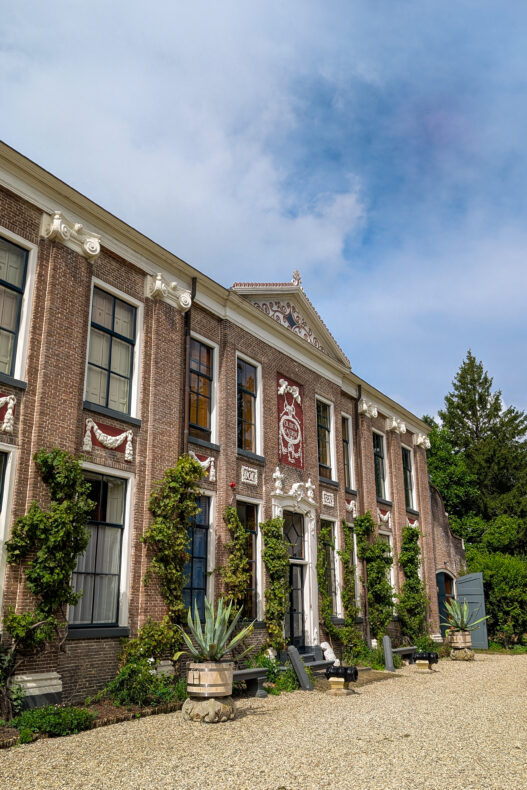
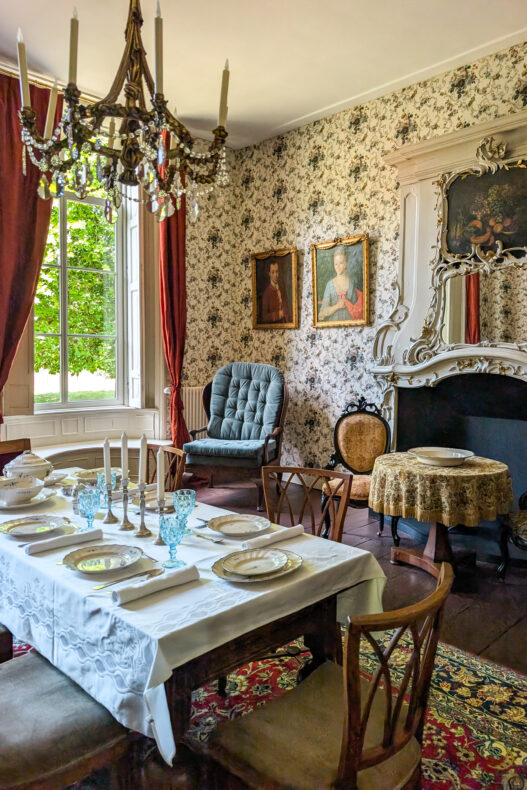
Landgoed Oldengaerde, just outside Dwingeloo, is one of the best-preserved havezaten in Drenthe, the manor houses of the old local nobility. The current house dates from 1717 and was built for the Van Dongen family. That makes it one of the few places in the area where you can see a real historic country estate.
The manor house isn’t always open to visitors, but there are regular free guided tours. The grounds are beautifully laid out too, with avenues, moats and sightlines that were all deliberately designed. The gardens and woodland around the house have changed over time, but the estate’s structure has largely survived. That still gives you a good picture of how country estates like this worked in the eighteenth century.
The estate is a short distance from Dwingeloo and easy to combine with a visit to the village or Dwingelderveld.
#13 Het Blauwe Meer
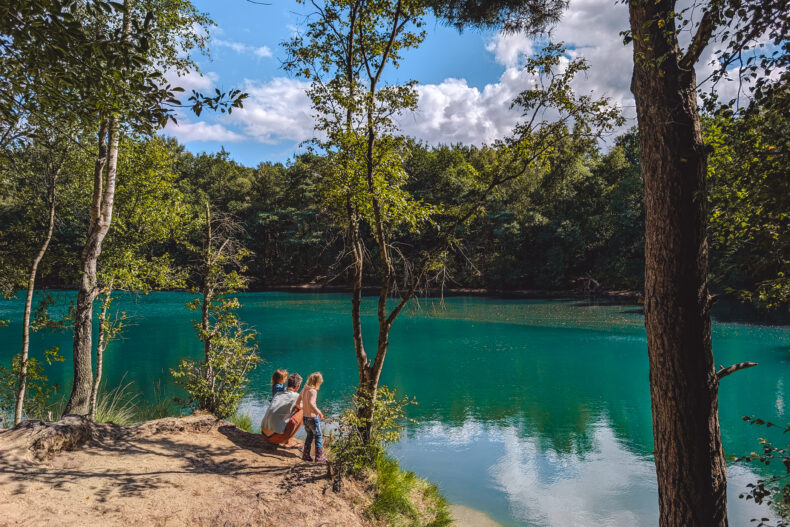
Het Blauwe Meer (the Blue Lake) lies near Hoogersmilde, a short distance from Diever, and is known for its clear blue water. The lake was created by sand extraction, which left steep banks and deep water. That combination is what gives it its striking colour. That said, it’s probably best seen from the air: we personally found the deep blue from the photos much less obvious in real life.
Around the lake there’s a sandy beach to sit or lie on. In summer it’s a popular swimming spot for hot days. Families and day-trippers in particular know where to find it, so it can get pretty busy on sunny days. In the summer months, visitors who aren’t members of Natuurmonumenten pay €3.50 per person to get in.
There are facilities such as a kiosk and toilets, which makes it easy to stay a bit longer. Outside high season it’s much quieter, and you can simply go for a walk or have a look around.
#14 Holtingerveld and Hunebed D53
Holtingerveld, near Havelte, has a different character from the forests around Diever. Here you’ll find heathland, open plains and scattered patches of woodland, with large boulders dotted across the landscape. In summer a flock of sheep grazes here, and during lambing season you can see them at the sheepfold. Scottish Highland cattle graze here as well.
A popular sight is Hunebed D53 in the middle of the area, the second-largest hunebed in the Netherlands. It’s close to the road, so it’s an easy walk. Its size gives you a good idea of just how impressive these burial monuments really are. The smaller Hunebed D54 lies not far away.
The area also has a clear Second World War history. The Germans built an airfield here, and remains of it are still visible.

#15 Museum Miramar
Museum Miramar in Vledder is officially all about shells and sea creatures, but we actually found the story of its founder, Jeanne Warners, the most interesting part. This remarkable woman travelled the world for years, collecting shells and marine animals she found herself along the way.
Jeanne Warners was born in 1898 and set off into the world at a young age. Among other places, she lived in the Dutch East Indies (now Indonesia) and travelled widely along tropical coastlines. That’s where she started collecting shells, not as a scientist, but out of pure interest and curiosity. Over the years, her collection grew to thousands of pieces.
After returning to the Netherlands, she decided to open her collection to the public, and in 1969 Museum Miramar opened its doors. Almost everything you see inside comes straight from her own travels, which makes it more personal than a standard museum collection.
The museum itself isn’t big and you’ll walk through it fairly quickly. That’s exactly why the story behind the collection matters. Keep it in mind and you’ll look at the displays differently, which makes the visit all the more interesting.


#16 De Proefkolonie
De Proefkolonie (the Trial Colony) in Frederiksoord is a short distance from Diever and tells a remarkable chapter of Dutch history. In 1818, a social experiment started here in which poor families from the cities got a fresh start in the countryside. They were given a small house and a plot of land, and had to support themselves.
The initiative came from the Maatschappij van Weldadigheid (Society of Benevolence), which wanted to fight poverty by giving people structure and work. Frederiksoord was the first colony, and others followed, such as Willemsoord and Wilhelminaoord.
Walking around, you’ll still see the straight avenues and the characteristic colony cottages. The whole area follows a clear, deliberately designed layout. The Colonies of Benevolence are now on the UNESCO World Heritage List, and a museum tells you more about the story of De Proefkolonie.
The Prison Museum in Veenhuizen is nearby too. It ties in well with the story of the colonies, because penal colonies later developed there. Together, they give you a glimpse into how the nineteenth century dealt with poverty and discipline.
#17 De Zeven Observation Tower near Fochteloërveen
De Zeven lookout tower stands on the edge of the Fochteloërveen, a vast raised bog on the border of Drenthe and Friesland. The tower was built in 2013 and is about 24 metres high, with a long staircase to the top. But the most striking thing isn’t the view, it’s the tower itself. As the name suggests (‘zeven’ is Dutch for seven), it’s built in the shape of the number 7.
At the top, you have a clear view over the bog. The landscape is different from the rest of the area around Diever: open plains, water and low vegetation. That lets you see a long way, especially on a clear day.
The Fochteloërveen is one of the last areas of living raised bog in the Netherlands, which makes it ecologically valuable. Special birds live here too, such as cranes. With a bit of luck, you’ll see or hear them during your visit.


#18 The Kale Duinen Sand Dunes at Aekingerzand
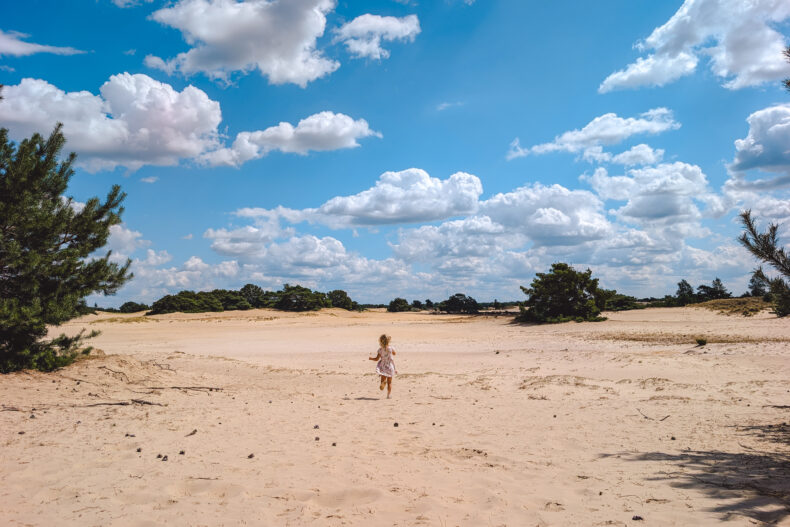
The Kale Duinen, also called the Aekingerzand, lie within Drents-Friese Wold and are one of the most striking landscapes around Diever. Instead of forest or heath, you walk through an open area of drifting sand.
The sand moves freely here with the wind and weather. That slowly changes the landscape and keeps it open, giving a completely different picture from the rest of the national park.
You can roam freely here, without set paths, which sets it apart from most nature areas in the Netherlands. It’s a lovely place to wander around, especially in good weather.
#19 Belevenispad Hoogersmilde Adventure Trail
A boring walk in the woods? Not on the Belevenispad (adventure trail) near Hoogersmilde. This free 2.5-kilometre route is full of surprises. Along the way you pump water yourself, scramble over huge boulders, climb a lookout tower and peer through a spyhole in search of grass snakes. Our kids loved the replica Spitfire most of all. They happily played there for a whole hour, while we relaxed on one of the wings.
The trail is marked with red posts and takes you past ten fun tasks and play features, so it feels more like a treasure hunt than an ordinary walk. With young kids especially, time flies and they stay entertained enough to keep walking. The trail is within cycling distance of Diever, but there’s also a car park if you’d rather drive.
Discover the best things to do in Drenthe with kids →


#20 Terhorsterzand Swimming Lake
Almost everyone knows Het Blauwe Meer, but since this summer we’d rather drive to Terhorsterzand. From the car park, it’s a few minutes’ walk through the woods to a quiet sandy beach with shallow water. Our kids could play safely in the water everywhere, which felt a lot more relaxed than at a deep swimming lake.
What struck us most was how peaceful it was. We’d expected a much busier beach in summer, but there were only a handful of other families, so plenty of room to find a nice spot in the shade. Don’t expect a kiosk or playground: apart from a few rubbish bins, there’s hardly anything here. The lake is an official swimming location, so the water quality is checked regularly during the swimming season. To be on the safe side, always look up the latest water quality reports before you go.

#21 Pluktuin Zeldenrust Blueberry Picking Farm
If your kids love fruit, Pluktuin Zeldenrust is a must. When you arrive, you get a little bucket and follow the signs to the field where picking is allowed that day. Then comes the best part: hunting for the biggest blueberries. Tasting along the way is allowed too. Our toddler didn’t need to be told twice, and before we knew it the first berries were going straight from the bush into his mouth.
At €6 per kilo, we also found it really cheap. Together, our kids had picked enough to pay just €2.40. That’s cheaper than a punnet from the supermarket and a much more fun outing. We certainly know where we’ll be getting our blueberries from now on. Depending on the season, you can also pick flowers here. Round off your visit with a coffee and a slice of blueberry cake on the terrace.


#22 Doldersummerveld Observation Tower and Sheepfold
One of the most beautiful places around Diever is without a doubt Doldersummerveld, where you might come across flocks of sheep and Scottish Highland cattle. For the best view over the heath, head to the Doldersummerveld lookout tower. From the car park, it’s about a ten-minute walk, and a wide view over the heath awaits you at the top. With a bit of luck, you’ll see a flock of sheep or the wild cattle grazing in the distance.
A little further on is the Drents-Friese Wold sheepfold. The sheep are usually out on the heath during the day, so don’t count on finding them at the fold. Still, we like to stop here for a while. There are picnic tables, a sjoelbak (a traditional Dutch shuffleboard game) and plenty of room to stretch your legs.


