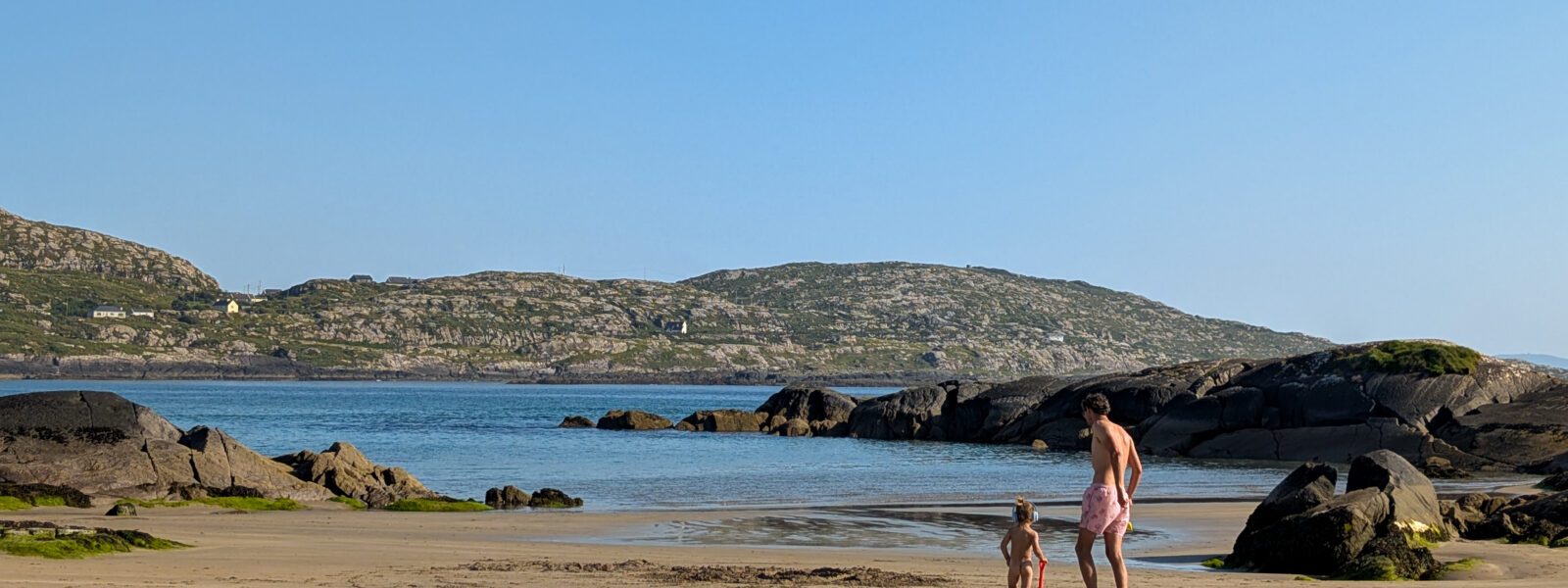
In Ireland you never have to drive far before something makes you hit the brakes. Behind one hill there’s a deserted bay of white sand, behind the next a centuries-old castle. And sometimes you don’t get any further at all, because a sheep has planted itself in the middle of the road and clearly isn’t going anywhere soon.
We spent just over three weeks on a road trip through Ireland with our two kids. We drove clockwise: south from Dublin, along the rugged coasts of Cork and Kerry, then back north via the mighty Cliffs of Moher and gorgeous Achill Island. Along the way we walked clifftop paths, found colourful little villages and learned that Ireland can easily serve up four seasons in a single day. Which is why our rain jackets were never more than an arm’s length away!
In this guide we take you along on our three-week Ireland road trip itinerary, split into 10 stops. Short on time? You’ll also find a route for two weeks and one for a single week. We share our favourite places, practical tips on driving and where to stay, and a few extra stops for anyone who wants to linger a little longer on this green island.
Ireland road trip tips
How many days do you need for an Ireland road trip?
Three weeks gives you a proper loop of the south and west without every day turning into a long drive. With two weeks, focus on the southwest and part of the west coast. With one week, stick to the best of Cork and Kerry, which is far from a bad choice.
Don’t trust the map too much. Eighty kilometres of coast road can easily take two hours, and that’s before you’ve pulled over once for a view, a beach or a pot of tea. With a day or two of slack, the whole trip feels a lot more relaxed.
In the end we spent almost four weeks in Ireland. We’d planned to stay longer, but after a long run of mostly wet days, and a small campervan full of soggy coats, we called it and cut the trip short. The schedule below fills three weeks completely. Want room for rainy days? Add a day or two, or skip Galway city.
What is the best time for a road trip in Ireland?
For driving around Ireland, May, June and September are the sweet spot. Days are long, it isn’t busy everywhere yet, and you’ll usually find a parking space at the big stops. In May and June the verges are full of wildflowers and rhododendrons turn whole hillsides in Kerry pink.
July and August are warmest on average, but that’s also when the coach tours are out in force and small coastal villages book up quickly. Rain can turn up in any month. Within a single week we had a storm on the Copper Coast and a heatwave of over 30°C in Kerry, so pack a rain jacket as well as sun cream.
How do you get to Ireland for a road trip?
The quickest option is to fly in and hire a car. Dublin and Cork both have direct flights from across Europe. Pick up your car in Dublin and you can start the route below straight away. Automatics are less common in Ireland than manuals, so book one early if you need it.
Our tip: book your rental car through Discover Cars. It compares all the big rental companies in one go, so you can easily find the best deal.
Bringing your own car works too. Coming from the Netherlands, we crossed the Channel and drove up through England to the far northwest of Wales. From the port of Holyhead you’re in Dublin by the afternoon. Would you rather skip the UK? There’s a direct ferry from Cherbourg in France to Rosslare or Dublin, but you’ll spend a night and a good chunk of the next day on board.
→ Discover all our tips for renting a car in Ireland
→ Compare the best car hire deals in Ireland
What is driving in Ireland like?
Ireland drives on the left, and on the motorway you’ll get used to it within the hour. The real work happens on the narrow country lanes. Often you share a single lane with traffic coming the other way, with hedges or stone walls inches from your mirror.
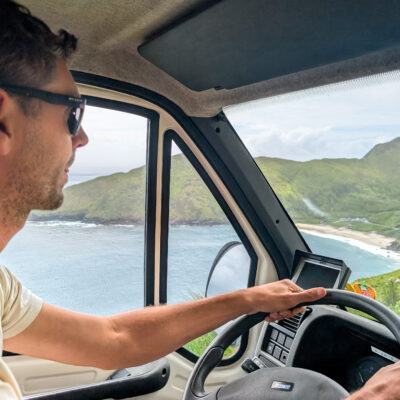
In practice it’s far less nerve-racking than it sounds. Oncoming drivers wait patiently in a passing place, and a raised hand to say thanks is part of the deal. We found it much easier than we’d feared, even though the lanes are a notch tighter than what we were used to in England. Sebastiaan drove while I kept an eye on every junction, saying it out loud each time: “turning left, so a small bend.”
A small car is the most relaxed choice. Travelling with a campervan or caravan, like we did? Then skip the Conor Pass on Dingle, because vehicles over two tonnes aren’t allowed on it.
Around Dublin, watch out for tolls. The M50 ring road has no toll booths: you pay online by 8pm the next day, although many hire companies sort it out for you. The Dublin Port Tunnel does have a toll booth, and the road from the ferry port steers you towards it almost automatically.
Should you drive around Ireland clockwise or anticlockwise?
We went clockwise: south first, then up the west coast. You ease in with the beaches and cliffs of Cork, and each day up the coast feels a little more rugged than the last. We also did the Ring of Kerry clockwise, against the flow of the tour coaches, so you don’t end up crawling along behind them.
What should you keep in mind on an Ireland road trip?
Dress in layers and always keep a warm jumper in the car. The weather turns fast, and a short walk to a clifftop can start in sunshine and end in a shower that goes straight through your jacket.
Bins are few and far between in Ireland, even at car parks and viewpoints, so bring a bag for your own rubbish.
In the northwest, still days can bring out the midges: tiny biting insects that hang around lakes and woods. Insect repellent is well worth packing.
Where to stay on an Ireland road trip
On a road trip you don’t want to repack your bags every morning. Pick a few bases where you stay two or three nights and do day trips from there. Kinsale, Kenmare or Killarney, Dingle, Doolin, Galway, Westport and Sligo all work well. In summer the small coastal towns fill up fast, so book ahead.
These hotels sit nicely along the route and stand out for their interiors or location:
#1 Number 31 is a quiet guesthouse spread over a Georgian townhouse and a modernist mews, on a peaceful street south of Dublin’s centre. Curl up by the fire in the sunken lounge, and you’re about ten minutes’ walk from St Stephen’s Green.
#2 Giles Norman Gallery & Townhouse sits right in the middle of Kinsale, above photographer Giles Norman’s gallery of black-and-white images of the Irish coast. It’s small and personal and an easy stroll from the harbour, but note that it only takes adult guests.
#3 Brook Lane Hotel is a small family-run hotel on the edge of Kenmare with its own bar and restaurant. It’s a handy launch pad for the Ring of Kerry, and the town centre is just a few minutes away on foot.
#4 Castlewood House is a guesthouse by the water, just outside Dingle town. Many rooms look out over the harbour, and breakfast is a good excuse not to rush off too early.
#5 Hotel Doolin is in the village where boats leave for the Aran Islands and the cliffs. The Cliffs of Moher are a quarter of an hour’s drive away, and in the evening a pub with traditional music is right on your doorstep.
#6 The g Hotel in Galway was styled by milliner Philip Treacy, with pink and purple lounges and oversized mirrors. After a wet day on the coast, the spa is a real treat.
#7 The Wyatt Hotel overlooks The Octagon, the square at the heart of Westport, with restaurants and pubs around the corner. It makes a practical stop between Galway and Achill Island.
#8 The Glasshouse is a striking glass-and-steel hotel on the River Garavogue in the centre of Sligo. Benbulben’s flat summit and the Gleniff waterfalls are only half an hour or so up the road.
Our 3-week Ireland road trip itinerary in 10 stops
We spent almost four weeks on the road ourselves. Below is our clockwise route, trimmed to three weeks and split into 10 stops, with the number of days we’d suggest for each. We saved Dublin itself for the end of our trip; if you’d rather start there, the route works just as well.
#1 Dublin and the Wicklow Mountains: city, mountains and monastery ruins (days 1 to 3)
Dublin turned out to be a lot more fun than people had warned us. Our favourite was the National Botanic Gardens, with Victorian glasshouses full of palms and plants, where the kids kept pointing out the strangest specimens themselves. We also wandered the centre, had veggie burgers in a pub just outside Temple Bar, and took turns making a silver ring at a workshop. Riding the double-decker bus into town counted as a highlight all of its own, as far as the kids were concerned.
→ Discover the 20 best things to do in Dublin
South of the city lie the Wicklow Mountains. On our first day the cloud was so low we could barely see a thing, so we escaped to the little coastal town of Wicklow, where it cleared up. The next day we had more luck in Glendalough, a valley with two lakes and the remains of an early medieval monastery.
All four of us followed a flat trail beyond the Upper Lake to the ruins of an old miners’ village, then came back the same way. Later, Sebastiaan climbed the Spinc on his own for the view down over the Upper Lake. On the way back we passed the crumbling cathedral and the graveyard with its mossy headstones. I usually find graveyards a little creepy, but this one was beautiful.
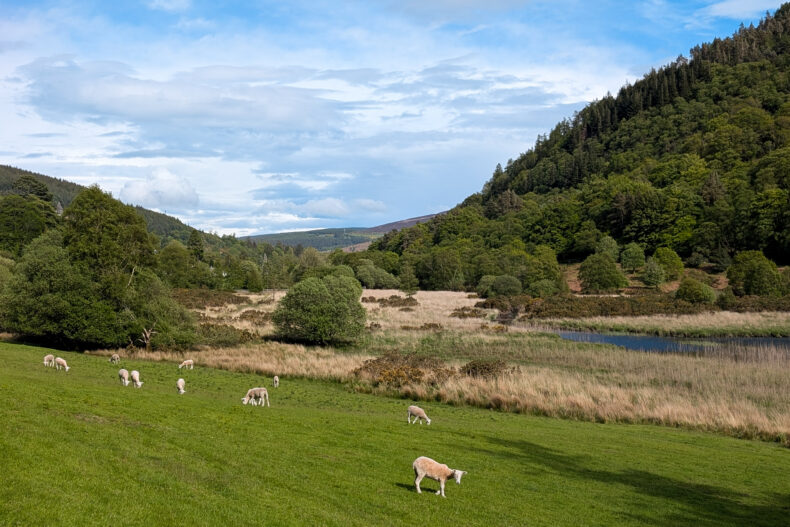
#2 The Copper Coast and Mahon Falls: cliffs and a waterfall among the sheep (day 4)
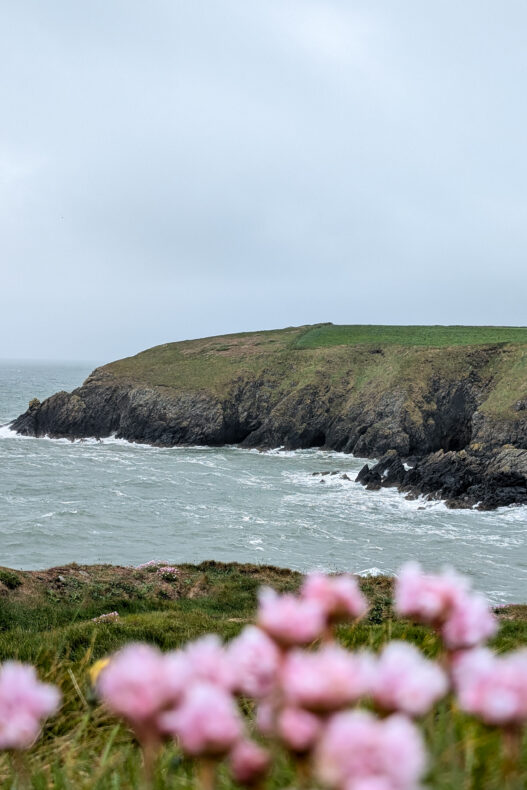
Along the Copper Coast in County Waterford, the R675 takes you past cliffs, little coves and the remains of old copper mines. The coastline’s geology is protected as the Copper Coast UNESCO Global Geopark. We got the first storm of the trip here, but the verges were bursting with flowers and the coast lost none of its drama.
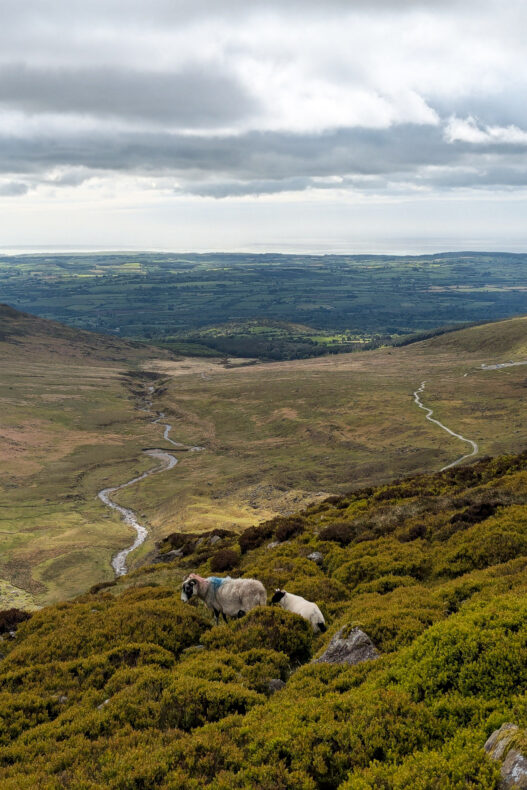
A fifteen or twenty minute drive inland brings you to Mahon Falls in the Comeragh Mountains. From the car park, a path leads between sheep and lambs to the foot of the waterfall. On the walk back to the car park all four of us got caught in a downpour and arrived soaked. Sebastiaan and our son also scrambled up a steep stretch to the top of the falls, and they stayed dry. It was hard going with a toddler, but the view over the whole valley made up for it.
#3 Cork and Kinsale: Ireland’s second city and a colourful harbour town (days 5 to 6)
On the way to Cork we walked part of the Ballycotton Cliff Walk, a coastal path looking out to a lighthouse on a rocky islet. The kids picked wildflowers from the verge until they had a proper bouquet.
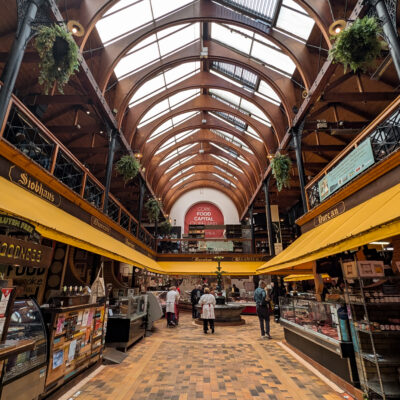
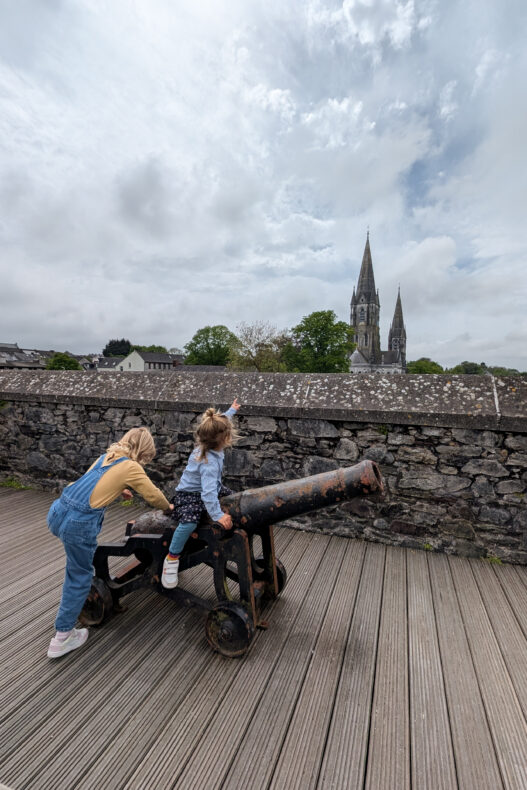
For a first taste of Cork, one day is enough. We took the double-decker into the centre, had lunch in a pub, climbed Elizabeth Fort for the view over the rooftops and wandered the streets around the English Market. Halfway through the afternoon the sun came out, and it stayed with us until evening.
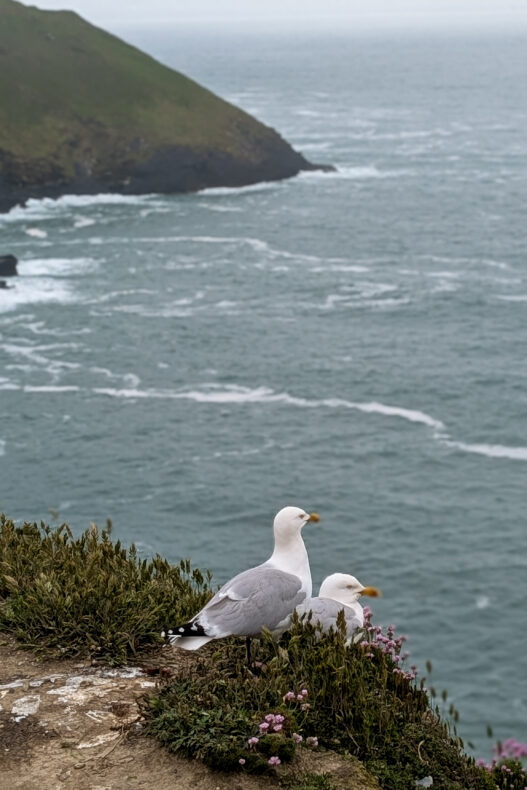
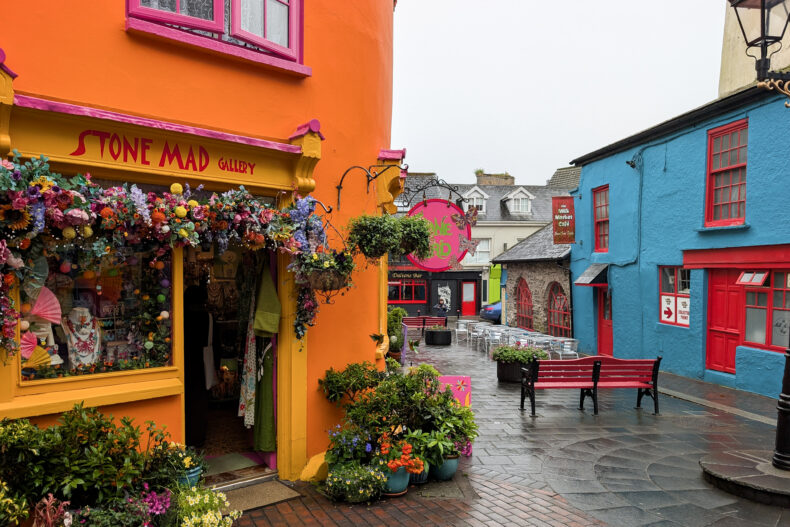
South of the city lies Kinsale, the official start of the Wild Atlantic Way. The harbour town is known for its colourful facades and good restaurants. We tried the coastal path to Charles Fort but turned back halfway when the rain set in. Our stop at the Old Head of Kinsale at the end of the day made up for it: you drive as far as the entrance to the golf resort and look out from there over cliffs full of gulls.
→ Discover the 11 best things to do in Cork
#4 West Cork: Clonakilty, Mizen Head and Barley Cove (days 7 to 8)
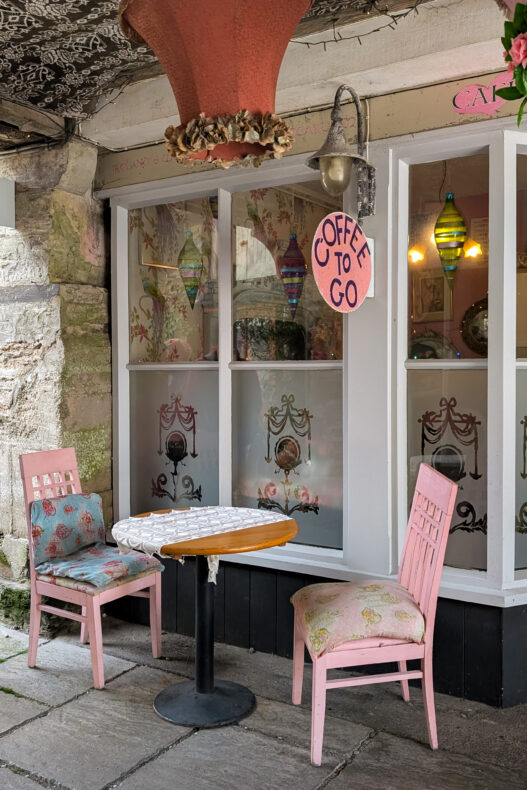
West Cork feels calmer than the rest of the south coast. In Clonakilty, bunting hangs over the street, the terraces are full and there’s a pink tearoom where we ate the first scones of our trip. They wouldn’t be the last. Just outside town is Red Strand, a beach that becomes enormous at low tide; we ended up spending the whole morning there.
Further west, the land runs out at Mizen Head, where the cliffs are the last stop before the ocean. A bridge over a gorge leads to the old signal station, and its small museum kept us busier than we’d expected. In the waves below the cliffs we spotted a dolphin.
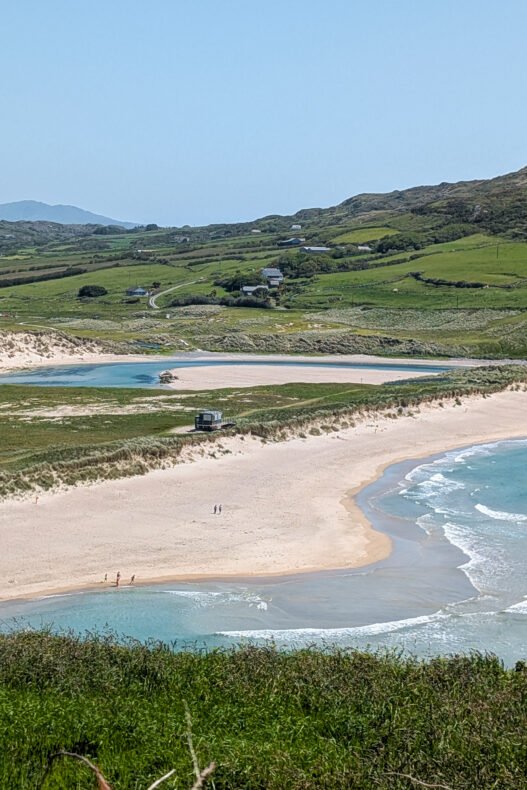
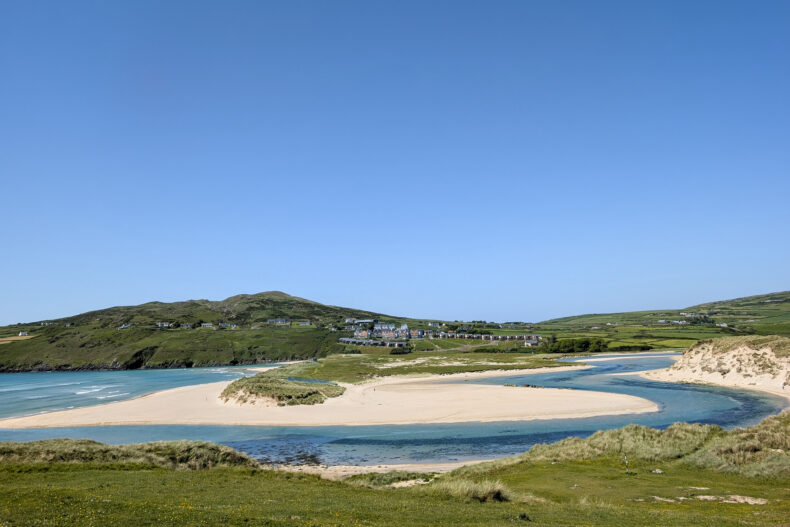
Finish at Barley Cove, with dunes, white sand and a shallow lagoon behind the beach. If we could pick just one beach from this road trip to go back to, it would be this one.
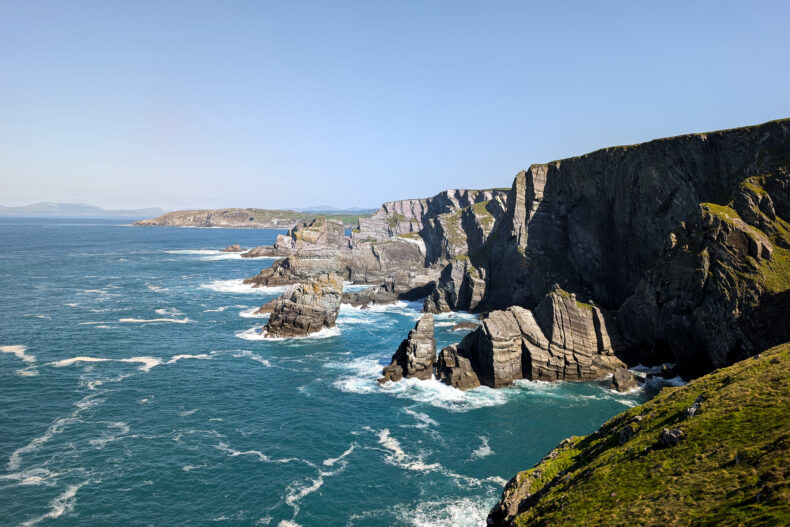
#5 The Ring of Kerry and Killarney National Park: Ireland’s most famous drive (days 9 to 12)
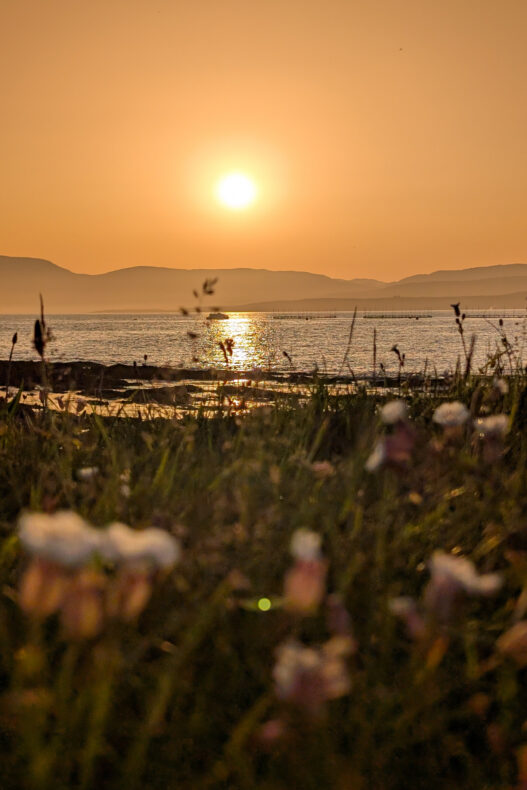
For us, Kerry was the high point of the south. The evening before the Ring of Kerry, we watched the sun go down at Glanlough, on the far side of the Kenmare River. The ring itself is a loop of about 180 kilometres around the Iveragh Peninsula, past beaches, mountain passes and villages of brightly painted houses. Give it at least three days.
On my birthday we ate supermarket cake in the shade near Sneem, because it was over 30°C that day. At Derrynane Beach it only got cool enough for a swim late in the afternoon. The Skellig Ring, including the steep Coomanaspig Pass, took us to the Kerry Cliffs, and from the coast we could see the jagged Skelligs out at sea.
→ See the boat trip around Skellig Michael from Portmagee
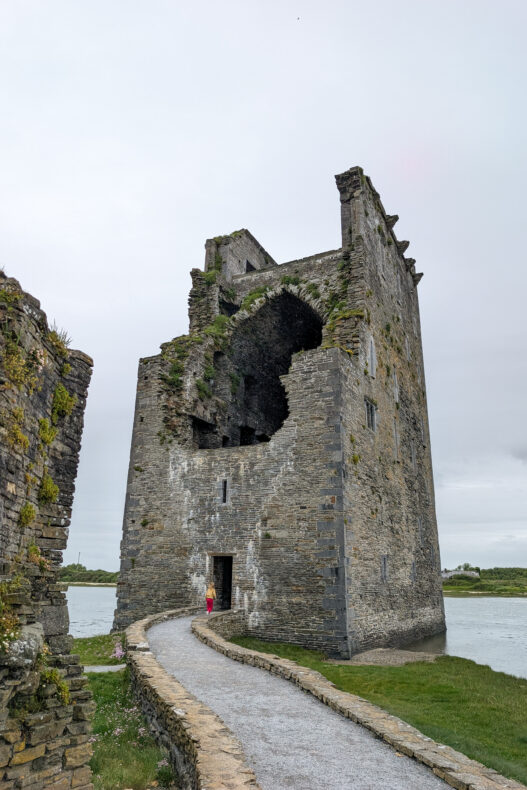
At Inny Beach we watched the sunset while a film crew was busy shooting, and the next morning we had the beach almost to ourselves. After that we went to admire Ballycarbery Castle near Cahersiveen, an ivy-covered ruin by the mudflats.
After the temperature dropped by fourteen degrees, we headed inland via Lickeen Forest and Moll’s Gap to Killarney National Park. There the kids rode their own bikes along the paved path beside Muckross Lake, from the car park at Dinis to the Old Weir Bridge. Next up were scones at Dinis Cottage. Afterwards, drive on to Muckross Abbey, which is free to visit. An ancient yew tree grows in its cloister courtyard.
→ Discover the 10 best stops on the Ring of Kerry
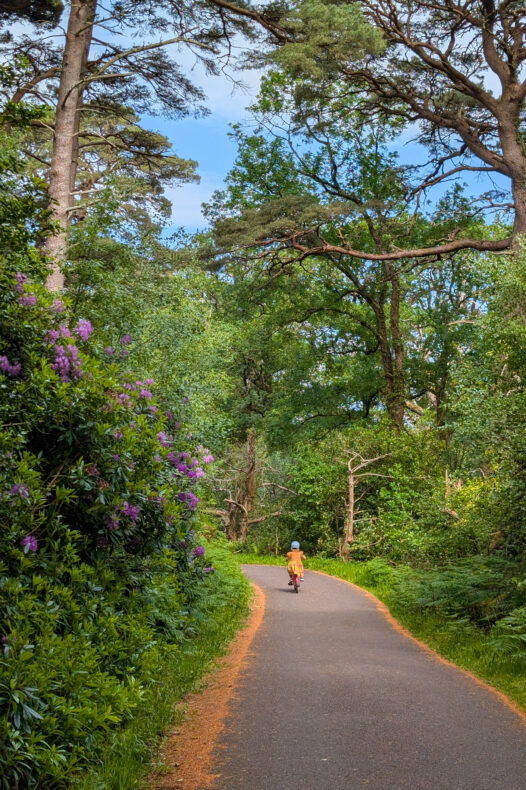
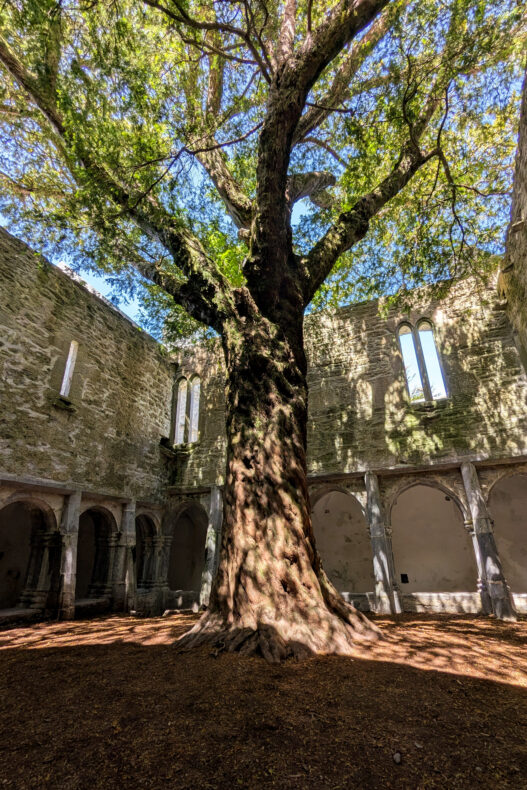
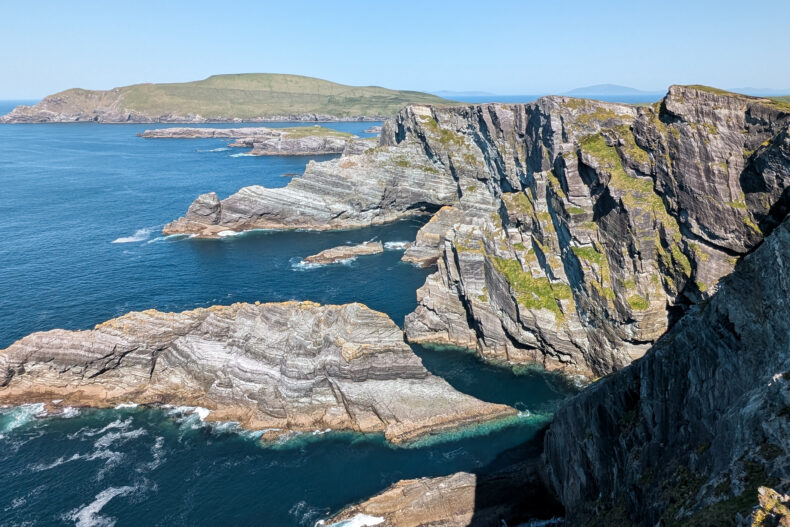
#6 Dingle and the Shannon ferry: to the westernmost tip of Ireland (days 13 to 14)
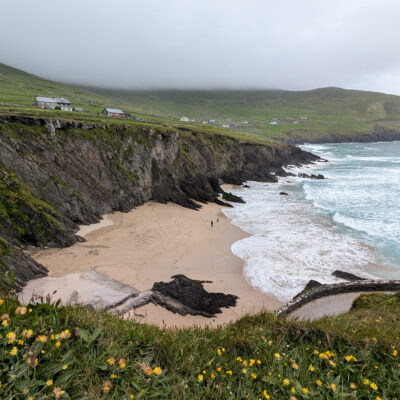
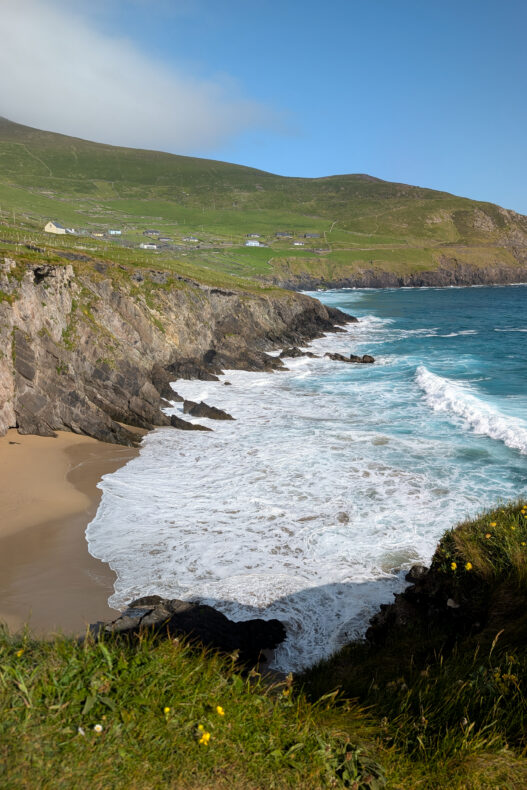
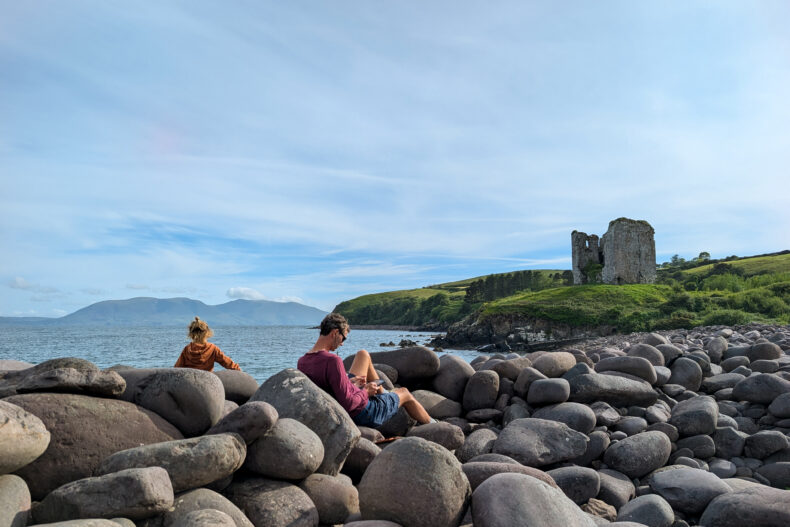
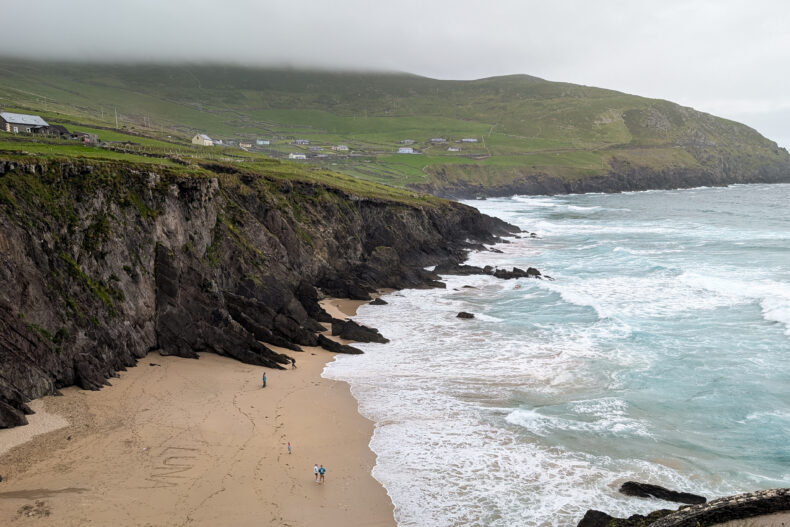
On the Dingle Peninsula we drove past Minard Castle, a ruin above a beach of round boulders, and on to Dunmore Head, the westernmost point of the Irish mainland. At Coumeenoole Beach the road dips down to a cove between the rocks, and at Dunquin Pier the best view is from the top, where you can see the path zigzag down the cliff to the jetty. Offshore lie the Blasket Islands, which you can visit on a boat trip from Dingle.
From Dingle you head north, past Carrigafoyle Castle on the banks of the Shannon. A narrow spiral staircase takes you to the top of the tower, with views across the water. At Tarbert you catch the ferry to Killimer: twenty minutes later you’re on the other side, and you’ve saved yourself a long detour via Limerick. We bought our ticket online, which was a little cheaper than at the pier.
→ See the boat trip to the Blasket Islands from Dingle
#7 The Cliffs of Moher and the Burren: cliffs and a moonscape (days 15 to 16)
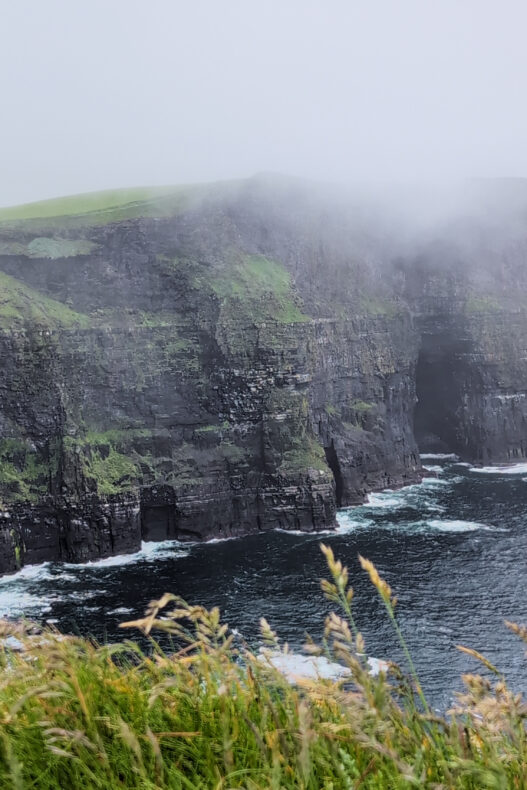
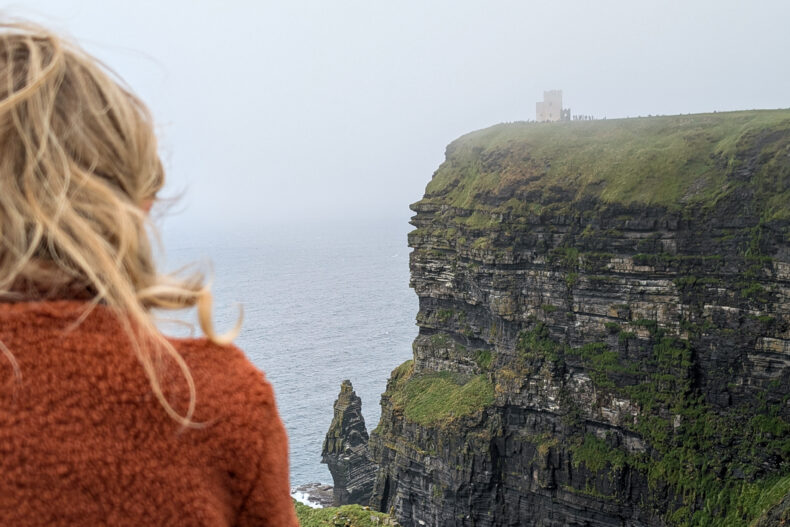
At over 200 metres, the Cliffs of Moher are Ireland’s most famous cliffs, and it shows. We found a packed car park, rain and so little visibility that the puffins were just specks in the distance. You buy your ticket at the car park; it covers the paths and the visitor centre, where the kids decided the short film was the best part.
Go early in the morning or late in the day if you can, or see the cliffs from the water on a boat from Doolin. Personally, we found the Kerry Cliffs and the cliffs at Portacloy in Mayo every bit as beautiful, and far less crowded.
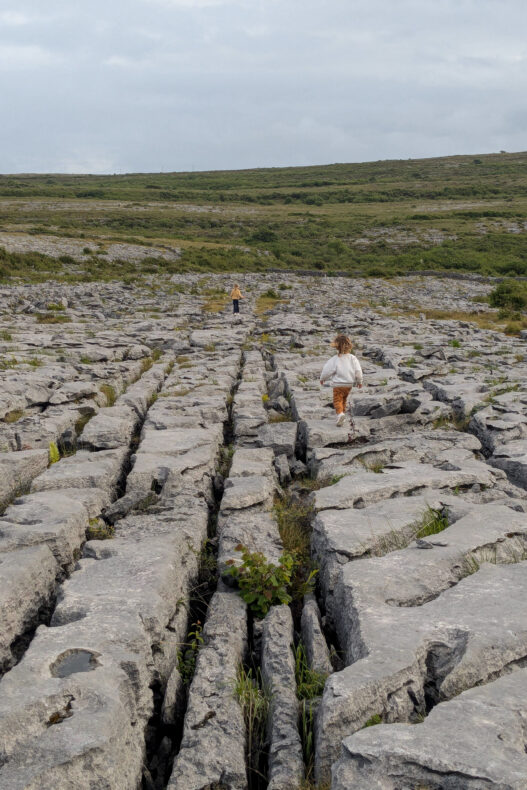
Right next door is the Burren, a bare plateau of grey limestone with little flowers growing in the cracks. Sebastiaan and the kids roamed around from a viewpoint, with no set route, and that worked perfectly. A little inland, near the village of Ruan, we also took a short woodland walk.
→ See the boat trip along the Cliffs of Moher from Doolin
#8 Galway: baking scones and a lively city by the sea (day 17)
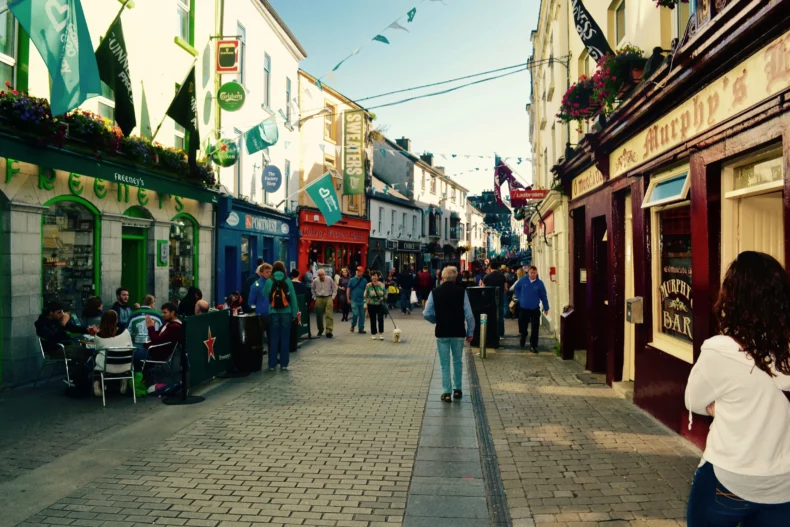
Galway is the best-known city on the west coast, with colourful lanes in the Latin Quarter, buskers and pubs with live music at night. With an extra day, the Aran Islands make a great outing: ferries run from Galway and Doolin to Inis Oírr, the smallest of the three islands.
→ See the day trip by ferry to Inis Oírr
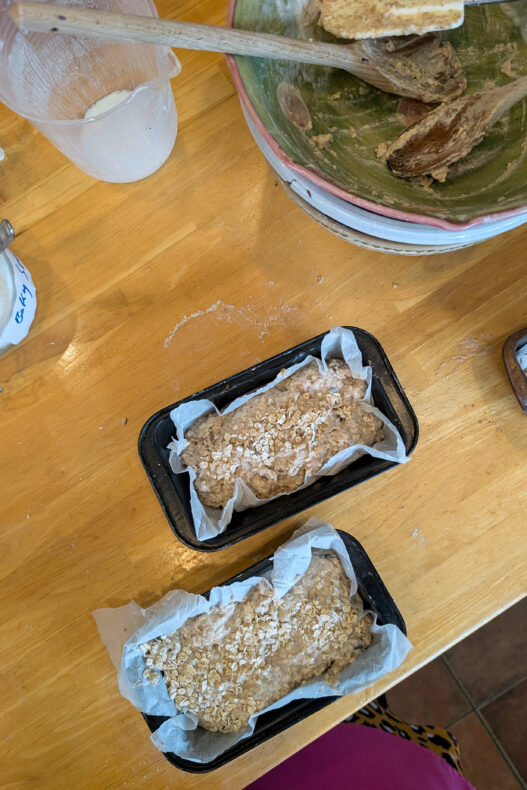
We joined a scone and brown bread baking class at Kate’s home in Kilcolgan, just south of the city. On a rainy day, few things beat a warm kitchen and a tray of scones you made yourself.
→ Book the scone and brown bread baking class with Kate

#9 Achill Island and North Mayo: sheep, cliffs and basking sharks (days 18 to 19)
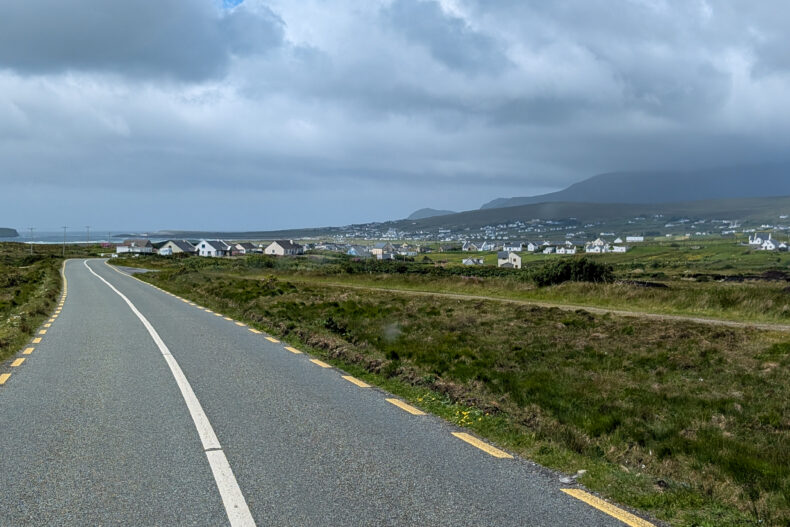
You reach Achill Island over a bridge, yet it feels like an island the moment you arrive. Sheep wander across the road and nibble at front gardens. At the end of a steep coast road lies Keem Bay, a bay of turquoise water below the mountains. We got caught in a cloudburst there and warmed up afterwards with mugs of hot chocolate. Sebastiaan hiked up Croaghaun from the reservoir at Lough Acorrymore and came back drenched, without having seen any of the view.
The north coast of Mayo is one of the quietest corners of the country. At Portacloy, a short but spectacular path along the cliffs leads to the word ÉIRE, laid out in stones in the grass during the Second World War to tell pilots they were flying over neutral Ireland. On a tip from a local we drove on to Rinroe Beach, where around fifteen basking sharks were cruising along the shore. Every so often a fin broke the surface, and twice a shark leapt clean out of the water.
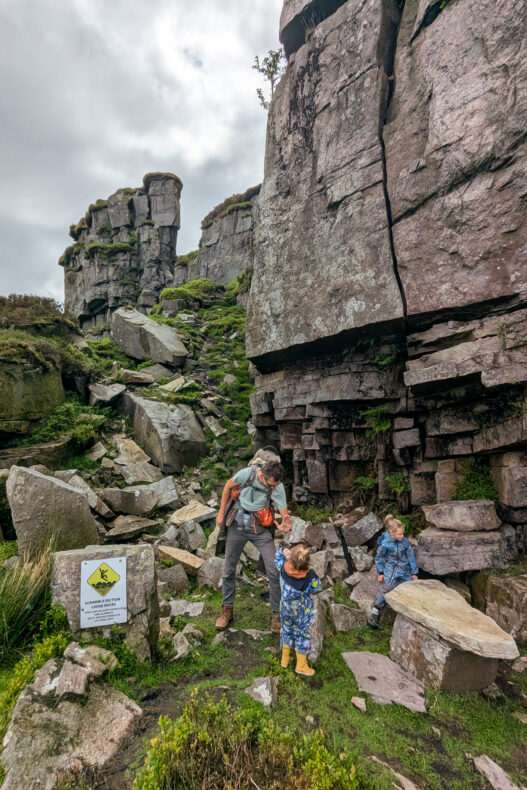
Carry on past Downpatrick Head, where the sea stack Dún Briste stands just off the coast. Don’t miss Poll na Seantainne, a huge collapsed crater just behind the cliff edge. Down at the bottom, the ocean surges in through a tunnel in the rock, and in rough weather the spray shoots up so high it looks like smoke from a distance. That’s where the Irish name comes from: the hole of the old fire.
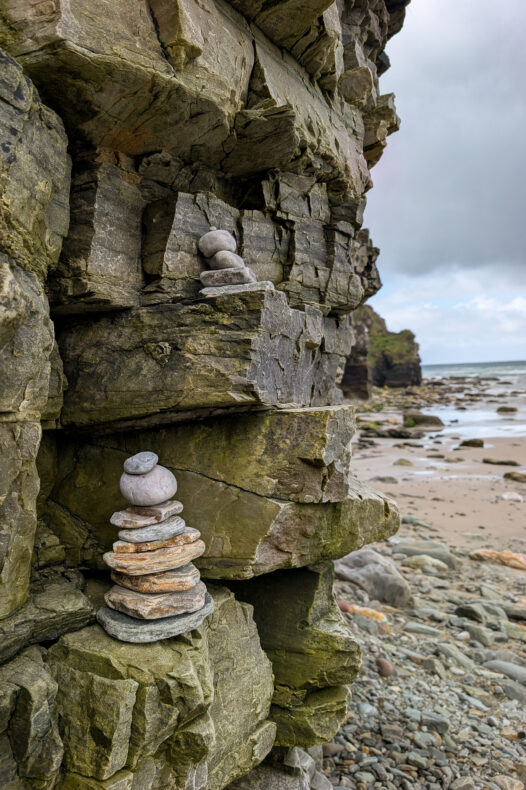
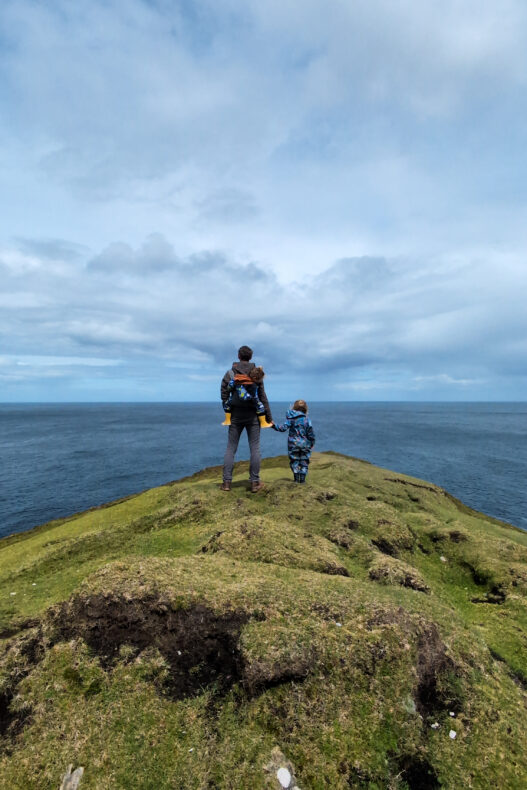
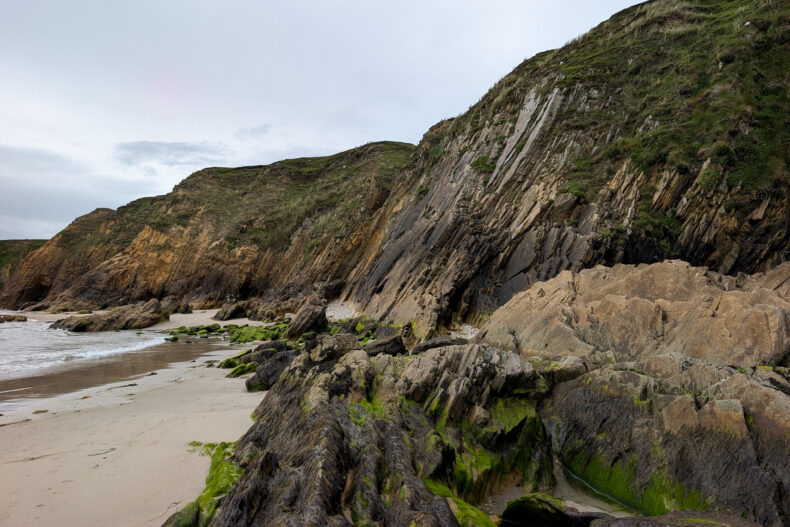
#10 Sligo and the road back: a flat-topped mountain, waterfalls and a walk among the rocks (days 20 to 21)
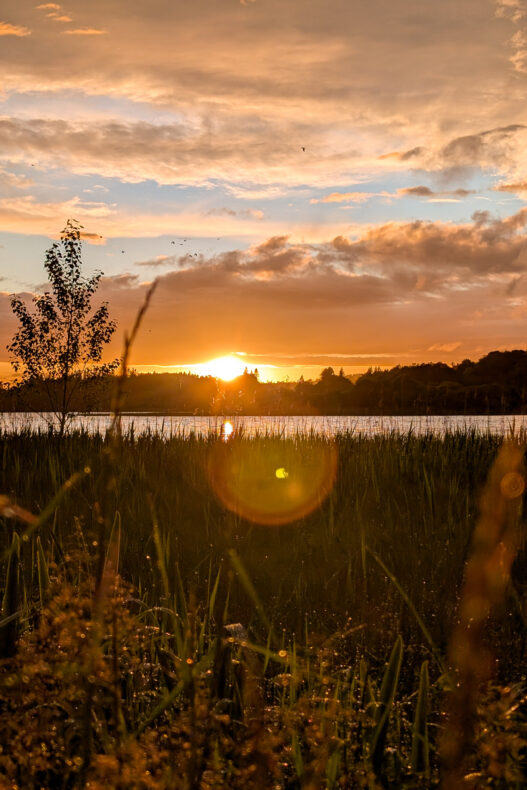
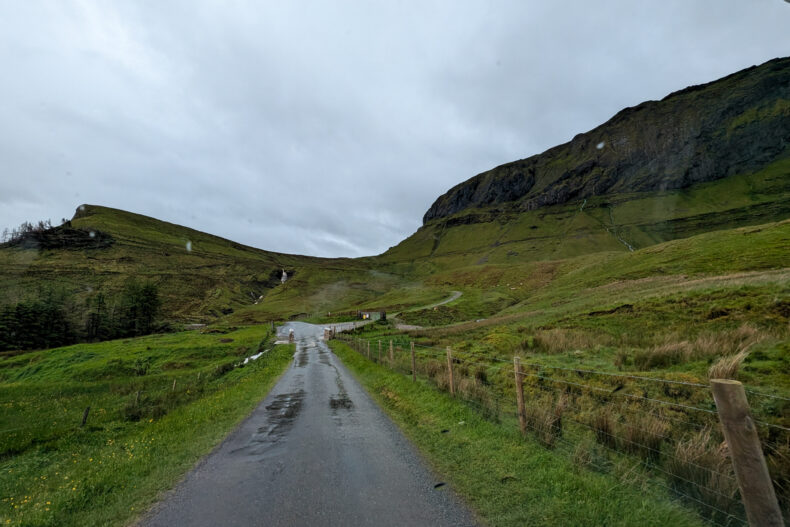
In Sligo you can spot Benbulben from miles away, a flat-topped mountain with steep green sides. Be sure to drive the Gleniff Horseshoe, a narrow loop road through a horseshoe-shaped valley where water pours down the rock faces. We stopped for a short walk to one of the waterfalls; beyond that there’s not much hiking to be done, which we found a shame. In the evening, head a little south to Lough Meelagh, where a golden glow over the water rescued a rainy day for us.
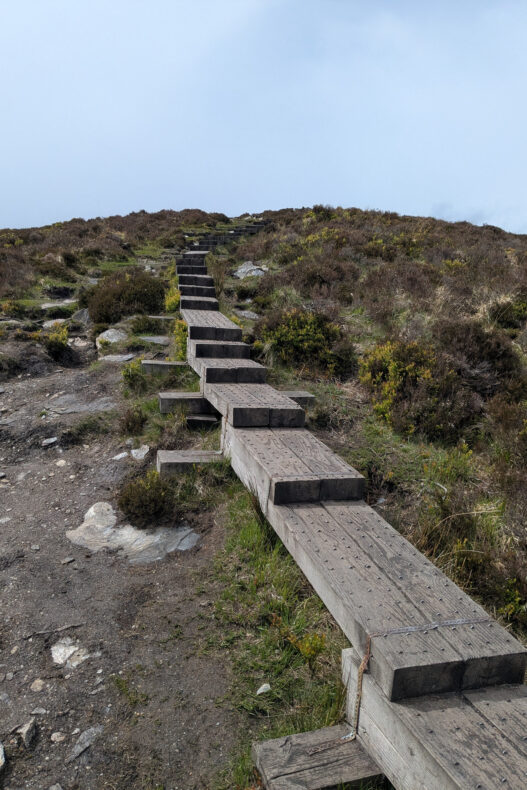
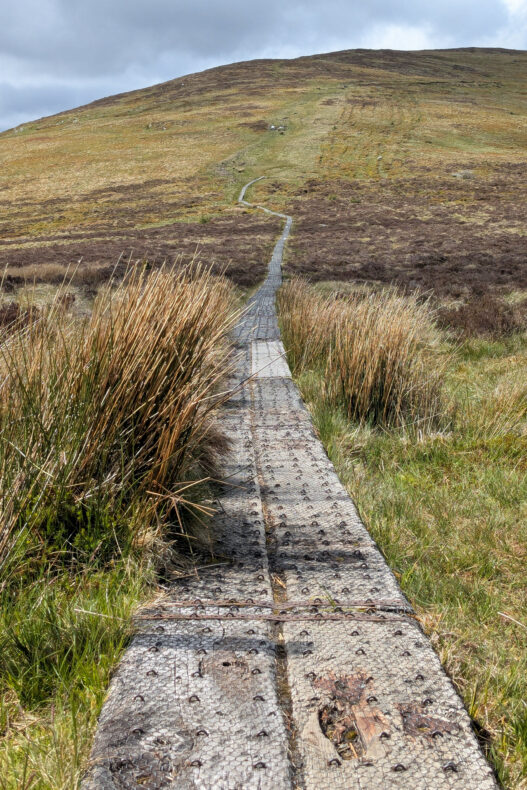
On your last morning, do the Mass Rock walk south of Sligo, over boardwalks and past huge boulders. We were soaked by the end, but it was still one of the best walks of the whole trip. Afterwards it’s about three hours back to Dublin. Got an early flight or ferry? Then spend your final night closer to the city.
2-week Ireland road trip itinerary
With two weeks, leave out Mayo and Sligo and focus on the south and the coast of Clare. Here’s how that works day by day.
Days 1 to 4: Dublin and Glendalough on days 1 and 2, then the Copper Coast and Mahon Falls on day 3, ending in Cork, where you spend day 4.
Days 5 to 10: Kinsale and Clonakilty on day 5, Mizen Head and Barley Cove on day 6. Days 7 to 9 are for the Ring of Kerry from Kenmare and Killarney National Park, and on day 10 you drive the Slea Head Drive on Dingle.
Days 11 to 14: on day 11, take the Shannon ferry via Carrigafoyle Castle to Doolin and the Cliffs of Moher. Day 12 is for the Burren and the drive to Galway, day 13 for Galway itself. On day 14 it’s just over two hours back to Dublin on the motorway.
1-week Ireland road trip itinerary
With one week, go for the southwest. Fly into Cork and pick up your hire car there. Kinsale and the West Cork coast, with Clonakilty, Mizen Head and Barley Cove, fill the first few days. Then drive to Kenmare for the Ring of Kerry and finish in Killarney National Park.
From Killarney you’re back at Cork Airport in about an hour and a half. That way you lose very little time behind the wheel and still see one of the finest stretches of coast in Ireland in a single week.
What if you have more time?
Got a few days to spare, or want to fill in the route differently? These places slot nicely into an Ireland road trip.
Bonus tip: the inland route via Kilkenny and Cashel
Between Dublin and the south you can also take the inland route. Kilkenny is about an hour and a half from Dublin, a medieval city with a grand castle, a cathedral with a round tower you can climb, and the Medieval Mile linking the two.
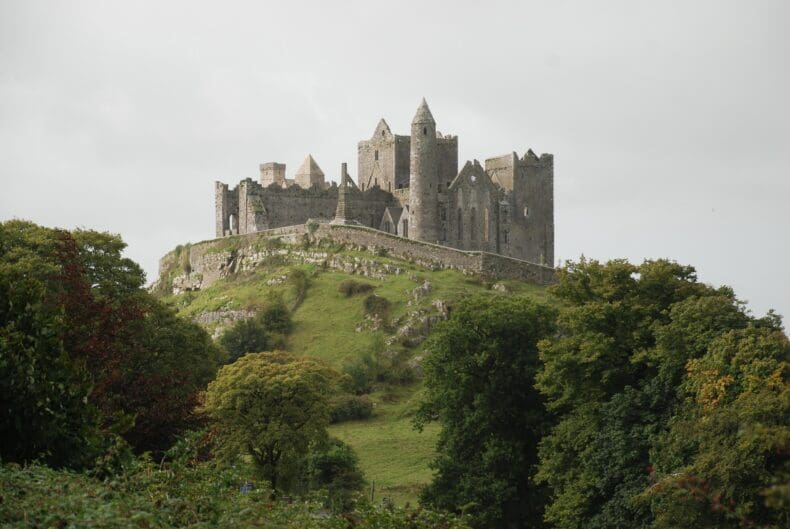
A little further southwest, close to the M8 to Cork, the Rock of Cashel crowns a limestone hill above the countryside. On top are the remains of a cathedral, a round tower and Cormac’s Chapel, built in the twelfth century. It’s an easy stop on your way to Cork.
Bonus tip: the Ring of Beara and the Healy Pass
Finding the Ring of Kerry too busy? The Ring of Beara, on the peninsula between Kenmare and Bantry, is a quieter alternative. The route runs past small fishing villages and rugged coastline, and over the Healy Pass, a mountain road with hairpin bends across the Caha Mountains.
Bonus tip: Connemara and the Sky Road
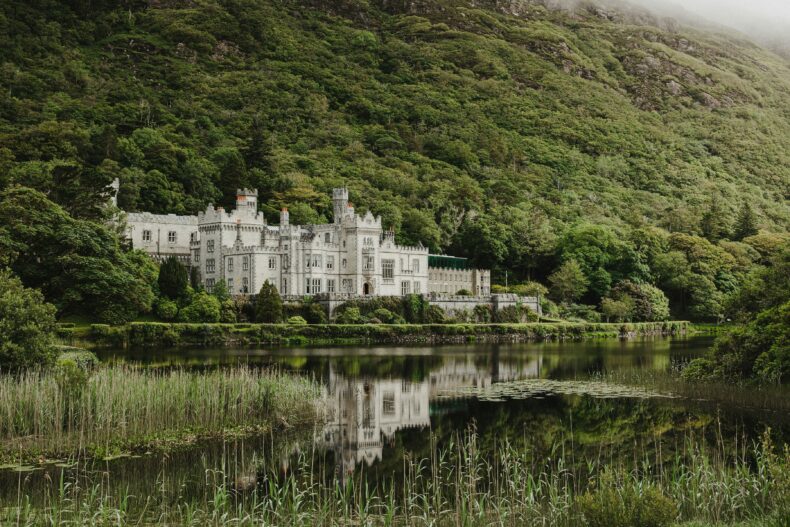
West of Galway lies Connemara, a wild landscape of lakes, bog and low mountains. Kylemore Abbey, a castle beside a lake, is its most famous photo stop. From Clifden you can drive the Sky Road, a short loop high above the Atlantic with views over the little islands offshore.
→ See the full-day Connemara tour with Kylemore Abbey
Bonus tip: Donegal and the Giant’s Causeway
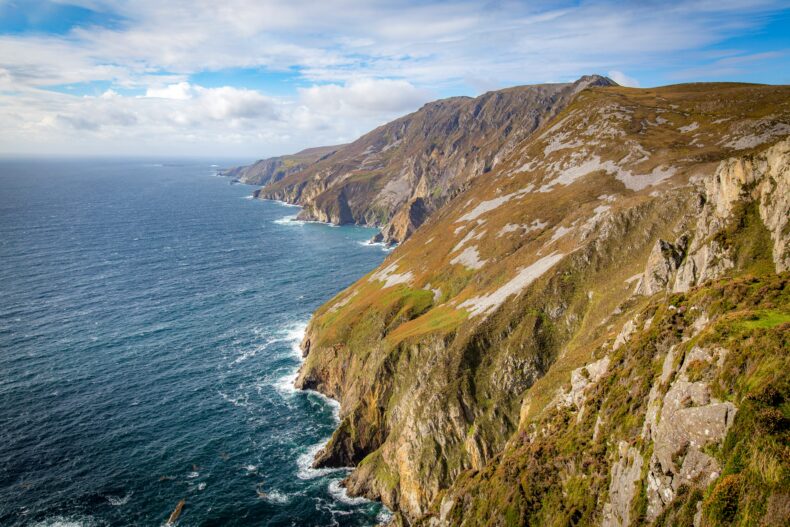
North of Sligo begins Donegal, the wildest and least visited corner of Ireland. Here you’ll find the cliffs of Slieve League, among the highest sea cliffs in Europe, and Malin Head, the island’s northernmost point. We didn’t get that far ourselves, and it’s high on our list.
From Donegal it isn’t far into Northern Ireland and the Giant’s Causeway, with its thousands of hexagonal basalt columns. Crossing the border? Most visitors who don’t hold a British or Irish passport need an ETA, the UK’s electronic travel authorisation, even when arriving by road.
→ Discover the 20 best places to visit in Ireland
→ Discover the 18 best stops on the Wild Atlantic Way
→ Discover our tips for Ireland by campervan