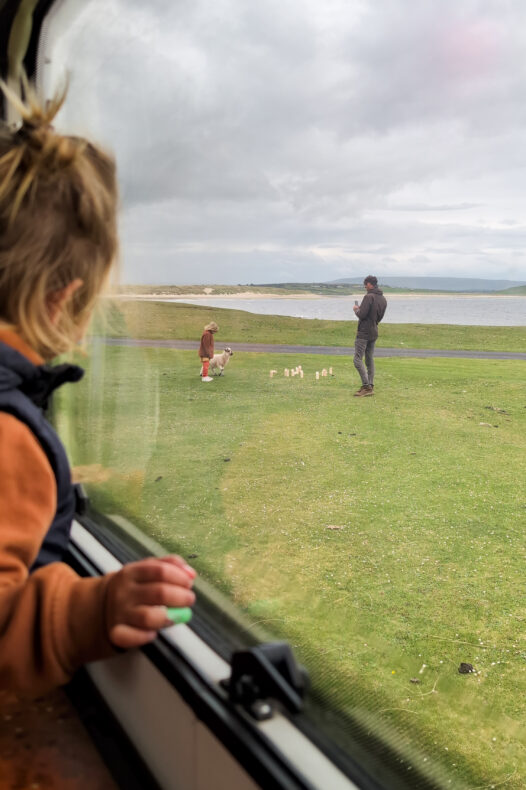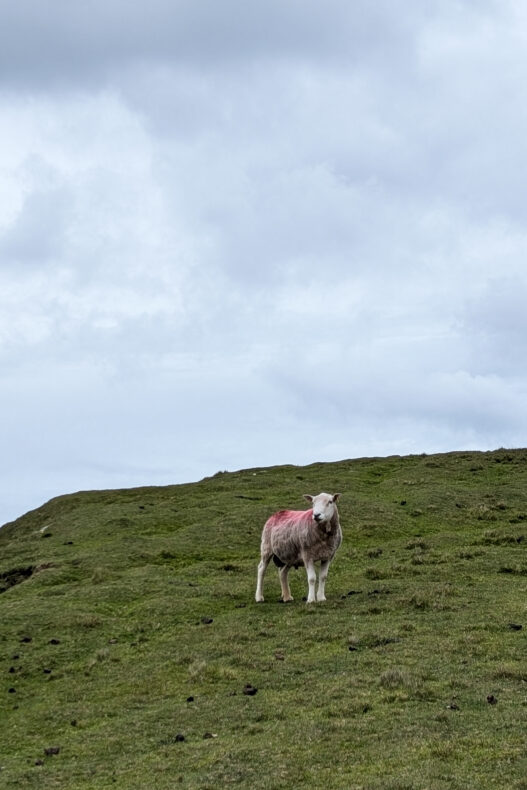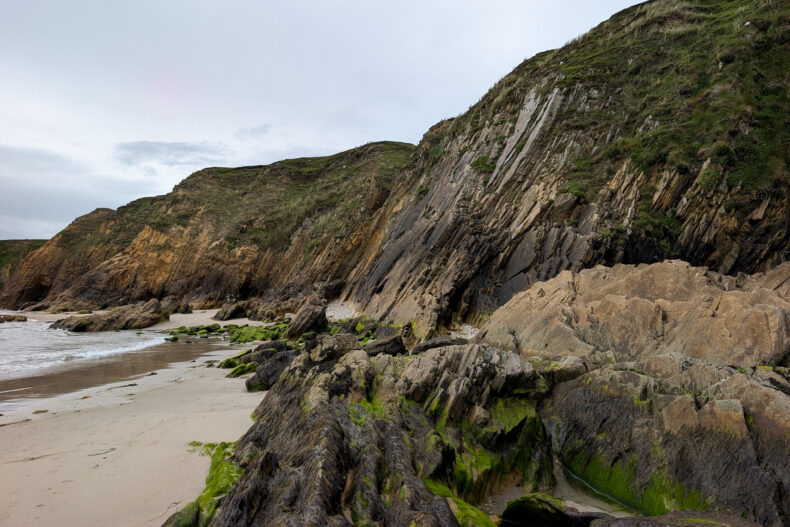
Coffee next to a crumbling castle, a beach right outside the door, and sheep grazing around the van as you drift off to sleep. We spent almost four weeks travelling around Ireland in our own campervan, with our daughter and son in the back.
Ireland is a wonderful country to explore by campervan, but it isn’t France or Spain. The roads are narrower, proper aires are few and far between, and the weather does exactly what it likes. Go in knowing that, though, and you’re in for a brilliant trip.
In this guide to touring Ireland by campervan, we’ll tell you how we got there, where we parked up for the night, how we dealt with water, gas and rubbish, and what didn’t go to plan. We also share our favourite drives and the spots where we’d happily have stayed another night.
Tips for Ireland by campervan
A few things are worth knowing before you roll onto the ferry. Here are our most useful tips, from the crossing all the way to the bin bags.
How do you get to Ireland with a campervan?
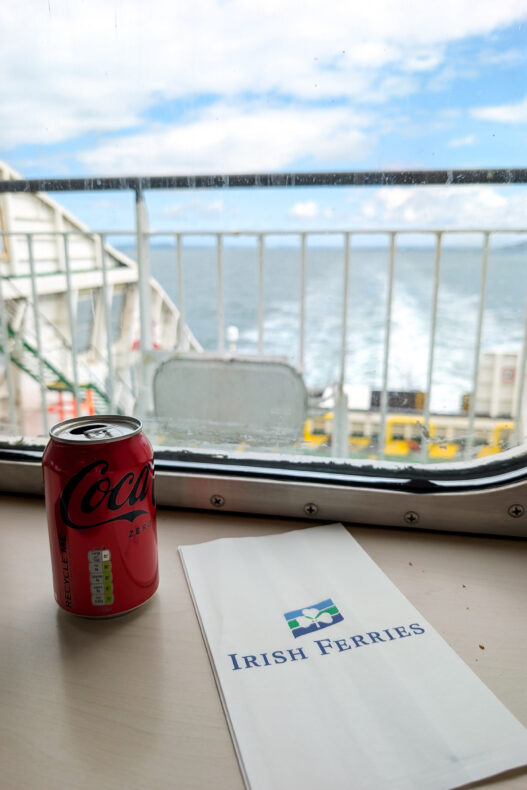
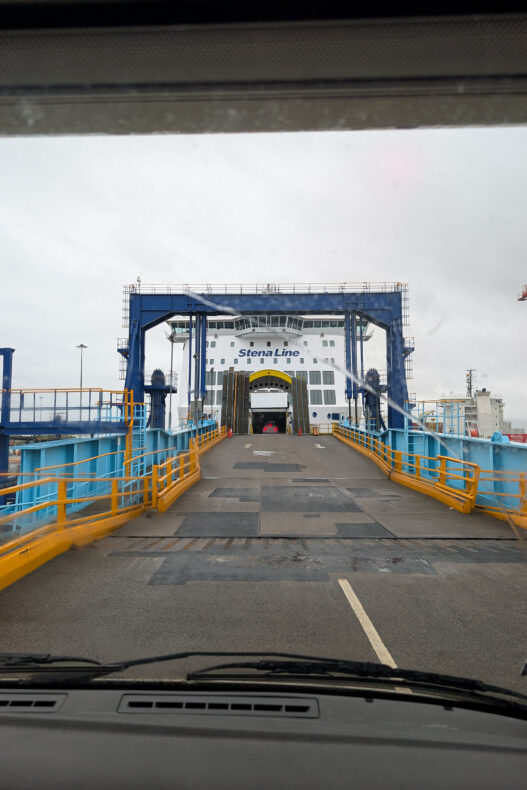
We drove from the Netherlands and took the land bridge through Britain. The ferry from Dunkirk took us to Dover, then we drove via Cambridge and across Wales to Holyhead, where Irish Ferries got us to Dublin in about three and a half hours. We took around a week over the outward journey, because we love pottering around England too. On the way home we sailed with Stena Line from Dublin to Holyhead and crossed from Dover to Calais.
Driving through Britain means sorting out the paperwork for the whole family in good time. Unless you’re a British or Irish citizen, everyone needs a valid passport, the kids included, plus a UK ETA: a digital travel permit for the United Kingdom that you apply for online or in an app. We had it all arranged well before we left, so it didn’t cost us a thought on the road.
Prefer to skip Britain altogether? There are direct ferries from France: Cherbourg to Rosslare or Dublin, Roscoff or Boulogne to Cork, and Dunkirk to Rosslare. You’ll be on board for 14 to 24 hours, though, which is why we went for two short crossings instead. In summer, book well ahead, as fares also depend on the length and height of your van.
Should you hire a campervan in Ireland?
No van of your own, or only two weeks off? Then it often makes more sense to fly to Dublin and pick up a campervan there. You’ll easily save a week of travelling there and back, and you start your route fresh.
Go for a compact model, even if that big one with the huge bed is tempting. On the coast roads of Kerry and Mayo you’ll be grateful for every centimetre you don’t have. Ours is six metres long and got through everywhere without trouble, and a camper van is easier still.
→ Compare campervan hire in Ireland with Campervan Planet
How many days do you need for Ireland by campervan?
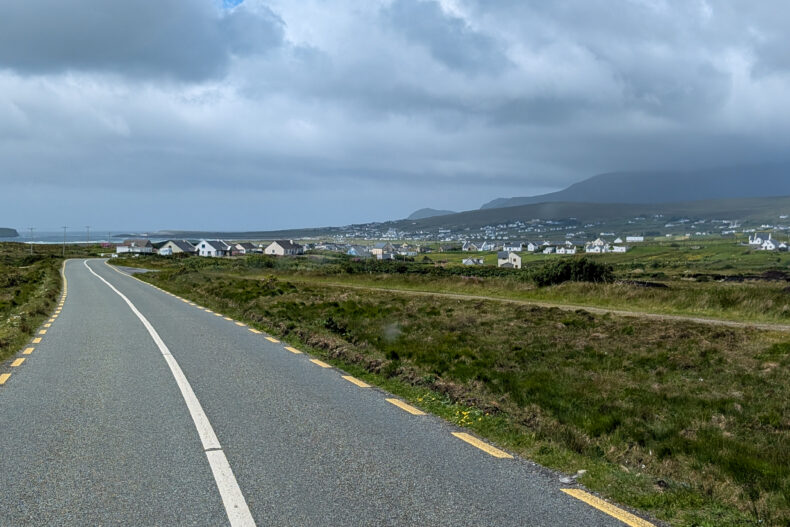
Bringing your own van from mainland Europe? Then count the journey there and back first. You can reach Holyhead in a couple of long driving days, but we took a week. Once you’re in Ireland, allow at least three weeks for a loop along the south and the west coast. With two weeks, stick to the south-west, from Cork via Kerry to Clare.
We spent almost four weeks in Ireland and drove clockwise. From the Wicklow Mountains we followed the coast of Waterford and Cork to Kerry, took the Shannon ferry to Clare and Galway, and then carried on to Achill Island, North Mayo and Sligo. After a lot of rain in a small van, we cut the trip a little short and headed back to the boat via Dublin.
Expect a slower pace on the coast roads than you’re used to. A hundred kilometres can easily take half a day once you’ve stopped for a few beaches and viewpoints.
→ Discover our 3-week Ireland road trip itinerary in 10 stops
→ Discover the 18 best stops along the Wild Atlantic Way
What is the best time to visit Ireland by campervan?
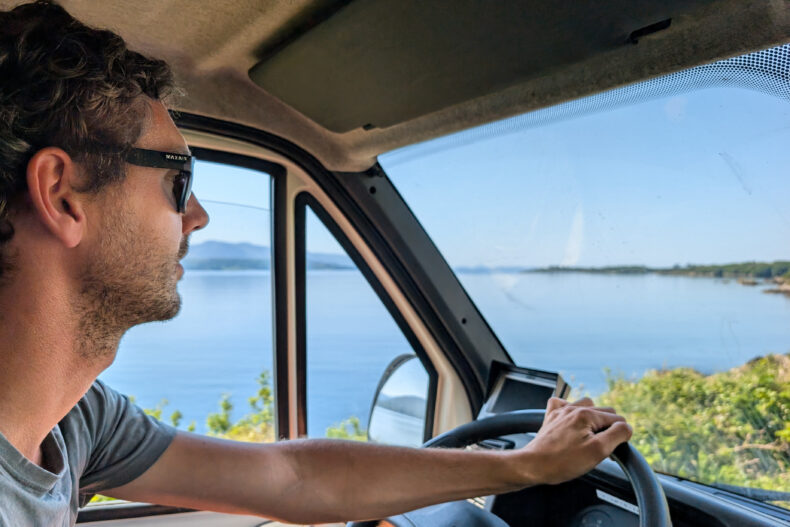
May to September is the sweet spot for a campervan trip. The evenings are long, the verges are full of wild flowers, and most campsites and attractions are open. July and August are the busiest months, especially around the Ring of Kerry and the Cliffs of Moher, so book campsites in advance then.
What you can never count on is the weather. In Kerry we suddenly found ourselves in a heatwave, hiding in the shade in Sneem and only heading to the beach late in the afternoon. A few days later the rain gear was back on as we wound our way through the mountains. So pack shorts and plenty of layers for everyone.
What is driving a campervan in Ireland like?
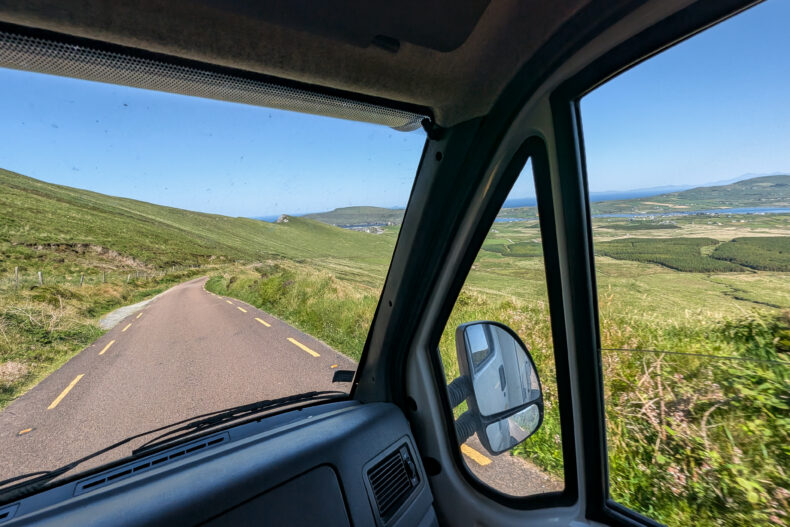
On the motorways it feels much like home, apart from driving on the left. Turn off the main road, though, and Ireland narrows fast. Many coast roads are a single lane shared with oncoming traffic, with stone walls or hedges brushing past your mirrors. Take it slowly, pull into a passing place and give way when you need to, and you’ll be fine. Irish drivers are patient, and nearly everyone raises a hand as they pass.
Do check your route for steep mountain passes. The Conor Pass on the Dingle Peninsula is closed to vehicles over two tonnes, so campervans and caravans have to go around. The Coomanaspig Pass on the Skellig Ring, close to the Kerry Cliffs, is allowed, and we drove it in our six-metre van. It’s steep and narrow. It went fine, but it’s good to know what’s coming.
Coaches drive the Ring of Kerry anticlockwise. We went the other way round, as recommended, and barely noticed them. Height barriers and no-parking signs only caught us out in a handful of places, because Park4Night usually tells you in advance whether a car park has a barrier. Supermarket car parks were never a problem, and the villages were easy enough too, as long as you think ahead about where to leave the van.
Around Dublin, the M50 has a barrier-free toll: pay online by 8 pm the following day. And if you’re driving off the ferry in Dublin port, keep your eyes open, as the signs steer you almost automatically into the Dublin Port Tunnel, which is tolled as well.
→ Discover the 10 best stops on the Ring of Kerry
→ Read our 14 tips for car hire and driving in Ireland
Where can you stay overnight with a campervan in Ireland?
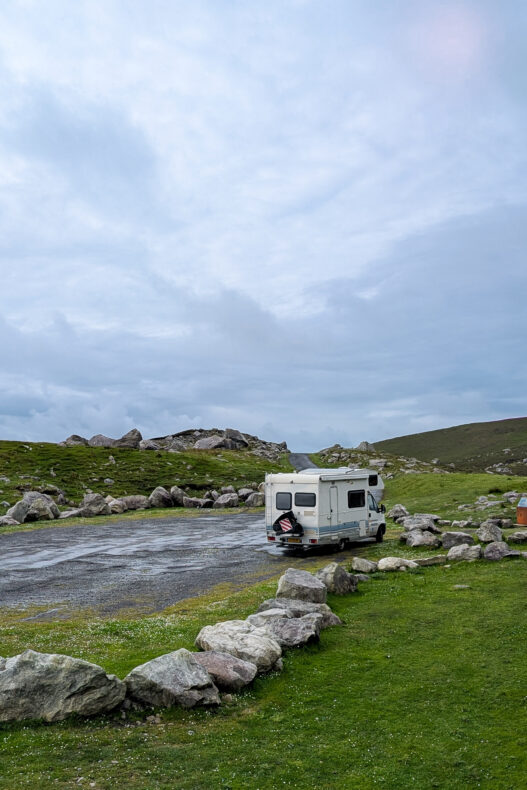
Aires like you find in France barely exist in Ireland. We wild camped for the whole trip and found our spots with the Park4Night app. Our van is self-sufficient, with solar panels and its own bathroom, so we didn’t need a campsite to shower or charge up.
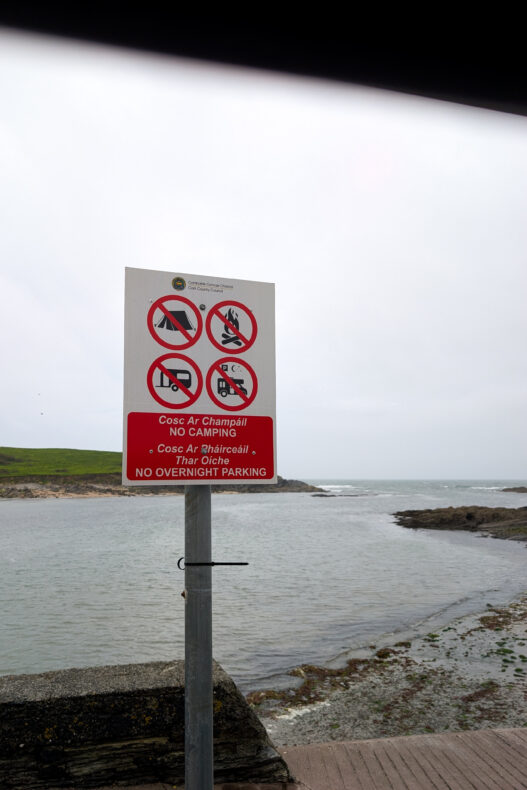
That said, overnight parking isn’t allowed everywhere. Officially you can only stay where it’s permitted or with the landowner’s consent, and many coastal car parks are meant for a short stop. We kept things tidy: no chairs outside, signs respected, nothing left behind. Always read the latest reviews on Park4Night as well. A spot that someone once marked as a favourite may have gained a no-overnight sign since.
Some places do have proper arrangements. At the Upper Lake car park in Glendalough, for example, you simply pay for the number of nights you stay. On some beaches people even drive onto the sand, such as at Inch Beach on the Dingle Peninsula (not to be confused with Inch Strand in East Cork). There were cars on the sand when we were there, but we didn’t dare with our heavy van. If you’d rather be on a campsite, there are more than a hundred on the island, listed on campingireland.ie, and many of them close in winter. A cheaper option is Safe Nights Ireland, a network of simple pitches at farms, pubs and the like.
How do you manage water, gas and rubbish on the road?
You can often fill up with water at petrol stations, and Park4Night also shows places to fill your tank and empty your grey water. We brought two gas bottles from the Netherlands, which lasted the whole trip. Bring enough of your own, as continental gas bottles can’t simply be swapped in Ireland. Power was never an issue: our solar panels and inverter did the work, and the leisure battery charged while we drove.
Our water pump had been acting up for a while. Most of Ireland’s camping shops are around Dublin, so on day one we bought a spare there, just in case. In the end the old pump held out for the whole trip and the new one stayed in the cupboard, but it was reassuring to have it.
The trickiest part of wild camping was the rubbish. Bins are almost nowhere to be found in Ireland, not even at viewpoints or car parks. Taking your litter home with you is simply what people do here, and it shows: the countryside is spotless. So bring a few sturdy bin bags, because it can be a while before you can get rid of them. On Achill Island we even came across a talking bin in one village. Apparently they’re so rare that they make a bit of a fuss about them.
What should you watch out for on a campervan trip in Ireland?
The biggest difference from a campervan trip in southern Europe is the weather. Rainy days with two small children in a van are hard work: wet coats, no space and nobody keen to go outside. By the time we reached Galway, we were seriously thinking about catching the boat home. In the end we shortened the trip a bit. So plan a few indoor things, like a scone-baking workshop near Galway, the Victorian glasshouses in Dublin or a hot chocolate after a downpour.
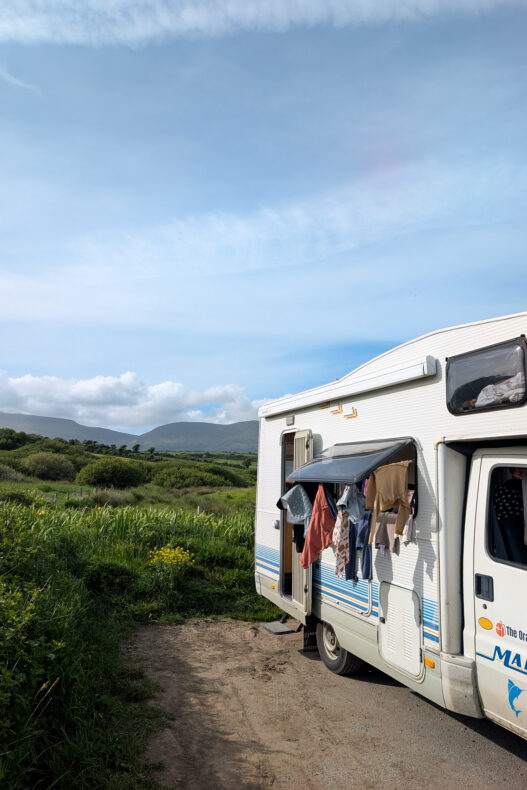
Then there’s something every camper will recognise: laundry. In Killarney we ended up at a launderette with dryers that barely dried, and drove on with damp washing and clammy bedding. Check the reviews of a launderette on Park4Night or Google Maps before you go. People often warn about a bad dryer there, although not always. A washing line on the van and a sunny day are worth their weight in gold in Ireland.
On calm days in the north-west, watch out for midges. These minuscule biting flies gather around lakes and in woodland. By a lake in Sligo they even crept into the van through the vents. A good repellent helps, and on windless days so does a spot by the sea, where there’s a breeze.
It can also blow a gale on the coast, and a campervan catches a lot of wind. Park with the nose into the wind, so the van rocks less and you sleep a lot better.
The 6 best drives for a campervan trip in Ireland
In Ireland, the road is often just as good as where it takes you. These were our favourite stretches behind the wheel.
#1 Copper Coast Drive: cliffs and coves in Waterford
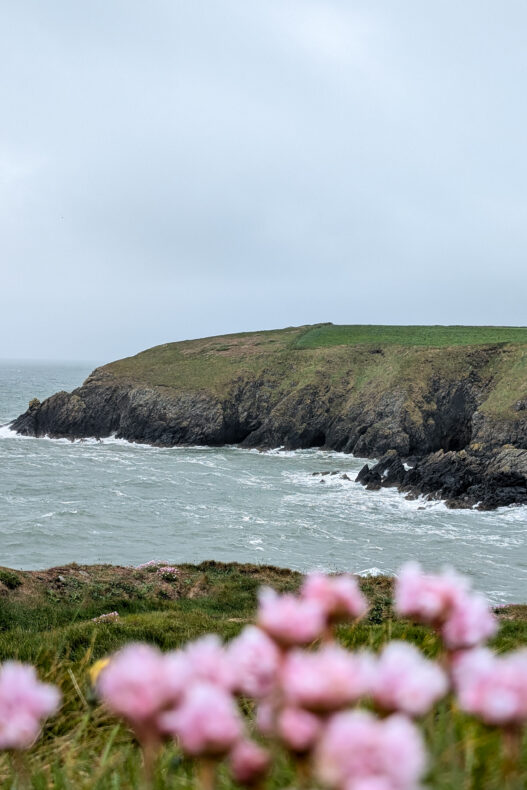
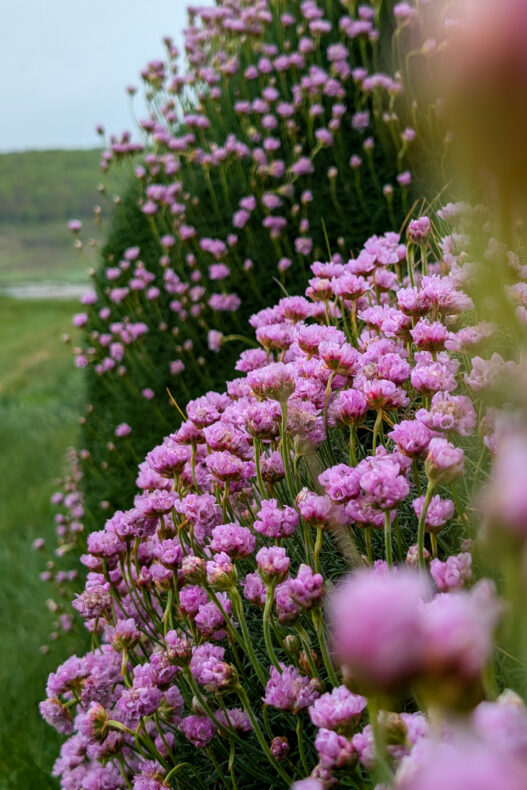
The R675 traces the coast of County Waterford past rugged cliffs, little coves and verges bursting with wild flowers. It’s a quiet road, and every few kilometres there’s another reason to pull over. The coast takes its name from the copper mines that once operated here.
We parked up here on a stormy evening, right on the coast, and the van rocked all night long. From the Copper Coast it’s a twenty-minute drive inland to the Comeragh Mountains and Mahon Falls.
#2 The N71 over Moll’s Gap: through the mountains of Kerry
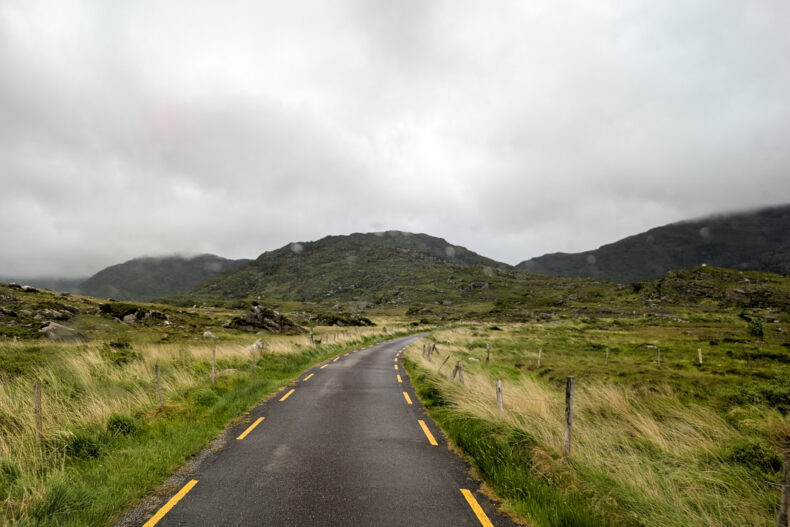
Between Kenmare and Killarney, the N71 climbs over Moll’s Gap, a mountain pass looking out over the bare peaks of Kerry. Then it winds down towards the lakes of Killarney National Park. Pink rhododendrons lined the road the whole way, even with the clouds hanging low.
It’s a busy tourist route, so expect oncoming traffic and the odd coach that needs the whole bend. Take your time and stop at a viewpoint or two to get the most out of it.
#3 The Skellig Ring: the quiet side of Kerry
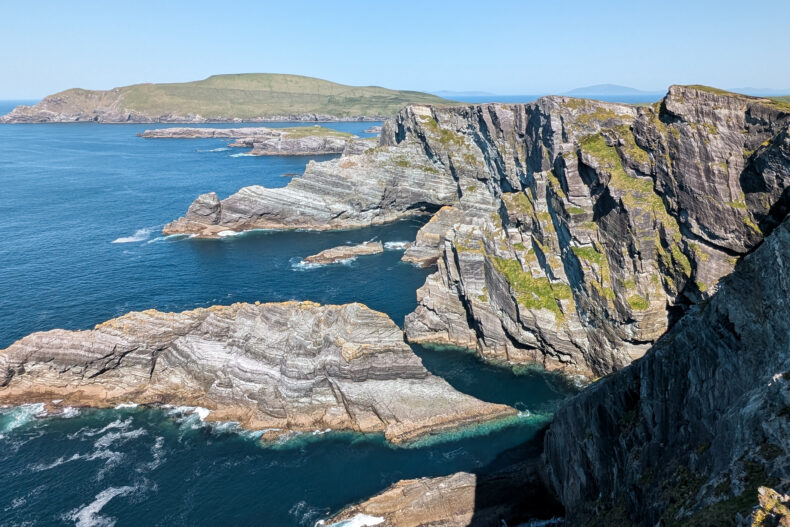
The Skellig Ring is a loop off the Ring of Kerry where the big coaches don’t go, and you notice it straight away. You drive past bays and green hills, with the rocks of Skellig Michael and Little Skellig out at sea and Puffin Island closer to shore.
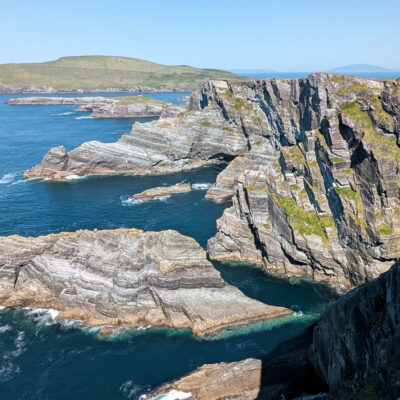
Near Portmagee you’ll find the Kerry Cliffs, for us some of the finest cliffs of the whole trip. On the way there you climb the Coomanaspig Pass, a steep, narrow section to keep in mind with a campervan. We made it over in our six-metre van without a problem.
#4 Slea Head Drive: around the tip of Dingle
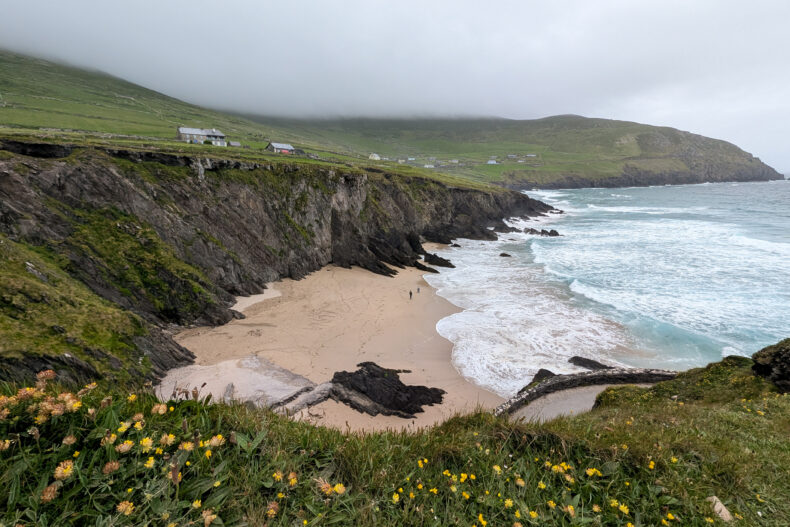
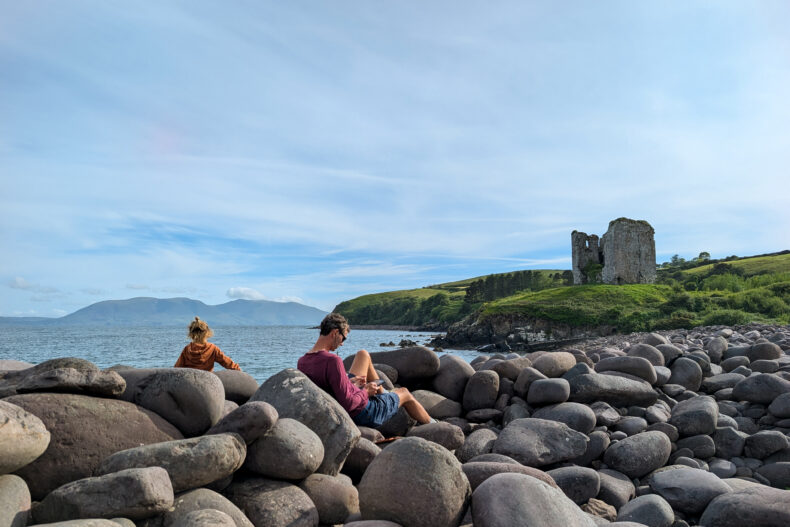
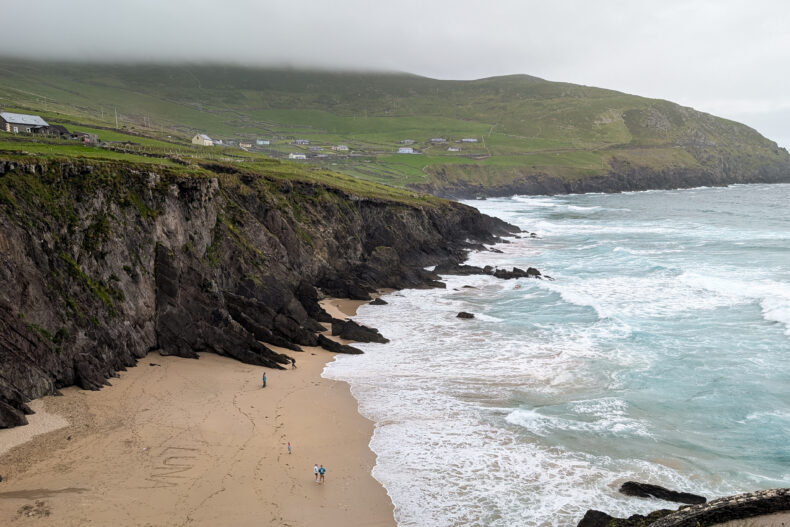
Around the tip of the Dingle Peninsula you drive with the Blasket Islands in view. We stopped at Minard Castle, a ruined castle above a beach of round boulders, at Dunmore Head and at the little beach of Coumeenoole. In places there’s a rock face on one side and the ocean on the other, so this isn’t the spot to overtake.
At Dunquin Pier, a zigzag path leads down to the boat for the Blasket Islands. It’s a touristy stop, but the view from the top makes up for it.
#5 Achill Island: out to Keem Bay
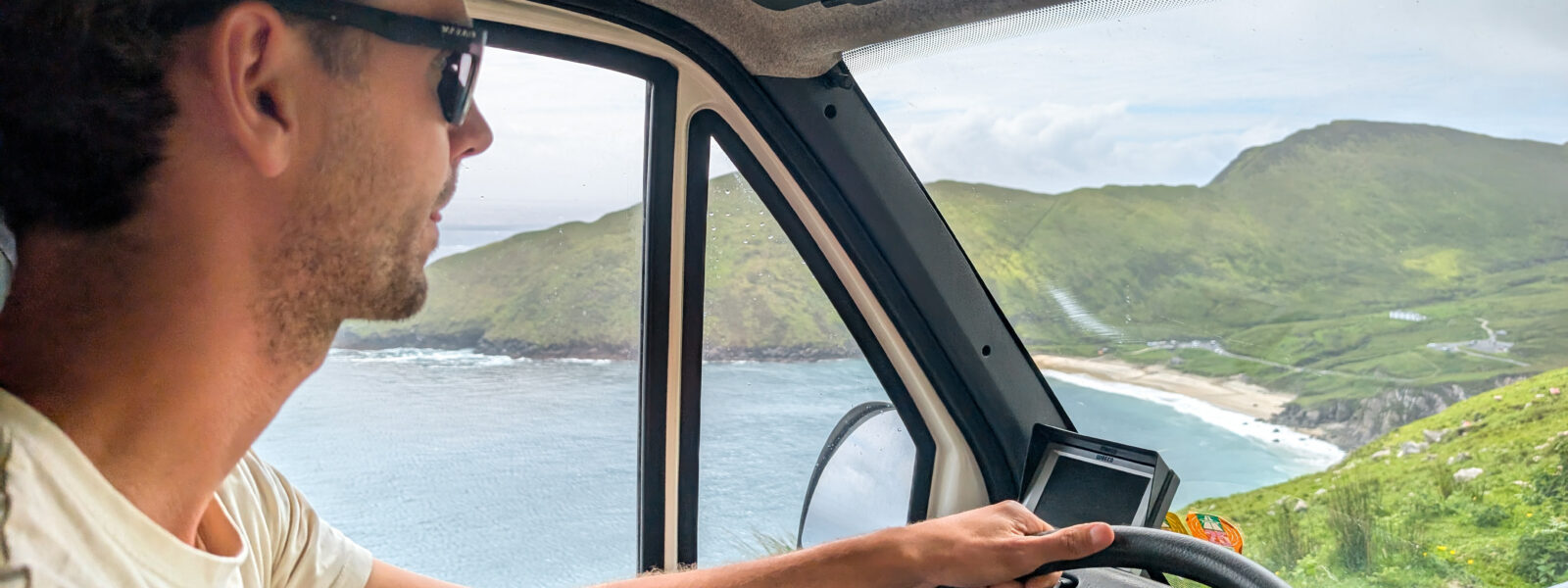
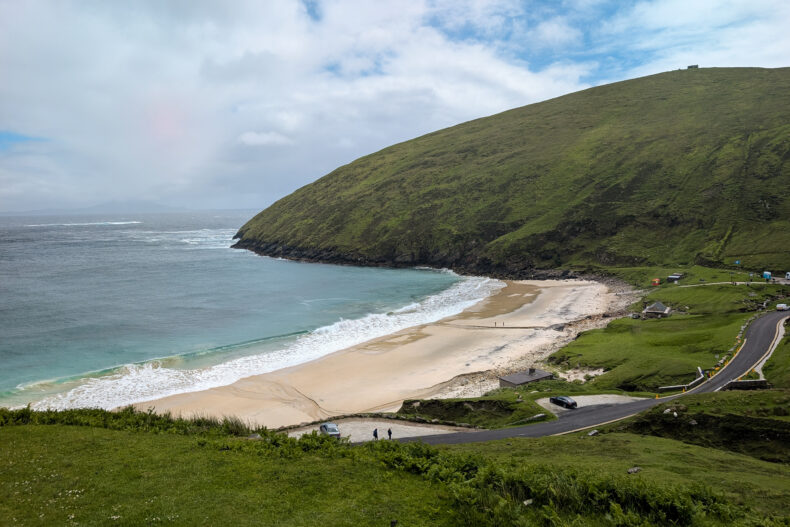
A short bridge takes you onto Achill Island, but once you’re across it really does feel like an island. Sheep wander the road in no particular hurry, and some help themselves to people’s front gardens. At the end of a steep coast road lies Keem Bay, a bay between the mountains with a waterfall and the Cathedral Rocks nearby.
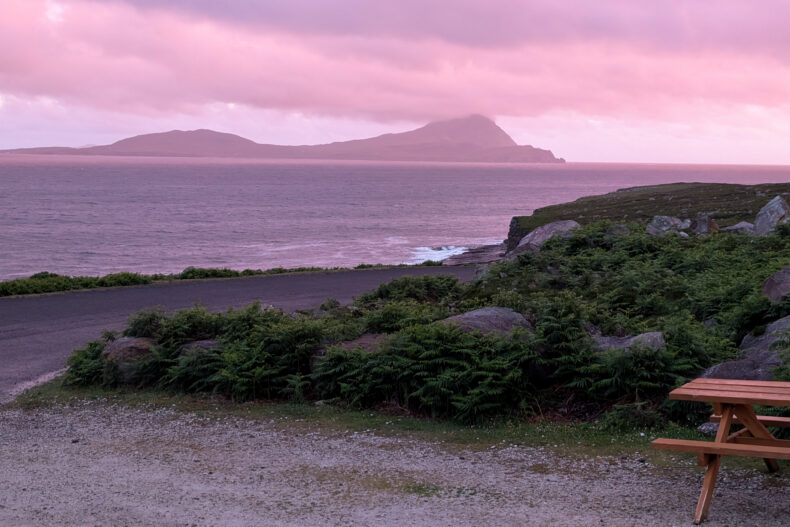
At Corraun, just before the bridge onto the island, the evening sky turned bright pink. On Achill itself we sheltered from a downpour with a hot chocolate.
#6 Gleniff Horseshoe: waterfalls in Sligo
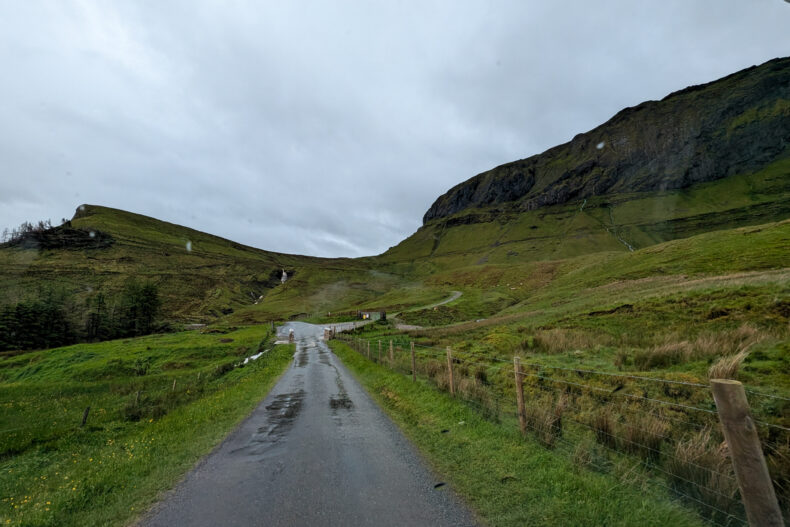
At the foot of Benbulben, a short loop road takes you through a horseshoe-shaped valley ringed by sheer rock walls. It rained almost non-stop for us, so water was pouring down from every side. For us, one of the most overwhelming landscapes we saw in Ireland.
Halfway round we stopped briefly to walk to a waterfall. There isn’t much more hiking to be done here, so think of it mainly as a stunning drive.
Our 8 favourite campervan overnight spots in Ireland
Some of the places where we spent the night really stuck with us. These were our favourites.
#1 Mahon Falls: a waterfall among the sheep
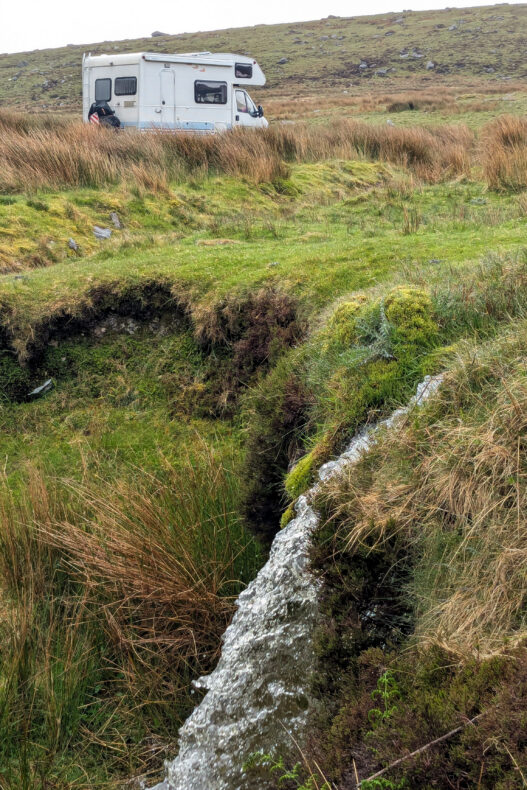
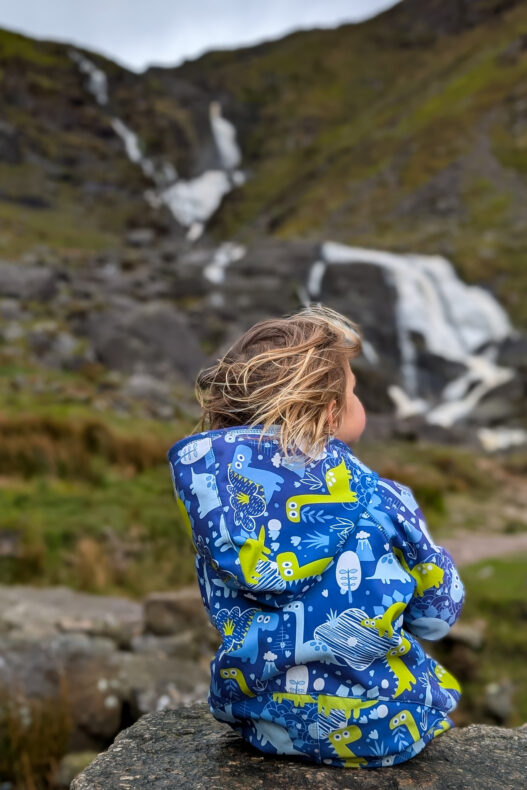
In the Comeragh Mountains, twenty minutes from the Copper Coast, you’ll find Mahon Falls. We parked in a fairytale valley with sheep and lambs all around the van. Sebastiaan and our son scrambled up the steep path together until they were standing above the waterfall. As the four of us walked back to the car park afterwards, the heavens opened and we reached the van soaked to the skin.
Our spot on Park4Night: #23014, close to the waterfall. A little further down the road there’s another good one: #63127.
#2 Red Strand: waking up by the beach in West Cork
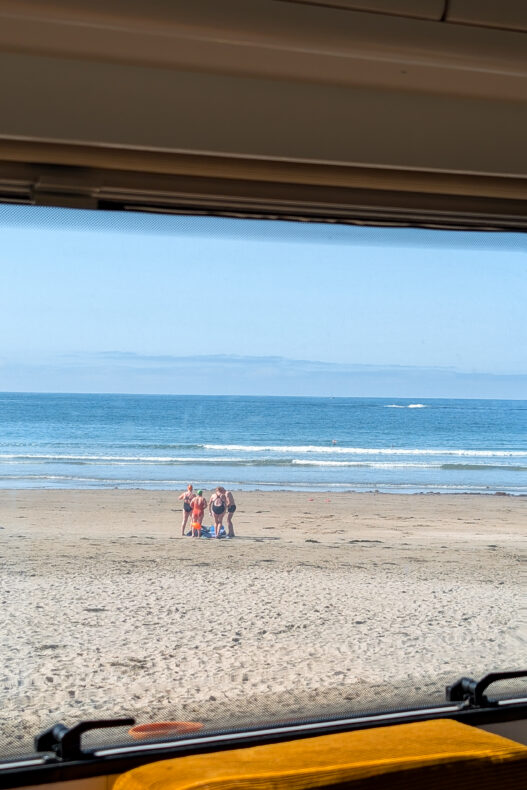
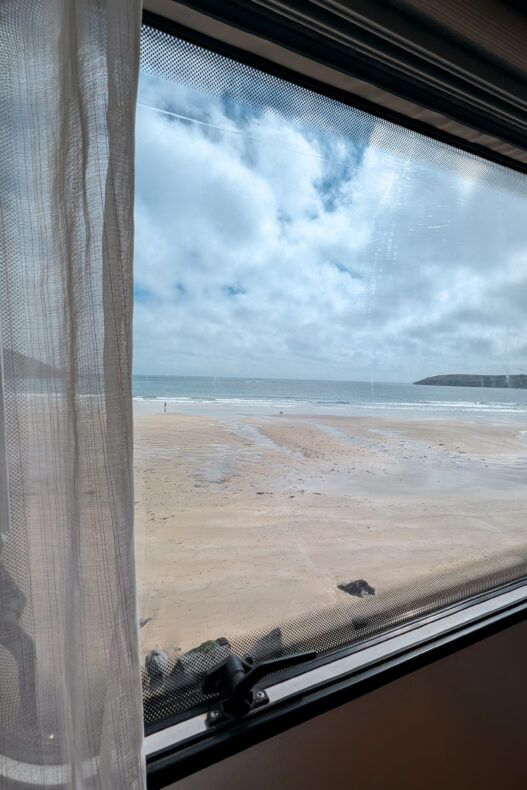
Close to Clonakilty lies Red Strand, a wide sandy beach that grows considerably at low tide. We slept right by the sand and looked out over the beach through the van window in the morning. We’d meant to get going early, but we ended up lingering all morning.
Our spot on Park4Night: #51141
#3 Glanlough: by the water of the Kenmare River
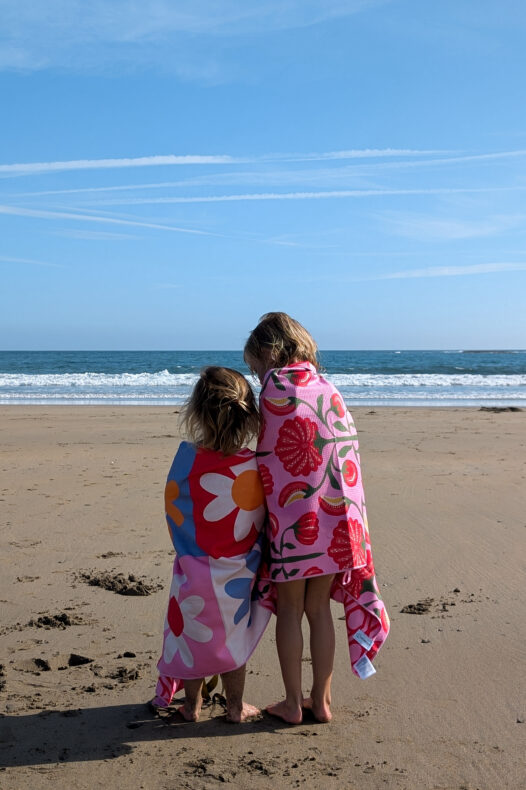
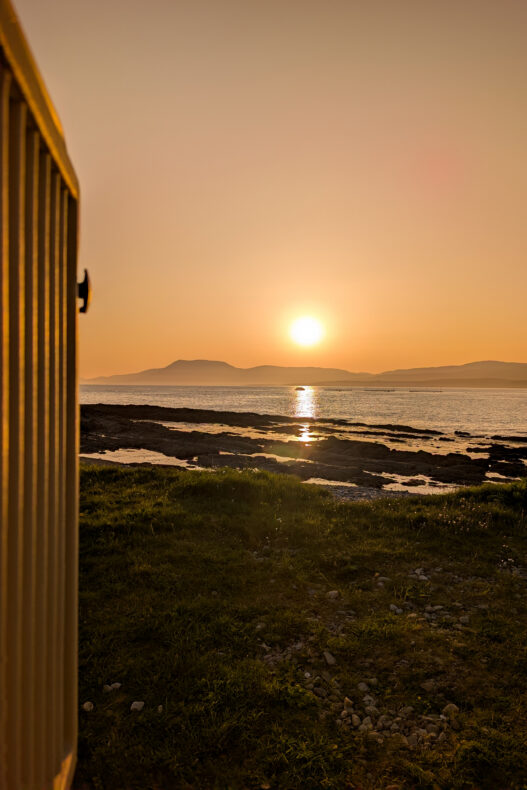
Just before we started on the Ring of Kerry, we parked at Glanlough, on a pebble beach along the Kenmare River. To someone else it might be just another spot by the water, but for us it was one of the best evenings of the trip. We made happy stones from the pebbles, there was nobody else around and it was wonderfully peaceful. And the sunset over the water was truly beautiful.
Our spot on Park4Night: #38984
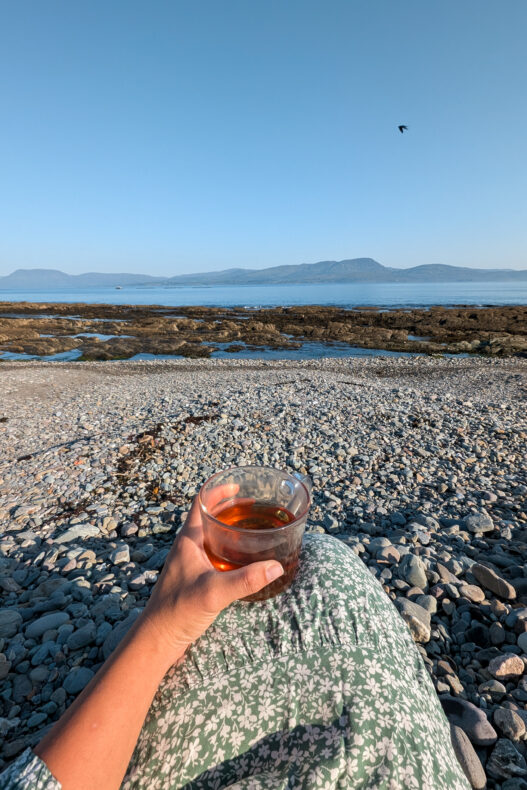
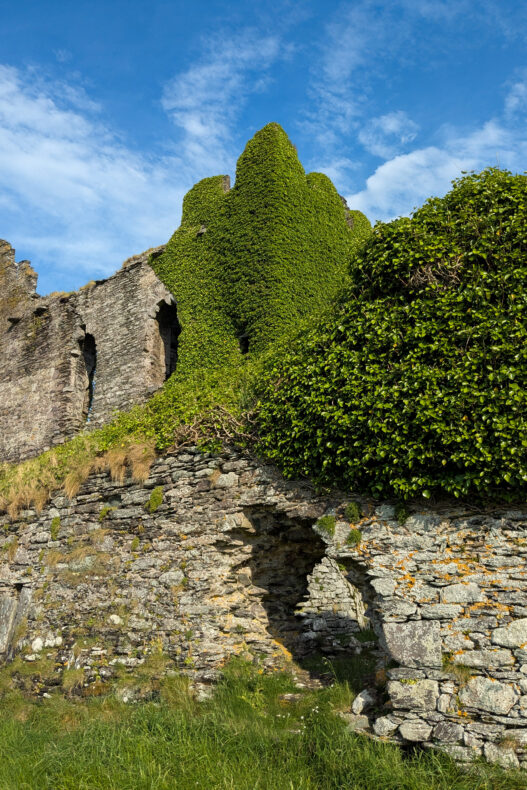
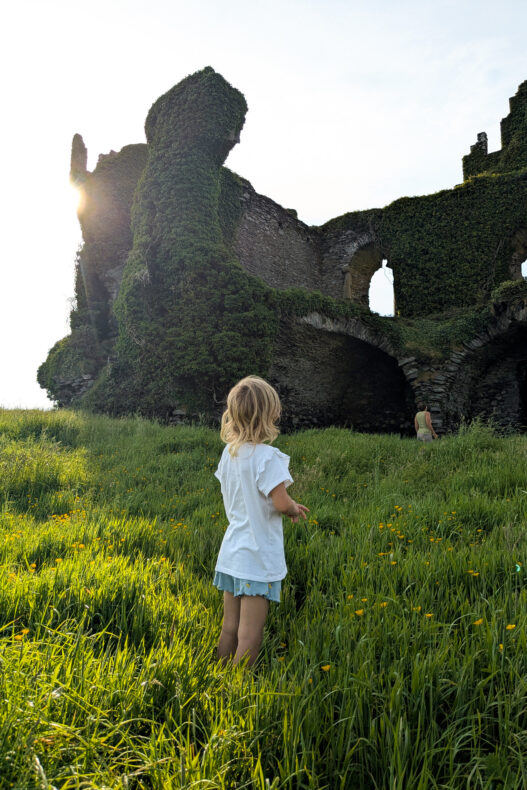
#4 Ballycarbery Castle: coffee by a ruin on the mudflats
Near Cahersiveen stands the ivy-clad ruin of Ballycarbery Castle, next to mudflats that dry out at low tide. Around sunset, tractors trundled across the flats while we drank coffee in the golden light. A ten out of ten for us.
The castle stands on a farmer’s land. On the road side, signs say the ruin is closed to the public, so check what’s allowed when you get there.
Our spot on Park4Night: #25483
#5 Carrigafoyle Castle: a tower house by the water
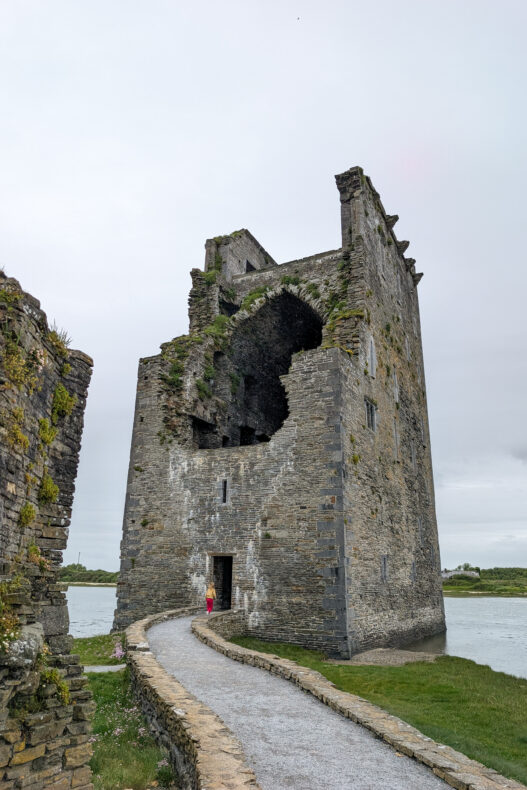
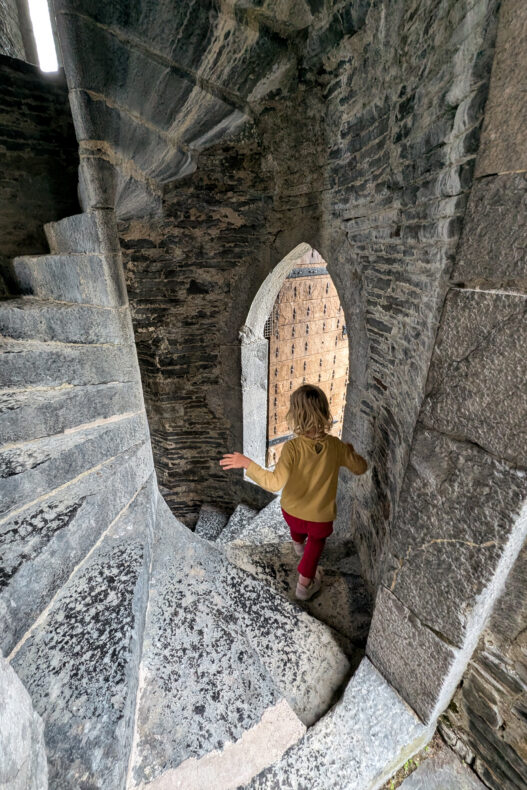
Carrigafoyle Castle is a tall tower house built right on the Shannon estuary. We arrived in the afternoon, slept next to it and climbed the narrow spiral staircase to the top once more the next morning. A fifteen-minute drive further on, the ferry leaves Tarbert for County Clare, so it makes a great last stop in Kerry.
Our spot on Park4Night: #49137
#6 The Burren and Doorus: between limestone and sea
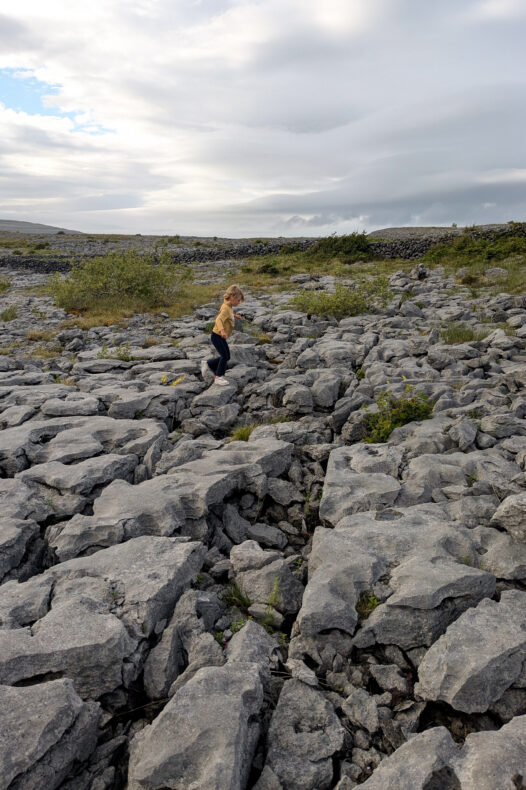
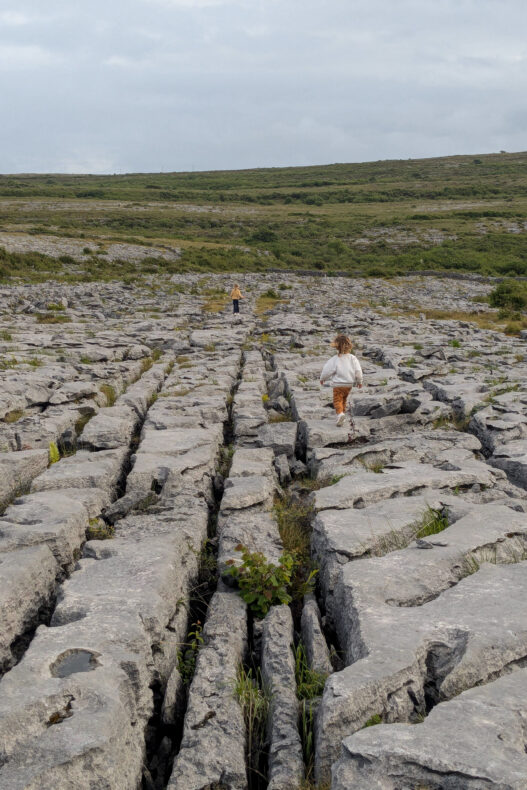
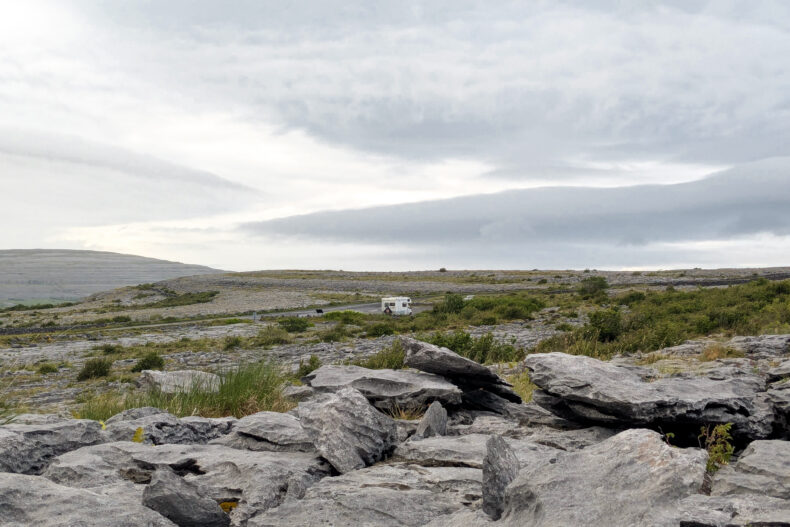
In The Burren we slept among grey limestone pavements that look more like the moon than the Emerald Isle. Near Ruan we took the kids on a short woodland walk, and afterwards we found a lovely spot by the sea at Doorus, on the northern side.
Our spot on Park4Night: #61318
#7 Lough Acorrymore: a mountain lake on Achill Island
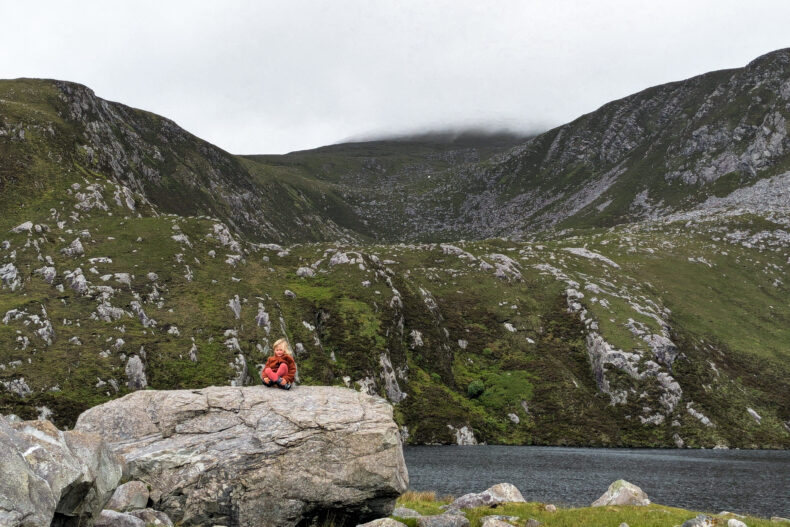
On Achill Island we parked by Lough Acorrymore, a reservoir with a small dam tucked in between the mountains. A storm blew through that night. Sebastiaan still climbed Croaghaun from the lake, but saw nothing but cloud at the top and came back drenched. The spot itself was one of the most beautiful of the trip.
Our spot on Park4Night: #132218
#8 Rinroe Beach: sheep on land, basking sharks at sea
After the Portacloy Cliff Walk, a local tipped us off about Rinroe Beach, a beach with rocks and caves in the quiet north of Mayo. Suddenly there were basking sharks swimming just off the shore. We counted about fifteen, and twice we saw one leap right out of the water.
We stayed the night there among the sheep and still couldn’t quite believe it.
→ Discover the 20 best places to visit in Ireland