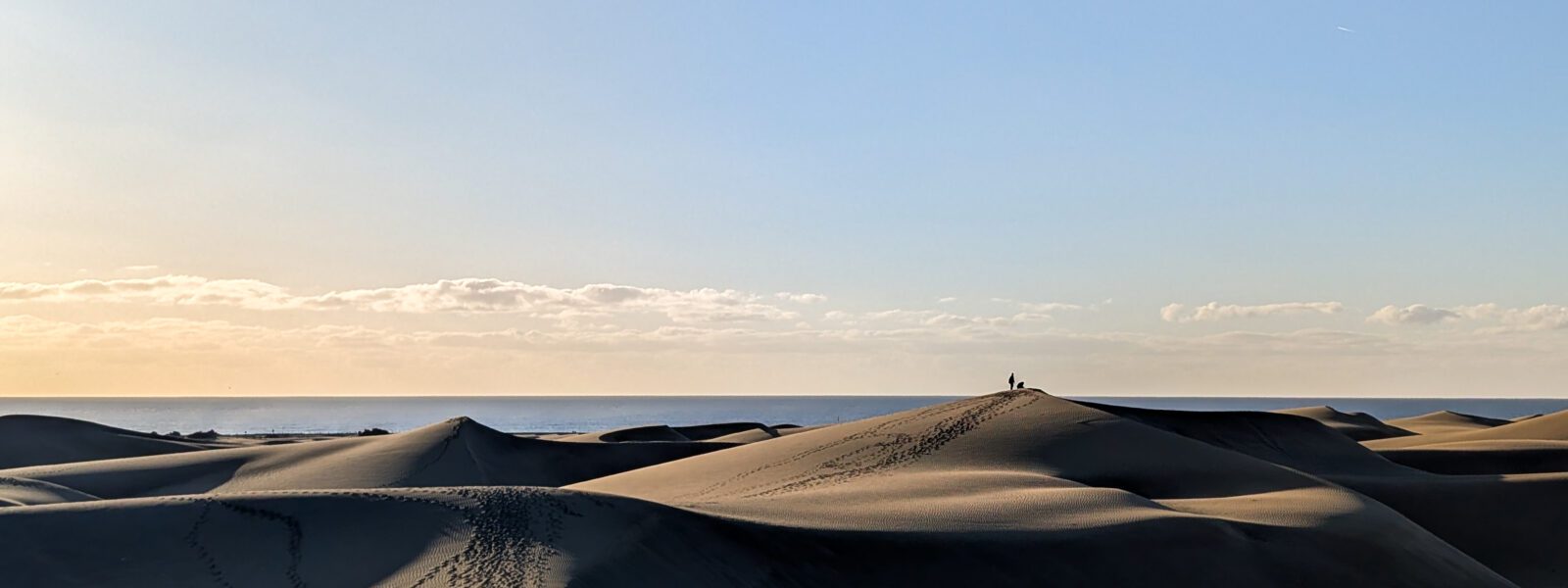
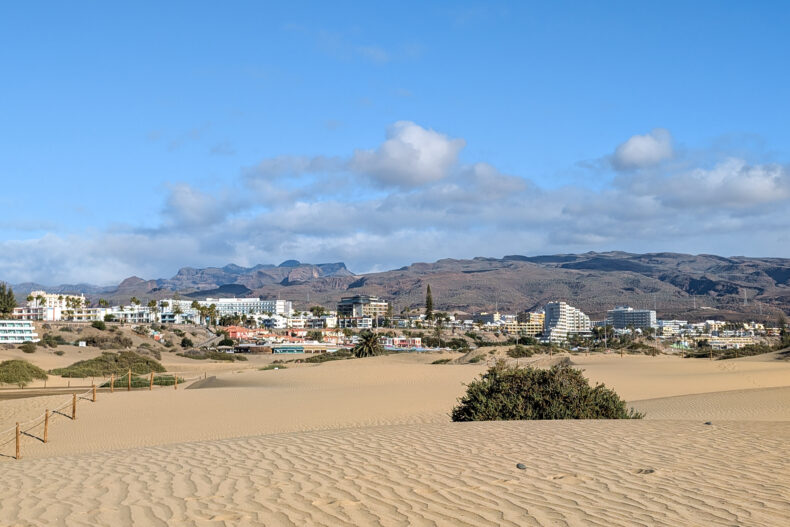
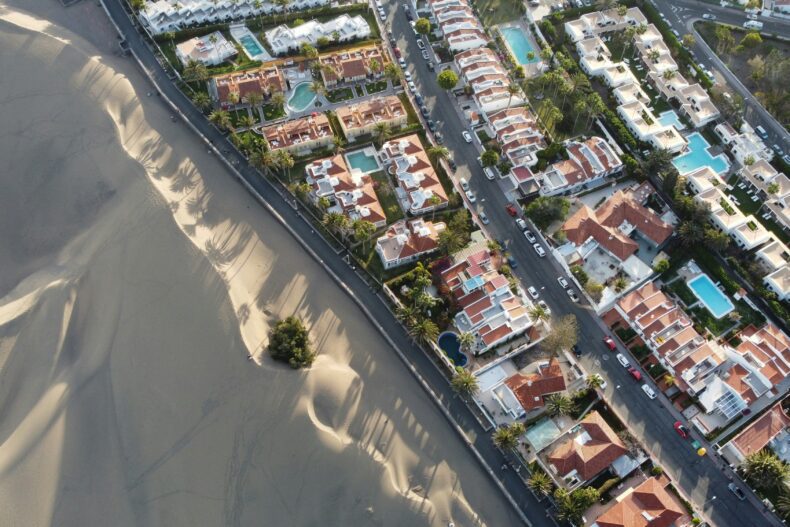
Maspalomas is the tourist heart of Gran Canaria. Hotels, shopping centres and sunbeds as far as the eye can see, but despite all that we spent several brilliant days here. That’s mostly down to the famous dunes. Right in the middle of all those buildings lies a vast desert that rolls straight into the ocean. Head out early and you’ll have it almost to yourself.
I first came here as a child with my parents, and this time I was walking through the sand with our own kids. We hiked for kilometres along the beach, swam at Playa del Inglés and Meloneras, and I even took a wander through the wonderfully odd shopping centres of Playa del Inglés.
Maspalomas also makes a great base for getting out and about. Boat trips leave from the harbours nearby, surf schools run lessons right on the beach, and in the dry interior you can bounce along dusty tracks in a buggy. In this blog we share the 15 best things to do in and around Maspalomas, from free tips to excursions you can book ahead.
What is Maspalomas known for?
Maspalomas is best known for the Maspalomas Dunes, the huge stretch of sand between Playa del Inglés and the lighthouse. It’s also one of the most popular beach resorts in the Canary Islands, with a beach that runs for kilometres and sunshine almost all year round.
The dunes are a protected nature reserve. The wind keeps shifting the sand, so the landscape looks a little different every time you visit. On the edge lies La Charca, a lagoon that attracts plenty of birds.
The climate is why so many people flock here in winter. The south is the sunniest part of Gran Canaria, while the north and the mountains are cloudier more often.
Maspalomas is also a place for nightlife and shopping. Around Playa del Inglés you’ll find big shopping centres from the seventies, such as the Yumbo Centre, which come alive after dark. The area has also been a favourite with LGBTQ+ travellers for decades.
Where to stay in Maspalomas?
Maspalomas covers a big area, from Playa del Inglés and San Agustín in the east to Meloneras in the west. If you want the dunes and the beach within walking distance, pick a hotel on the edge of the dunes or near the lighthouse. These are our picks:
#1 Seaside Palm Beach feels like a retro film set, with its bold seventies design and lush tropical garden. The dunes are a few minutes’ walk away, and it has far more personality than the big resorts around it.
#2 Hotel San Agustin Beach Club sits right on the quiet beach of San Agustín, with a cheerful interior in seaside colours. Handy if you’d rather keep the bustle of Playa del Inglés at arm’s length.
#3 Hotel Faro, a Lopesan Collection Hotel stands next to the lighthouse, with the Meloneras promenade and the sea on the doorstep. Note that this hotel is adults only.
→ Discover the 8 best places to stay in Gran Canaria
Best things to do in Maspalomas
#1 Maspalomas Dunes: walking through a desert by the sea
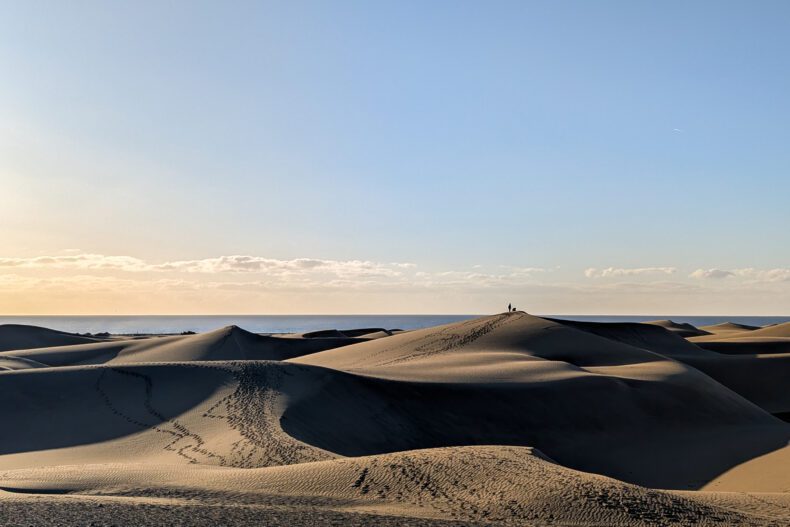
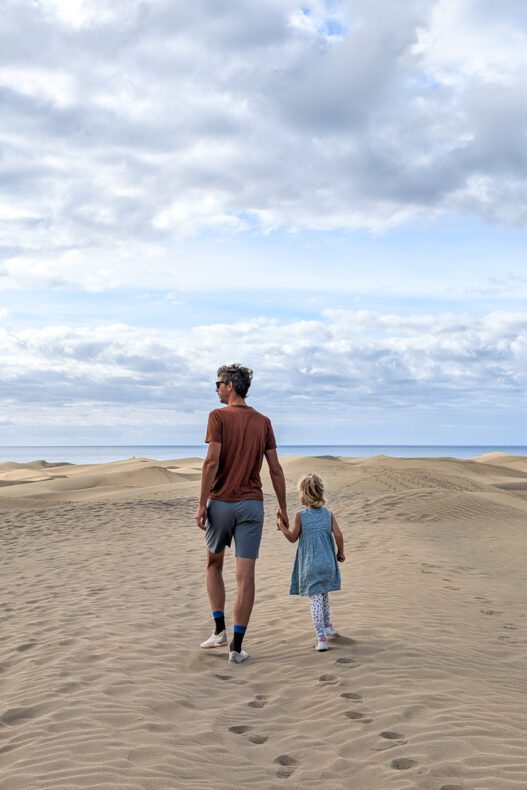
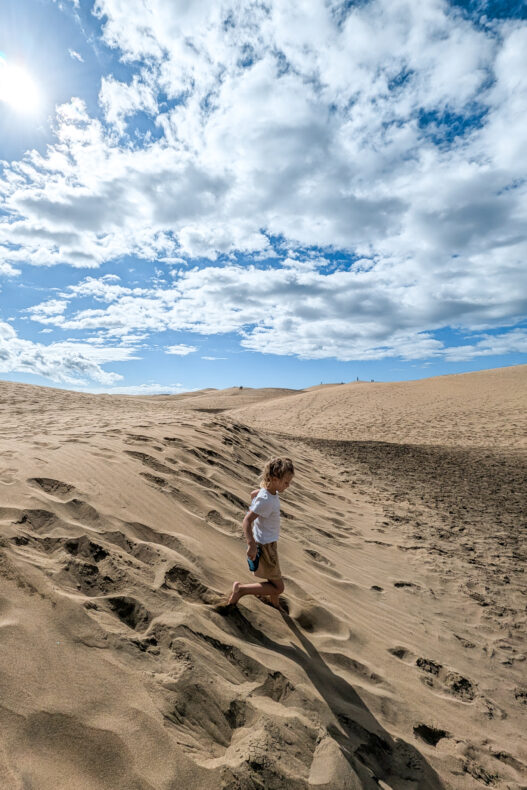
It’s still early when we walk into the dunes, and the sand is cool under our feet. Ahead of us the sandhills stretch all the way to the sea, without a hotel or sunbed in sight. The kids race ahead along the path, up one dune and down the next.
The Maspalomas Dunes are the most famous natural area on Gran Canaria. Most of the sand comes from the sea and the wind keeps blowing it further inland, so the dunes slowly change shape. The whole area is a protected nature reserve, which means you’re only allowed on the marked walking trails, which you can spot by the posts in the sand. You’ll see plenty of people tramping straight across the dunes, but there are checks and you risk a fine. We always took trails 3 and 4.
A good starting point is the viewpoint by the RIU hotel on the edge of Playa del Inglés, where you can look out over the whole dune field. Go early in the morning or late in the afternoon, because at midday the sand gets seriously hot and there’s no shade anywhere. Bring water and wear something on your feet.

#2 Beach walk from Playa del Inglés to the lighthouse
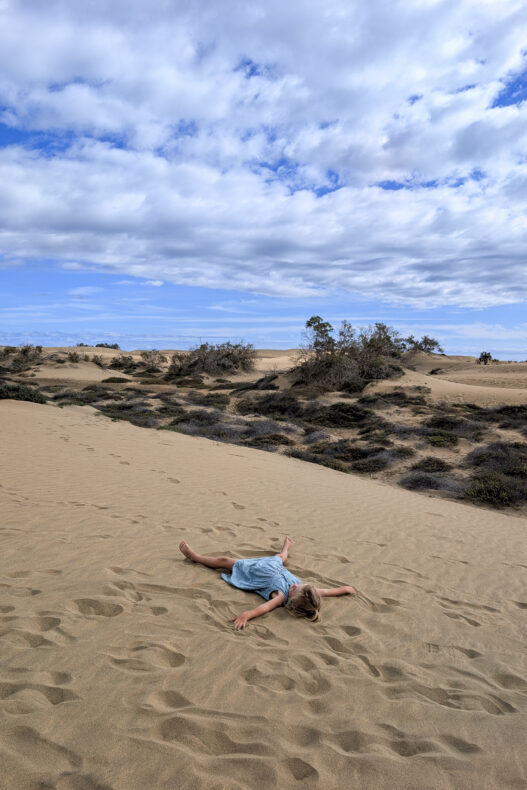
The beach at Maspalomas runs seamlessly into the one at Playa del Inglés, and together they stretch for kilometres. We walked from Playa del Inglés past the dunes all the way to the lighthouse, with waves on one side and sand on the other. Along the way we dived into the sea a few times.
The best part of this walk is seeing the dunes from the other side. The first stretch is packed with sunbeds, but the further you go, the emptier it gets. Part of the beach is a nudist beach. Our kids didn’t even notice, but if it makes you uncomfortable, it’s good to know.
Allow about an hour for the whole walk, longer if you stop to swim. You can head back the same way or, more fun, take one of the trails through the dunes.
→ Discover the 15 most beautiful beaches in the Canary Islands
#3 La Charca: birdwatching at the lagoon
On the western side of the dunes, close to the lighthouse, lies La Charca. This small brackish lagoon is a resting spot for migrating birds and herons, and with a bit of luck you’ll spot them standing among the reeds. We passed it on our way to the lighthouse.
Palm trees ring the lagoon, a nice splash of green against the sand and the beach next door. Swimming isn’t allowed here, as the lagoon is protected.
#4 The lighthouse and the Meloneras promenade
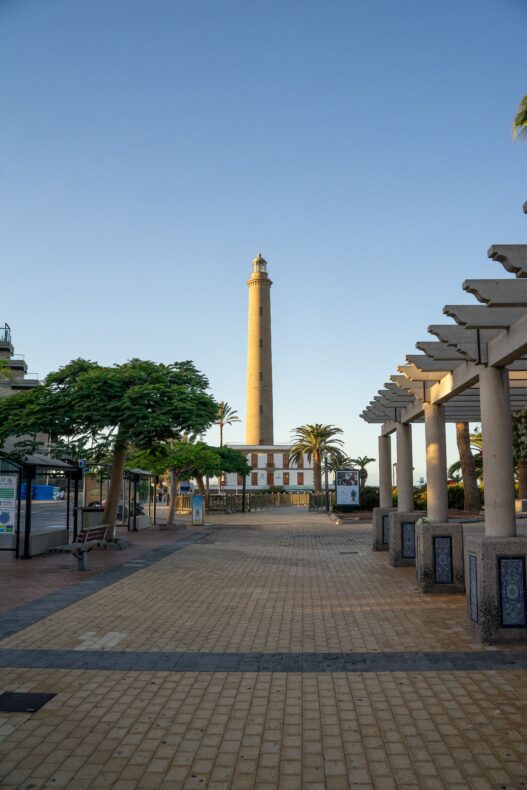
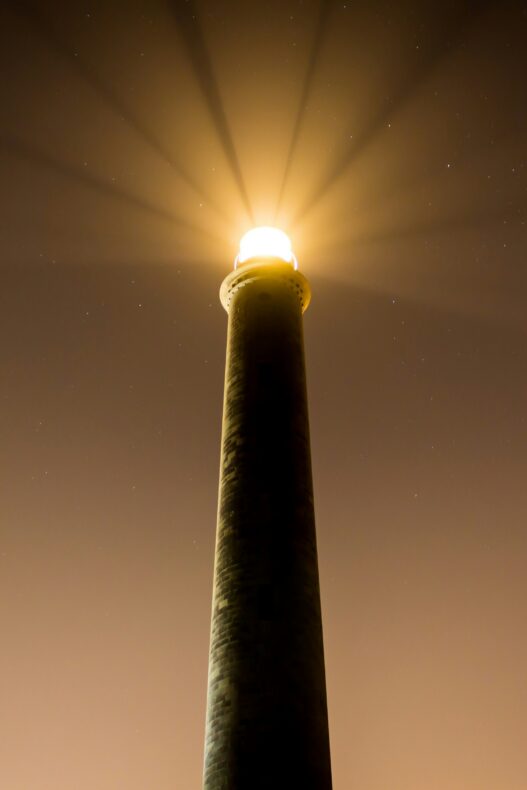
The Maspalomas Lighthouse has stood here since the late nineteenth century, and at over fifty metres it’s one of the tallest lighthouses in the Canary Islands. It marks the spot where the dunes end and the Meloneras promenade begins.
That promenade is a world away from Playa del Inglés: wide, well kept and lined with restaurants with terraces facing the sea. We went for a swim in the bay here and then strolled along the water for a while. It’s at its best at sunset, when the lighthouse turns orange.
#5 Playa del Inglés: swimming, shopping centres and Indian food
Playa del Inglés isn’t really our kind of place. Hotel after hotel, shopping centre after shopping centre, and neon lights and music all night. Still, I took a wander through during the day to see it for myself and pick up a few groceries. I went to CITA, one of the big shopping centres from the seventies. It turned out to be a bit run-down as well as a strange mix: the supermarket sits between souvenir shops, schnitzel restaurants, bars and swingers’ clubs, which only come to life at night. The best-known shopping centre is the Yumbo Centre, the nightlife hub of Playa del Inglés.
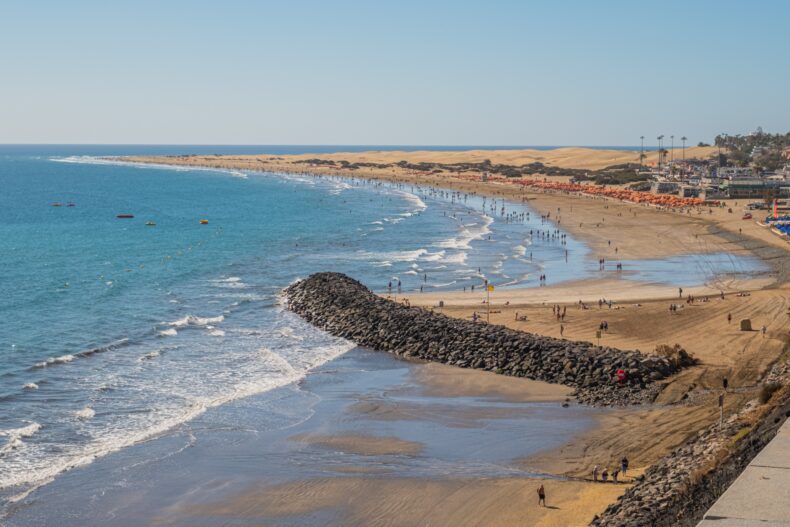
The beach at Playa del Inglés is wide and the water is usually calm, so we swam here too. On the long strip of restaurants we ate at an Indian place, and to our amazement it was a huge hit with our preschooler. Indian food became her new favourite, so we went back a second time, and on every island after that we went looking for an Indian restaurant.
#6 Boat trip along the south coast
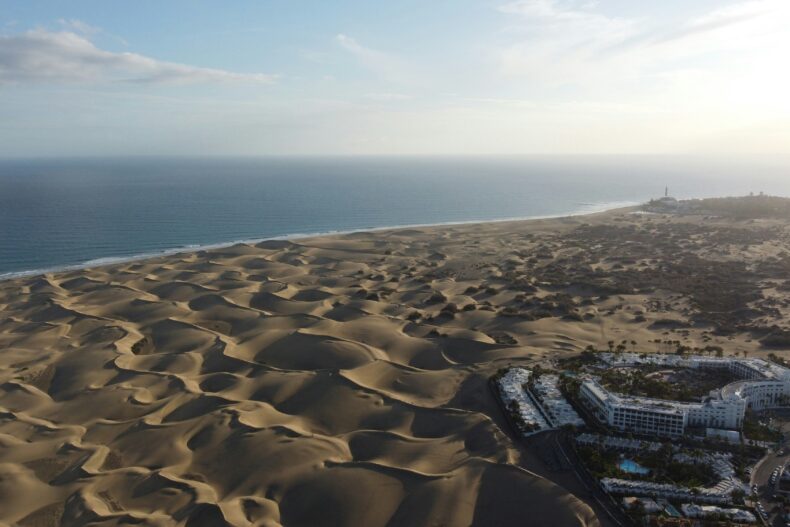
From the water you see just how big the dunes really are, with the lighthouse a dot on the horizon. Boat trips along the south coast leave from the harbours of Puerto Rico and Pasito Blanco, from a short sunset sail to half a day on a catamaran with lunch and a snorkelling stop.
Several kinds of dolphins live in the waters around Gran Canaria, and on many trips there’s a chance you’ll see them. If you book a dolphin-spotting trip, choose an operator that keeps its distance and doesn’t disturb the animals. Prone to seasickness? A catamaran is steadier in the water than a small boat.
→ Book a sunset sailing trip
→ Book a catamaran trip with lunch and snorkelling
#7 Surf lesson on the beach at Playa del Inglés
The waves at Playa del Inglés are usually not too big and break over sand, which makes it a great place to stand on a board for the first time. A lesson starts on the beach with an explanation of technique and safety, then you head into the water with an instructor.
Board and wetsuit are included, so all you need to bring is a towel. The sea is often calmest in the morning.
→ Book a surf lesson in Playa del Inglés
#8 Try diving: your first time underwater
Never been diving? On a try-dive you first learn how the gear works in shallow water, then go a little deeper with an instructor. The sea along the south coast is clear and often calm, with rocks that fish love to hang around.
No experience needed and all the equipment is included. Many dive schools pick you up in Maspalomas.
#9 Jet ski safari along the coast
Fancy some speed on the water? Then a jet ski safari is a brilliant choice. With a guide leading the way, you ride along the coast for about an hour, with stops to take in the view. You get a briefing first, so no experience is needed.
→ Book a jet ski safari from Maspalomas
#10 Buggy tour through the dry interior
Half an hour from the coast, Gran Canaria turns into a bare, rugged mountain landscape full of deep ravines. On a guided buggy tour you drive along dirt tracks to viewpoints you’d never reach in a normal car. It’s dusty and bumpy, and that’s exactly the point. Wear clothes that can get dirty and bring sunglasses against the dust.
→ Check out the buggy tour through the interior
#11 Off-road on an electric motorbike
Prefer two wheels? On this tour you ride an electric enduro bike through the hills behind Maspalomas. The bikes are powerful but almost silent, so you can still hear the nature around you. The instructor explains everything beforehand, so beginners are welcome too.
→ Join an off-road tour on an electric motorbike
#12 Aqualand and the theme parks around Maspalomas
Aqualand Maspalomas is the biggest water park on Gran Canaria, with wild slides, a wave pool and shallow pools for little ones. Go early to avoid long queues, and bring sunscreen, as shade is scarce.
There are more parks around Maspalomas. Holiday World is a small amusement park with a Ferris wheel and funfair rides, and Sioux City Park is a recreated Wild West town with cowboy shows, good for a few hours out with kids.
→ Book your Aqualand Maspalomas tickets
→ Discover the 23 best things to do in Gran Canaria with kids
#13 Day trip to Puerto de Mogán
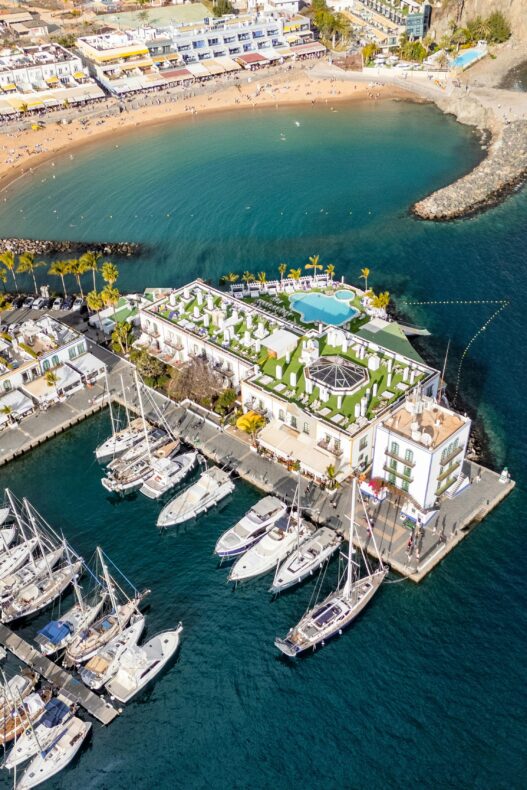
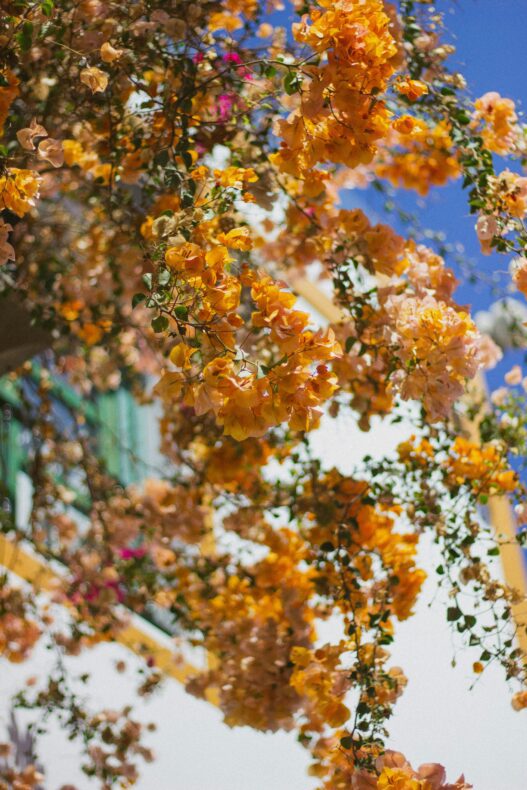
Half an hour west of Maspalomas, Puerto de Mogán feels like a different island. White houses with flowers spilling down the walls, little canals and a harbour full of fishing boats. No wonder people call it Little Venice.
Want to leave the car behind? A small ferry runs along the coast via Arguineguín and Puerto Rico to Mogán. You can hop off in Arguineguín, a fishing village where we spent a few days and where you’ll meet a surprising number of Norwegians. There’s a big market in Mogán on Fridays and in Arguineguín on Tuesdays.
#14 Into the mountains: Tejeda, Roque Nublo and stargazing
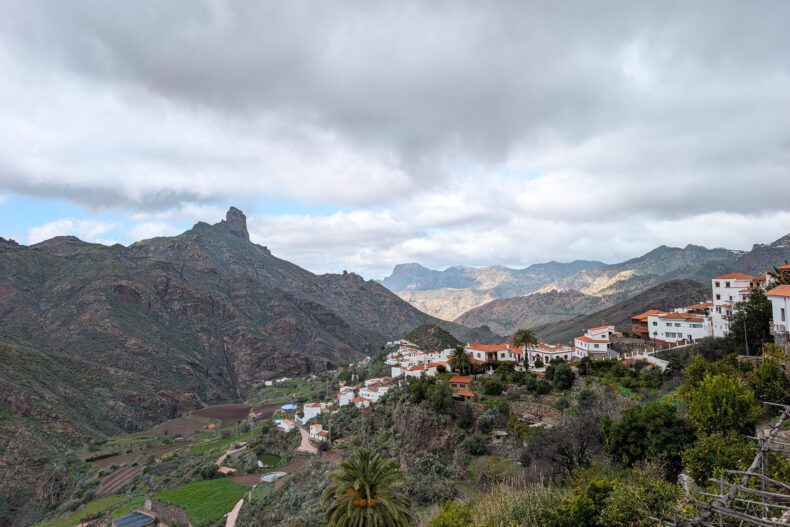
Drive from Maspalomas into the mountains and within an hour you’re among pine forests and rocky peaks. We spent three days around Tejeda and found the interior the most beautiful part of the island. We went walking in the area and later strolled through the village of Tejeda itself, which clings to a mountainside with views of the rocks all around.
From Tejeda it’s not far to Roque Nublo, the famous rock pillar towering over the island. The walk up is short, which also means it gets busy on nice days. Go early if you want a parking space.
The sky above the interior is clear and dark, which is why Gran Canaria is a recognised Starlight destination. On an evening tour a guide takes you up into the mountains, where you look at planets and galaxies through a telescope.
→ Book a stargazing tour in the mountains
You’ll need a car for the interior: buses are few and far between, and the roads are narrow and twisty. With Discover Cars you can compare rental companies on the island in one go and add full coverage, so there are no nasty surprises at the desk.
→ Compare car hire in Gran Canaria with Discover Cars
→ Discover the 38 best places to visit in Gran Canaria
#15 Arinaga: our favourite town on the east coast
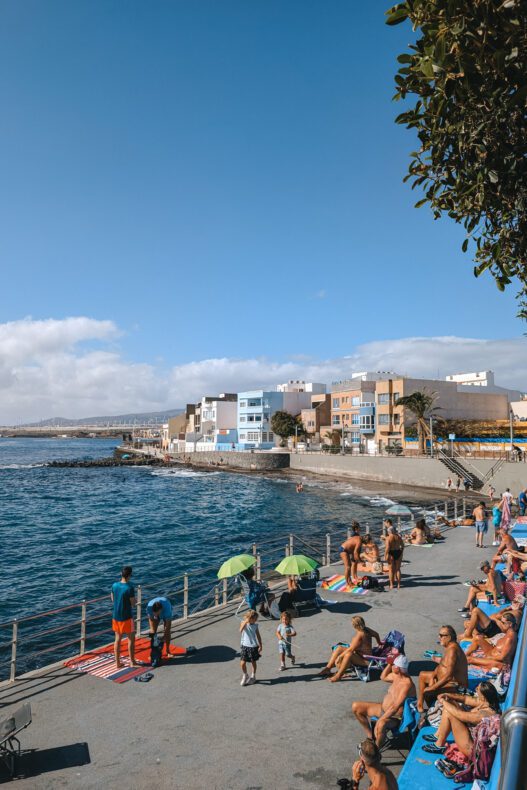
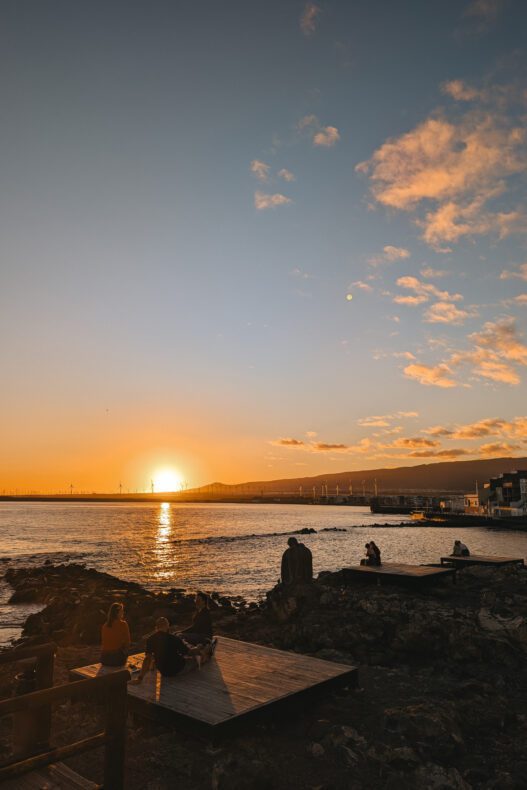
Want to see Gran Canaria without the resorts? Drive half an hour north-east to Arinaga. It was our favourite town on the island, with a long seafront promenade, a few terraces and little playgrounds scattered through the town and along the seafront, which the kids couldn’t get enough of. We spent Christmas Eve on the beach here.
Here you’ll mostly meet Canarian families rather than tourists. Combine it with a stop at Pozo Izquierdo, a bit further on, where the windsurfers tear across the waves when the wind is up.
→ Discover the 20 best things to do in Gran Canaria
More tips for your trip to Gran Canaria
 Our pickHotels in Gran Canaria: from a beach hotel by the Maspalomas dunes to a room in the old Vegueta quarter
 Want to stop wherever you like? Rent a car with Discover Cars and compare the big rental companies in one go.
 No flight yet? Compare flights to Gran Canaria.
 A buggy ride through the canyons or your first dive? Book tours in Gran Canaria with GetYourGuide.
 Discover all our blogs about Gran Canaria