
From historic cities and traditional mountain villages to turquoise rivers, dramatic waterfalls and winding roads through the hills, a road trip through Bosnia is full of variety from beginning to end. One day you might be exploring the atmospheric streets of Sarajevo or Mostar, while the next you are standing high in the mountains, walking through a quiet village or looking out over a powerful waterfall. Along the way, there are scenic viewpoints, small local towns and plenty of inviting terraces where you can stop for a drink or something to eat. Because many of the distances between destinations are surprisingly short, there is also plenty of time to slow down, make spontaneous stops and enjoy the scenery without feeling like you are rushing from one place to the next.
This 12-day Bosnia itinerary takes you past some of the most beautiful places in the country. Well-known highlights such as Mostar, Kravica Waterfalls and Una National Park are all part of the route, but we also include places like Lukomir, Rama Lake and Vodopad Blihe, which are just as deserving of a place in your plans. Together, these stops create a varied road trip with a great balance of culture, nature and quieter places where you can still enjoy the surroundings without large crowds.
What makes this route especially enjoyable is the mix of experiences along the way. You can spend the morning wandering through an old city centre, drive through wide mountain landscapes in the afternoon and end the day beside a river or lake. There is always something different waiting at the next stop, which keeps the journey interesting even on the driving days.
If you have less time, the route can easily be shortened to 10 days by skipping a few stops or combining some travel days. If you prefer to travel at a slower pace, you can extend it to 14 days and stay an extra night in some of your favourite places. That gives you more time for longer walks, relaxed afternoons by the water, extra sightseeing or simply enjoying a destination without having to move on again the next morning.
Discover the 10 most beautiful places in Bosnia and Herzegovina →


Practical tips for Bosnia
#1 Internet and SIM cards
In our experience, having a reliable internet connection is extremely useful during a road trip through Bosnia, especially if you rely on Google Maps for navigation or want to look up a restaurant, hotel or attraction while you are on the road. It makes travelling much easier when you can quickly check directions, opening hours or reviews without having to search for Wi-Fi first.
One important thing to keep in mind is that Bosnia and Herzegovina is not part of the European Union. This means roaming is often not automatically included in a standard European mobile plan, and using your normal mobile data can become surprisingly expensive. It is therefore a good idea to check the conditions of your own provider before you leave. Bosnia, for example, was not included in our Dutch mobile subscription.
One of the easiest options is to use an eSIM Roambit. You can arrange everything before your trip begins, so you have mobile data as soon as you arrive in Bosnia. There is no need to search for a local SIM card, visit a phone shop or risk running up expensive roaming charges.
An eSIM can sometimes be a little more expensive than buying a local SIM card, but we think the extra convenience can easily be worth it. Especially on a road trip, it is nice to know that your phone simply works from the moment you arrive. You can immediately open Google Maps, contact your accommodation or look up your next stop without having to organise anything first.
#2 Is Bosnia safe?
Bosnia may not be the first destination that comes to mind when you think of a European road trip, and that was actually one of the reasons we were so curious to visit. We were interested to see what travelling around the country would really be like, especially because Bosnia still feels much less touristy than many other destinations in Europe.
During our trip, however, we never really felt unsafe. We travelled while pregnant and with a toddler, and we felt comfortable both in the cities and in smaller towns and rural areas. Whether we were walking through Sarajevo and Mostar, stopping in small villages or driving through the countryside, the atmosphere generally felt relaxed and welcoming. Of course, it is always sensible to take the usual precautions you would take anywhere else, but we never felt that travelling through Bosnia required us to be especially cautious.
There is, however, one important thing to be aware of. Some remote natural areas still contain landmines left over from the Bosnian War. That may sound worrying, but for most travellers it will have very little effect on a normal road trip. Known risk areas may be marked with warning signs, and the most important thing is to stay on established roads, official hiking trails and clearly used paths.
If you are planning to hike in more remote areas, it is best to follow recognised routes and local advice rather than wandering off-trail. As long as you stay on marked paths and respect warning signs, this issue is unlikely to play a major role in your trip.
#3 Best time to visit Bosnia
Bosnia is a beautiful destination throughout much of the year, but for a road trip we think May, June, September and October are especially good months to visit. Temperatures are generally comfortable, the landscapes look beautiful and the country is much quieter than during the busiest summer weeks.
We travelled through Bosnia in October ourselves and thought it was almost the perfect time of year. The first autumn colours were beginning to appear in the forests and mountains, giving the landscape a completely different look. Along the roads, small stalls were selling pomegranates, grapes and other local produce, which made the journey feel even more seasonal and added a lovely local touch. Another big advantage was how peaceful the main sights were. Even some of Bosnia’s most famous attractions felt surprisingly relaxed. In Mostar, for example, we had no trouble finding a table on a terrace with a view of the iconic Stari Most, something that can be much harder during the busiest summer months.
July and August can become very hot, particularly in the south around Mostar and the wider Herzegovina region. Sightseeing in the middle of the day can therefore feel quite intense, and popular places are also much busier. If you enjoy warm weather and do not mind the crowds, summer can still be a good choice, but we personally prefer the quieter shoulder seasons. Winter offers a completely different experience, with snow in the mountains and a much calmer atmosphere. However, some mountain roads and remote areas can become more difficult to reach, so it is less practical if your main goal is a road trip covering many different parts of the country.
For us, late spring and early autumn offer the best balance. You get pleasant temperatures, beautiful scenery, quieter cities and enough good weather to enjoy everything from mountain villages and waterfalls to historic towns and outdoor terraces.
#4 Renting a car or bringing your own
A car is almost essential if you want to explore Bosnia properly. Many of the country’s most beautiful places are tucked away in the mountains, surrounded by nature or hidden in small villages that are difficult to reach by public transport. Having your own car or a rental car also gives you the freedom to stop whenever something catches your eye, whether that is a scenic viewpoint, a quiet village or a small local restaurant by the roadside.
We travelled through Bosnia in our own campervan, and that worked extremely well for us. It gave us plenty of freedom and made it easy to adjust our plans along the way. If you are travelling with your own car or camper too, it is worth checking before you leave whether Bosnia is included in your vehicle insurance. In many cases it is, but it is always better to confirm this in advance rather than discover a problem once you are already on the road.
If you prefer to rent a car, make sure you check whether cross-border travel is allowed, especially if your itinerary includes Croatia or another neighbouring country. Some rental companies require extra permission, documents or fees for taking the car across the border, so it is important to read the conditions carefully before booking.
#5 Driving in Bosnia
Driving in Bosnia turned out to be much more relaxed than we expected. Outside the larger cities, the roads are often quiet, and the main routes between towns are generally in good condition. The main thing to keep in mind is that many roads wind through the mountains, so distances can be a little misleading. A drive of only 100 kilometres can take much longer than you might expect when there are plenty of bends, climbs and slower sections.
For that reason, we would recommend planning fewer kilometres per day rather than trying to cover too much ground. Bosnia is the kind of country where the journey itself is often part of the experience, and it is worth leaving time for spontaneous stops at viewpoints, small villages or roadside cafés.
On some roads, drivers overtake quite confidently, but we quickly got used to the local driving style. The only road where we would advise taking a little extra care is the route towards Lukomir. The final stretch is unpaved and fairly bumpy, although it is usually still manageable with a normal passenger car if you drive slowly and carefully.
Overall, we found driving in Bosnia straightforward and enjoyable. As long as you allow enough time for mountain roads and avoid planning overly long driving days, travelling by car is one of the easiest and most flexible ways to see the country.
#6 Money: card or cash?
Bosnia uses the Bosnian convertible mark (BAM). In larger cities such as Sarajevo, Mostar and Banja Luka, paying by card is usually easy, and most hotels, restaurants and shops accept debit or credit cards. Even so, we found that carrying some cash was still useful surprisingly often.
Smaller restaurants, parking areas, local markets and some entrance fees do not always accept card payments, especially once you leave the bigger cities and tourist areas. Having a little cash with you means you do not have to worry about finding an ATM at the last minute.
Our advice is therefore to always keep a small amount of local currency in your wallet. ATMs are easy to find in the larger towns and cities, so withdrawing more money during your trip is usually simple.
Whenever you are given the choice, it is generally better to pay in the local currency rather than in euros. This often gives you a better exchange rate and helps you avoid unnecessary conversion fees. It is a small detail, but over the course of a road trip it can make payments easier and save you a little money as well.


10–14 day Bosnia road trip itinerary
This 12-day Bosnia itinerary gives you plenty of time to discover the country’s highlights without having to rush from one place to the next. From historic cities and traditional mountain villages to dramatic waterfalls, turquoise rivers and beautiful national parks, this road trip shows just how varied Bosnia really is.
The route is designed to give you a good balance between culture, nature and relaxed travel days. You will have time to wander through atmospheric old towns, drive along scenic mountain roads and stop at some of the country’s most impressive natural sights, while still leaving enough room to slow down and enjoy each destination properly.
If you have less time, the itinerary can easily be shortened to 10 days by combining a few stops or leaving out one or two places. If your schedule is more flexible, a 14-day road trip is even better. That gives you the chance to stay an extra night in Sarajevo or Mostar, spend more time in the mountains or simply add a few slower days along the way.
For us, 12 days is a great middle ground. It is long enough to experience a wide range of landscapes, cities and smaller places, but still compact enough to keep the trip varied and exciting from start to finish. Whether you travel for 10, 12 or 14 days, this route gives you a strong introduction to some of the most beautiful and memorable parts of Bosnia.
Day 1 & 2: Sarajevo and Trebević
The first two days of this Bosnia road trip are dedicated entirely to Sarajevo, and it is a fascinating place to begin. Few cities in Europe bring so many different cultures together in such a small area, and you notice that immediately as you start exploring. In the historic district of Baščaršija, it can almost feel as if a little piece of Istanbul has been placed in the middle of the Balkans. Narrow streets, colourful shops, traditional coppersmiths still working by hand and the smell of freshly brewed Bosnian coffee make this one of those places where you can easily spend hours simply wandering around.
Sarajevo also has a much more serious and moving side. During the siege of the city in the 1990s, there was intense fighting, and traces of that period can still be found throughout the city today. Visiting the Tunnel of Hope or one of Sarajevo’s war museums gives important context to the recent history of Bosnia and Herzegovina and helps you understand the city on a much deeper level. That mix of atmosphere and history is what makes Sarajevo so interesting. One moment, you are walking through busy market streets filled with cafés and small shops, and the next you are standing in a place connected to one of the most difficult periods in the city’s past. It is a city with many layers, and taking the time to experience both sides makes your visit much more meaningful.
In between sightseeing, there is plenty of time to slow down at a terrace and try some local food. Ćevapi and burek are two classics that are easy to find throughout the city, and sitting down for Bosnian coffee is almost an experience in itself. Two days is a good amount of time to explore Sarajevo at a relaxed pace, without feeling like you need to rush from one highlight to the next. On the second day, a trip up to Trebević is almost essential. The cable car takes you from the busy city centre to the green mountain slopes above Sarajevo in just a few minutes. The change of scenery is immediate: one moment you are surrounded by traffic and historic streets, and shortly afterwards you are standing among trees with wide views over the city.
One of the main sights on Trebević is the abandoned bobsleigh track from the 1984 Winter Olympics. Today, the concrete track is covered in colourful graffiti and has become one of the most recognisable photo spots in Bosnia. The bright colours create a striking contrast with the history of the site and make the old Olympic track feel completely different from what it must have looked like during the Games. Trebević is worth visiting for more than just the bobsleigh track, though. From the upper cable-car station, you can follow several walking routes and stop at viewpoints overlooking Sarajevo and the surrounding mountains. It is a lovely place to spend a few hours away from the busy centre, especially if you enjoy combining city trips with a little nature.
A perfect way to end the afternoon is with lunch or a drink on a terrace overlooking Sarajevo before taking the cable car back down. After two days filled with history, old streets, mountain views and good food, the road trip continues the following morning towards Lukomir.

Day 3: Lukomir and Konjic
After two days in Sarajevo, it is time to leave the city behind and head into the mountains. Today’s route takes you to Lukomir, the highest village in Bosnia, and the drive there is already one of the highlights of the day. The road winds through the Bjelašnica mountains, with the scenery becoming more dramatic the higher you climb. The final stretch is unpaved, but in normal conditions it is usually manageable with a regular car if you drive carefully and take your time. Lukomir feels like a place where time has slowed down. Traditional stone houses with their distinctive roofs sit among open fields, sheep graze nearby and the whole village has a wonderfully quiet atmosphere. It is one of those places where the setting matters just as much as the sights themselves, and simply walking through the village gives you a strong sense of rural life in the Bosnian mountains.
One walk you should definitely make is towards the edge of the Rakitnica Canyon. From here, you get a spectacular view over one of the deepest gorges in the country. The landscape feels wide, dramatic and almost completely untouched, with steep slopes dropping away below the village. The contrast between peaceful Lukomir and the wild canyon beside it makes this one of the most memorable stops on the route.
Half a day is usually enough to explore Lukomir at a relaxed pace. If you have time, stay for lunch at a local restaurant and try one of the traditional dishes. Homemade pita or grilled lamb are both popular choices and fit perfectly with the mountain setting. A simple lunch here is a lovely way to slow down before continuing your journey. In the afternoon, the route continues to Konjic, a charming town on the clear blue Neretva River. The historic centre is compact, so it is easy to explore in a few hours without feeling rushed. At the heart of town stands Stara Ćuprija, the old Ottoman stone bridge that has become Konjic’s most recognisable landmark.
The bridge is especially beautiful towards the end of the day, when the softer light falls across the stone and the river below. The riverside promenade is also a lovely place for an evening walk, with plenty of opportunities to stop for a drink, sit by the water or simply enjoy the view. If you are in the mood for a little more adventure, Konjic is also one of the best places in Bosnia for rafting on the Neretva River. Most rafting trips take around half a day and are among the most popular outdoor activities in the country. It is a great option if you want to add some action to your road trip and see the river from a completely different perspective.

Day 4: Tito’s Bunker and Mostar
Before continuing towards Mostar, a visit to Tito’s Bunker is one of the most interesting stops you can make around Konjic. Hidden just a few minutes outside the town, this huge underground complex was built during the Cold War as a secret shelter for Yugoslav president Josip Broz Tito and a small group of key officials. From the outside, there is almost nothing to reveal what lies beneath the ground, but once you step through the heavy doors, an impressive network of corridors, bedrooms, meeting rooms and command centres opens up below you.
The bunker can only be visited on a guided tour, which usually takes around an hour and a half. Walking through the rooms gives you a fascinating look at how seriously the possibility of war was taken at the time. It is a very different experience from the rest of this road trip and adds another layer to the history you have already encountered in Sarajevo and Konjic.
After the visit, the route continues with one of the most scenic drives of the entire trip. Much of the road to Mostar follows the bright green Neretva River, with steep mountains rising on either side. The scenery is beautiful almost the whole way, so it is worth leaving a little extra time for spontaneous stops and viewpoints along the route.
Once you arrive in Mostar, it quickly becomes clear why this is the most famous destination in Bosnia. The iconic Stari Most immediately steals the show and is every bit as photogenic as you would expect, but the city has much more to offer than its famous bridge alone.
We joined a Free Walking Tour to learn more about the history of Mostar, Bosnia and the story behind the bridge, and we would definitely recommend doing the same. It adds much more context to what you see and helps you understand the city beyond its postcard views. Mostar has a complicated and fascinating past, and hearing some of those stories while walking through the old town makes the visit far more memorable.
After the tour, take your time wandering through the narrow streets of the old bazaar, where small shops, stone houses and busy terraces line the lanes. Walk across to the Crooked Bridge and visit the Koski Mehmed Pasha Mosque as well. If the minaret is open, the climb is worth it for one of the best views in the city, with Stari Most and the old town spread out below you.
A lovely way to end the day is on a terrace beside the river, watching the light slowly soften as the bridge turns golden around sunset. Mostar is especially atmospheric at this time of day, once some of the day-trippers have started to leave and the streets become a little quieter.
We also recommend getting up early the following morning and taking one more walk through the old town before the crowds arrive. Seeing Stari Most and the surrounding streets almost empty gives the city a completely different feel and is well worth the early start.
Discover the 14 best things to see in Mostar →

Day 5: Blagaj, Bunski Kanal and Mostar
Today is all about exploring the area around Mostar. Start the morning in Blagaj, less than a fifteen-minute drive from the city. This is where you will find the famous Blagaj Tekija, a centuries-old dervish monastery built right against a steep rock face. Beside it, the bright blue Buna River flows straight out of a huge cave, creating one of the most recognisable views in this part of Bosnia. The atmosphere is especially pleasant early in the day, before the area gets busier. It is a lovely place to walk along the water, take in the scenery or sit down for breakfast beside the river. That said, we personally found Blagaj quite touristy for what is essentially one beautiful building in a dramatic setting. It is still worth visiting, but we would not plan to spend too many hours here.
On the way back towards Mostar, make a short stop at Bunski Kanal. This is one of those places that many travellers skip, but it is definitely worth a quick detour. Here, the Buna River squeezes through a narrow limestone channel before flowing into the Neretva. From the bridge, you get a great view of the water rushing through the rocks, and you only need around twenty minutes to see it properly. The rest of the afternoon is perfect for spending more time in Mostar. You can visit a few of the viewpoints around Stari Most, wander through the narrow lanes filled with small local shops or sit down for a Bosnian coffee on one of the terraces overlooking the Neretva.
If you do not mind walking a little further, we also recommend heading outside the historic centre to see some of Mostar’s street art. It shows a completely different side of the city and makes an interesting contrast with the old stone streets, Ottoman-style buildings and traditional shops around the bridge.
If you are hoping to see the famous bridge divers jump from Stari Most, late afternoon is usually your best chance during the summer months. After that, enjoy one final evening in Mostar, perhaps with dinner by the river and another slow walk through the old town as the light begins to fade. It is a lovely way to finish your time in one of Bosnia’s most atmospheric cities before continuing the road trip the next morning.

Day 6: Počitelj and Kravica Waterfalls
After a few days in Mostar, it is time to continue the road trip and explore more of southern Bosnia. The first stop is Počitelj, one of the most beautiful historic villages in the country. This old Ottoman fortified town is built into the hillside and is full of narrow cobbled streets, stone houses and small squares that make it a lovely place to explore on foot.
Take your time wandering through the village and make your way uphill towards the fortress for a panoramic view over the Neretva Valley. The climb is not especially long, but on a hot day it can feel quite steep, so it is worth taking it slowly. One of our favourite parts was climbing the old castle tower, which gives you an even better view over Počitelj and the surrounding landscape. Although the village itself is not very large, it has plenty of character and is a great place to spend an hour or two. You can explore the old streets, stop for a drink, take in the views and simply enjoy the peaceful atmosphere before continuing your journey.
Around half an hour away, you will reach the Kravica Waterfalls, one of the most famous natural sights in Bosnia. The wide, horseshoe-shaped waterfall drops around 25 metres into a clear blue pool, surrounded by lush greenery. It is an impressive sight and one of those places that looks beautiful from almost every angle.
In summer, Kravica is especially popular for swimming, and you can also rent a kayak and spend some time on the water. During our visit in October, however, the water was just a little too cold for us to take a proper swim. Even without getting in, it was still a lovely place to spend a few hours, walk around the area and enjoy the views from different spots.
Allow around three to four hours in total if you want to visit Kravica at a relaxed pace, including time to walk around, take photos and perhaps stop for something to eat or drink. Afterwards, continue the road trip towards Rama Lake, with the next overnight stop in the direction of Travnik.

Day 7: Rama Lake and Travnik
The road towards central Bosnia takes you past Rama Lake, one of the most beautiful lakes in the country. This striking blue reservoir is surrounded by mountains and dotted with small peninsulas, creating one scenic view after another along the route. It is the kind of landscape that makes you want to stop more than once, especially when the road climbs and gives you a wider view over the water.
The higher viewpoints are especially worth seeking out, as they show just how beautiful the setting really is. From above, you can see the deep blue water winding between the hills, with quiet stretches of shoreline and small patches of land reaching into the lake. If you have a little more time, you could stay longer for a boat trip or stop somewhere by the water for lunch before continuing your journey.
In the afternoon, the route continues to Travnik, a charming and atmospheric town that once served as the capital of Ottoman Bosnia. That long history has left the city with a very distinctive character, and it feels quite different from many of the other stops on this road trip.
The colourful old centre, historic fortress and the clear blue waters of Plava Voda are the main highlights. Take some time to wander through the narrow streets, explore the fort for a beautiful view over the town and then make your way down to Plava Voda, where cafés and terraces line the gently flowing water.
Travnik is also known for its ćevapi, which many Bosnians consider to be among the best in the country. That makes dinner here an easy choice, especially if you want to try a local speciality in the place where it is especially popular.
An afternoon and evening are enough to get a good feel for Travnik, see the main sights and enjoy the relaxed atmosphere. It is a lovely place to slow down after a scenic driving day and a pleasant stop before continuing your route through Bosnia the next morning.

Day 8: Travnik, Jajce and Mlinčići
After a relaxed morning in Travnik, continue the road trip towards Jajce, one of the most beautiful historic towns in Bosnia. The drive takes around an hour and a half and once again leads through green hills and mountain scenery, making the journey itself part of the experience. The road is scenic and peaceful, so there are plenty of moments when you may want to slow down and simply enjoy the views along the way.
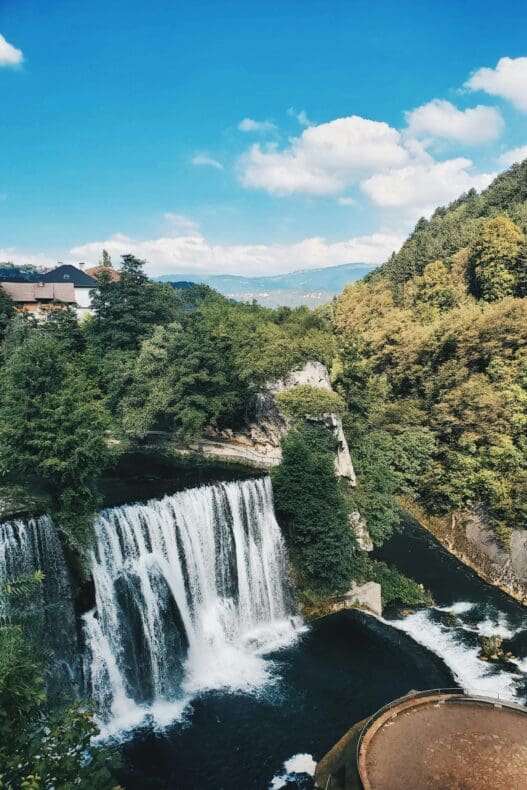
Jajce is best known for the impressive Pliva Waterfall, which drops right in the middle of the town. You can admire it from the main viewpoint, but it is also worth walking down for a closer look. The setting is especially striking because the waterfall sits so close to the historic centre, creating a combination of nature and old architecture that you do not often see. This unusual location gives Jajce a very distinctive character.
Make sure to leave some time for the old fortress as well. The walk up takes you through parts of the historic centre, and once you reach the top, you are rewarded with beautiful views over the town and the surrounding mountains. Jajce is compact enough to explore without rushing, but there are still plenty of small streets, viewpoints and historic corners to keep you busy for several hours.
Just a few minutes outside Jajce, you will find the Pliva Lakes and Mlinčići, one of the most photogenic places in Bosnia. Between the Great and Small Pliva Lakes stand dozens of small wooden watermills that were once used to grind grain. Today, the mills are mainly visited for their peaceful setting, traditional appearance and beautiful reflections in the water, making them a lovely place for a short walk and some photos.
The area around Mlinčići is wonderfully calm, with water flowing between the little wooden structures and plenty of space to slow down for a while. It is the kind of place where you may plan to stop for twenty minutes and end up staying much longer simply because the atmosphere is so peaceful. An afternoon is enough to explore both Jajce and Mlinčići at a relaxed pace, before ending the day with an overnight stay in Jajce.

Day 9: Pliva Lakes, Sanski Most and Vodopad Blihe
Before continuing towards Bihać, it is worth spending a little more time around the Pliva Lakes. The atmosphere is especially peaceful in the morning, when the water is often still and the surrounding forests reflect beautifully across the surface. It is a lovely place to slow down before another driving day begins. If you have a little extra time, take a short walk along the shore or rent a small boat to explore the lake from the water. Either way, it makes for a calm and scenic start to the day.
From the lakes, continue towards Sanski Most, a town that many travellers simply pass through. For this road trip, however, it makes a very useful stop because it is close to Vodopad Blihe, one of Bosnia’s lesser-known waterfalls. At almost sixty metres high, the waterfall drops dramatically through a green and wooded landscape. Despite its size, it is much less famous than Kravica, which means the area often feels surprisingly peaceful. That quieter atmosphere is exactly what makes this stop so enjoyable.
A wooden walkway and a series of steps lead down towards the base of the waterfall, so you can get quite close without having to tackle a difficult hike. The view becomes more impressive as you descend and the sound of the falling water grows louder. On a warm day, this is also a great place to cool down and enjoy the fresh surroundings for a while. If conditions are suitable, we would definitely recommend taking a refreshing dip before heading back to the car. It is an easy stop to enjoy at a relaxed pace.
After visiting the waterfall, continue the road trip towards Bihać, the gateway to Una National Park. This pleasant town sits directly on the Una River and is a lovely place to finish the day after several hours on the road. Take an evening walk along the riverside promenade, enjoy the clear blue-green water or find a restaurant in the centre for dinner. The atmosphere is relaxed, especially later in the day when things begin to quiet down. It is a comfortable place to settle in before the next part of the journey.
Spending the night in Bihać also puts you in the perfect position for the following morning. Instead of starting the day with another long drive, you can head straight towards Una National Park, one of the most beautiful natural areas in Bosnia. After a day filled with lakes, waterfalls and scenic roads, Bihać feels like an easy and pleasant place to pause. It also marks the beginning of another highlight of the trip, with some of Bosnia’s most impressive river landscapes waiting just ahead.

Day 10: Una National Park
After several days filled with historic cities, old towns and cultural sights, it is time to head back into nature and explore one of Bosnia’s most beautiful landscapes: Una National Park. From Bihać, it takes around an hour to reach Štrbački Buk, the park’s best-known waterfall. The drive itself is already worth the trip, as the road follows the bright green Una River and winds through peaceful countryside. Even before you arrive, the scenery makes it clear that this is going to be one of the most memorable days of the journey.
Štrbački Buk is without doubt the main highlight of the park. The river crashes down over several wide levels, creating a powerful series of waterfalls surrounded by forest and wooden walkways. Several viewpoints let you see the falls from different angles, and each one gives you a slightly different perspective. The combination of rushing water, lush greenery and the deep colour of the river makes this one of the most impressive natural sights in Bosnia. It is the kind of place where you naturally want to slow down and stay a little longer.
Set aside a few hours to explore the walking paths around Štrbački Buk and enjoy the views without rushing. The trails are easy to follow and give you plenty of opportunities to stop, take photos and simply listen to the sound of the water. Much of the experience comes from moving between the viewpoints and seeing how the falls change from one spot to the next. The forest setting also makes the area feel calm and peaceful, even though the waterfalls themselves are full of energy.
If you still have time afterwards, continue deeper into the park towards Martin Brod. This smaller village is known for its broad waterfalls, old watermills and wonderfully quiet atmosphere. Compared with many famous nature reserves elsewhere in Europe, this part of Una National Park can feel surprisingly peaceful. That makes it especially enjoyable if you prefer natural places where you still have space to take in the surroundings without large crowds around you.
Allow a full day to explore Una National Park properly, especially if you want to visit both Štrbački Buk and Martin Brod at a relaxed pace. After a day filled with rivers, waterfalls and forest scenery, head back to Bihać for the evening. Ending the day with a walk or dinner beside the Una River is a perfect way to relax and reflect on one of the most scenic days of the entire Bosnia road trip.
Day 11: Bosanska Krupa and Banja Luka
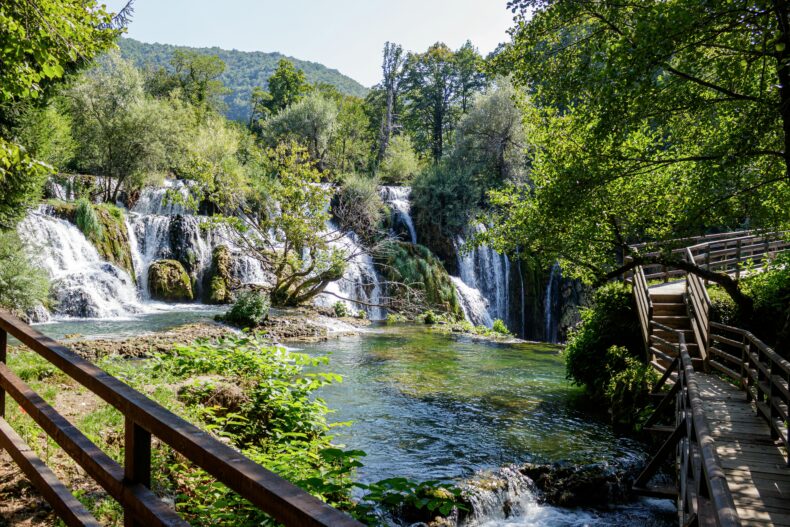
The final stage of the road trip begins in Bosanska Krupa, a charming little town on the banks of the Una River. The centre is small, but that is exactly what makes it such a pleasant stop along the way. Walk across the wooden bridges, watch the small waterfalls flowing through the town and take a little time to enjoy the peaceful atmosphere by the water. Around an hour is usually enough to see the main sights, but Bosanska Krupa is a lovely change of pace before continuing the journey.
From here, it is around an hour and a half to Banja Luka, the second-largest city in Bosnia. The city feels more modern and spacious than Sarajevo or Mostar, but there is still plenty to see and enough to fill a relaxed afternoon. Start with Kastel Fortress, one of the city’s best-known landmarks, which sits right beside the Vrbas River. The riverside setting makes it a pleasant place to walk around and get your first impression of the city.
Afterwards, take a stroll along the broad boulevard or settle down at one of the many terraces in the centre. Banja Luka has a laid-back and open feel, making it an easy place to slow down after several busy days on the road. It is the kind of city where sightseeing and relaxing go hand in hand, so you can easily combine a few attractions with a long lunch, coffee break or quiet walk.
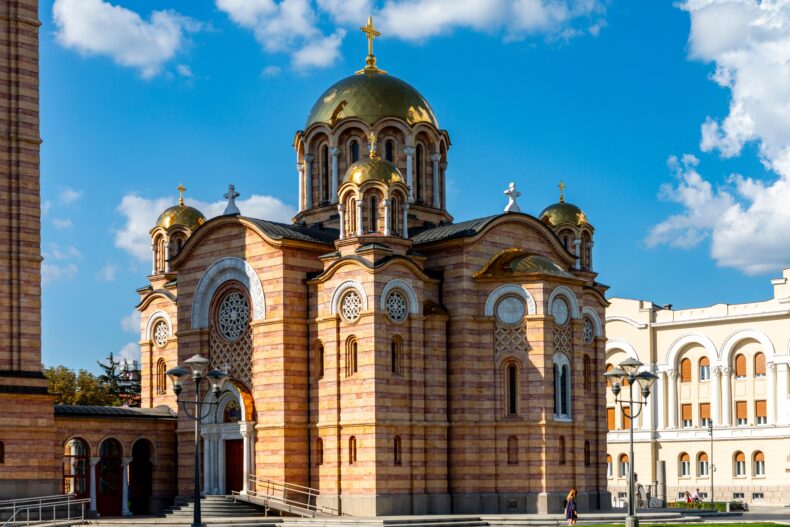
Two other sights worth adding to your afternoon are the Cathedral of Christ the Saviour and the Ferhadija Mosque. Both are important landmarks and show a different side of the city’s history and architecture. Together with the fortress and river, they add more variety to a visit and make Banja Luka feel more interesting than you might expect at first glance.
After starting the day beside the peaceful Una River and ending it in one of Bosnia’s largest cities, this final leg offers a nice contrast and a relaxed finish to the trip. Banja Luka may not have the same old-town atmosphere as Sarajevo or Mostar, but it brings a different character to the route. It is a comfortable place to spend your final evening before heading home or continuing your journey elsewhere.
Day 12: Departure from Banja Luka
After eleven days filled with historic cities, mountain landscapes and some of Bosnia’s most impressive natural scenery, the road trip comes to an end. By now, you will have seen a wide mix of places, from busy old towns and quiet villages to waterfalls, rivers and national parks. Banja Luka makes a relaxed final stop before it is time to head home or continue your journey elsewhere.
From Banja Luka, there are several ways to travel on, depending on your flight schedule and where you need to go next. The city has a small international airport with connections to a number of European destinations, which can make it a convenient place to finish the trip. The choice of flights is more limited than at larger airports, though, so it is worth checking the timetable before finalising your plans.
Another popular option is to drive to Zagreb, which takes around two and a half hours. Zagreb Airport has a much wider range of daily flights, so for many travellers this is the most practical and flexible choice. It can also work well if you are continuing your journey through Croatia or returning a rental car there at the end of the road trip.
You can, of course, also drive back to Sarajevo, especially if you have booked a return flight from the capital. The distance is a little longer, but it is still a perfectly reasonable option and allows you to finish the trip where it began. Depending on your plans, you could even add one final night in Sarajevo before flying home.
Whichever route you choose, this is the point where a very varied journey through Bosnia comes to a close. Over the past eleven days, you have travelled through historic cities, mountain villages, green valleys, waterfalls and national parks, with plenty of scenic roads in between. It is a road trip that gives you a real sense of how diverse the country is and leaves you with a long list of places you may want to return to one day.


