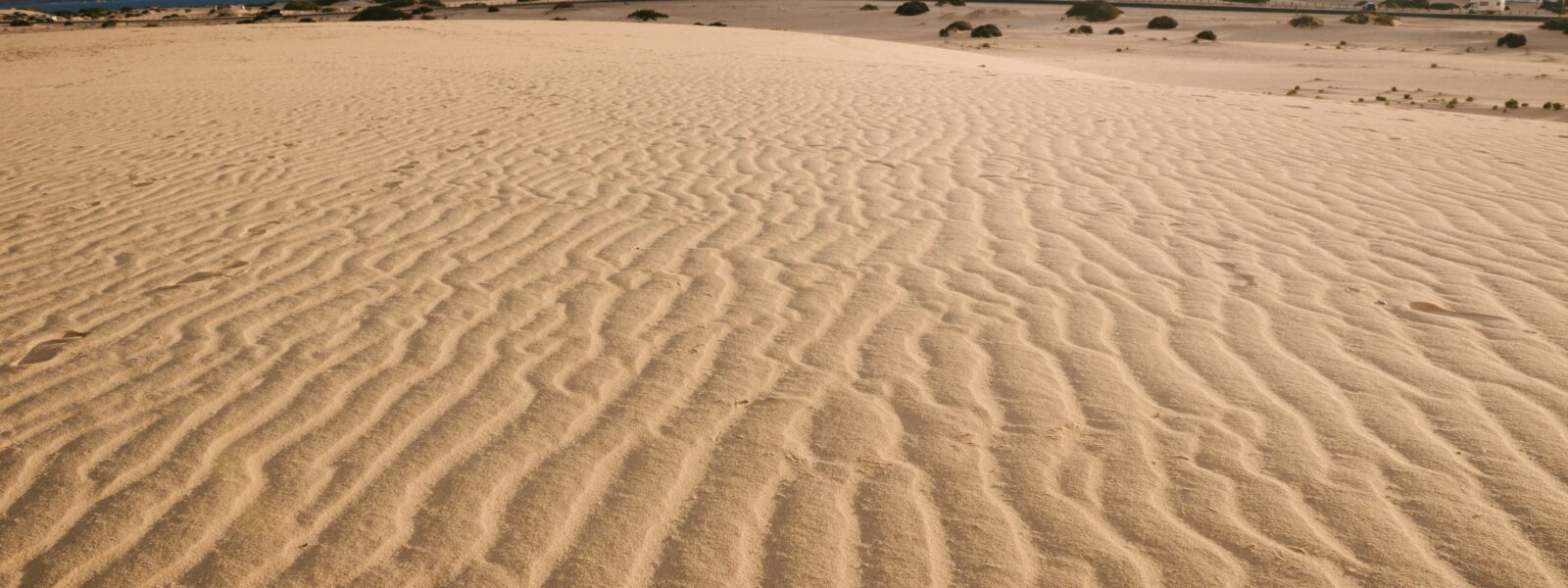
Corralejo has everything you’d picture for a holiday in the Canary Islands. One day you’re walking through rolling sand dunes that look straight out of the Sahara, the next you’re standing on the rim of an ancient volcano or crunching across a beach covered in ‘popcorn’. In between, you grab a seat on a sunny terrace, stroll along the harbour, laze on the beach or hop on the ferry to wild, unspoilt Isla de Lobos.
Whether you’re here for sun and sand, love getting out into nature or want to see as much of Fuerteventura as possible, there’s plenty to do in and around Corralejo. In this guide we share the 12 best things to do in Corralejo, so you can make the most of your trip to this easygoing beach town at the very northern tip of Fuerteventura.
Where is Corralejo and how do you get there?
Corralejo sits at the very top of Fuerteventura, one of the Canary Islands. The islands lie off the coast of Morocco, but they’re part of Spain, so you pay in euros and EU rules apply. Thanks to the mild climate, Fuerteventura is one of Spain’s most popular holiday spots, and not just in summer. In spring, autumn and even midwinter, plenty of travellers head here to chase the sun.
Within Fuerteventura, Corralejo’s location is hard to beat. You can walk to the harbour or the lively centre, while the huge sand dunes start just a few minutes out of town. Isla de Lobos, El Cotillo, Calderón Hondo and the Bayuyo volcanoes are all close by too, which makes Corralejo a perfect base for exploring the north of the island.
Getting there is easy. Fuerteventura Airport has direct flights from many cities across Europe; from the Netherlands, for example, it’s a flight of about 4.5 to 5 hours. From the airport, Corralejo is roughly a 40 minute drive.
→ Discover the 6 best areas to stay in Fuerteventura
What is Corralejo known for?
Corralejo is one of Fuerteventura’s most popular beach towns, and it’s easy to see why. You get a lively seafront, great beaches, spectacular sand dunes and a laid-back atmosphere. Add top conditions for surfing and a short boat ride to Isla de Lobos, and you’ve got a place where the days fly by.
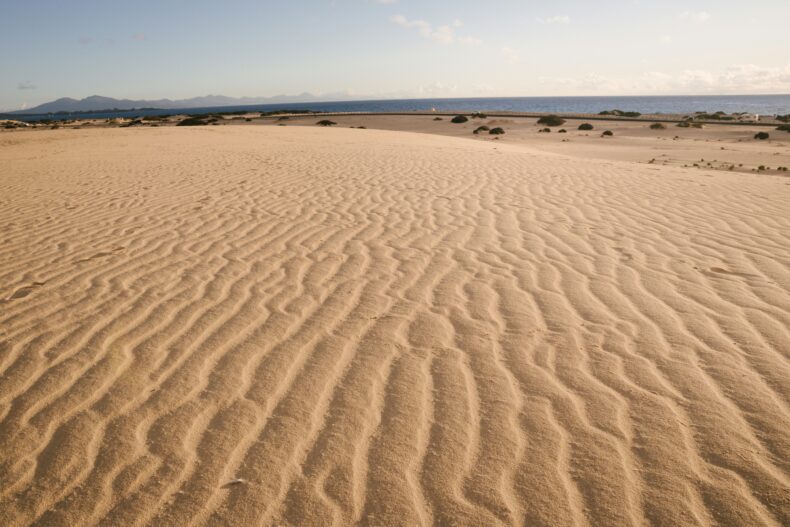
The biggest draw is without doubt the Dunas de Corralejo. As soon as you drive out of town, the hotels and shops suddenly give way to a sweeping landscape of white sand dunes. Paired with the bright blue ocean, it makes for one of the finest views on Fuerteventura.
The beaches pull in plenty of visitors as well. Around Corralejo you’re spoilt for choice, from small town beaches you can walk to straight from a restaurant to wide stretches of sand with all the space in the world. Clear water and a steady breeze also make the area popular with surfers, kitesurfers and snorkellers.
Another reason many people pick Corralejo is its handy location. From the harbour you can hop on the ferry to Isla de Lobos, a small uninhabited island where you can hike, snorkel and enjoy the peace and quiet. Other highlights, such as the volcanoes near Lajares and the beaches of El Cotillo, are only a short drive away.
And perhaps its biggest plus: Corralejo has a great holiday vibe. By day you wander along the harbour, sip a drink on a terrace or pop into a fun little shop. Once the sun goes down, the restaurants and bars fill up and the centre really comes alive.
Things to do in Corralejo: our 12 favourite spots
#1 Explore the beaches of Corralejo
The beaches might be the number one reason so many travellers choose Corralejo, and Fuerteventura in general. Of all the Canary Islands, we thought this one had the best beaches.
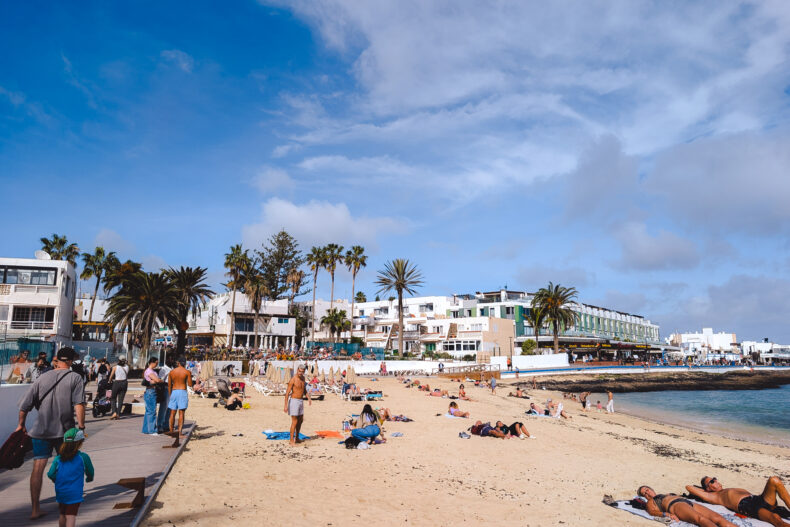
There are more than ten beaches around town, each with its own character. In the centre you’ll find smaller sandy beaches such as Playa Waikiki and Playa Corralejo Viejo. The water here is usually calm and shallow, which makes them popular with families, and with restaurants and shops a few minutes’ walk away it’s easy to combine a beach day with lunch in town. Drive a few minutes south and you’ll reach the Grandes Playas. Here the beach stretches for kilometres along the coast, with plenty of room to swim, sunbathe or go for a long walk.
Thanks to the constant trade winds, these beaches are also a favourite with windsurfers and kitesurfers. We loved just sitting on the sand watching everyone out on the water, including a surprising number of wingfoilers.
#2 Visit Popcorn Beach
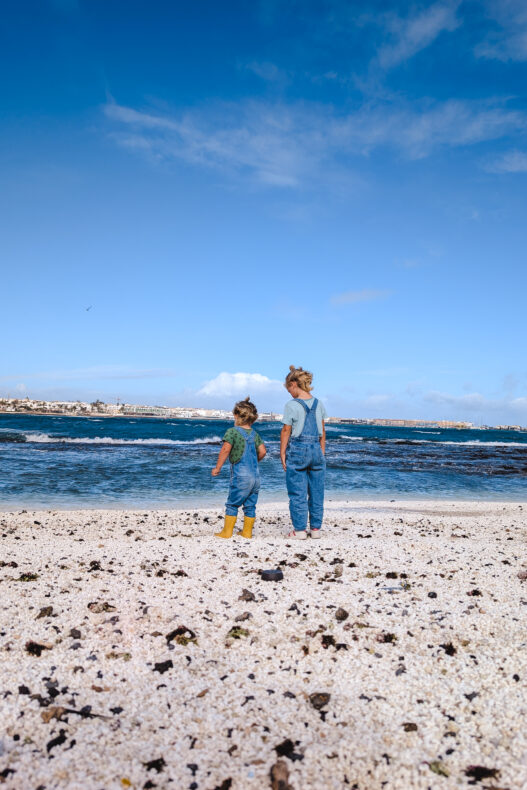
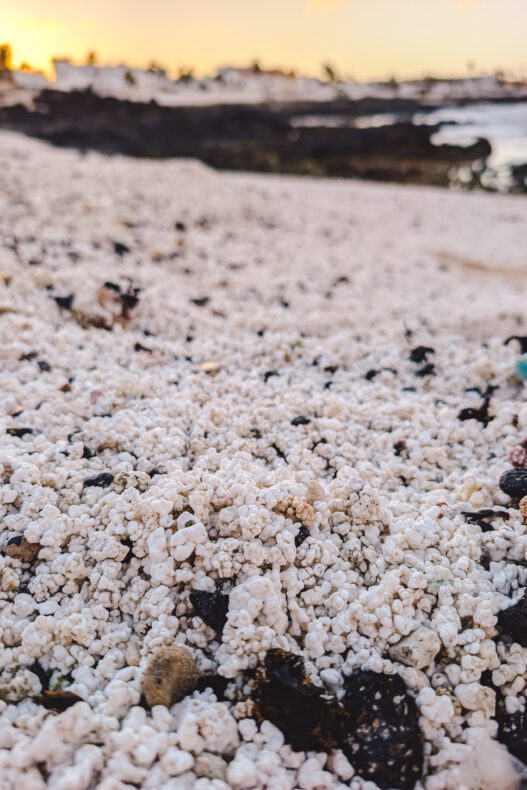
On the edge of Corralejo lies one of Fuerteventura’s most unusual beaches: Popcorn Beach. Its official name is Playa del Bajo de la Burra, but almost everyone knows it by its nickname. That comes from the thousands of little white pieces of coralline algae scattered along the shore. Over thousands of years the sea has worn them into round shapes that look remarkably like popcorn.
Popcorn Beach sits on the outskirts of town, towards the fishing village of Majanicho, and you can easily walk there along the seafront promenade. A large part of the route is even wheelchair and pushchair friendly. Most visitors come here for a walk or to take photos.
Good to know: don’t take any of the white ‘popcorn’ home. The algae are part of the natural ecosystem, and taking them is actually against the law.
#3 Walk through the Dunas de Corralejo
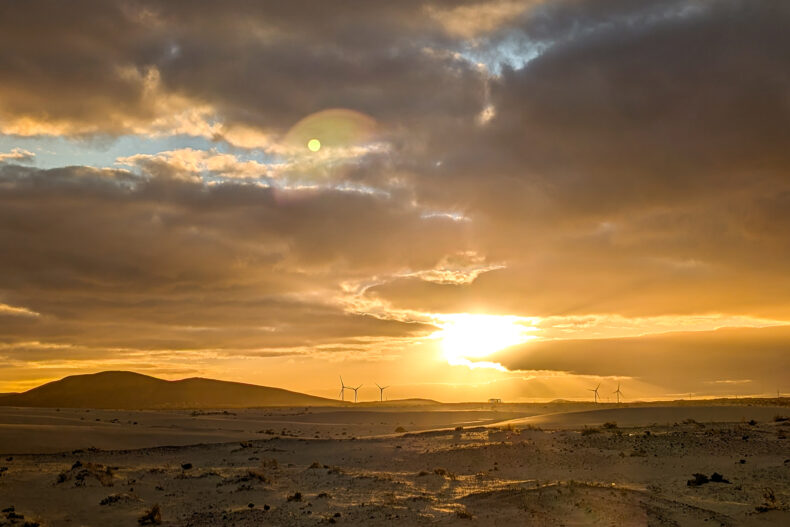
Drive out of Corralejo and the landscape changes almost instantly. The buildings disappear and make way for a vast field of dunes that runs right down to the ocean. Welcome to the Parque Natural de Corralejo, a protected nature park of more than 2,600 hectares on the north eastern tip of Fuerteventura. The dunes are mostly made of finely ground shells and coral blown inland by the wind, which is why the sand here is so strikingly white.
Tip: Fancy staying right in the middle of this landscape? Then Hotel Riu Oliva Beach Resort is a great choice. The hotel sits directly on the beach, surrounded by the Dunas de Corralejo.
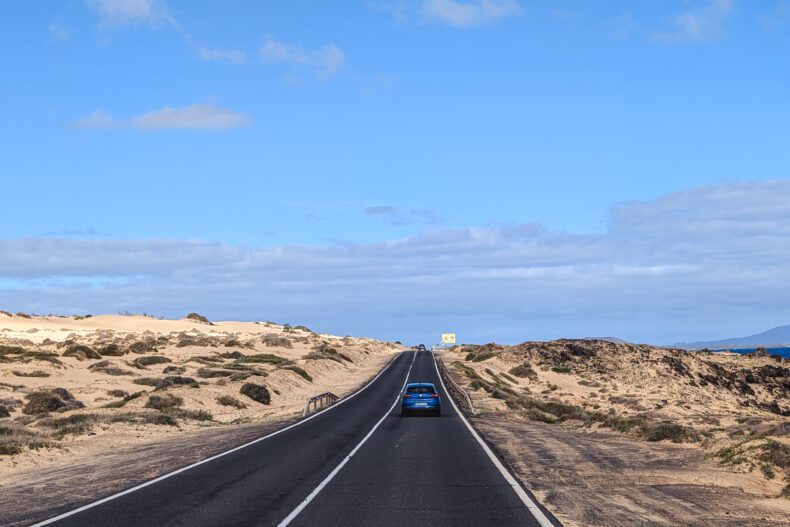
The road through the park has plenty of car parks where you can easily pull over. From there you can wander straight into the dunes or carry on to one of the wide sandy beaches by the sea. Along the way you’ll have views of Isla de Lobos and, on a clear day, even Lanzarote.
It’s at its best early in the morning and late in the afternoon. For us, sunset was the highlight. With the soft light and long shadows, it’s no surprise the dunes are among the most photographed spots on Fuerteventura.
#4 Take a day trip to Isla de Lobos
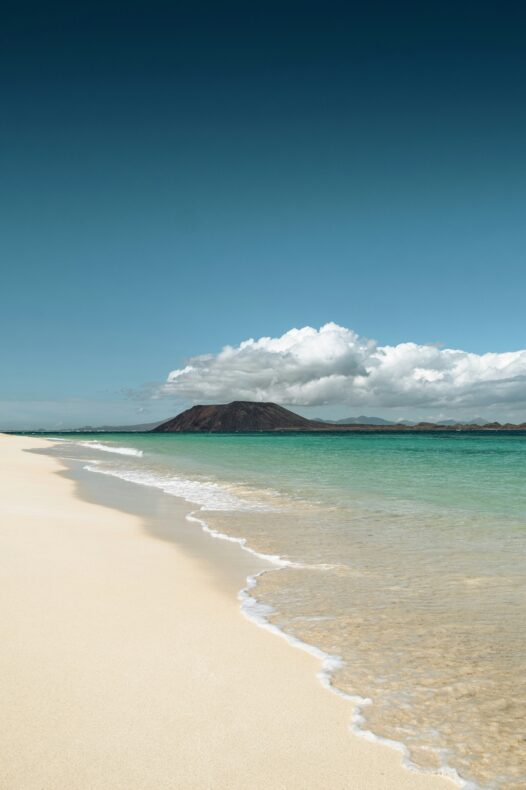
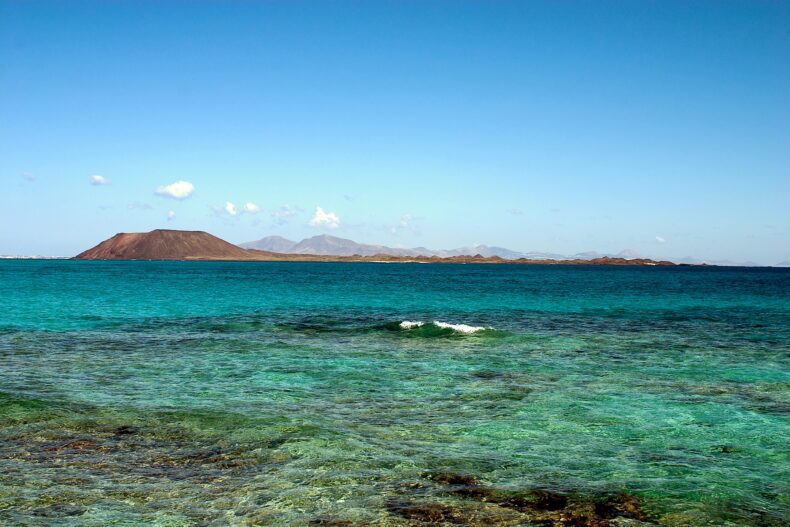
If you only do one excursion from Corralejo, make it Isla de Lobos. This little island lies less than two kilometres off Fuerteventura, and the ferry from the harbour gets you there in about twenty minutes. There are no houses and no cars on this uninhabited island. Just nature and beaches.
Isla de Lobos is a protected nature reserve, so only a limited number of visitors are allowed onto the island each day. That keeps it wonderfully quiet.
A walking trail takes you past volcanic landscapes, small coves and old salt flats to the Montaña La Caldera volcano. From the top, you look out over Corralejo, Lanzarote and the ocean. Don’t skip La Concha either. This sheltered bay is known for its crystal clear water and is one of the best places to snorkel around Fuerteventura.
#5 Stroll along Corralejo harbour
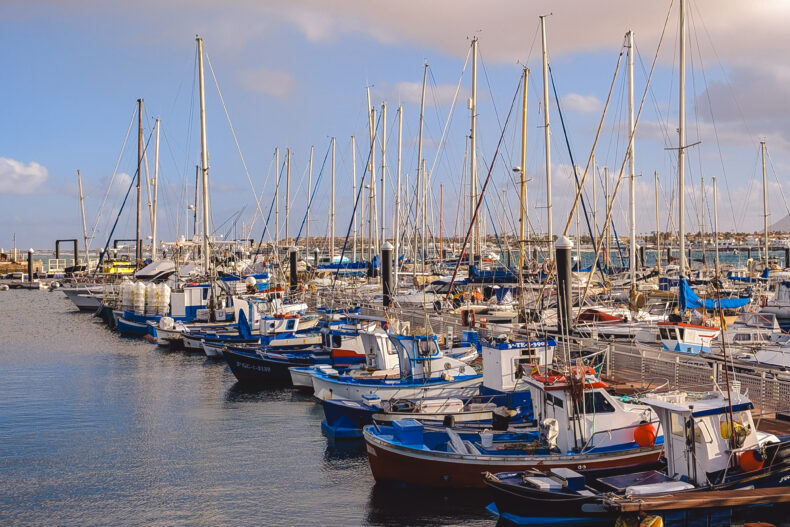
It’s hard to imagine now, but Corralejo was once nothing more than a small fishing village. The harbour played a big part in that story, and it still does. Fishing boats still head out from here, while a little further along the ferries come and go to Isla de Lobos and neighbouring Lanzarote.
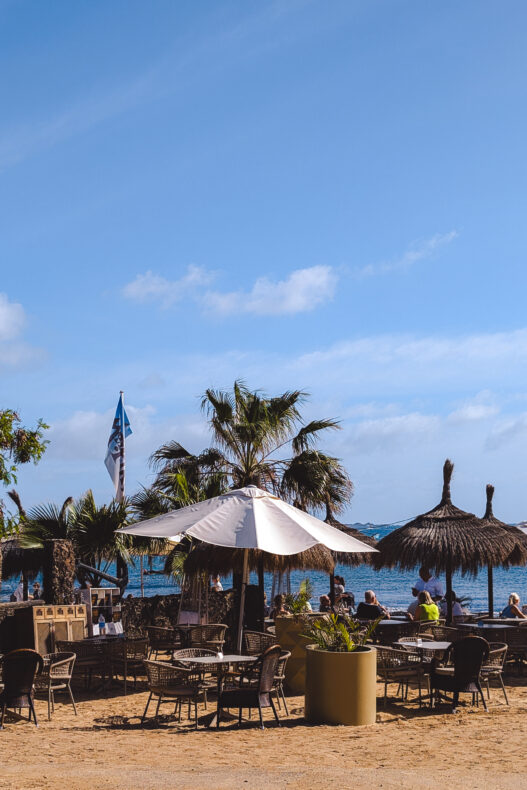
The promenade along the harbour is one of the most pleasant spots in town. You’ll pass terraces, restaurants and small shops, all looking out over the boats and the ocean. Do grab a seat on one of those terraces: with a drink in hand you can watch the ferries sail in, with Isla de Lobos on the horizon. We had pizza at Pizzeria Margherita. Towards the end of the day there’s a relaxed buzz here, with locals and holidaymakers side by side.
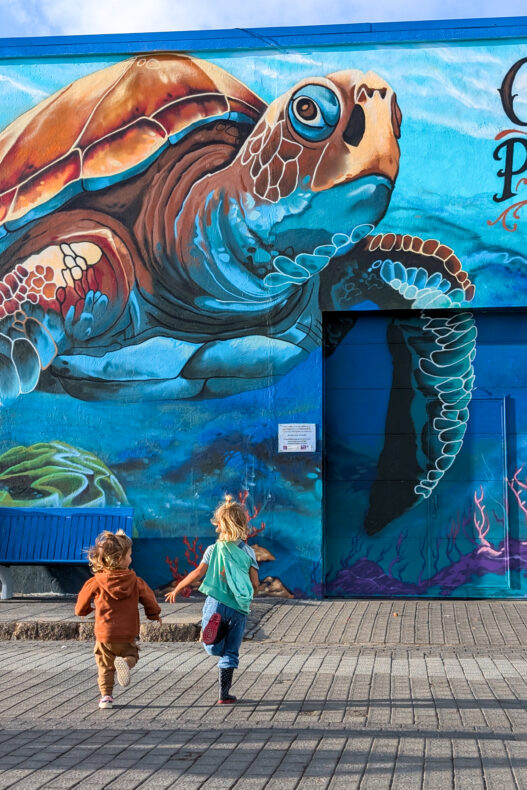
Tip: At the harbour you’ll find a big mural full of sea turtles and tropical fish. Our kids absolutely loved it.
#6 Wander through the centre of Corralejo
Corralejo is big enough to feel lively, yet small enough to explore entirely on foot. The heart of town is Avenida Nuestra Señora del Carmen, the long and slightly touristy shopping street that runs straight through the centre. Along the way you’ll pass surf shops, boutiques, ice cream parlours and terraces that stay busy all day.
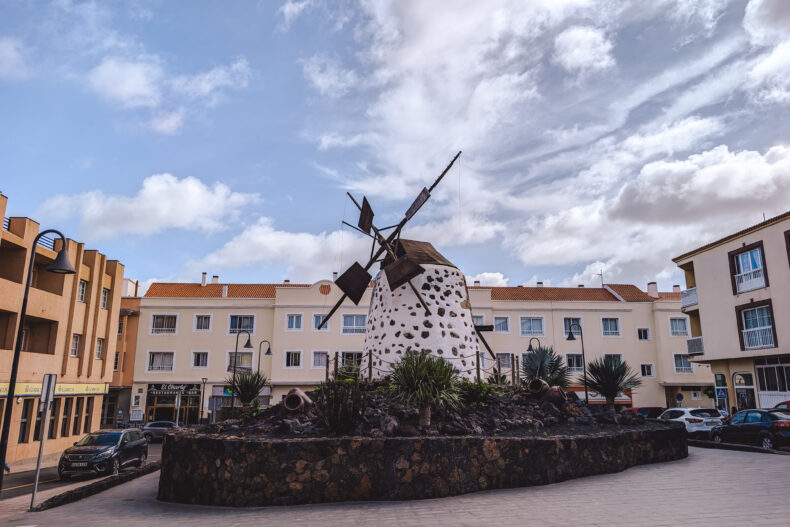
Make sure you also stop by the white Molino Domingo Estévez Rodríguez. This traditional 19th century windmill is a reminder of the days when grain was still grown all over Fuerteventura and ground into gofio, a traditional Canarian flour. Want to see inside a mill like this? Then we recommend the Museo del Queso Majorero in the middle of the island, about a 45 minute drive from Corralejo.
Another well-known spot is El Campanario. This small shopping centre is charmingly built in Canarian style and has a pleasant courtyard that regularly hosts a market.
Tip: Travelling with kids? Then La Tunera Park, close to El Campanario, is a fun stop. With a playground and a skate park, it’s the perfect place to let them burn off some energy.
Finally, wander over to Music Square. Once evening falls, this square turns into one of the best places to go out in Corralejo. Restaurants set up their terraces, street musicians get the mood going and live music drifts out of several bars.
#7 Go surfing, kitesurfing or snorkelling
Thanks to the constant trade winds, Corralejo has been one of the top water sports spots in the Canary Islands for years. Surfers, windsurfers and kitesurfers come from all over the world to the north of Fuerteventura, and around the beaches you’ll find dozens of surf schools where you can take lessons or rent gear. Never stood on a surfboard? Then this is one of the best places to learn.
There’s plenty to discover beneath the surface too. Along the rocky coast and near Isla de Lobos the water is remarkably clear, which makes snorkelling very popular here. With a bit of luck you’ll spot schools of colourful fish, starfish and even rays. Prefer to get out on the water without a board? You can also go kayaking or join a boat trip along the coast.
#8 Climb the Calderón Hondo volcano
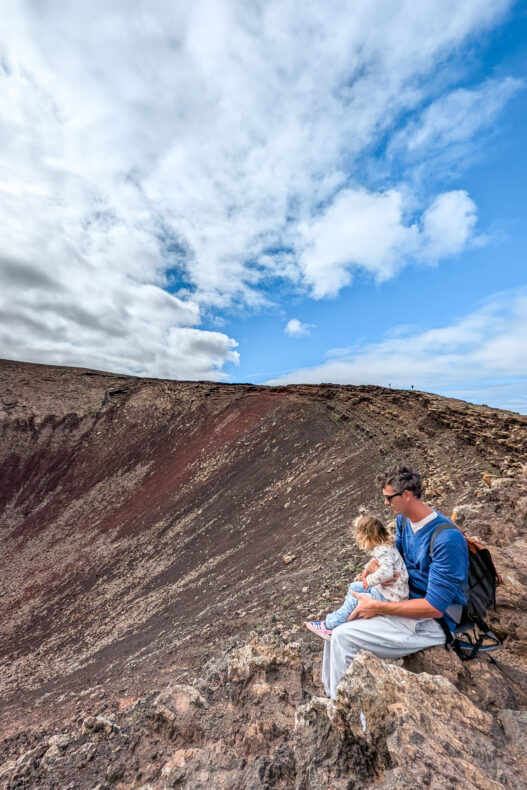
If you mainly think of Fuerteventura as a beach island, Calderón Hondo will surprise you. It’s one of the best preserved craters on the island and one of the finest walks around Corralejo. From the car park, it takes about half an hour to reach the crater rim. The route isn’t long, so it’s very doable for families. Even our kids, aged 3 and 5, walked up with ease.
Once at the top, you look straight down into the crater, which is almost seventy metres deep. Turn around and you get sweeping views over the volcanoes of the north, the dunes of Corralejo and, on a clear day, Lanzarote.
Calderón Hondo is hardly a secret, though, and it can get pretty busy. Early in the morning or late in the day it’s much quieter, and we think the dramatic landscape looks its best then too.
Extra special: on and around Calderón Hondo we came across lots of Barbary ground squirrels. They’re not shy at all and sometimes even climb onto your lap hoping for a snack. Our kids, of course, thought it was brilliant. As cute as they are, it’s best not to feed them. They’re not native to the island and are actually a threat to Fuerteventura’s fragile nature.
#9 Discover the Volcanes de Bayuyo
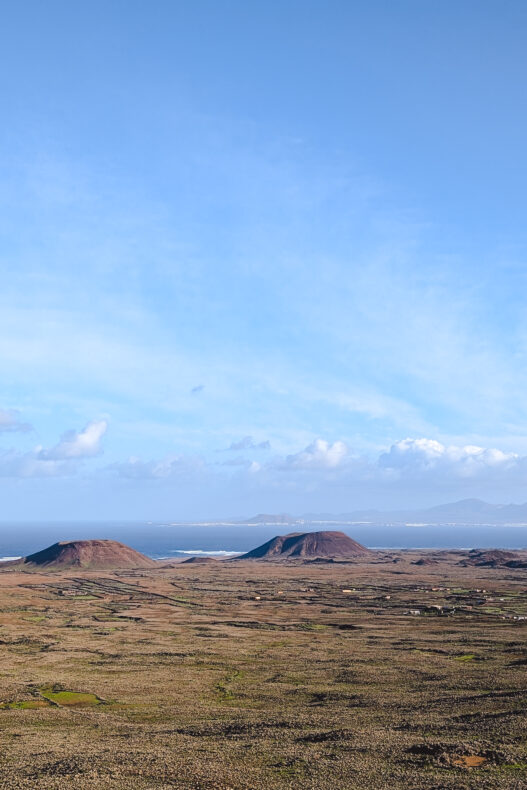
Looking for a quieter volcano experience? North of Calderón Hondo lies the Volcanes de Bayuyo, a chain of volcanoes that formed around 50,000 years ago and counts among the youngest volcanic landscapes on Fuerteventura. According to geologists, the sand of the Dunas de Corralejo partly comes from this volcanic rock breaking down, mixed with shells and coral from the sea.
Several walking trails cross the area, but you can also reach a few great viewpoints by car. Bayuyo Viewpoint in particular is worth a stop. From here you look out over Corralejo, the sweeping dunes, Isla de Lobos and Lanzarote. It’s a lot quieter than Calderón Hondo, so you can often enjoy the view all to yourself.
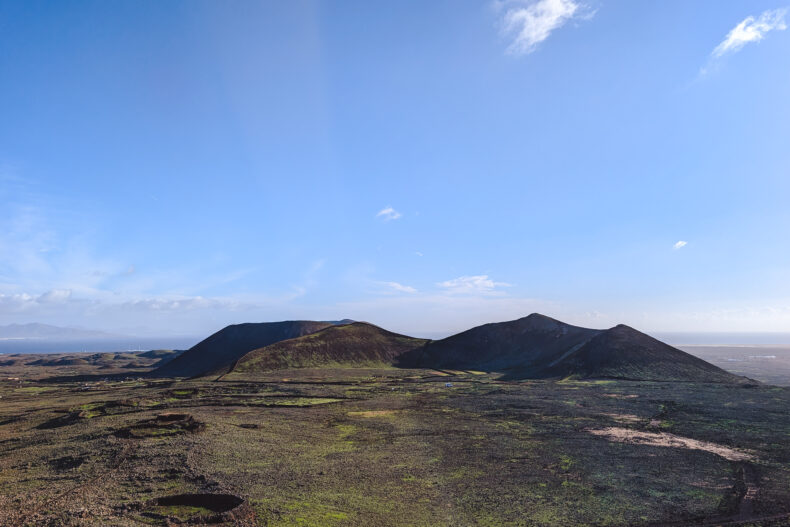
#10 Hike to the Volcán de la Arena
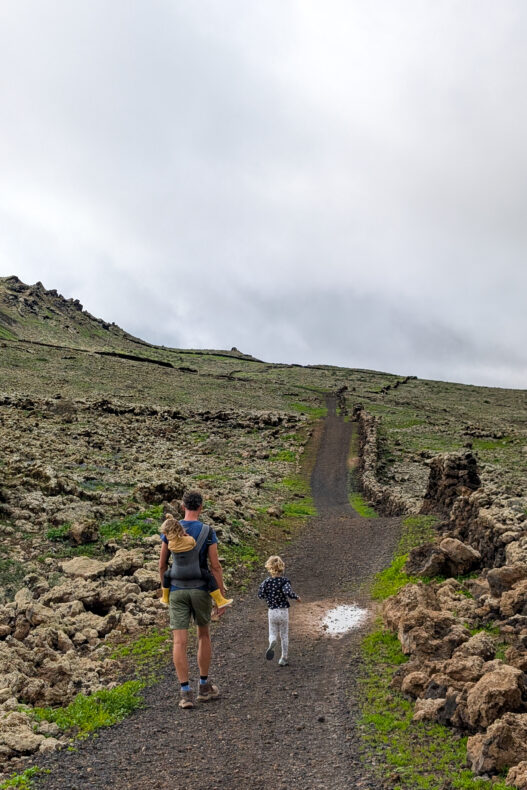
Another great walk near Corralejo takes you to Volcán de la Arena. This volcano sits a little further inland, close to the village of La Oliva, and is part of the protected Monumento Natural de Montaña de Arena. Because it’s less famous than Calderón Hondo, it’s often much quieter.
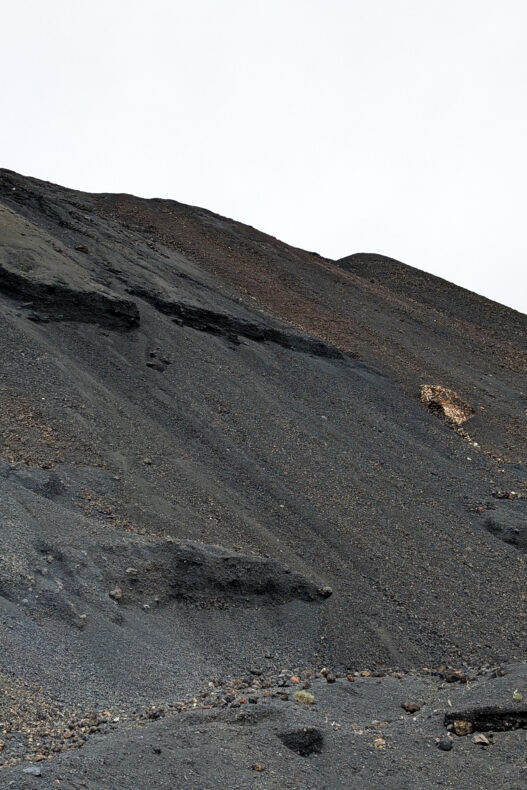
The trail leads through a bare volcanic landscape of black lava fields, red rocks and low shrubs that have adapted to the dry climate. You’ll barely see a building along the way. As you loop around the volcano, you can take a side path to the top for views over Fuerteventura’s interior, the surrounding volcanoes and, in the distance, the coast near Corralejo. Precisely because so few people come here, the walk feels wild and the landscape really gets to shine.
#11 Take a trip to El Cotillo
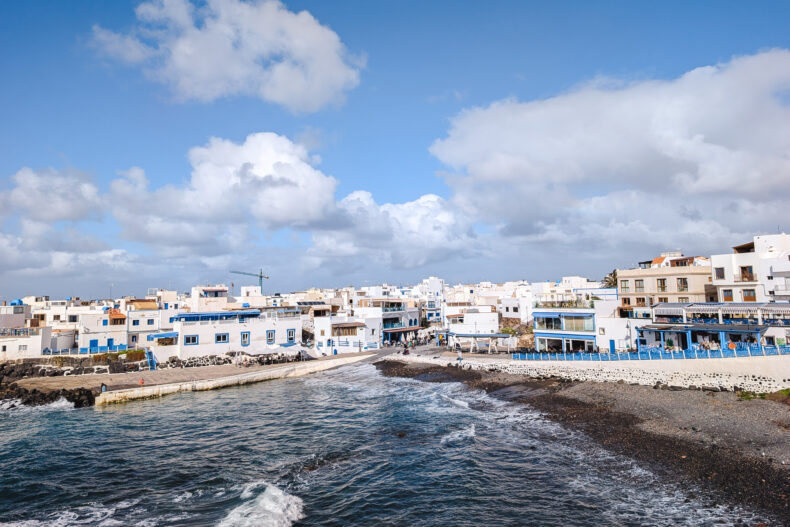
About twenty minutes’ drive from Corralejo lies El Cotillo, our favourite coastal town on Fuerteventura. Where Corralejo is known for its lively, touristy centre, El Cotillo has a more relaxed and authentic feel. The former fishing village is a cluster of white houses, narrow streets and a small harbour where fishermen still head out every day. It definitely sees its share of tourists, but to us it felt calmer and much more like a real village.
Most visitors come for the beaches. North of the village are several lagoons, sheltered from the ocean by volcanic rocks. As a result, the water is often remarkably calm and clear, even when it’s stormy elsewhere. That makes it ideal for families to swim, and judging by all the little ones on the beach, plenty of parents agree.
On the south side, by contrast, you’ll find wide sandy beaches with big waves that are popular with surfers. We loved watching them while the sun sank into the sea behind them.
Round off your visit with lunch or dinner by the harbour. Fresh fish is on almost every menu.
Tip: Got some time left? Then drive on to Faro de Tostón. East of this striking white lighthouse you’ll find the Piscinas Naturales de Playa de los Charcos, natural rock pools that appear between the volcanic rocks at low tide. We spent an entire day here with the kids. Just keep in mind that the pools are only properly visible and accessible at low tide.
#12 Discover Barranco Encantado
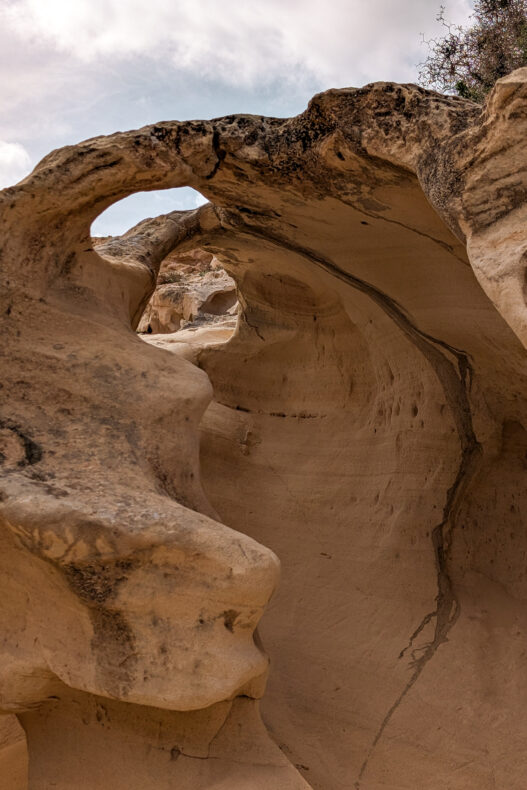
Looking for a spot that not everyone has found yet? Then Barranco Encantado is a great addition to your route. This narrow gorge lies in the volcanic landscape west of Corralejo, just south of El Cotillo, and is known for its jagged rock formations, carved out by wind and water over thousands of years. There’s a reason its name means ‘the enchanted gorge’.
From El Cotillo, you drive your (rental) car south along a bumpy track and park at a spot marked on Google Maps as Parking Barranco Encantado.
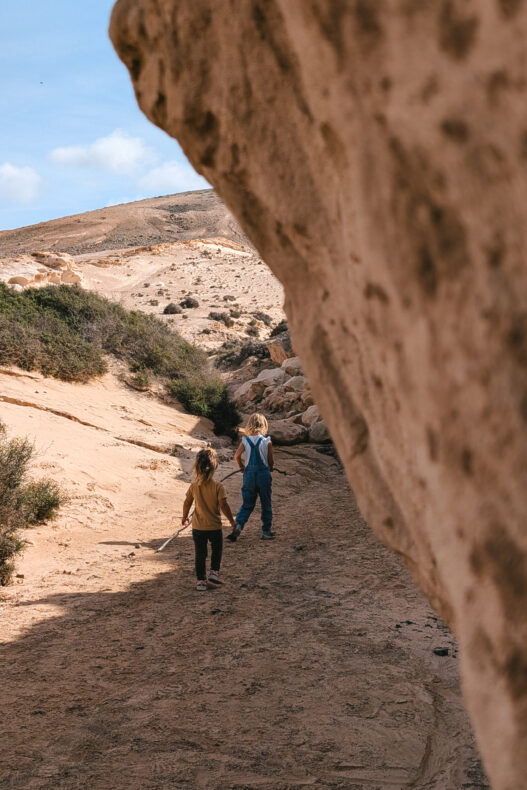
A walk through Barranco Encantado feels completely different from the rest of Fuerteventura. Instead of open plains, you wind between tall rock walls, twisting passages and unusual rock formations. It’s not a big sight where you’ll spend hours, but it’s a special stop and a fun short walk if you want to explore more of northern Fuerteventura or combine it with the volcanoes nearby.
→ Discover 8 lesser-known places on Fuerteventura
More tips for your trip to Fuerteventura
 Our pickStaying in Corralejo? Browse all hotels in Corralejo on Booking.com
 Long empty roads to remote beaches? Rent a car with Discover Cars and compare the big rental companies in one go.
 No flight yet? Compare flights to Fuerteventura.
 Taking the boat to Isla de Lobos? Book your crossing and other tours with GetYourGuide.
 Discover all our blogs about Fuerteventura


