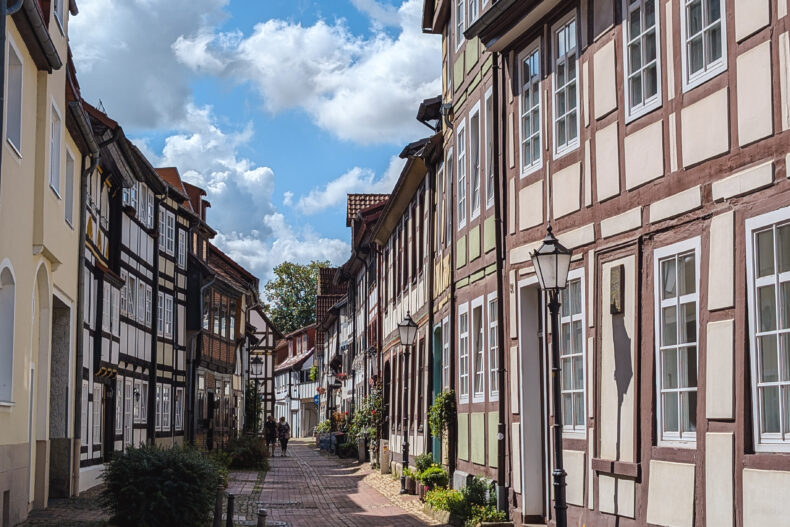
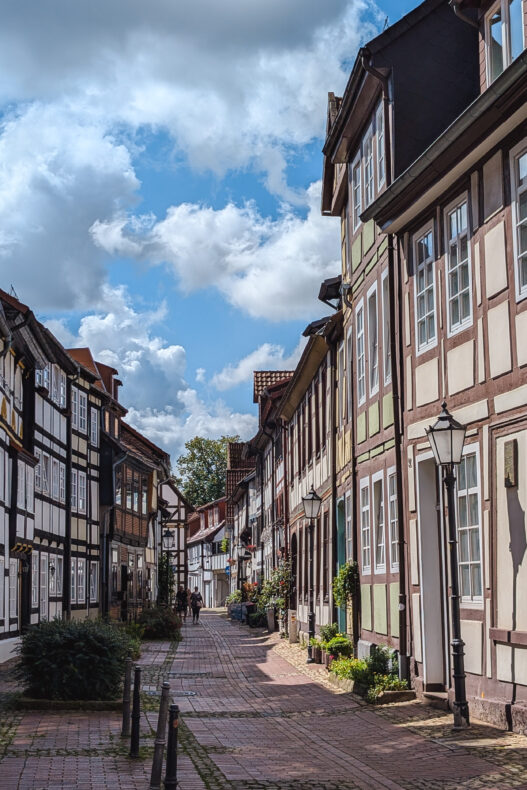
“Just make sure you don’t lose the children.” It is probably the joke people make most often when you tell them you are going to Hameln. Luckily, I had already found a very practical solution: for this city trip, I left the children at home and travelled with a friend instead. Hameln is known around the world because of the legend of the Pied Piper, but we soon discovered that there is much more to the city than its famous story. The old town is full of character, with colourful half-timbered houses, elegant historic buildings and small streets that are perfect for wandering without much of a plan.
We spent our time exploring those atmospheric streets, admiring impressive Renaissance façades and looking out for the many details that make the historic centre so attractive. We also ate pancakes inside a half-timbered house dating back to 1550, which felt like a very fitting place for lunch in a town with so much history. One of the most fun parts of our visit was an escape tour through the city. It turned out to be both entertaining and much more challenging than we had expected, and it gave us a completely different way to explore Hameln while paying attention to corners and details we might otherwise have walked straight past.
Of course, we also spent time learning more about the mysterious story that has made Hameln famous for more than seven centuries. The legend of the Pied Piper appears everywhere in the city, but instead of feeling repetitive, it adds a playful and slightly mysterious layer to the old town. What surprised us most was how varied Hameln felt. There is history, architecture, local stories, good places to eat and fun activities, all packed into a compact centre that is easy to explore on foot.
So if you are planning to visit Hameln, there is plenty to look forward to beyond the Pied Piper alone. In this article, we share our favourite sights, fun things to do and practical tips, so you can make the most of your visit and discover everything this surprisingly beautiful city has to offer.

The Legend of the Pied Piper of Hameln
Ask anyone what Hameln is famous for, and chances are the Pied Piper will be the first thing they mention. This centuries-old story about a mysterious flute player made the town famous around the world, and even today the legend is woven into almost every corner of Hameln. You will spot references to it everywhere: in statues, carved stones, historic façades, the famous Pied Piper’s House and even a colourful church window. No matter where you walk in the old town, the story is never far away.
According to the legend, Hameln was suffering from a terrible rat infestation in 1284. A mysterious man dressed in brightly coloured clothes arrived in town and offered to get rid of the rats in return for a generous reward. The townspeople agreed. As soon as the stranger began playing his flute, the rats came pouring out of houses, alleys and hidden corners. They followed the music through the streets, forming a strange procession behind the Pied Piper.
He led them all the way to the River Weser, where the rats entered the water and drowned. Hameln was finally free of its problem, and the people were delighted. At least, they were delighted until it was time to pay.
The townspeople refused to keep their promise and sent the Pied Piper away without the reward they had agreed on. It turned out to be a decision they would deeply regret. On 26 June 1284, the Pied Piper returned to Hameln. This time, however, he did not play for the rats. Instead, the children of Hameln followed the sound of his flute and walked out of the town behind him. According to the legend, 130 children disappeared without a trace and were never seen again.
A Story That Has Survived for Centuries
What makes the story of the Pied Piper especially fascinating is how early it appears in historical sources. This is not a tale that suddenly appeared hundreds of years later. Around the year 1300, there was already a stained-glass window in the Marktkirche St. Nicolai showing the flute player together with the children. That means some version of the story was already being remembered not long after the date connected to the legend itself.
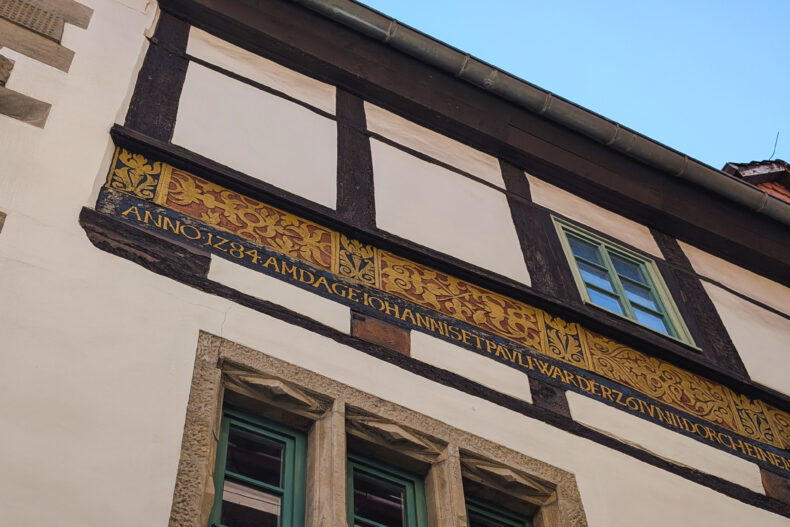
The original window was lost in the seventeenth century, but by then its image and story had already been described in written sources. Today, you can see a modern stained-glass window inside the church that keeps the centuries-old story alive. The famous Pied Piper’s House also refers directly to the legend. Although the building itself was constructed much later, in 1602, an inscription on the façade tells how, on 26 June 1284, 130 children were led out of Hameln by a brightly dressed flute player.
One of the most surprising details is that the rats do not appear at all in the oldest versions of the story. They seem to have been added centuries later. Originally, the story was simply about the mysterious disappearance of the children. The rat infestation, the promised reward and the Piper’s revenge were later additions that slowly became part of the tale.
Today, those elements are so closely connected with the Pied Piper that it is hard to imagine the story without them, but they were not part of the earliest version. For centuries, the legend remained mainly a local story. That changed when the Brothers Grimm included it in their 1816 collection Deutsche Sagen.
Through their books, the tale reached a much wider audience and gradually spread far beyond Hameln and Germany. Over time, the Pied Piper became one of the most famous figures in German folklore.
What Really Happened?
Perhaps the most interesting question is also the one nobody has been able to answer: what actually happened? Historians today think the legend may have been inspired by a real event. One reason is the unusually specific date linked to the story, combined with the fact that references to the disappearance appear in such early sources. One of the most commonly discussed theories is that the so-called “children” may actually have been young people from Hameln who left the town in the thirteenth century to build a new life somewhere in Eastern Europe.
At the time, recruiters travelled through crowded areas of Germany looking for people willing to settle in developing regions farther east. Young residents from Hameln may have joined one of these migration movements and left the town together. If that theory is true, the mysterious Pied Piper may not have been a magical flute player at all. He could simply have been a recruiter who convinced a group of young people to leave Hameln and settle somewhere else.
Over time, the memory of that departure may have changed into a much darker and more mysterious story. There is no proof, though, and that uncertainty is exactly what makes the legend so fascinating. More than seven centuries later, nobody knows for sure what happened in Hameln on that June day in 1284. A real event may have slowly turned into a legend, with new details added each time the story was told from one generation to the next. We had never expected there to be such a deep mystery or possibly even a real historical event, behind a story we had always known simply as a fairytale.
Learning about the older versions, the missing children and the theories behind the legend completely changed the way we looked at the Pied Piper. It also made exploring Hameln much more interesting, because all those statues, inscriptions and references around the old town suddenly felt connected to a mystery that has never truly been solved.
Plan a Round Trip Through Lower Saxony
Hameln may be one of the best-known cities in Lower Saxony, but it is certainly not the only one worth visiting. We combined it with Celle and Goslar on a multi-day trip through the region, and it turned out to be a great route. Each of the three cities has a completely different character. Celle is known for its palace and hundreds of beautiful half-timbered houses, Goslar is filled with medieval history, and Hameln stands out for its impressive Weser Renaissance architecture and, of course, the famous legend of the Pied Piper. That variety is exactly what made the trip so enjoyable for us. Even though the cities are relatively close to one another, each stop felt completely different from the last. You get royal history in Celle, medieval streets and mining heritage in Goslar, and beautiful Renaissance buildings mixed with one of Germany’s most famous legends in Hameln.
We travelled around Lower Saxony by train. From the Netherlands, the easiest starting point is the direct train from Utrecht to Hanover. If possible, we would recommend planning your trip around this connection, as it saves you from having to change trains several times along the way. We would also strongly suggest reserving a seat for the international part of the journey. We travelled without a reservation and quickly discovered that finding a good available seat was not always easy, especially on the busier parts of the route.
Once you reach Hanover, travelling on to Hameln, Celle and Goslar is fairly straightforward. This makes Hanover a useful hub for a rail trip through this part of Lower Saxony and allows you to combine several historic cities without needing a car. If you prefer maximum freedom, however, a road trip is probably the better choice. Travelling by car gives you much more flexibility, especially if you want to add other beautiful places in Lower Saxony or explore more of the Harz Mountains along the way.
You can stop wherever you like, change your plans more easily and are less dependent on Deutsche Bahn, which was not always as punctual as we might have hoped during our trip. Even so, we really enjoyed travelling by train. The more sustainable side of the journey appealed to us, and there was something very relaxing about not having to drive. Instead, we could watch the landscape pass by, read a book or simply catch up with each other while travelling between the different cities.
For us, that slower pace suited this trip very well. The train journeys became part of the experience rather than just a way of getting from one destination to the next.
Tip: We stayed at Hotel zur Börse, right in the middle of Hameln’s Altstadt. We had a complete apartment with its own kitchen and a lovely view over the lively Osterstraße, which made it feel like a comfortable little home in the heart of the city. Directly below us on Osterstraße was Italo, where we sat down for a delicious Italian dinner in the evening. It was a very convenient combination: good food downstairs, a comfortable apartment above, and the historic centre right outside the door.
For us, Hotel zur Börse made a great base for exploring Hameln. As soon as you step outside, you can walk straight into the old town and reach many of the main sights within just a few minutes.

Top Things to Do in Hameln
#1 Wander Through the Historic Altstadt
The best way to experience Hameln is on foot. The historic Altstadt is compact, full of atmosphere and packed with beautifully preserved half-timbered houses and richly decorated Renaissance buildings. Almost every façade is worth slowing down for, and around nearly every corner there is another detail that makes you want to stop and look a little closer. We explored the old town with a local guide, and that made the visit even more enjoyable. As we wandered through the narrow streets, we learned how Hameln developed into a wealthy trading town on the River Weser and why so many grand merchant houses were built here.
Having a guide also helped us notice things we might easily have missed on our own. Some façades are covered in carved wood, decorative stonework, old inscriptions and small symbols that reveal something about the people who once lived or worked there. Of course, the story of the Pied Piper is never far away. His legend appears all over Hameln, and once you start paying attention, you will notice references to it in buildings, signs, statues and small details throughout the old town.
That mix of real history and local legend is part of what makes the city so much fun to explore. One moment you are looking at an impressive Renaissance merchant house, and the next you spot another playful reference to the Pied Piper. If you prefer to explore on your own, that works just as well. The Altstadt is easy to navigate, and its compact size makes it perfect for wandering without a strict route or detailed plan.
In fact, we think that is one of the nicest ways to discover Hameln. Turn into the smaller streets, follow whatever catches your eye and give yourself time to enjoy the atmosphere instead of moving quickly from one sight to the next.For us, simply walking through the Altstadt was one of the highlights of our visit. The combination of half-timbered houses, elegant Renaissance façades, narrow streets and Pied Piper references gives Hameln a character that feels both historic and playful at the same time.
It is the kind of old town where wandering is part of the experience, and where you keep finding something interesting even when you are not looking for a specific sight.
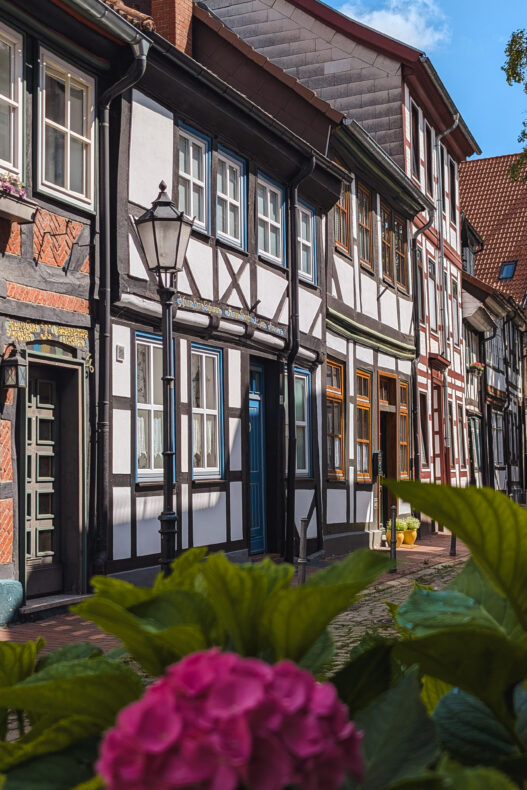

#2 Admire the Marktplatz
Sooner or later, you will naturally find yourself on the Marktplatz, the lively heart of Hameln. This central square is filled with café terraces, colourful façades and some of the most beautiful historic buildings in the city. For centuries, this was one of the main places where wealthy merchants came to trade their goods, and even today it still feels like one of the busiest and most atmospheric parts of Hameln. It is a lovely place to stop for a while, sit down with a drink or simply watch people pass by.
Make sure to take your time here and look up. Many of the richly decorated façades around the square were built in the Weser Renaissance style, an architectural style that you mainly find in towns along the River Weser.Look closely and you will notice elegant bay windows, carved stone details and elaborate decoration covering the buildings. These façades were designed to impress, and in many cases they were also a clear sign of wealth and status.
The richer the merchant, the more impressive his house was expected to be. As a result, some of the buildings around the Marktplatz are almost showpieces, filled with decorative details that were meant to attract attention. For us, that is what makes the square especially interesting. It is not only a pleasant place to sit and enjoy the atmosphere, but also one of the best places in Hameln to see how much money and importance the city once had as a trading town.
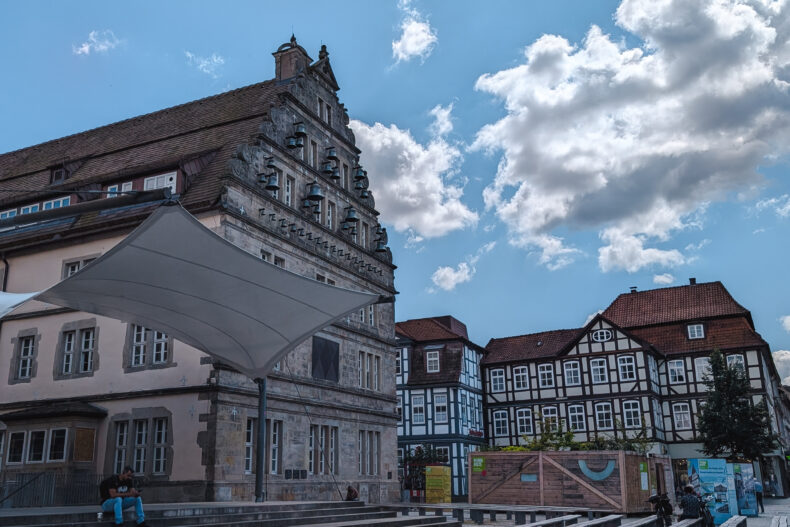
#3 See the Hochzeitshaus and Watch the Glockenspiel
Standing proudly on the Marktplatz is the impressive Hochzeitshaus, one of Hameln’s best-known historic buildings. Despite its name, it was never used only for weddings. Since it was built in the early seventeenth century, it has also been the setting for celebrations, banquets, dances and official receptions. For generations, this was one of the main places where the people of Hameln came together for important events and special occasions. That makes the Hochzeitshaus much more than just a beautiful building on the square; it was also an important part of social life in the city.
Make sure you do not walk past too quickly, because several times a day the façade quite literally comes to life. During the Glockenspiel, small moving figures appear and act out the famous legend of the Pied Piper, accompanied by the sound of bells. The performance only lasts a few minutes, but it is still worth stopping to watch. It is one of those slightly touristy attractions that somehow feels completely right in Hameln, where the story of the Pied Piper is woven into almost every part of the old town.
We especially liked how the Glockenspiel turns a historic façade into something playful. Even if you already know the legend, seeing it acted out in miniature on one of the city’s most famous buildings adds another fun layer to the story.
#4 Follow the Trail of the Pied Piper
You do not have to search very hard for the Pied Piper in Hameln. References to the famous legend appear almost everywhere you go, and once you start looking for them, you seem to spot them on every street. There are statues on the squares, rats in shop windows, and images, symbols and inscriptions on historic buildings throughout the Altstadt. Keeping an eye out for them makes wandering through the city even more fun, because the legend slowly becomes part of the way you explore Hameln.
If you want to make sure you do not miss the most important places connected with the story, follow the bronze rats set into the pavement. They form an easy trail through the old town and guide you past several of the main Pied Piper sights. Make sure to walk through Bungelosenstraße as well. According to the legend, this was the street the children followed when they were led out of Hameln by the Pied Piper.
Out of respect for the children, music and dancing have traditionally been forbidden in this street ever since. Whether you see it as history, legend or a mixture of both, knowing the story gives this quiet street a surprisingly different atmosphere. At the beginning of Bungelosenstraße, you will also find the famous Rattenfängerhaus, or Pied Piper’s House. An inscription on the façade, dating from 1602, tells how on 26 June 1284, 130 children were led away from Hameln by a flute player dressed in colourful clothes.
Once you know the background, this part of the city becomes much more than another collection of beautiful historic buildings. The streets, inscriptions and little bronze rats all connect back to the same mystery that has shaped Hameln’s identity for more than seven centuries. For us, following these small clues through the old town made the legend feel much more present. Instead of reading the story in a museum or guidebook, you experience it piece by piece while walking through the very streets where it is said to have taken place.


#5 Admire the Leisthaus
Ask someone from Hameln which building they consider the most beautiful in the city, and there is a good chance they will point you towards the Leisthaus. This richly decorated merchant house, built in 1585, is one of the finest examples of Weser Renaissance architecture in Germany. It is the kind of façade that rewards a closer look. At first, you notice the overall richness of the design, but the longer you stand there, the more individual details begin to appear.
The front of the building is filled with carved stonework, elegant ornaments and figures inspired by both the Bible and Greek mythology. There is so much to see that a quick glance hardly does it justice. Wealthy merchants in this period did not build grand houses simply because they needed somewhere to live. Their homes were also a way to show success, wealth and social standing to everyone who passed by.
The Leisthaus is perhaps one of the clearest examples of that idea in Hameln. Its façade feels almost like a carefully designed statement, with every decoration adding to the impression the owner wanted to make. We explored the building with a guide, who pointed out dozens of small details and explained the stories behind them. That made the façade much more interesting than it would have been if we had only stopped for a photo.
Through those details, we also gained a much better idea of what life was like for wealthy families in Hameln at the time. The decorations are not just there to look pretty; many of them reflect the beliefs, interests and ambitions of the people who lived here.
Today, the Leisthaus is home to the Hameln Museum, which we also visited briefly. It is a good place to learn more about the city’s history and, of course, about the legend that made Hameln famous around the world. One of the most unusual parts of the museum is the mechanical theatre. It tells the story of the Pied Piper in a very different way and turns the familiar legend into a small theatrical experience.
We thought it was a fun and memorable way to hear the story again, especially after seeing so many Pied Piper references elsewhere in the city. Even if you do not have time to go inside the museum, the Leisthaus is still absolutely worth stopping for. Take a few minutes to stand outside, look up and study the façade properly. It is one of those buildings that becomes more impressive the longer you look, and for us, it was one of the clearest reminders of just how wealthy and important Hameln once was as a trading city.

#6 Explore the City with Hameln2Go
If you want to discover Hameln in a more original way, we can definitely recommend Hameln2Go. Instead of joining a regular city walk, you head out with a backpack filled with puzzles, challenges and little surprises. The easiest way to describe it is as a kind of escape room, but with Hameln itself as the setting. Rather than solving everything inside one room, you move through the old town and use the streets, buildings and historic details around you to complete the tasks.
Along the way, you solve riddles, search for clues and discover interesting places while learning more about the history of Hameln. Because you are actively looking for dates, symbols, images and details on the façades, you naturally pay much more attention to your surroundings than you would during a normal walk. That was one of the things we liked most about the experience. Instead of simply passing historic buildings and thinking they looked pretty, we found ourselves stopping, looking up and studying the details much more carefully.
It also made the city feel more interactive. Hameln was no longer just the background to our walk; the streets and buildings became part of the game itself. Some of the puzzles were easier than others, and a few were surprisingly challenging, which made it even more fun. We had to work together, look closely and sometimes think a little longer than expected before we found the answer.
For us, Hameln2Go was honestly one of the most enjoyable parts of our visit. It combined sightseeing with a bit of competition and problem-solving, while still teaching us plenty about the city along the way. We also think this would be a great activity if you are visiting Hameln with older children or teenagers. The mix of puzzles, walking, history and discovery gives everyone something to focus on and makes sightseeing feel much less passive.
If you enjoy escape rooms, treasure hunts or simply exploring a city in a different way, Hameln2Go is a fun way to turn a walk through the Altstadt into a small adventure.
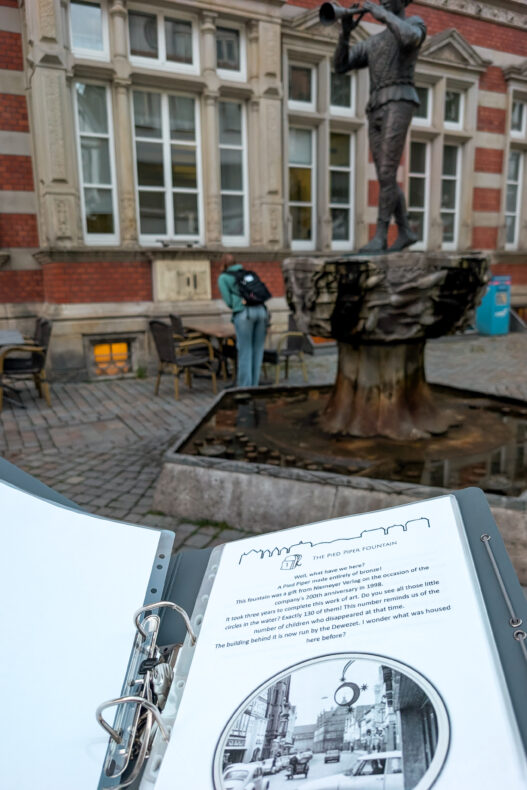

#7 Walk Along the Weser
Hameln would never have become the prosperous town it is today without the River Weser. For centuries, the river was an important trade route, carrying goods through northern Germany and connecting Hameln with other towns and markets across the region. That steady flow of trade brought money and opportunity to the city and helped Hameln grow into a wealthy merchant town. You can still see the results of that prosperity today in the grand houses, richly decorated façades and impressive historic buildings throughout the Altstadt.
For a completely different view of the city, head down to the Weserpromenade. From the riverbank, you can look out across the water and see a calmer, more open side of Hameln than you get in the narrow streets of the old town. On sunny days, this is also a popular place for locals to walk, relax and spend some time outdoors. The atmosphere feels much more laid-back here, which makes it a lovely place to slow down after a few hours of sightseeing.
We especially liked the contrast with the historic centre. One moment you are walking between centuries-old buildings and busy shopping streets, and the next you are beside the river with much more space around you and the water flowing quietly past. In summer, there is another good reason to stop here. Weser Glück is a relaxed beach-style bar right by the river, where you can sit with your feet in the sand and enjoy the atmosphere with a drink.
It is a fun and unexpected place to find in a historic German town, and it adds a completely different feel to the riverfront. If the weather is good, we can easily imagine spending quite a while here. Walking along the Weser is also a nice reminder that the river was never just a pretty backdrop to Hameln. It played a huge role in the city’s history and was one of the main reasons Hameln became such an important and wealthy trading town.
For us, that combination of history, local life and a relaxed riverside atmosphere made the Weserpromenade a very pleasant addition to a day in the city.
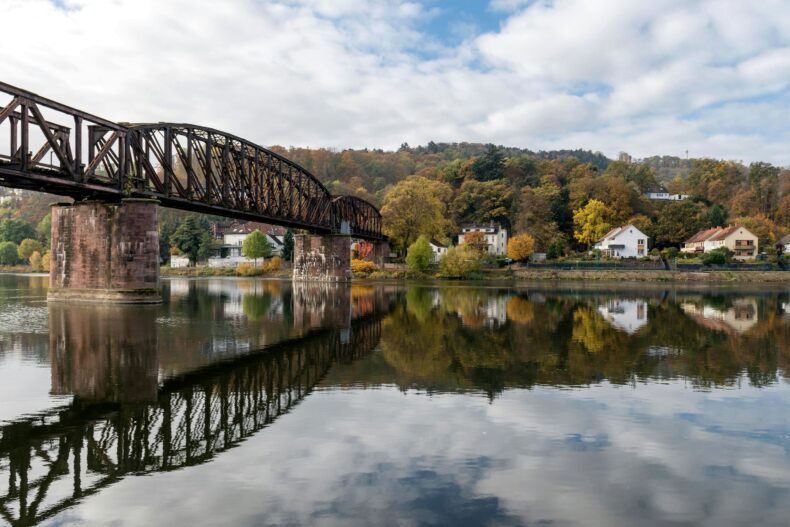
#8 Watch the Pied Piper Show
If you are visiting Hameln between May and September, try to be in the old town on a Sunday afternoon. That is when the famous legend of the Pied Piper is brought to life on the Marktplatz, with dozens of actors in historical costumes performing the centuries-old story as part of the RATS musical. The performance is free, does not take too long and usually attracts a good crowd. As people gather on the square, the Marktplatz takes on a completely different atmosphere and starts to feel almost like an open-air stage.
Even if you already know the story of the Pied Piper by heart, it is still fun to see the legend acted out in the middle of Hameln. The costumes, music and live performance make the familiar tale feel much more lively than simply reading about it in a guidebook or museum. There is also something special about watching the story in the city where the legend has been told for more than seven centuries. You are surrounded by historic buildings, standing in the heart of the old town, while one of Hameln’s best-known stories unfolds right in front of you.
What we especially like is how strongly the city still embraces the Pied Piper as part of its identity. The legend appears everywhere in Hameln, but this performance is one of the most direct and entertaining ways to experience it. It also gives the story a more playful side. After learning about the darker and more mysterious parts of the legend, seeing it performed with music, costumes and a full cast adds a completely different feeling.
If your visit falls on a Sunday during the warmer months, it is definitely worth planning your walk through the Altstadt around the show. It is easy to fit into a day of sightseeing, costs nothing to watch and adds a fun extra layer to your visit. For us, the fact that Hameln still brings its most famous story to life in the middle of the city is exactly what makes this such a memorable local tradition.


#9 Eat a Pancake at Pfannekuchen
We do not usually include restaurants in a list of things to see and do, but Pfannekuchen is an easy exception. The reason is simple: you are not just coming here for a pancake. The restaurant is set inside a beautiful half-timbered house dating back to 1550, so the setting itself already feels like part of the experience. Inside, you will find old oak beams, cosy dining rooms and plenty of historic character. The building feels warm and inviting, and there is also a lovely courtyard garden that makes the whole place even more charming.
It is one of those restaurants where you immediately notice the atmosphere before you even look at the menu. Sitting down for lunch here feels less like taking a break from sightseeing and more like continuing to experience Hameln’s history in a different way. The menu is huge, with dozens of sweet and savoury pancakes to choose from. There are also several vegetarian options, so there is plenty of variety whether you are in the mood for something light, filling or completely indulgent.
We had lunch here during our visit and really enjoyed the combination of good food and such a beautiful historic setting. It felt fun to be eating inside a building that had already been standing for almost five centuries. For us, that is exactly why Pfannekuchen deserves a place on this list. It is not just somewhere convenient to stop for lunch; it is also one of the most atmospheric places we visited in Hameln.
We would happily return on another trip, both for the pancakes and for the chance to sit once again inside such a wonderfully preserved old house.
#10 Admire the Stiftsherrenhaus
While walking through Hameln, you will eventually come across the Stiftsherrenhaus, one of the most beautiful Renaissance buildings in the city. It may be slightly less famous than the Leisthaus next door or the Hochzeitshaus on the Marktplatz, but it is certainly no less impressive. In fact, once you stop and really look at the façade, it quickly becomes clear how much detail went into its design.
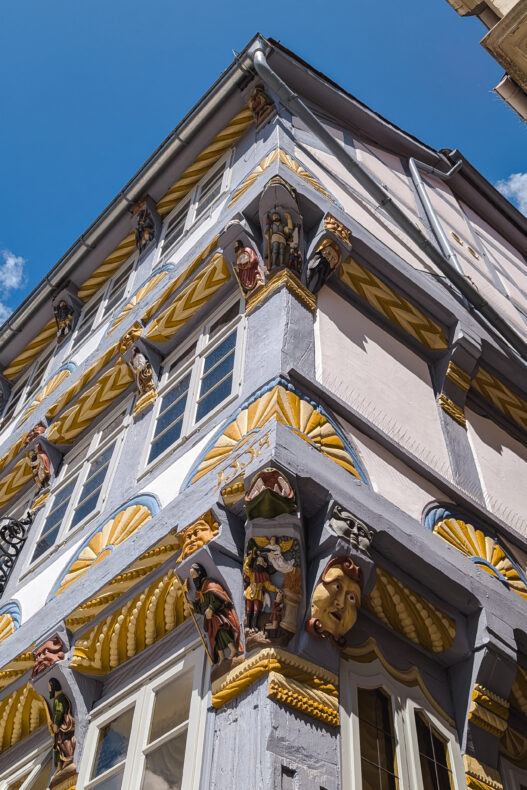
The building is a wonderful example of the Weser Renaissance, the architectural style for which Hameln is so well known. Elegant bay windows, carved figures and richly decorated details cover the façade from top to bottom. This is another place where it really pays to slow down and look closely. At first, you notice the overall beauty of the building, but the longer you stand there, the more individual details begin to appear.
Our guide pointed out several biblical figures worked into the decoration, along with demons that were believed to protect the people living inside the house. That combination of religious figures, protective symbols and decorative detail gives the façade much more meaning than you might notice at first glance.
There is also a more personal touch hidden among all those figures. The builder probably included himself and his wife in the decoration, which makes the façade feel surprisingly human despite its grand appearance.
For us, that was one of the most interesting things about the building. The Stiftsherrenhaus is not just beautiful to look at; it also tells you something about the beliefs, ambitions and personality of the people who created it. Having a guide explain those small details made the façade much more memorable. Once you know what to look for, the building stops feeling like just another impressive historic house and starts to feel almost like a story carved into stone.
We made this trip at the invitation of ‘9 Cities + 2 in Lower Saxony’, a partnership between some of the most interesting and enjoyable cities in the region. Feeling inspired to explore Lower Saxony for yourself? You can find plenty of ideas, travel inspiration and useful suggestions for planning your own trip at 9staedte.de.