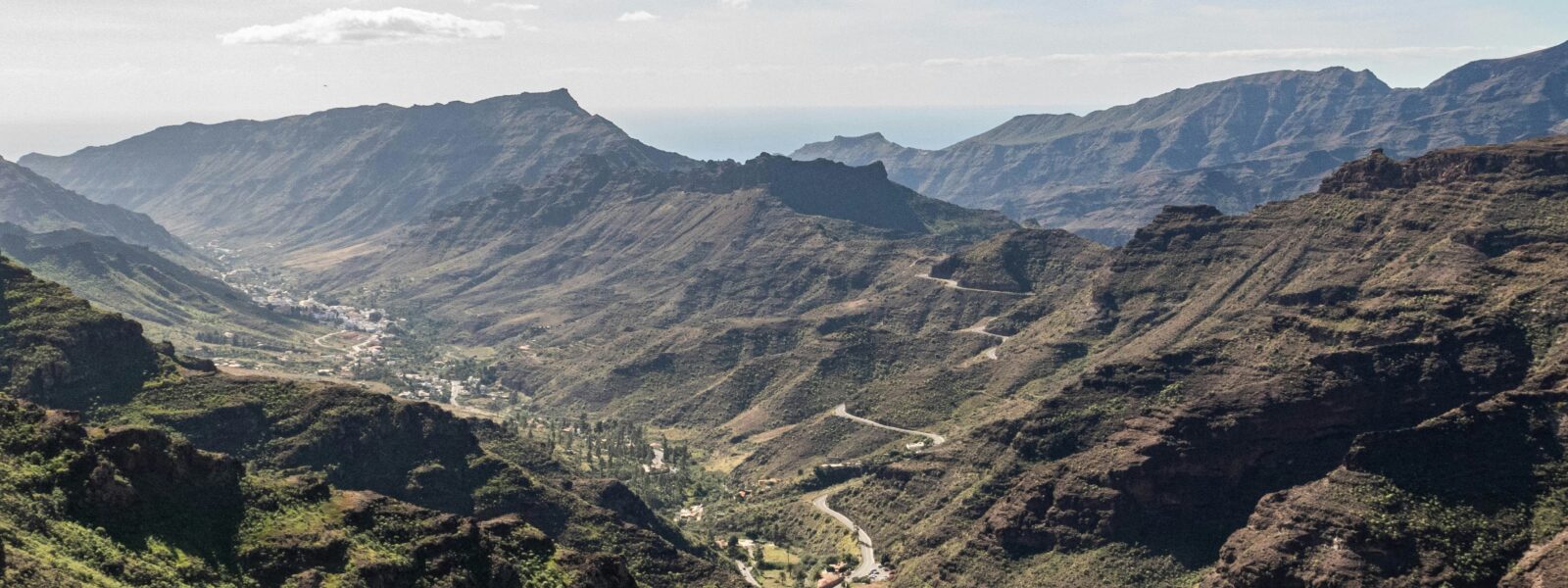
Gran Canaria is best known for the resorts and long sandy beaches in the south. But drive half an hour inland and you’re surrounded by volcanic peaks, deep ravines and pretty little villages. We spent weeks travelling around the island and discovered just how varied it is.
In this guide we share the 38 best places to visit in Gran Canaria, grouped by region. From famous spots like the Maspalomas Dunes and Roque Nublo to rock pools and coastal villages where you mostly meet locals. That makes it easy to plan a route or a few great day trips.
What is Gran Canaria known for?
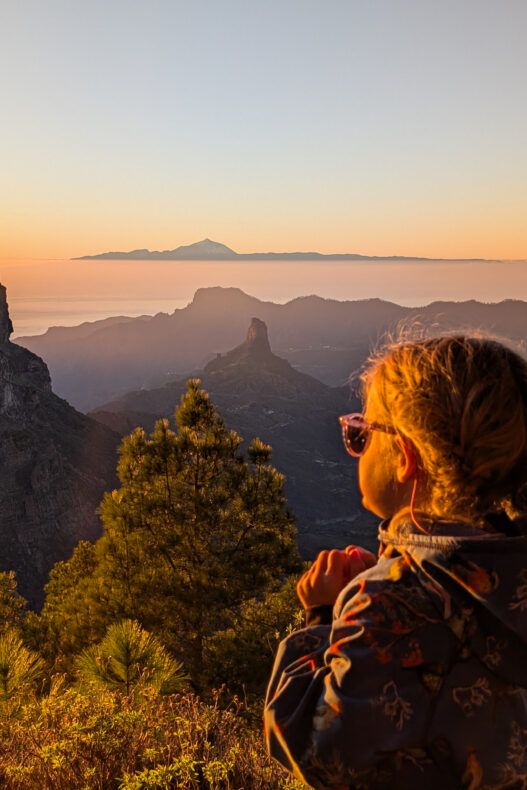
Gran Canaria is famous as a sunshine destination with gorgeous beaches, but the island is also called a miniature continent. Within an hour’s drive you’ll find dunes, mountains, green forests, gorges and rugged cliffs.
The beaches draw the most visitors. Playa del Inglés and Maspalomas are world famous, but scattered around the island there are also quiet bays and natural rock pools where you’ll mostly bump into locals.
The climate is another big pull. Even in winter, temperatures in the south often hover around 22 degrees and there’s little rain. The north and the interior are cooler and can be very cloudy, as we found out when we arrived in Tejeda inside a thick cloud.
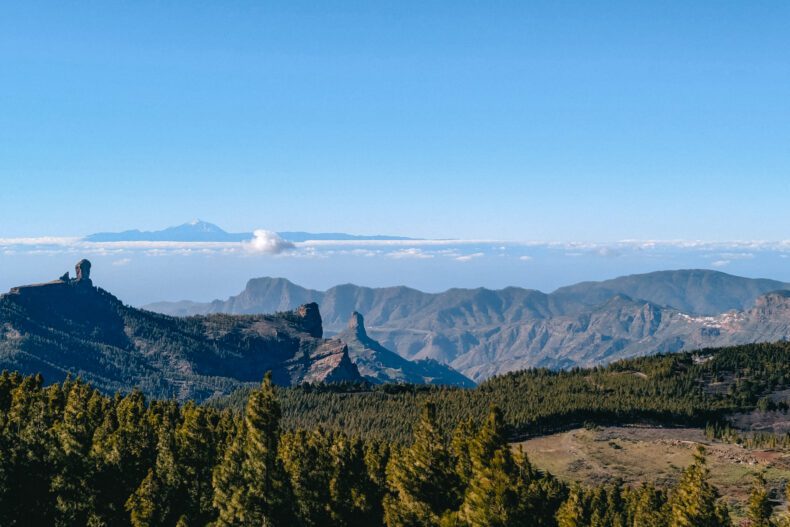
For nature lovers the interior is a revelation. Around Roque Nublo and Pico de las Nieves you drive winding mountain roads past viewpoints, pine forests and reservoirs. If you ask us, it’s the best part of the island.
Then there’s the culture. In Las Palmas you can wander through the historic Vegueta district, while villages like Teror and Artenara show what island life used to look like, with cave houses that recall the first inhabitants.
→ Discover which Canary Island is best to visit
→ Find out whether Tenerife or Gran Canaria suits you best
How to avoid the crowds in Gran Canaria
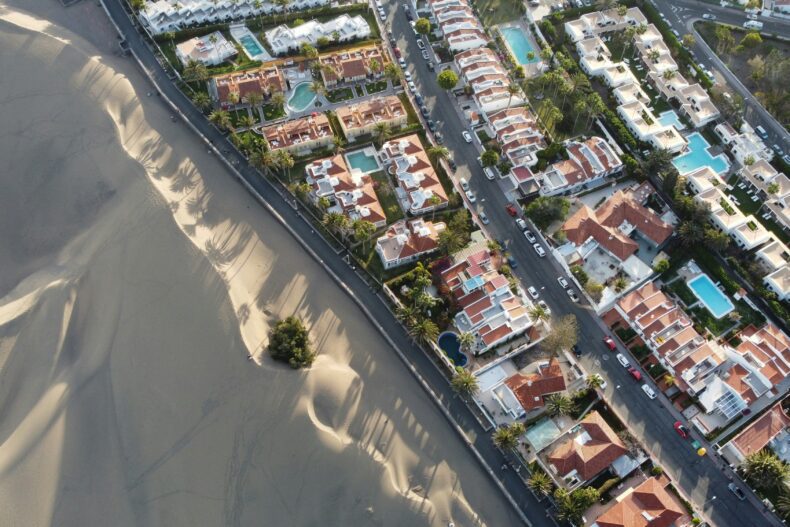
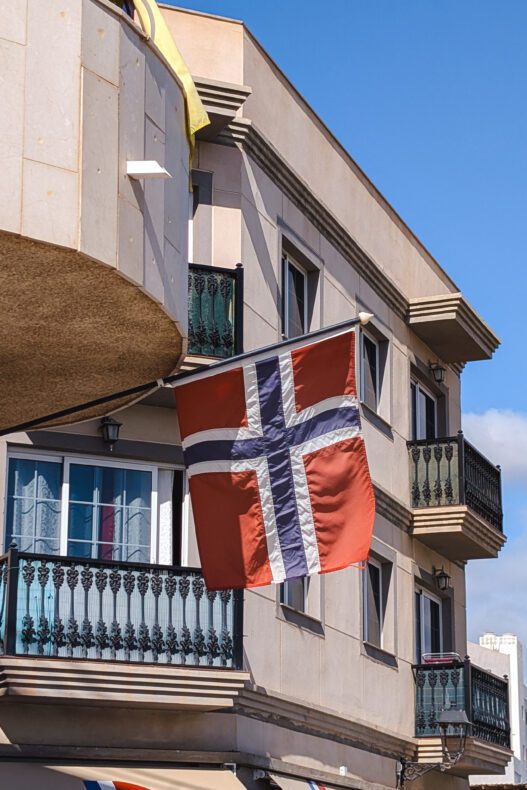
Mass tourism in Gran Canaria is mainly concentrated on the south coast, around Playa del Inglés, Maspalomas, Puerto Rico and Amadores. Some nationalities even have their ‘own’ coastal town, like the Norwegians in Arguineguín. These areas are packed with resorts, shopping centres and Dutch cafés. Want to experience a calmer island? Then pick the interior, the east coast or even the north as your base.
Setting off early helps enormously. With the kids we were usually out before most visitors, so even in Maspalomas we hardly noticed the crowds. For popular hikes like the one to the Azulejos de Veneguera, an early start is also the only way to still find a parking spot.
At weekends the interior gets busier, because locals head out en masse to picnic and barbecue in the recreation areas. It’s fun to see, but you’re better off planning your hikes on weekdays.
The quietest places we found were on the east coast. In Arinaga, Tufia and around Gáldar we mostly met Canarian families.
Where to stay in Gran Canaria?
Where to stay in Gran Canaria depends on what you’re after. Coming for sun and sea? Then the southwest is a good fit. Keen to explore the interior? Pick a hotel in the mountains. These are our tips:
#1 Parador de Cruz de Tejeda sits high in the mountains, right among the hiking trails and with views of Roque Nublo. Perfect if you want to see the island’s wild side and be first at the viewpoints in the morning.
#2 Hotel Cordial Mogán Playa is in Puerto de Mogán, the little harbour town with canals in the southwest. With a large garden, pools and the beach around the corner, it’s a great choice for families.
#3 Occidental Roca Negra in Agaete is all about peace and quiet on the northwest coast, with views of the ocean and the Tamadaba cliffs. Note that this hotel is adults only (16+).
Best places to visit in the south
#1 Maspalomas Dunes: a desert by the sea
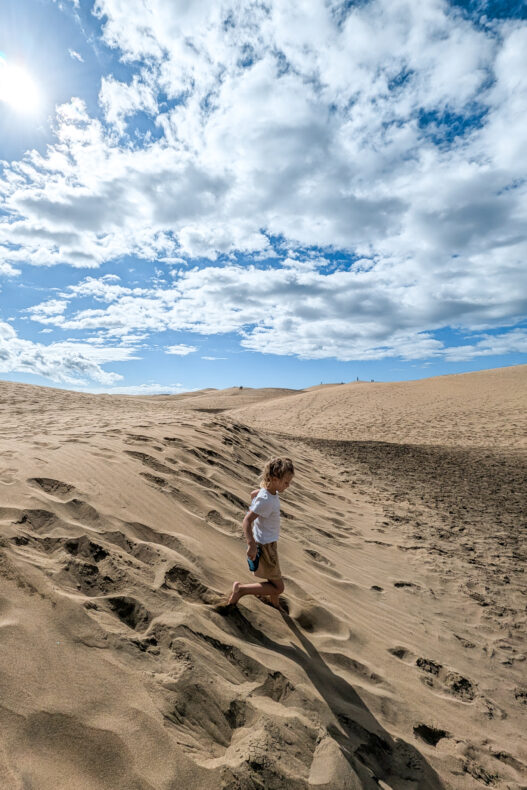
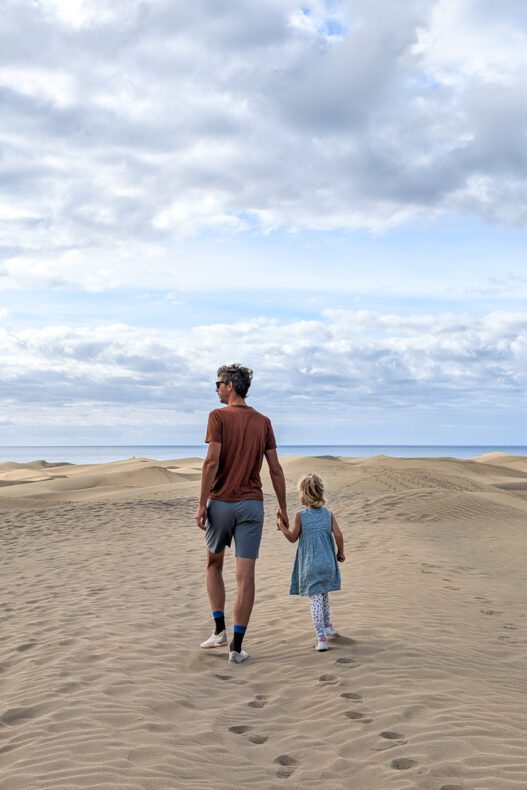
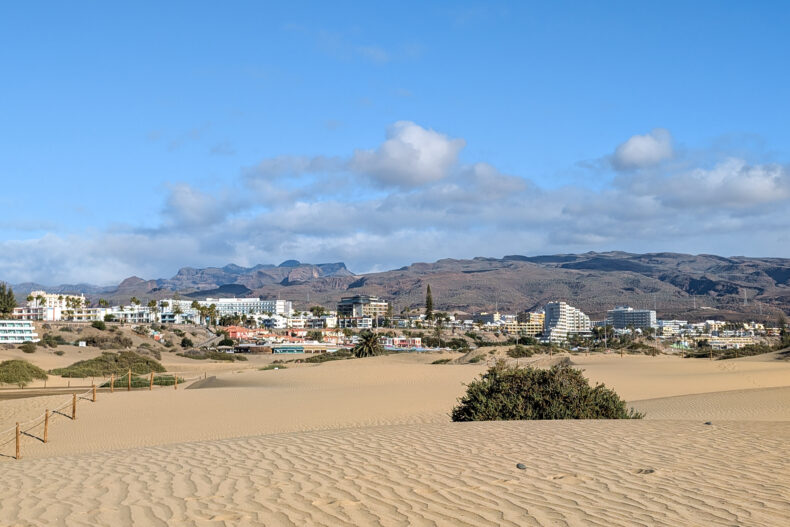
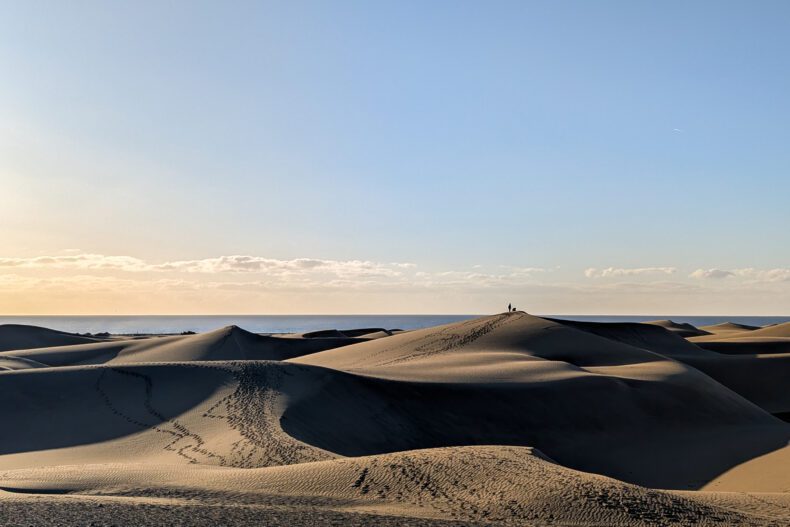
The Dunas de Maspalomas are Gran Canaria’s calling card. The protected dune area of over four hundred hectares stretches between Playa del Inglés and the Maspalomas lighthouse and feels like a slice of the Sahara by the sea. In the middle of the dunes you’ll find a lagoon and a palm oasis.
This is the tourist heart of the island, and you can tell. Still, we loved it. We went on long walks through the sand and along the kilometres-long beach, and swam in the sea. Come early in the morning or around sunset, when it’s quieter and the light is at its best.
Stick to the marked paths through the dunes, as the area is fragile and parts are closed off to protect nature.
→ Discover the 15 best things to do in Maspalomas
#2 Playa del Inglés: the island’s best-known resort
Right next to the dunes lies Playa del Inglés, one of the best-known resorts in the Canary Islands. The wide sandy beach slopes gently into the sea, backed by a long promenade with shops, bars and restaurants.
The town was built for tourism in the sixties, and you can see that in the soulless apartment blocks and shopping centres. Love beaches, buzz and everything within reach? Then you’ll be happy here. Looking for peace? Then come mainly for a beach day. In one of the touristy streets near the dunes we found an Indian restaurant our daughter kept talking about for weeks.
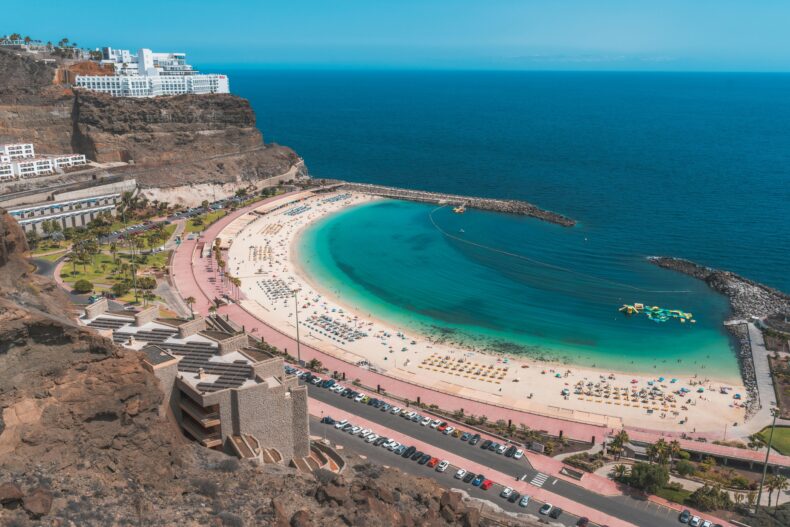
#3 Playa de Amadores and Puerto Rico: clear blue water in a sheltered bay
Playa de Amadores is a man-made, crescent-shaped beach with white sand and clear blue water. Breakwaters keep the sea calm, which makes it ideal for kids. Nearby is Puerto Rico, one of the island’s oldest resorts, with hotels and apartments climbing the slopes of the valley.
After a sweaty hike we came here to cool off in the blue water. Our son was mostly obsessed with the foot showers you find on many beaches in Gran Canaria. After a dip in the sea we followed a nicely laid-out path along the water to Puerto Rico.
#4 Puerto de Mogán: canals and flowers
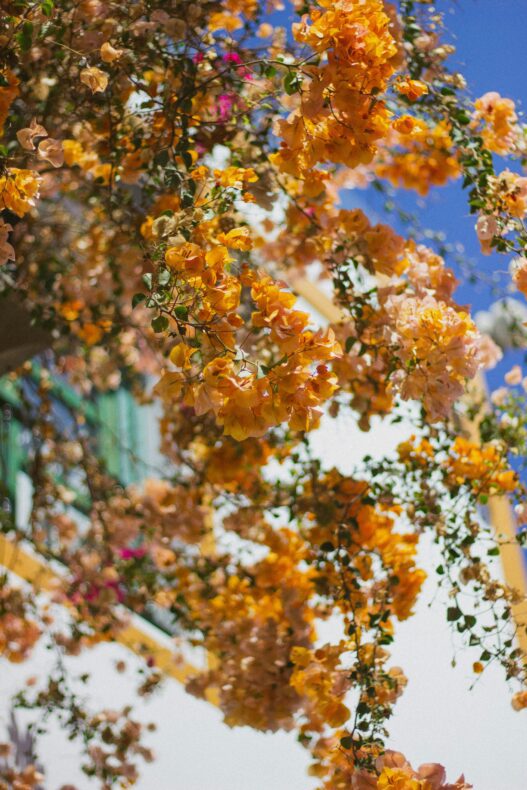
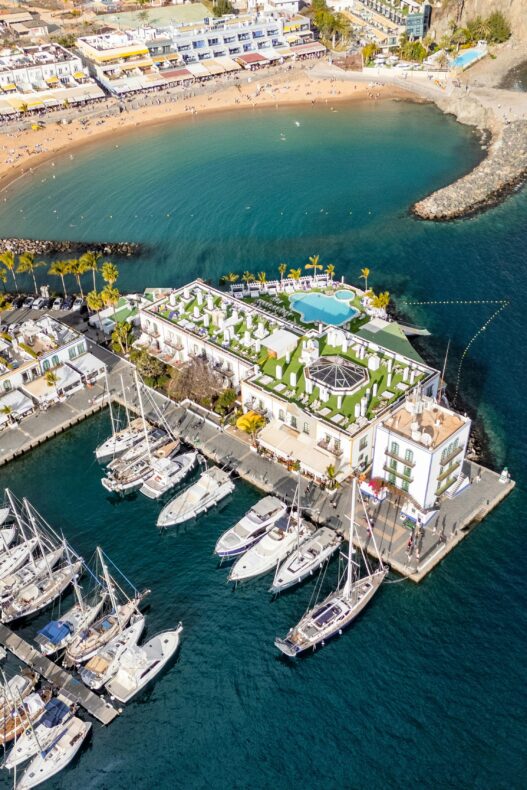
Puerto de Mogán is often called the Venice of Gran Canaria. That’s a bit of a stretch in our opinion, but we do get the comparison. The former fishing village has narrow lanes, white houses with flowers along the walls and canals connecting the marina with the village.
Around the harbour you’ll find terraces, seafood restaurants and a small beach overlooking the boats. On Fridays there’s a big market. The road from here into the interior is one of the most beautiful routes on the island, so don’t skip it.
→ Paddle a kayak to the sea caves near Mogán
#5 Arguineguín: the Norwegian fishing village
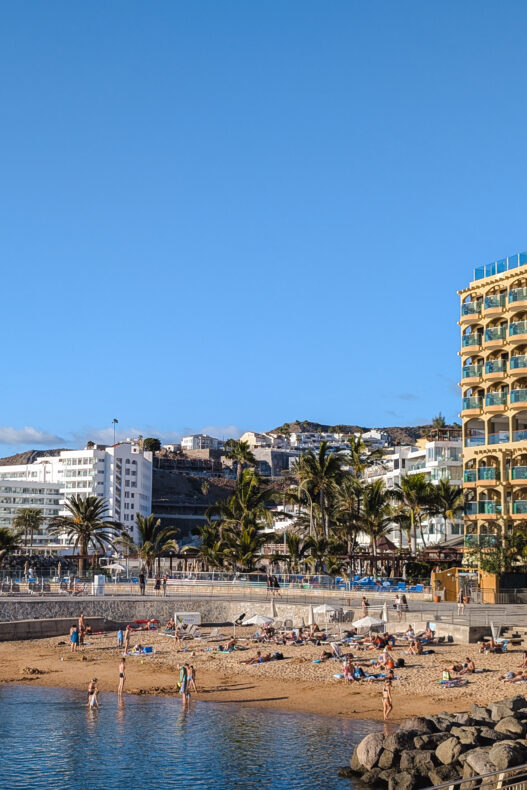
Arguineguín is a former fishing village that has grown into a quiet resort. What strikes you straight away: it’s incredibly Norwegian. There’s a Norwegian church, a Norwegian hairdresser, Norwegian newspapers and menus in Norwegian, because many Scandinavians spend the winter here. We found it a very unexpected and rather special experience.
The harbour is still full of fishing boats, and the seafood restaurants serve the catch of the day. We had a lovely beach day here, with a fun playground nearby. On Tuesdays there’s a big market, popular with locals and tourists alike.
Best places to visit in the interior
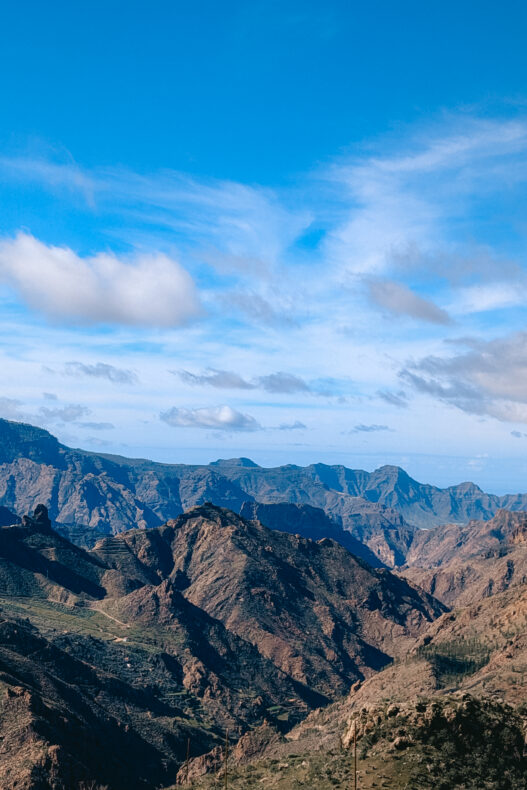
For us, the interior was the highlight of Gran Canaria. The roads are narrow and winding, so expect some intense driving, but the views more than make up for it.
#6 Roque Nublo: the symbol of the island
Roque Nublo is an 80-metre rock formation on a mountain plateau in the middle of the island. It’s a remnant of volcanic activity from millions of years ago and was already sacred to Gran Canaria’s original inhabitants.
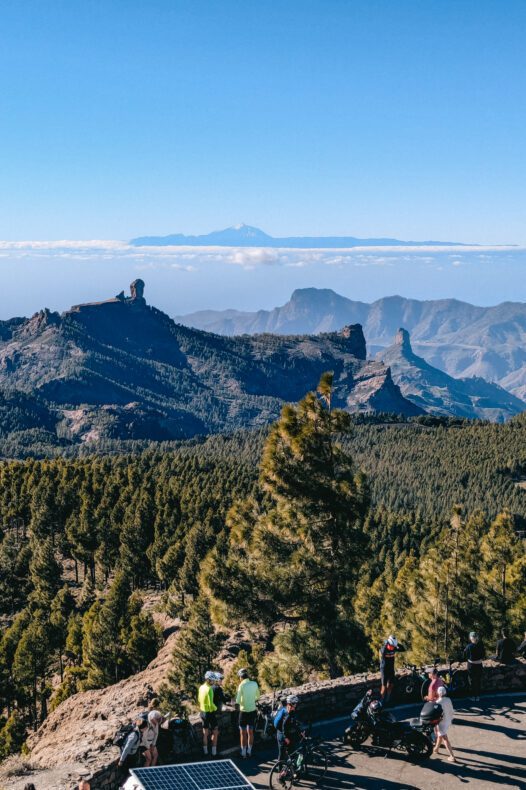
From the car park it’s about a half-hour walk to the foot of the rock, with views over the central mountains and, on a clear day, even El Teide on Tenerife. Come early, as the small car park fills up fast.

#7 Pico de las Nieves: the highest point of Gran Canaria
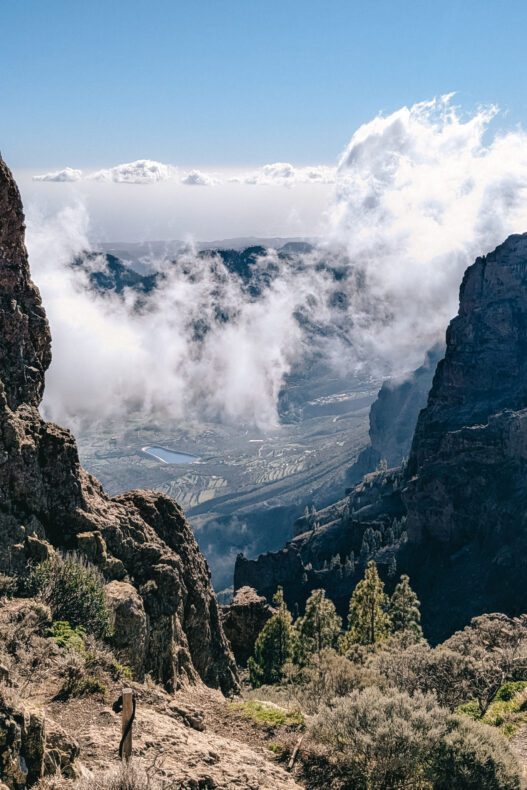
At 1,949 metres, Pico de las Nieves is the island’s highest point. You can drive almost to the top and look out over mountains, valleys and Roque Nublo in the distance. On clear days the peaks of other Canary Islands poke out above the clouds.
The name means snow peak. In the past, snow was collected here in pits so it could be kept until summer. These days it’s mainly a favourite spot for sunrise and sunset.
Although you can drive your (hire) car almost to the summit, Sebastiaan decided to lace up his hiking boots. From the campsite he did a stunning hike through this mountain landscape up to the highest point. After all that effort, the view is just that little bit better.
#8 Tejeda: a mountain village with a view
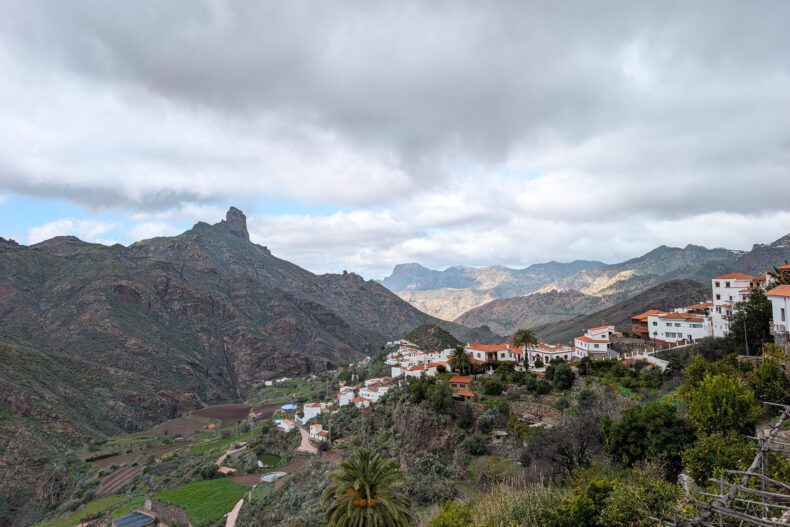
Tejeda is on the list of the most beautiful villages in Spain and sits at over a thousand metres in a bowl-shaped valley. All around you see jagged peaks, with Roque Nublo and Roque Bentayga stealing the show.
The road there is beautiful but narrow and twisty. We arrived in a thick cloud, but the next morning it had cleared up and was perfect for a walk with the kids. Do try the almond treats in the village, such as bienmesabe. Early in the year the almond trees in the area are in blossom.
#9 Artenara: cave houses in the rocks
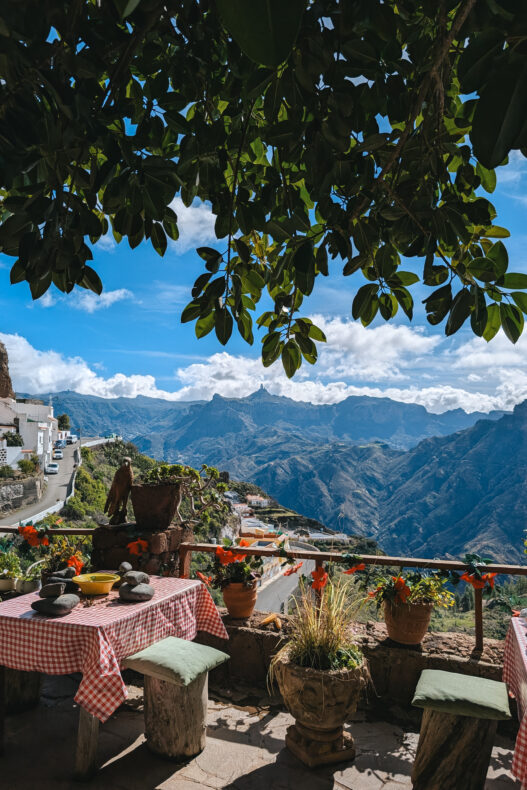
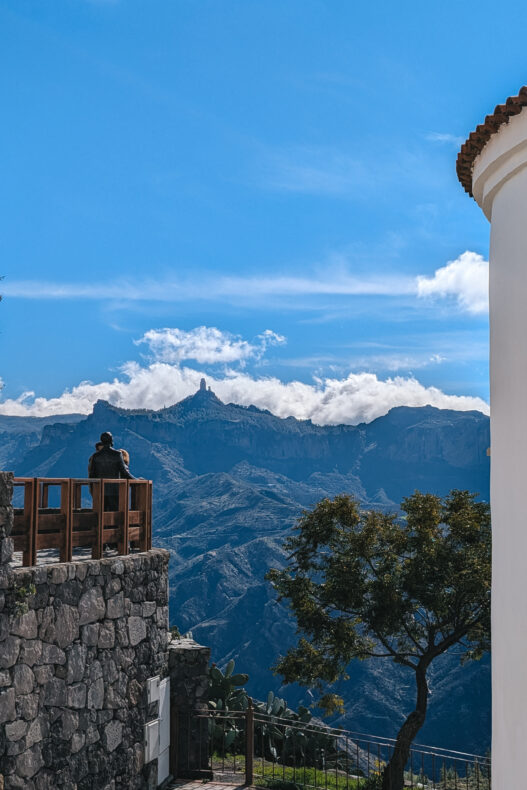
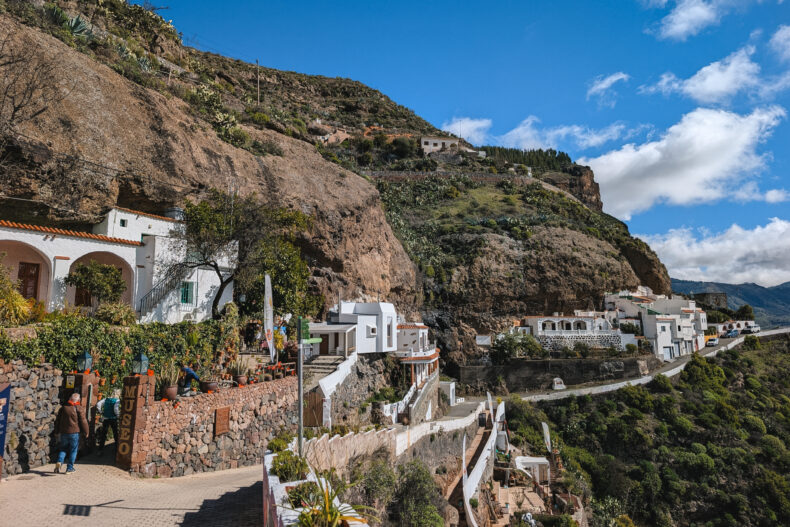
Artenara is the highest village in Gran Canaria and known for its cave houses. Many homes are partly or completely carved into the rock, a building style already used by the original inhabitants. There’s even a chapel built into the mountain. At the visitor centre you can look around for free and learn more about it.
In the free Museo Casas Cueva you can see how people used to live here. We found it a fun museum that’s very accessible for little ones too, with an unbeatable view over the mountains.
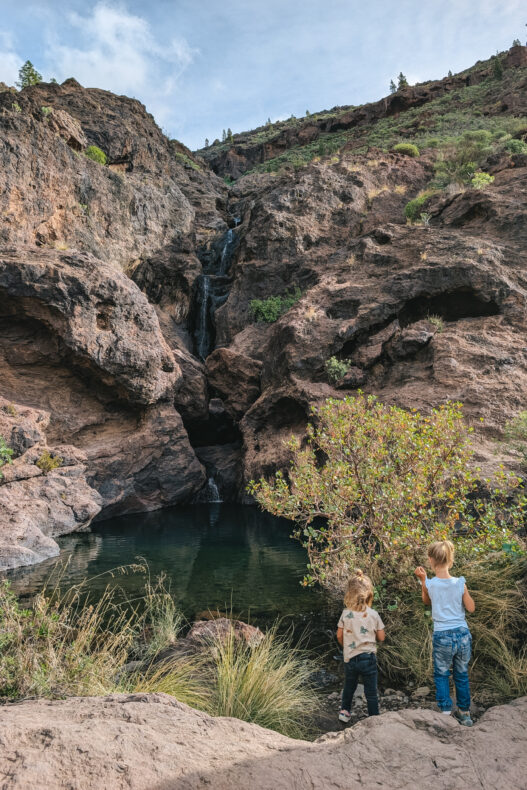
#10 Azulejos de Veneguera: colourful rocks and secret waterfalls
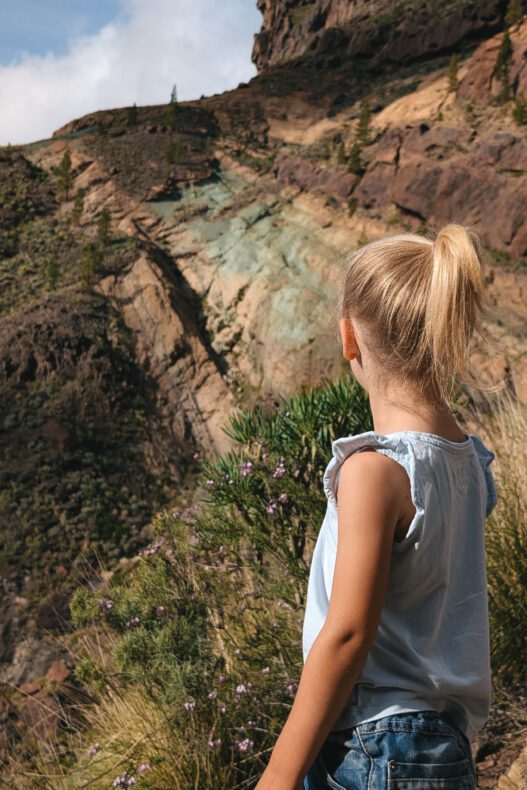
Along the GC-200 between Mogán and La Aldea lie the Azulejos de Veneguera, also known as the Rainbow Rocks. Minerals and oxidation colour the rock green, yellow, red and blue here. The name refers to the Spanish tiles the colours bring to mind.
From the road a short but steep hike of about 150 metres of climbing takes you to pools and small waterfalls between the colourful rocks. We arrived very early to find a parking spot and had the pools completely to ourselves. Idyllic! The water is pretty cold though, so we didn’t dare take a dip.
→ Discover the 20 best things to do in Gran Canaria
→ Discover 23 things to do in Gran Canaria with kids
#11 Mogán: the mountain village above the coast
Not to be confused with Puerto de Mogán on the coast: the village of Mogán sits much higher up in a green valley full of fruit trees, palms and farming terraces. The white church and the small village square form its heart.
We drove through on our way south and saw right away how charming it is. The drive up from the coast is an experience in itself, with narrow roads and great views over the valley.
#12 Presa de las Niñas: a reservoir among the pines
Presa de las Niñas is one of Gran Canaria’s largest reservoirs, at around 900 metres in the mountains southwest of Tejeda. Around the lake you’ll find pine forests with picnic spots, hiking trails and a campsite that’s popular with locals at weekends.
The water level varies a lot by season, but the surroundings are always green and peaceful. A nice spot for a picnic or a short walk during a road trip through the mountains.
#13 La Fortaleza de Ansite: the last stronghold of the original inhabitants
La Fortaleza is a rock formation that rises from the landscape like a fortress. This is where Gran Canaria’s original inhabitants put up their last organised resistance against the Spanish conquerors in 1483.
The rock holds caves, tombs and ceremonial spaces. A short trail leads to viewpoints over the ravines, and the visitor centre gives you background on the history of the site.
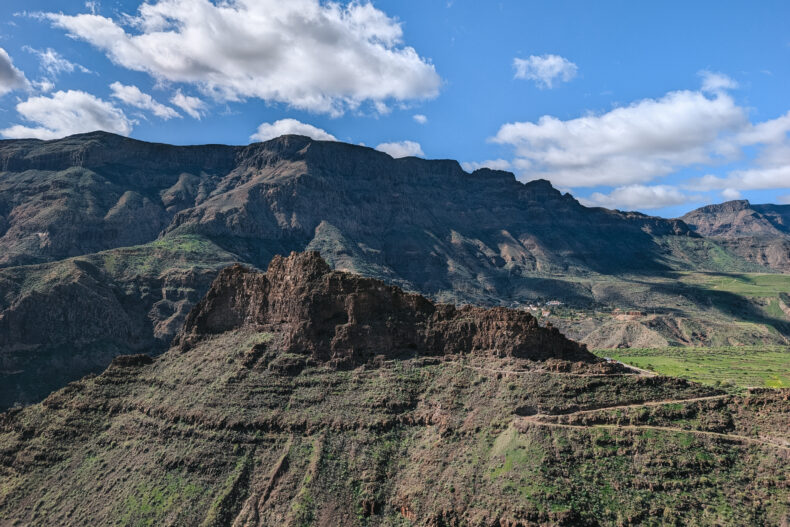
#14 Santa Lucía de Tirajana and the GC-65: one of the best scenic drives
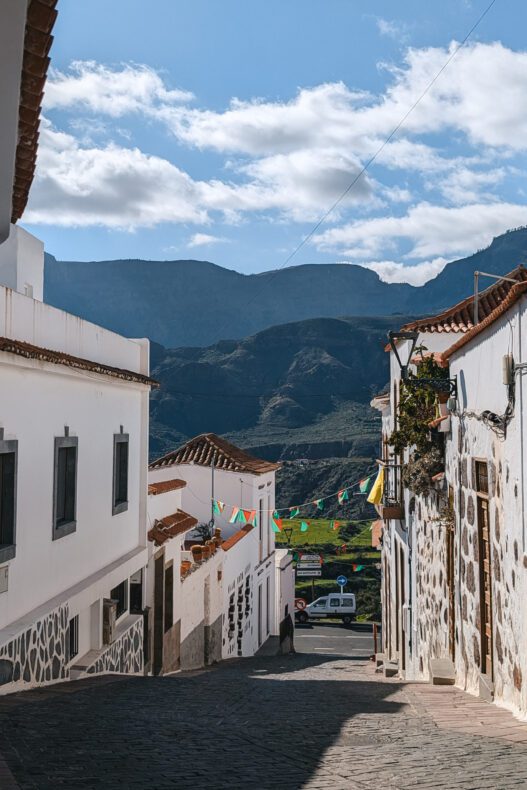
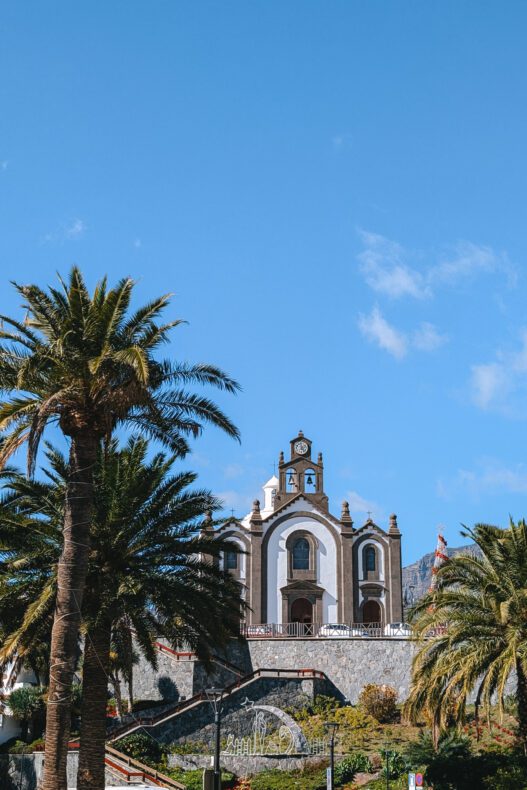
Santa Lucía de Tirajana is a mountain village among palms, almond trees and deep ravines. It lies on the GC-65, one of the island’s most beautiful driving routes, which winds through the southeastern interior past viewpoints and tiny hamlets.
In the village you’ll find a white church, a little square and a few places to eat. A good stop for coffee, or in our case a long lunch, during a scenic drive far from the touristy coast.
#15 Finca de Osorio: walking across an old estate
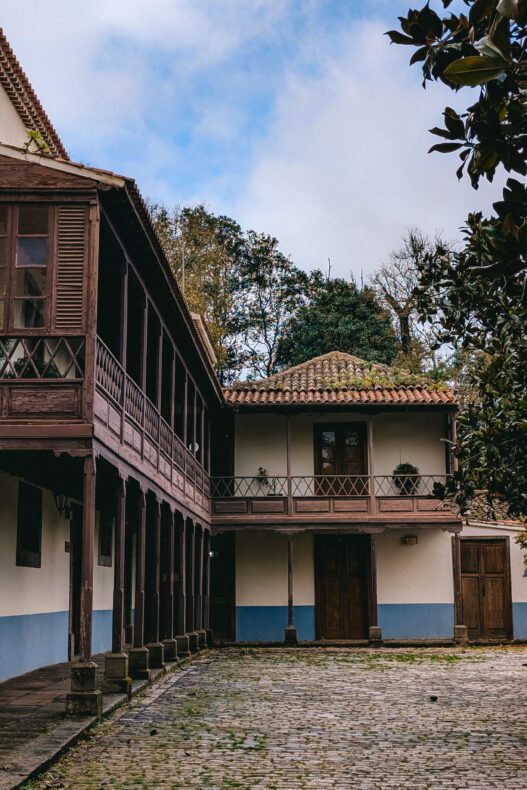
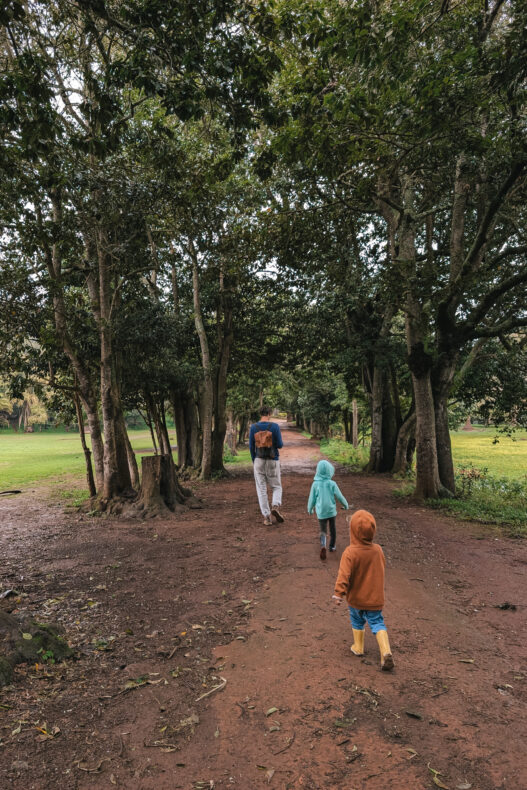
Just outside Teror lies the Finca de Osorio, a large estate in the green north of Gran Canaria. Where noble families once farmed, you now walk through laurel forests and meadows and past a restored manor house.
We visited the estate on a rainy day, but even then it’s a nice place to stretch your legs. Walks range from half an hour to a few hours. After rain it can be muddy, so wellies are no luxury.
#16 Teror: the religious heart of the island
Teror is a historic town with colourful mansions and wooden balconies, built around the basilica of Nuestra Señora del Pino, the patron saint of Gran Canaria. Every September thousands of pilgrims make their way to the church.
On Sundays there’s a market with local produce, including the famous chorizo de Teror. The atmosphere is calm and well kept, with an almost village-like feel. Combine the town with a walk on the nearby Finca de Osorio.
Best places to visit in the east and Las Palmas
#17 Las Palmas and Vegueta: the historic capital
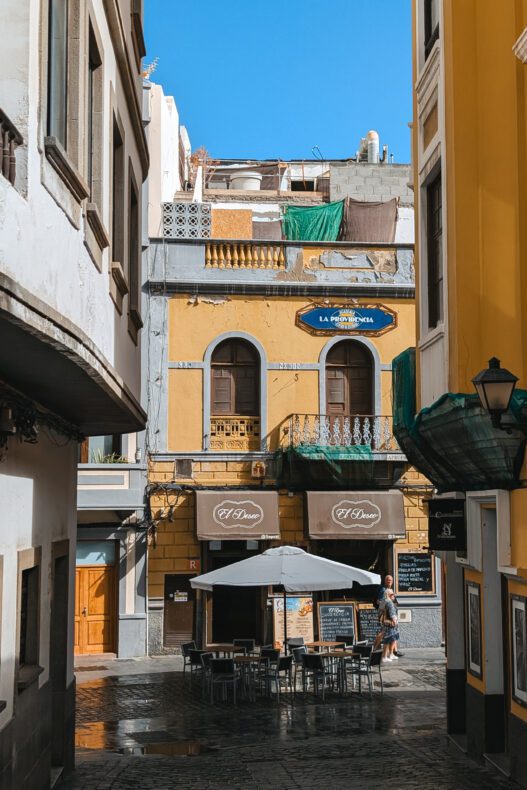
Las Palmas is the capital of Gran Canaria and the largest city in the Canary Islands. Its historic heart is the Vegueta district, with cobbled streets, colonial buildings, courtyards and the cathedral of Santa Ana.
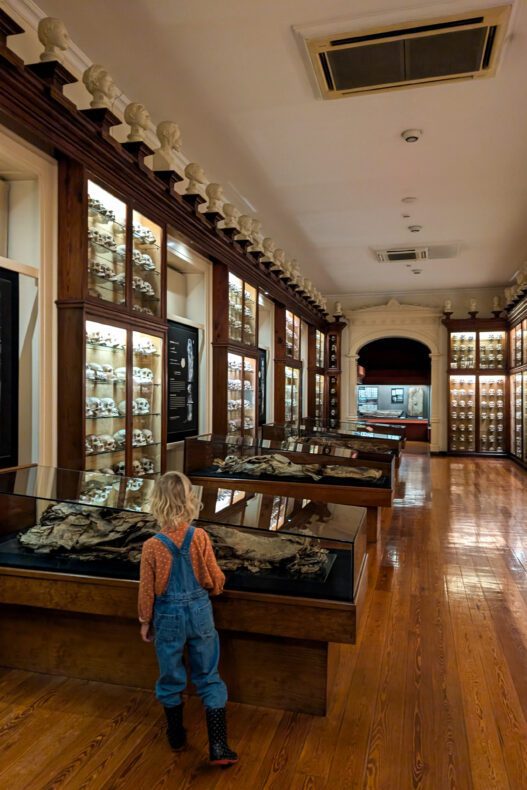
In Vegueta you’ll also find Casa de Colón, a museum about the voyages of Columbus, who stopped here on his way to the Americas. We were in Las Palmas on a rainy day, perfect for museums and restaurants. The mummies in the Museo Canario made for an impressive stop.
With a bit of luck you’ll catch a big celebration too: around Three Kings’ Day a huge parade moves through the city. Our kids couldn’t take their eyes off all the floats.
→ Explore Vegueta on a walking tour
#18 La Isleta: a rugged peninsula by the city
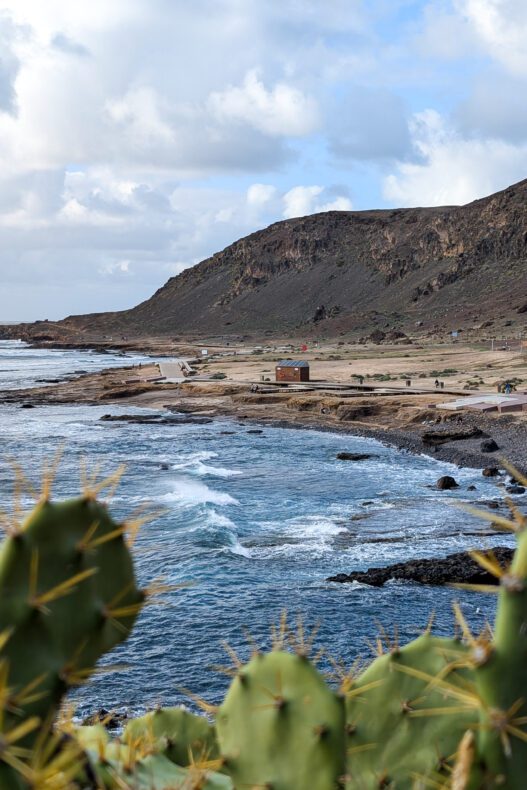
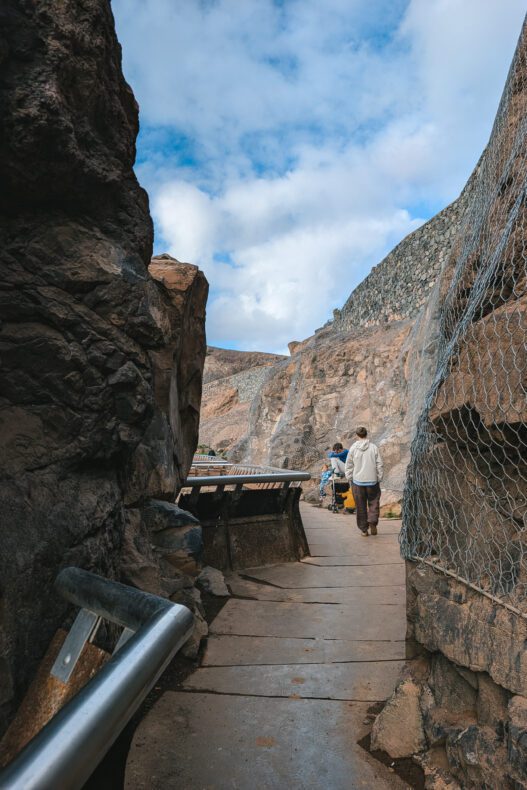
North of Las Palmas lies La Isleta, a volcanic peninsula with a wild coastline, viewpoints and hiking trails. Part of it is military land, but through the protected nature area you can walk straight to El Confital, a rocky bay with views of the city skyline.
After a rainy morning we found the sun again here. It feels raw and untouched, a world away from the touristy south.
#19 Jardín Botánico Canario: the largest botanical garden in Spain
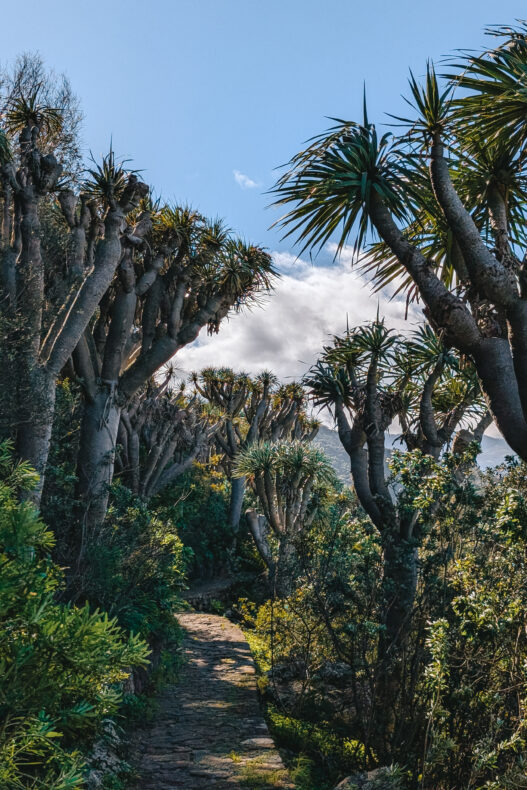
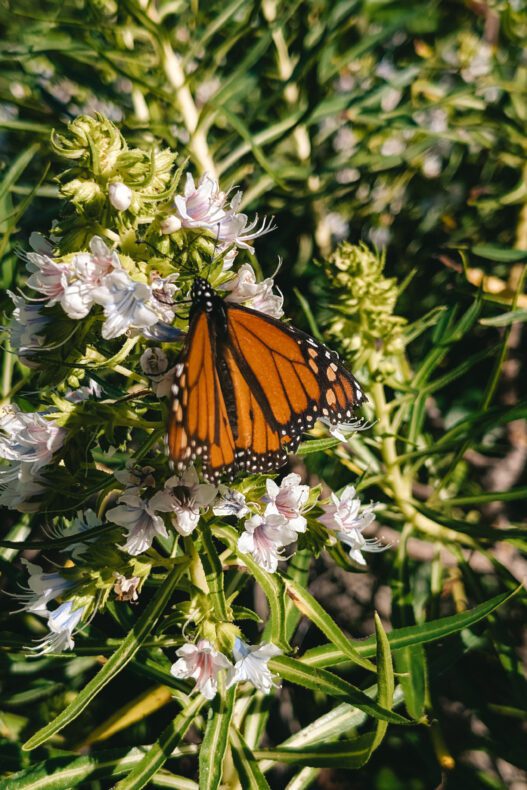
In a gorge near Tafira, just outside Las Palmas, lies the Jardín Botánico Canario Viera y Clavijo, the largest botanical garden in Spain. Spread over more than twenty hectares grow plants found only in the Canary Islands, from dragon trees to cacti and laurels.
The paths wind past rock walls, little waterfalls and viewpoints. We walked here with visiting family, and the kids thought it was a big adventure finding their way along all the different trails. Entry is free and it’s wonderfully cool on hot days.
#20 Playa de Las Canteras: one of Europe’s best city beaches
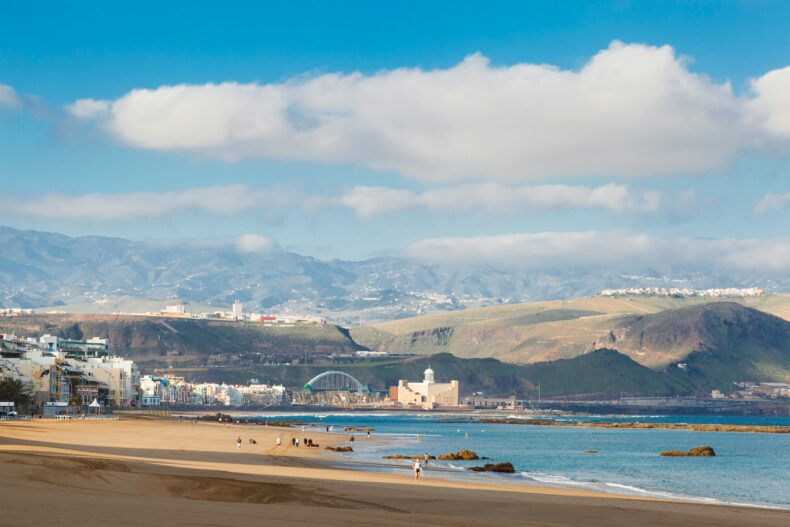
Playa de Las Canteras is the city beach of Las Palmas, three kilometres long and lined with a lively promenade full of terraces and beach bars. A natural reef offshore, La Barra, keeps the water calm at low tide, ideal for swimming and snorkelling.
At the southern end the waves are good for surfers. The golden sand and the view of La Isleta make this a popular meeting place for locals all year round.
#21 Caldera de Bandama: a walk along a crater rim
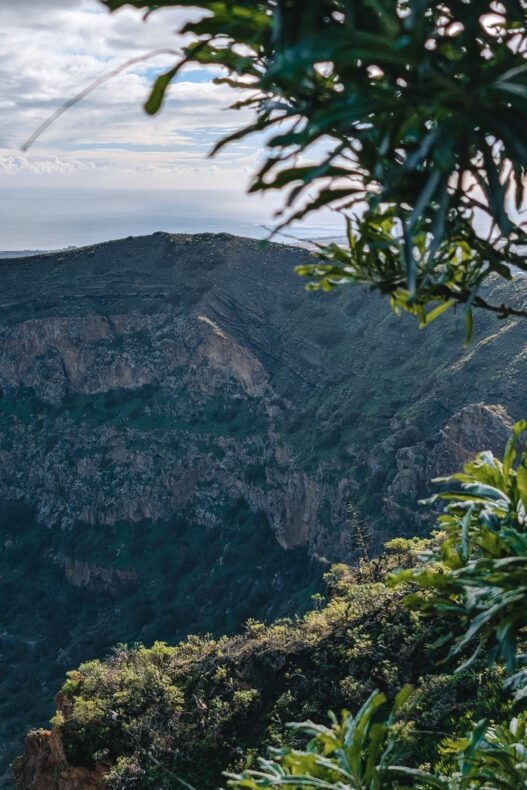
Just outside Las Palmas lies the Caldera de Bandama, a volcanic crater about a kilometre wide and two hundred metres deep. From Pico de Bandama at 569 metres you look out over the crater, the northeast of the island and, on a clear day, even Fuerteventura.
We did a short walk along the crater rim, very doable with kids. If you want more, you can also hike down to the bottom of the crater. The surroundings are dotted with vineyards and old country houses, which you can see from the top.
#22 Barranco de Guayadeque: cave restaurants in a green gorge
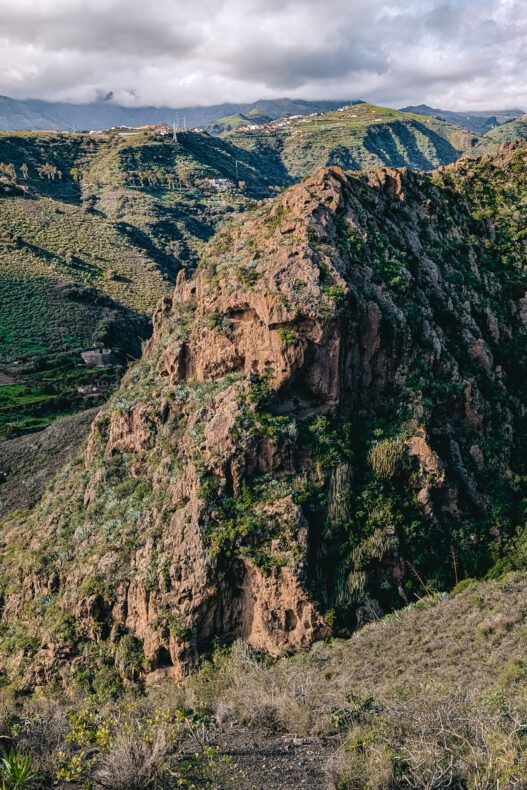
Between Ingenio and Agüimes winds the Barranco de Guayadeque, a green gorge full of cave dwellings. Some caves are still lived in, others have been turned into restaurants or a small chapel. We didn’t make it to Guayadeque ourselves, but it’s high on our list.
The gorge has a rich history, with tombs and ceremonial caves of the original inhabitants. A narrow road runs through it with places to stop, hike or have lunch in a cave. It’s especially beautiful in spring, when the almond trees are in bloom.
#23 Barranco de las Vacas and Agüimes: a mini Antelope Canyon
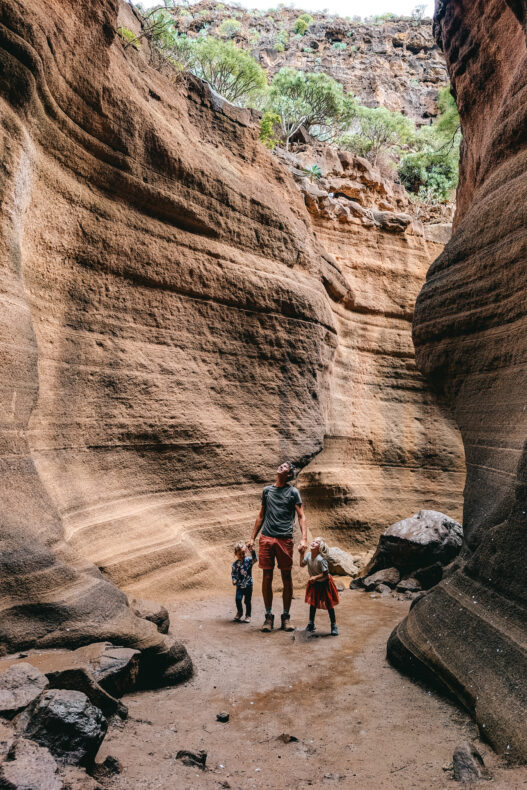
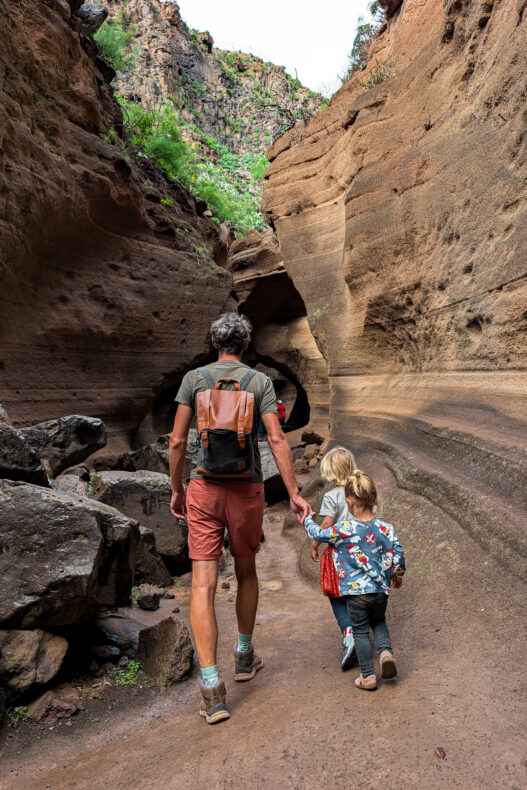
Close to Agüimes lies the Barranco de las Vacas, a narrow gorge with wavy walls of orange and red rock. It’s often compared with Antelope Canyon in the United States, though it’s a lot smaller. The path starts at a tunnel along the GC-550 and is short, but runs over loose gravel.
Combine the gorge with a visit to Agüimes, a cheerful village with bronze statues dotted around the old centre. We had a drink on a terrace and saw the village beautifully lit up in the run-up to Christmas. According to our daughter, one of the best evenings ever.
#24 Pozo Izquierdo: windsurfing paradise
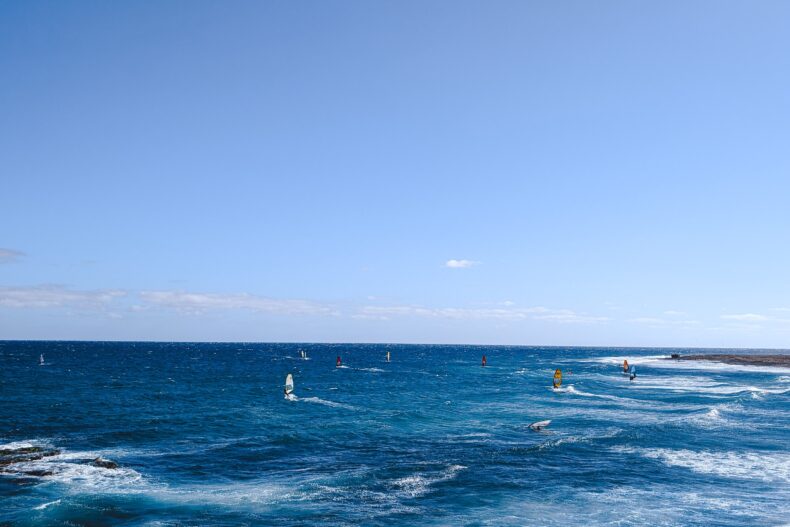
Pozo Izquierdo on the east coast is famous among windsurfers worldwide. Thanks to the constant strong wind, world championship events are held here every year.
We spent a day here and it was seriously windy. Perfect for watching the windsurfers pull off spectacular jumps offshore. The beach itself is rocky with little shade, but the kids had a great time at the playground.
#25 Arinaga: a laid-back coastal town without the crowds
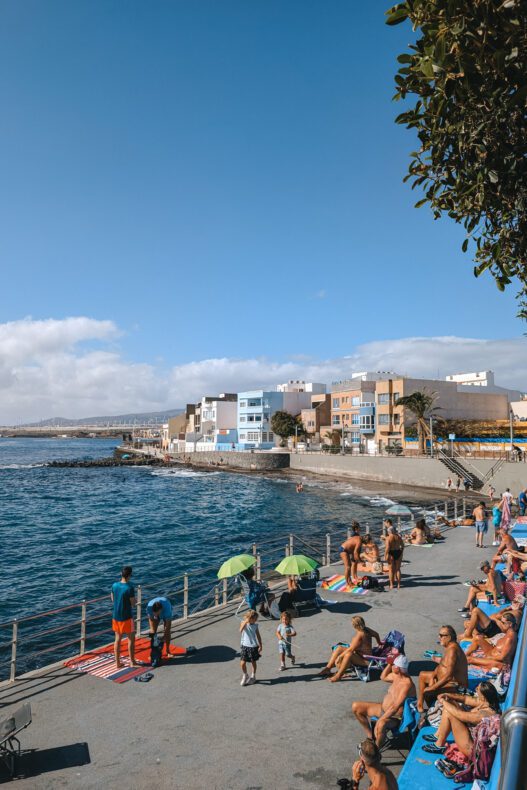
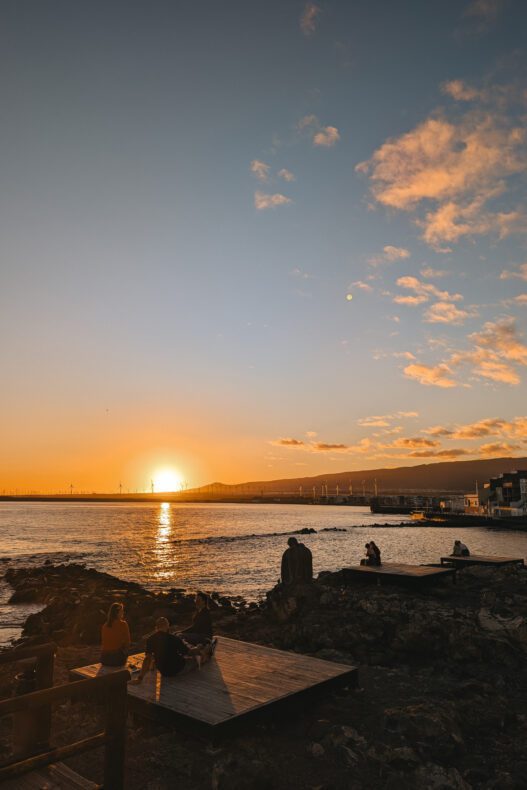
Arinaga lies on the east coast, just south of the airport, and is a proper local seaside town. A long promenade runs along the coast with views of the sea, basalt formations and wind turbines.
We liked it so much here that we came back twice. Terrace, dip in the sea, playground, stroll along the promenade: a top day. The clear water is good for snorkelling too, and in the centre you can eat fresh fish at simple restaurants. At weekends and in the evenings it’s pleasantly busy with locals.
#26 Playa del Cabrón: one of the island’s best dive sites
South of Arinaga lies Playa del Cabrón, a small rocky beach in a protected marine area. The water is crystal blue, and the underwater world with fish, caves and rock formations makes it one of the best diving and snorkelling spots in Gran Canaria.
You reach the beach via a dirt road and there are no facilities, so bring your own food and drink. Its slightly remote location also keeps it quiet.
#27 Tufia: a village against the cliff face
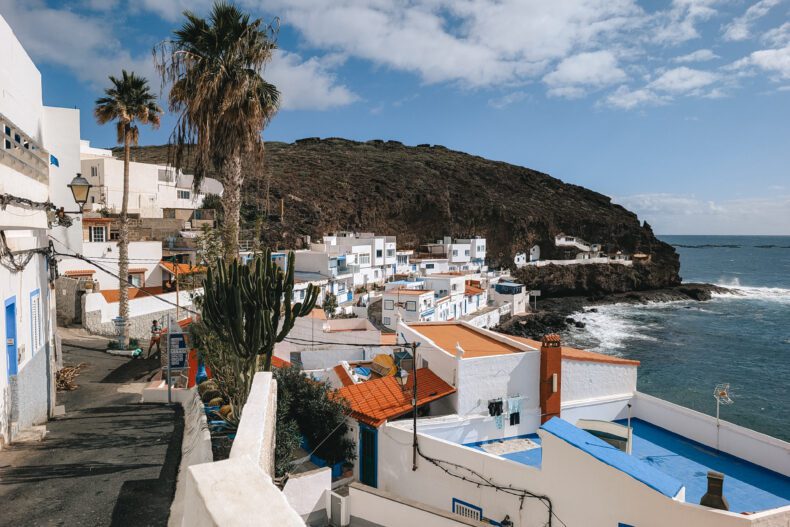
Close to the airport lies Tufia, a car-free hamlet with white houses built against a volcanic rock face. Some homes are still partly carved into the rock, a remnant of the original cave dwellers.
You get there via a short walk down from the road. In the small black sand bay you’ll mostly see snorkellers and divers. We came here with visiting family and found it a special, peaceful stop. There are no restaurants or shops, and an hour or so is plenty.
#28 El Bufadero: a natural geyser in the rocks
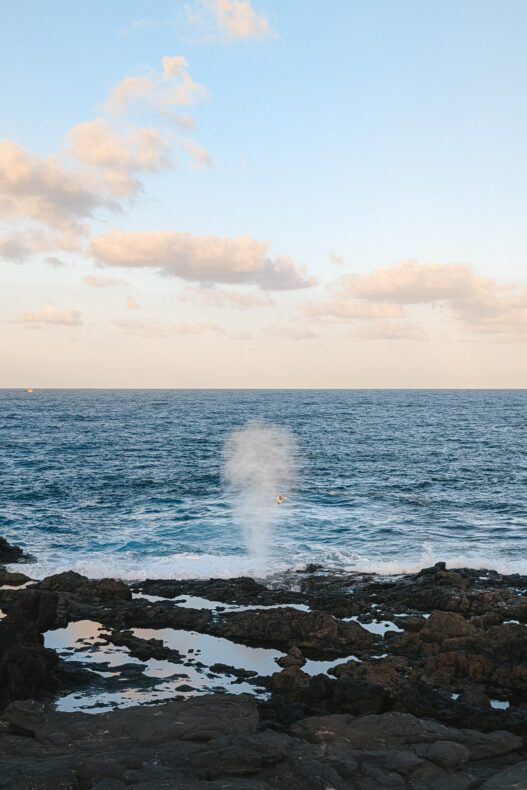
At La Garita, south of Las Palmas, seawater shoots up with force through round holes in the lava rocks at El Bufadero. The higher the waves, the bigger the show.
This was another stop with family, and the kids especially were mesmerised. There are no fences or warning signs, so keep a safe distance from the edge yourself. We also did a lovely walk along the coastal path to the next village, where we found a terrace.
Best places to visit in the north and west
#29 Mirador del Balcón: a view of the dragon’s tail
On the west coast, along the GC-200, lies Mirador del Balcón, a viewpoint high above the ocean. From the platform you look along steep cliffs that drop into the sea like the jagged tail of a dragon.
On a clear day you can see for miles along the coast and sometimes even El Teide on Tenerife. There’s a small car park nearby, so it’s an easy stop on a drive along the west coast.
#30 Charco Azul: a waterfall in a green gorge
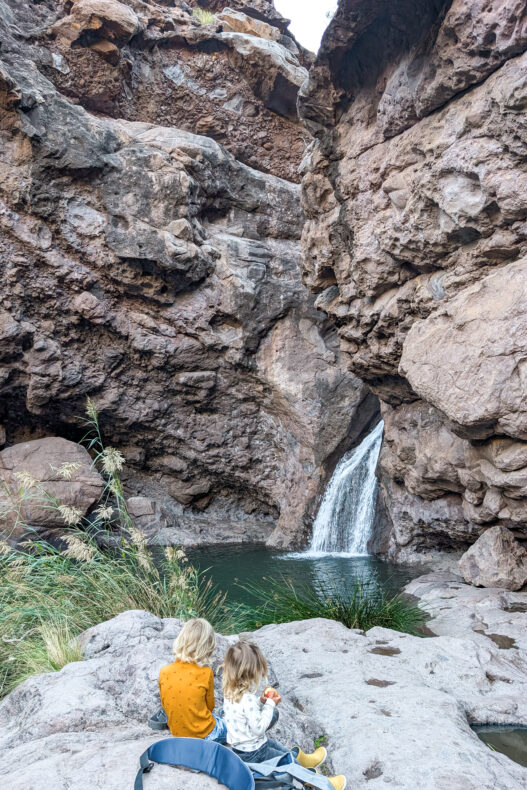
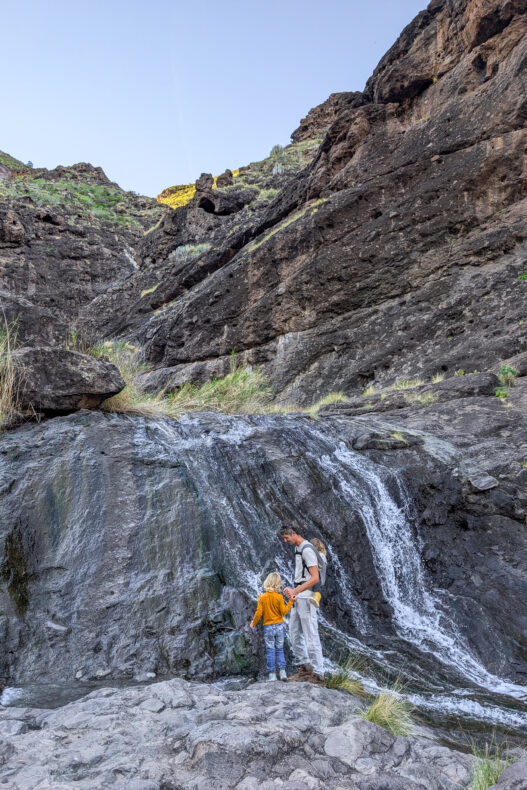
Near El Risco on the rugged west coast lies Charco Azul, a natural pool beneath a small waterfall. You reach it via a trail of about twenty minutes through a green gorge.
We thought it was a fun scramble through a beautiful landscape, doable with kids if they’re a bit adventurous. The water is cold and clear, and the waterfall is at its best after rain. Wear good shoes, as it can get quite slippery. You park in El Risco, where the small car park can fill up quickly, so we made sure to be there in good time.
#31 Playa de Sardina del Norte: a friendly little beach in the northwest
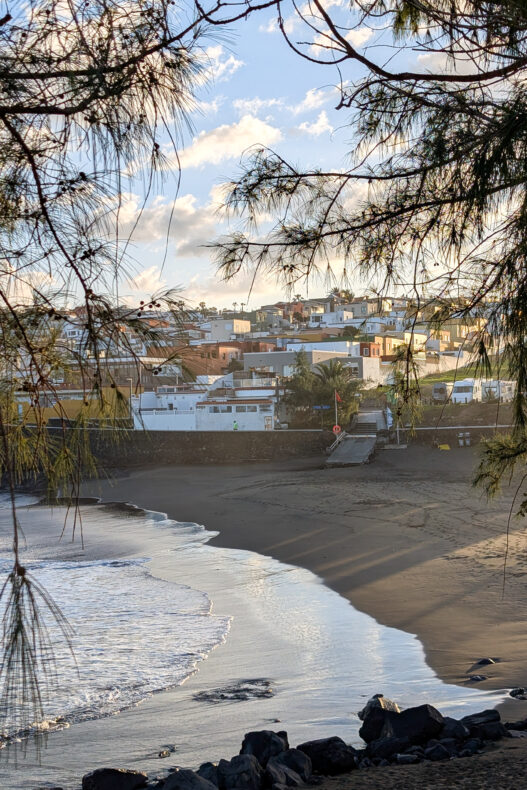
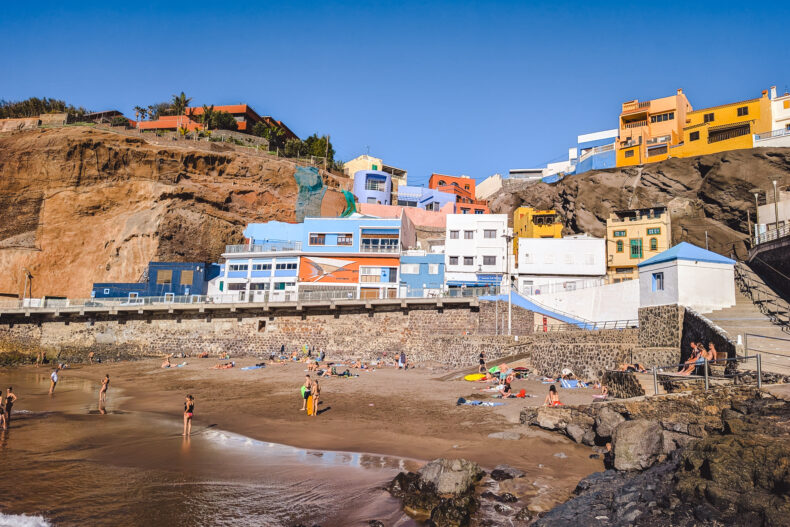
Near the fishing village of Sardina, in the northwest, lies Playa de Sardina del Norte. A small beach with dark sand, calm water and colourful houses along the shore. Divers head into the water from the pier, as the underwater life here is rich.
This turned out to be an unexpected favourite. A cosy little beach, seafood restaurants with sea views and a relaxed local vibe: it felt like a holiday within our holiday. In the end we stayed the whole day, finishing with a gorgeous sunset.
#32 La Aldea: a pebble beach between towering mountains
On the west coast lies La Aldea de San Nicolás, with a wide pebble beach on a bay surrounded by towering mountain walls. The sea is open here and the surf can be powerful, but in calm weather you can swim.
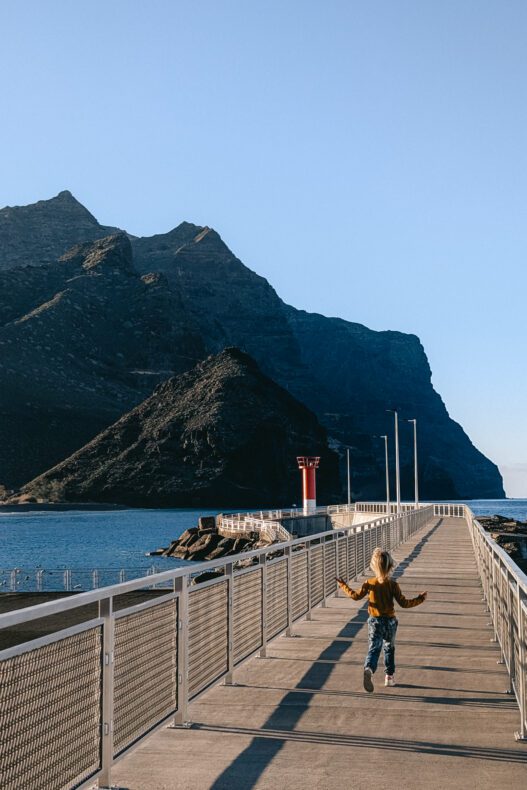
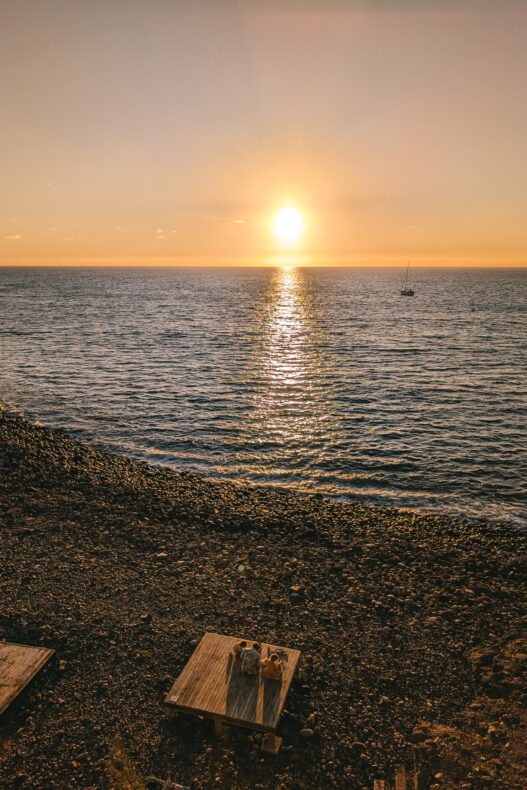
Next to the beach is a small fishing harbour with simple places to eat. Because it faces west, the sunsets here are stunning. La Aldea is still little known among tourists and loved mainly by islanders themselves. Do walk out onto the pier in the harbour for a lovely view of the village from the sea.
#33 Agaete and Puerto de las Nieves: rock pools beneath the cliffs
In the northwest lies Agaete, with the harbour of Puerto de las Nieves where the ferry to and from Tenerife docks. This is where we arrived on Gran Canaria. Along the coast there are natural rock pools in the lava, where breakwaters let you swim even when the sea is rough.
From the water you look out on the steep cliffs of the Tamadaba massif. Combine a swim with a stroll through the white village or some fish in the harbour. For something different, visit Finca Los Castaños, the leading pioneer and figurehead of Canarian coffee growing.
→ Taste the coffee of Finca Los Castaños in the Agaete valley
#34 Cenobio de Valerón: an ancient granary in the rock
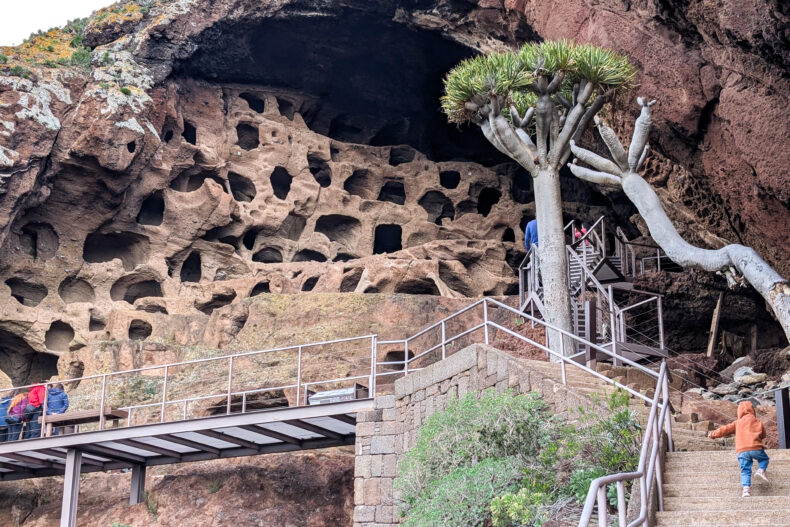
Near Santa María de Guía, hundreds of cavities have been carved into a steep rock face. They served as grain stores for the island’s original inhabitants. The name suggests a monastery, but it never was one.
A short path with steps takes you close to the rock face, where you can read how and why the site was used. We visited the caves on a rainy day, together with a loop around the Finca de Osorio.
#35 Firgas: a staircase full of waterfalls
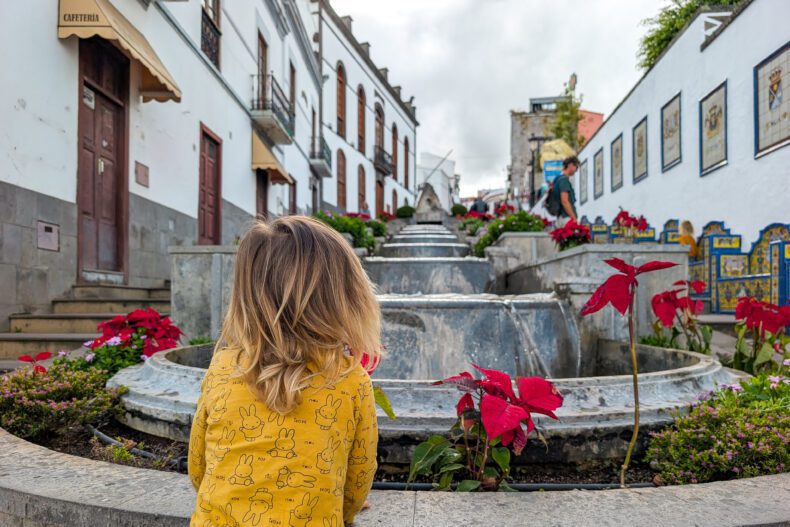
Firgas is a quiet mountain town in the north, known for the spring water that flows from the mountains here. In the centre runs the Paseo de Gran Canaria, a long staircase with little waterfalls and colourful tiled panels.
At around five hundred metres you get fine views towards the north coast. A short stop is enough, but it makes a nice change from all the beaches and cliffs.
#36 Punta de Gáldar: waves crashing on the rocks
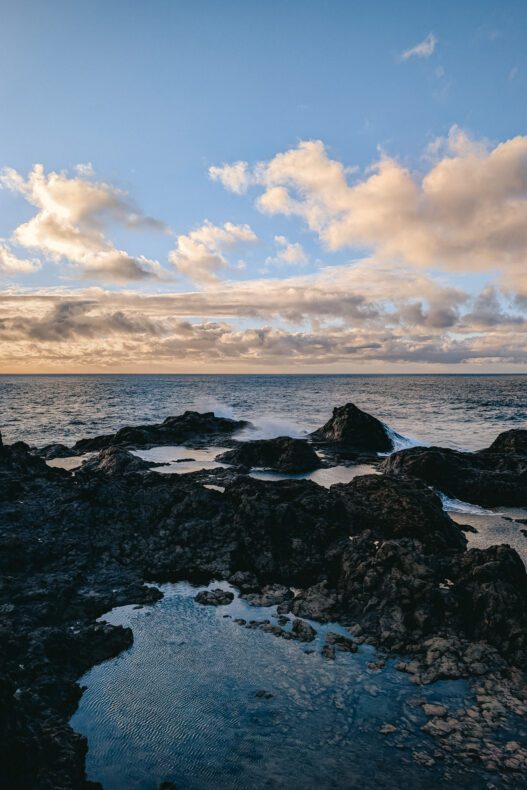
On the northwest coast near Gáldar you’ll find small natural pools in the volcanic rock. They’re simple and mostly popular with locals, with steps to get in and out of the water and flat rocks for sunbathing.
The best part for us was watching the waves smash into the rocks. When the sea is rough you could watch for hours, and in calm weather you can swim safely in the pools.
#37 Bañaderos: rock pools along the north coast
Along the GC-2 coastal road between Gáldar and Las Palmas lie the rock pools of Bañaderos, natural sea pools adapted with low walls and steps. The sea is often wild here, but inside the pools you swim in shelter.
Some pools are shallow, others are deep enough for a proper swim. Parking is limited, so arrive early or walk a little.
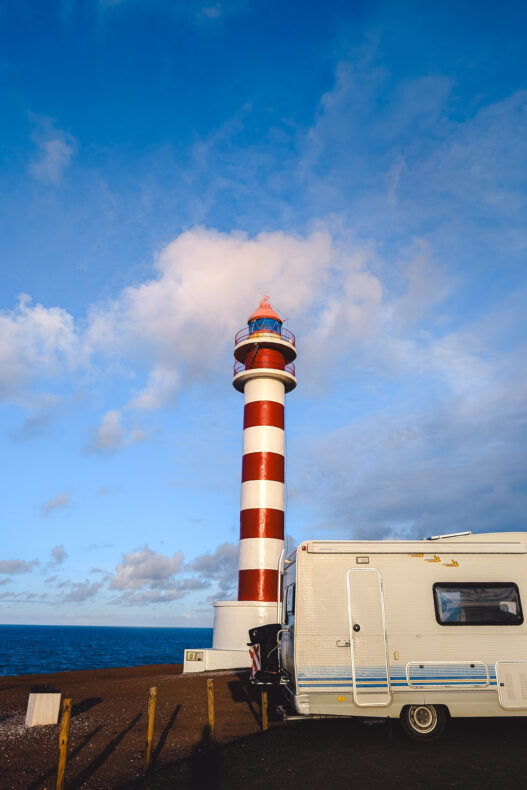
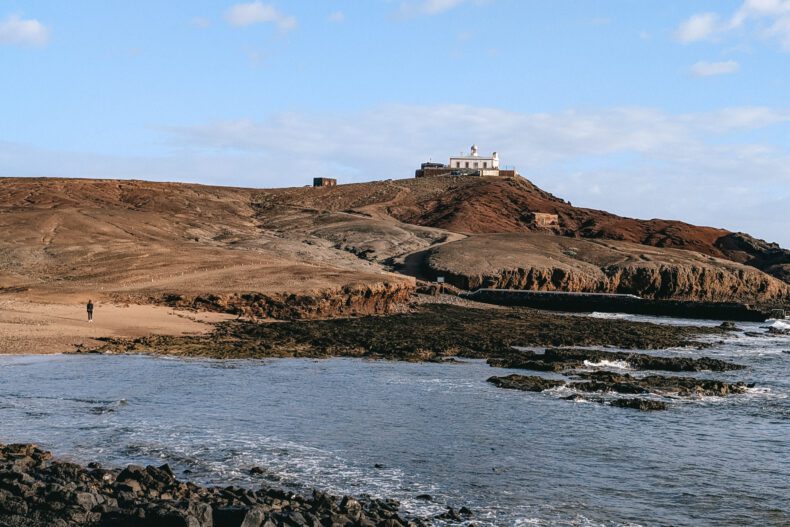
#38 Faro de Punta Sardina: a view of Tenerife
On the northwestern tip of the island stands the Punta Sardina lighthouse, on a cliff above the ocean. The road there runs through farmland and ends at a viewpoint above the sea.
This was our very first stop on Gran Canaria, and what an entrance. The waves crashed high against the rocks, the sun set beautifully and in the distance we saw El Teide rising above the horizon. There’s nothing else to do or buy, but you don’t need anything more here.