Sliding down a sand dune, paddling under a waterfall or coming face to face with a real mummy: on a family holiday in Gran Canaria, boredom never stands a chance. We spent a few weeks exploring the island in our campervan with our kids, aged nearly 3 and 5, and found there’s far more to do than sun and sand.
Of course you could happily spend a week by the pool. But Gran Canaria has much more up its sleeve: short scrambles into green ravines, rock pools on a wild coastline, cave houses high in the mountains and seaside villages where most of the families you meet are Canarian.
Below you’ll find our 23 favourite things to do in Gran Canaria with kids, from the sunny south to the green north, plus our tips on where to stay and how to get around.
Why is Gran Canaria great for kids?
Gran Canaria is one of the easiest islands for a holiday with children. It’s round and compact, the weather is almost always on your side and you can swap beach for mountains or city without long drives.
The climate helps a lot. In the south the sun shines all through winter and it’s warm enough to swim. Up in the mountains and along the north coast it’s noticeably cooler and cloudier, though, so keep a jumper in the car.
The variety keeps things exciting for kids. Race across the Maspalomas dunes in the morning, then scramble through a ravine or peek into cave houses in the afternoon. From the south to the capital, Las Palmas, is about a 45-minute drive.
Playgrounds are everywhere. Nearly every coastal village has one on the promenade or right by the beach, often with a café next door. With little ones that’s a lifesaver: parents get a coffee or a beer, kids get an hour of play.
Away from the big resorts, Gran Canaria feels very local. On the east coast, in places like Arinaga and Tufia, most of the people we met were Canarian families spending their weekend by the sea. We love how travelling with kids pulls us into everyday life somewhere new, and all those playground moments made it easy to get chatting with locals.
To reach all these places, you’ll need a car. Buses cover a good part of the coast, but the best nature spots inland and on the west coast lie along narrow mountain roads. You can compare rental cars with child seats on Discover Cars, which lists deals from local and international companies side by side. We explored the island in our own campervan, which is another great way to see Gran Canaria with kids.
→ Compare car rental deals in Gran Canaria on Discover Cars
→ Discover how we spent 4 months touring the Canary Islands by campervan
Where to stay in Gran Canaria with kids?
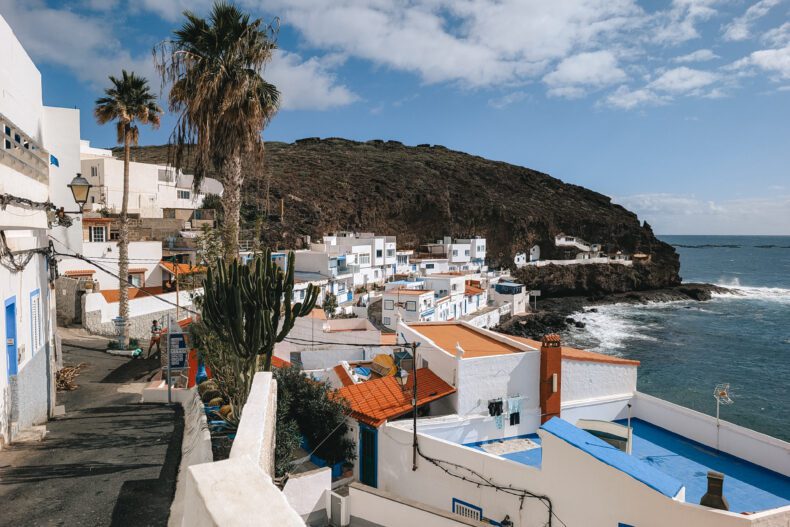
For most families, the south is the obvious choice. It’s the sunniest part of the island, with the calmest swimming beaches and the most hotels with kids’ pools. Puerto Rico and Playa de Amadores have sheltered bays with hardly any waves, while Puerto de Mogán and Arguineguín are smaller and more relaxed than the area around Playa del Inglés.
We loved the east coast around Arinaga. Big hotels are thin on the ground there, but you’re close to the airport, surrounded by locals and within easy reach of both Las Palmas and the south.
Looking for a hotel where the kids are happy even on days without outings? These are our two favourite family picks in the south.
#1 Hotel Cordial Mogán Playa in Puerto de Mogán is built like a little Canarian village, with white houses set in a big tropical garden. There are several pools, and the beach and harbour are a few minutes’ walk away.
#2 Arguineguín Park by Servatur has roomy apartments with their own kitchen and terrace around a large pool. Handy with small kids, as you can cook whenever it suits you, and laid-back Arguineguín is right around the corner.
→ Discover the 8 best areas and hotels in Gran Canaria
Zoos and water parks in Gran Canaria
Gran Canaria has plenty of parks aimed at families. Aqualand Maspalomas is the island’s biggest water park, with slides for every age. At Palmitos Park, in the hills above Maspalomas, you walk among tropical plants and animals, and Las Palmas has the large Poema del Mar aquarium.
We totally get that a water park can be the highlight of a kid’s holiday. Still, we chose to skip these parks. Dolphin and bird of prey shows don’t fit the way we want our children to discover the world, and when we travel we’d rather see what the island itself has to offer.
That turned out to be more than enough. A dip in a rock pool, a waterfall at the end of a scramble or the sun setting over the dunes: none of it needs a ticket.
23 best things to do in Gran Canaria with kids
We start in the sunny south and work our way clockwise around the island: along the rugged west coast, through the green north and Las Palmas, up into the mountains and back down via the east coast. That way you can easily use the list as a route.
→ Discover the 38 best places to visit in Gran Canaria
→ Discover 20 things to do in Gran Canaria beyond the beaches
→ Discover 15 things to do on Tenerife with kids
#1 Dunas de Maspalomas: running and rolling down the sand dunes
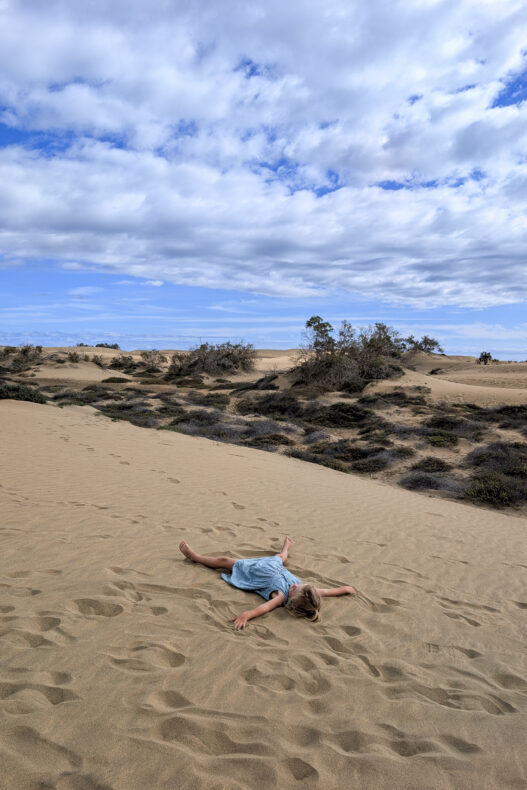
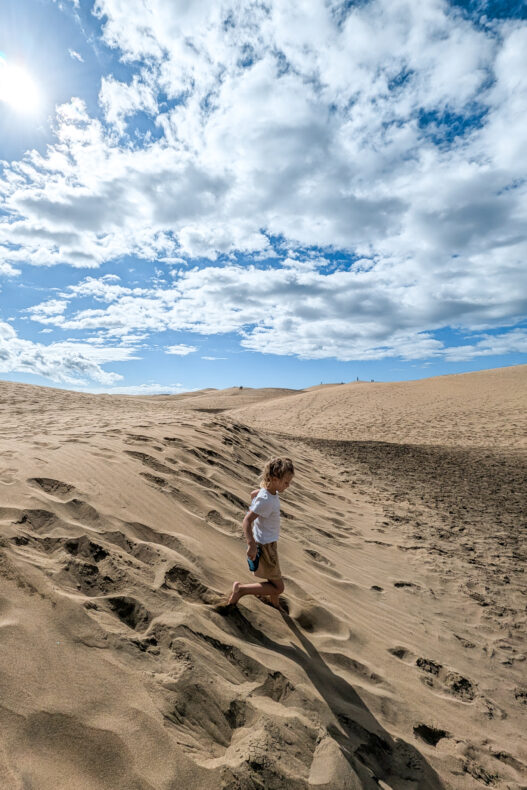
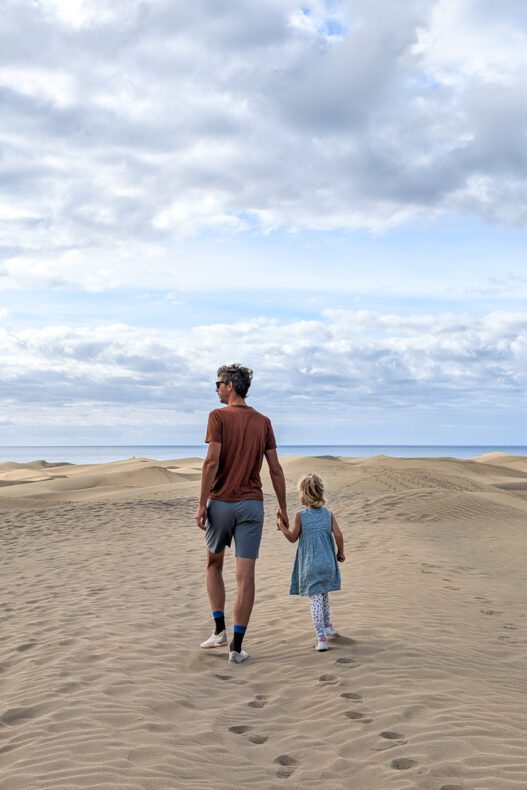
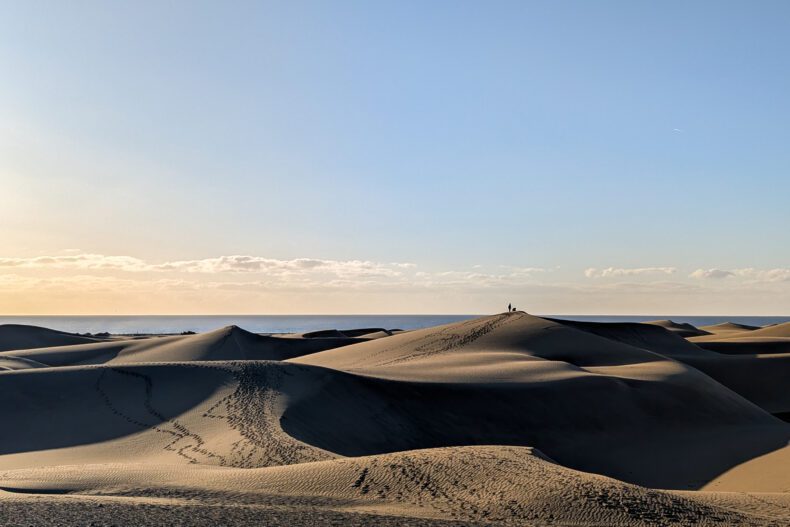
Maspalomas is Gran Canaria’s tourist hub, yet despite all the holiday buzz we had some wonderful days here. The Maspalomas dunes are a mini desert right by the sea, and for kids it’s one giant sandpit. Climbing, sliding and running down the slopes where it’s allowed: they’ll happily keep themselves busy.
On the sea side, the beach runs for kilometres all the way to Playa del Inglés. We walked the whole stretch along the sand, stopping for swims along the way. The water gets deeper gradually, so even small children can paddle safely. Around Playa del Inglés itself it’s a lot busier, with promenades full of restaurants and shops.
The crowds weren’t too bad because we always set off early in the morning. The sand is still nice and cool for little feet then, too.
→ Discover the 15 best things to do in Maspalomas
#2 Playa de Amadores: swimming in a sheltered bay
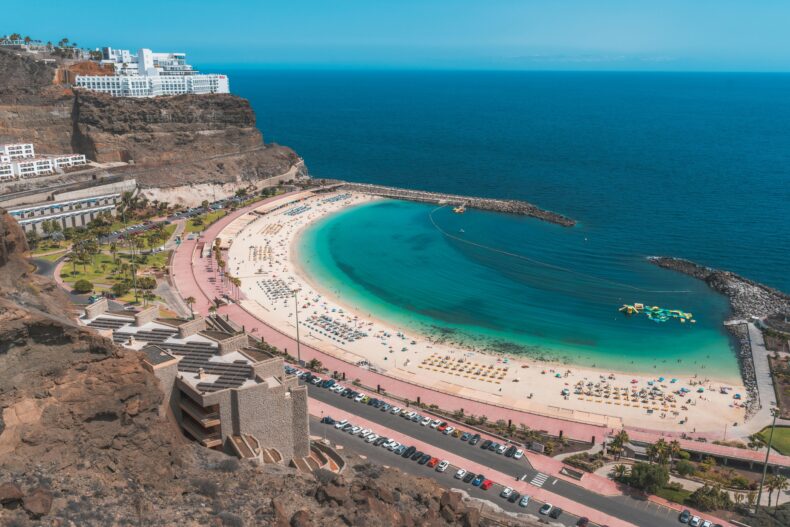
If you want stress-free swimming with young kids, Playa de Amadores is a great pick. The beach sits in a crescent-shaped bay protected by breakwaters, so there are barely any waves. The sand is pale and soft, and the water clear and almost tropically blue.
A car-free promenade with cafés and little shops runs around the beach. After our swim we followed the coastal path to neighbouring Puerto Rico, a pretty walk along the rocks.
→ Discover the 15 most beautiful beaches in the Canary Islands
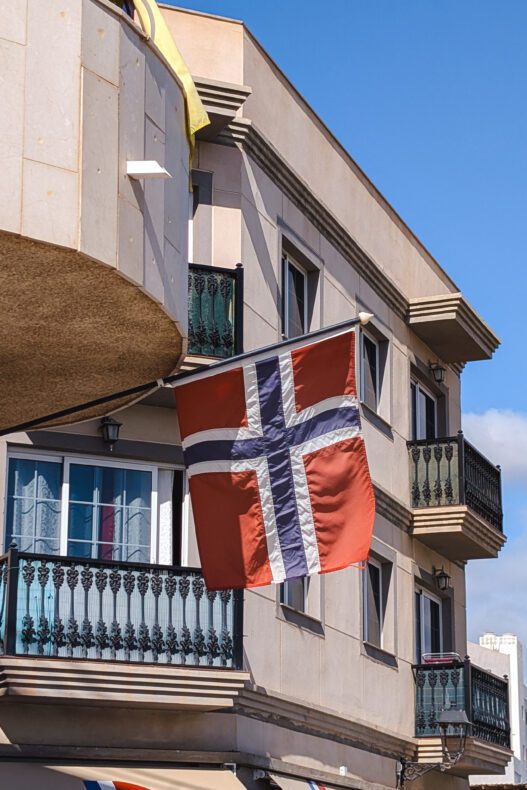
#3 Arguineguín: a Norwegian village with a beach and playground
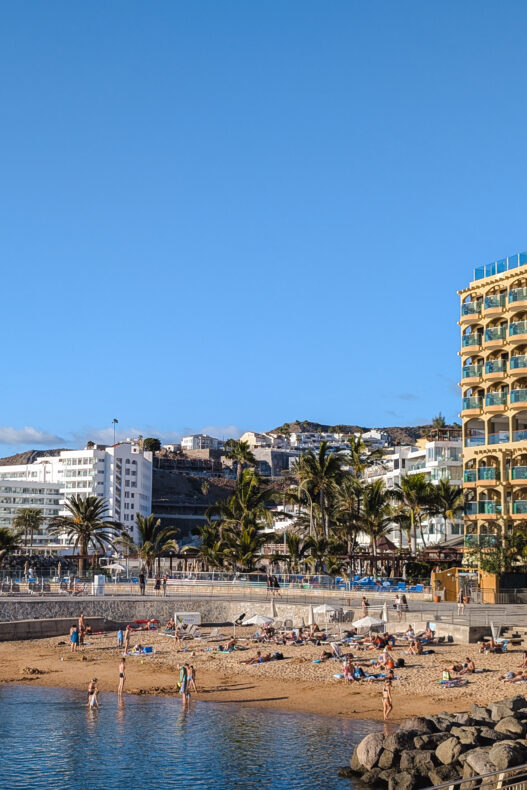
A Norwegian church, a Norwegian hairdresser and menus in Norwegian: in Arguineguín we briefly felt like we’d landed in Scandinavia. The old fishing village has grown into a quiet resort where lots of Norwegians spend the winter, and you notice it everywhere.
For families it’s a good place to catch your breath. There’s a calm beach and a fun playground in the village. We actually came for a launderette and ended up staying two days, hopping between beaches and climbing frames.
#4 Puerto de Mogán: white houses and a yellow submarine
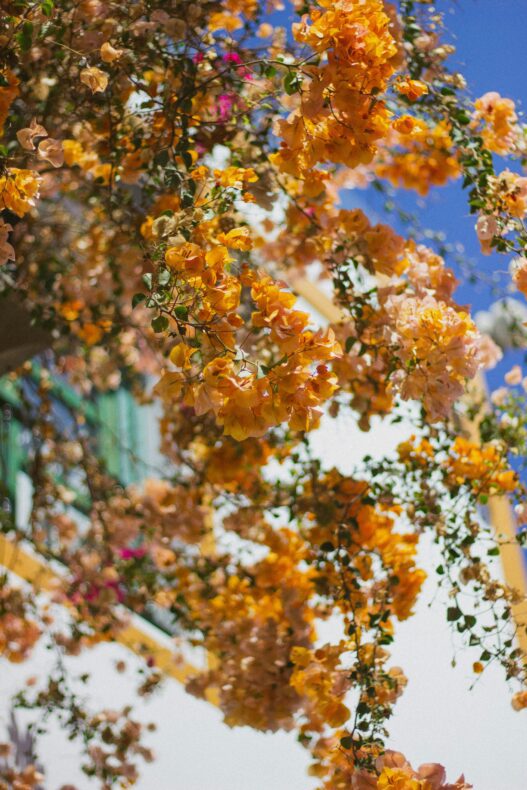
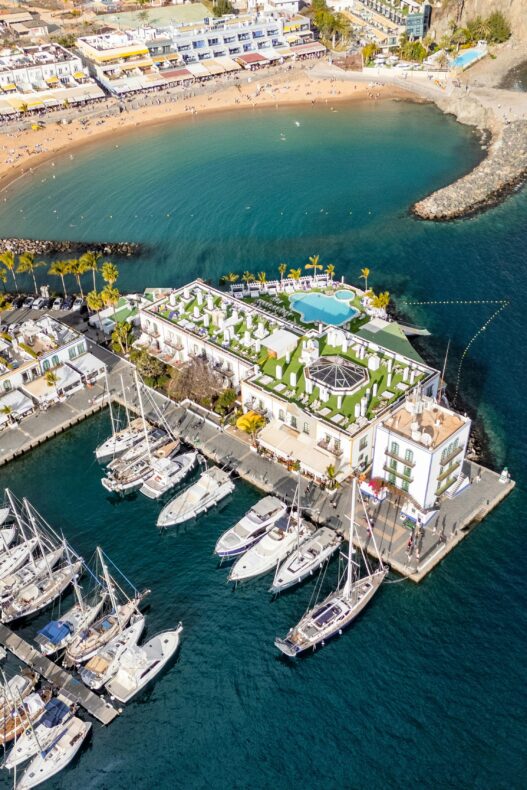
Puerto de Mogán is often called the Venice of Gran Canaria. We think that’s a bit generous, but kids love the little bridges over the canals and the boats in the harbour. The old fishing village has white houses with flowers tumbling down the walls, a small beach and plenty of terraces. On Fridays there’s a market, which makes it extra busy.
The big adventure here is a trip in the yellow submarine. After a short boat ride you dive to around twenty metres, where you watch fish and artificial reefs through large round windows. You stay completely dry and the dive lasts about forty minutes: just right for kids.
→ Book a dive in Mogán’s yellow submarine
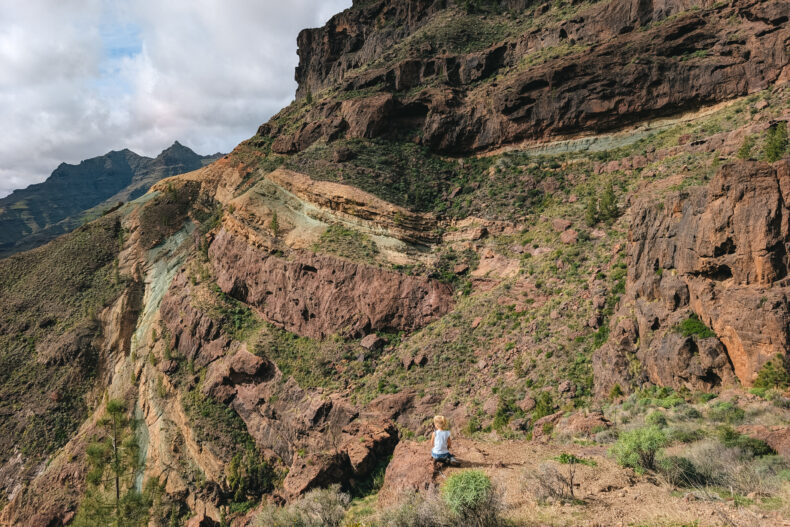
#5 Azulejos de Veneguera: scrambling among rainbow rocks
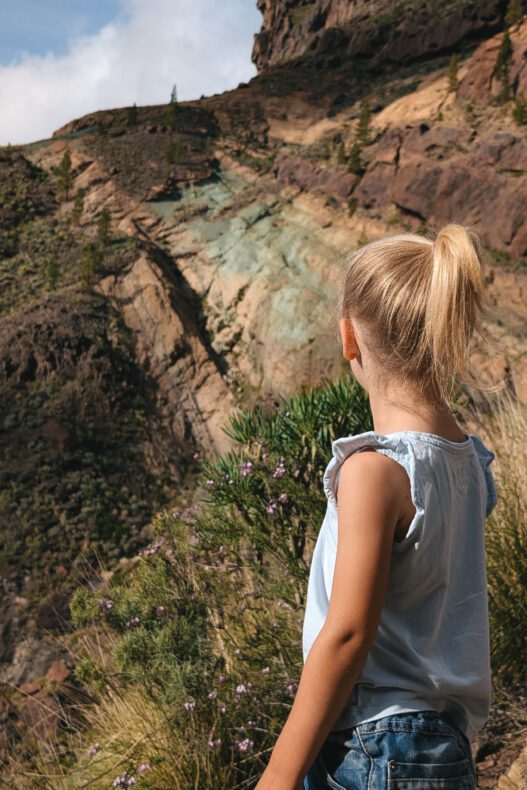
Green, pink, yellow and rusty red: the rocks of the Azulejos de Veneguera look as if someone went at them with a paintbrush. The colours come from minerals in the volcanic rock, which makes this spot on the GC-200 one of the most striking stops on the west coast.
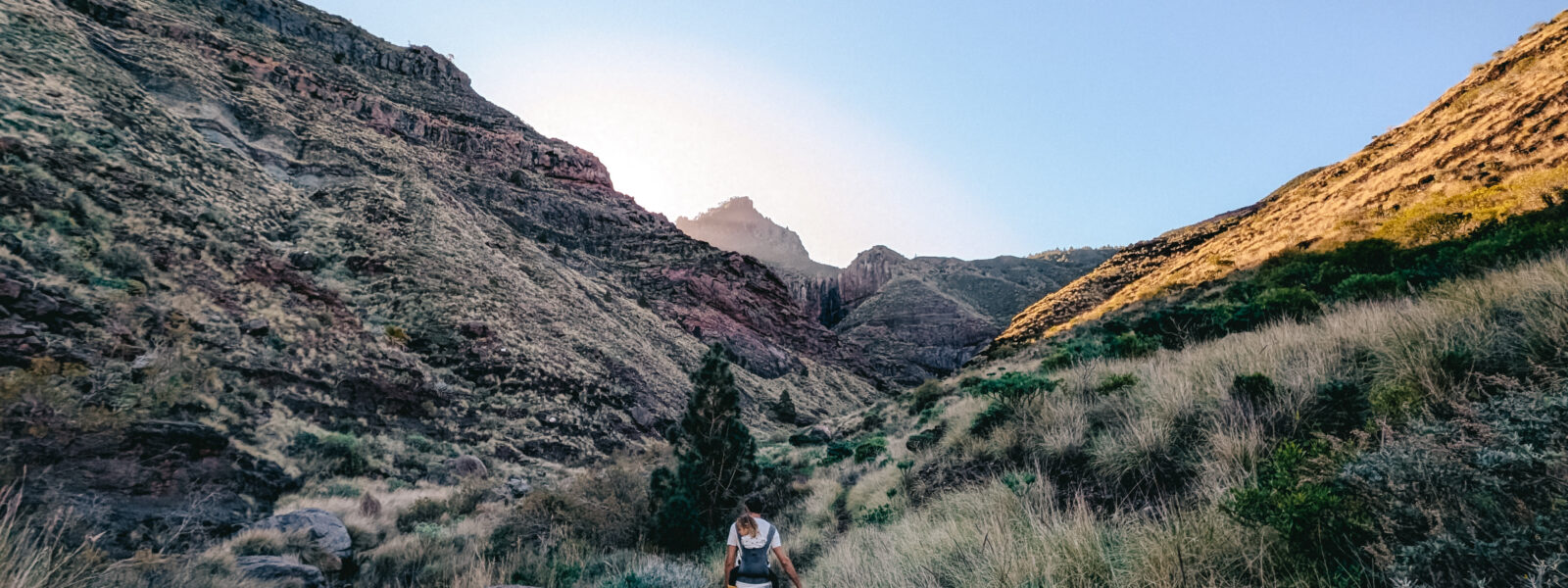
From the road it’s a steep twenty-minute climb up to a ravine with pools and little waterfalls. The path is short but tough, with around 150 metres of ascent and some scrambling over rocks. Our daughter, aged 4.5, walked the whole way herself, and our son rode in the carrier. At the top we were rewarded with clear pools between the colourful rock walls. The water is a bit cold for swimming, though, so we skipped that.
Parking is only along the road and the spots fill up fast. We went very early and got lucky. Combine the walk with a drive along the GC-200, one of the most scenic roads on the island.
#6 Charco Azul: a scramble to a waterfall
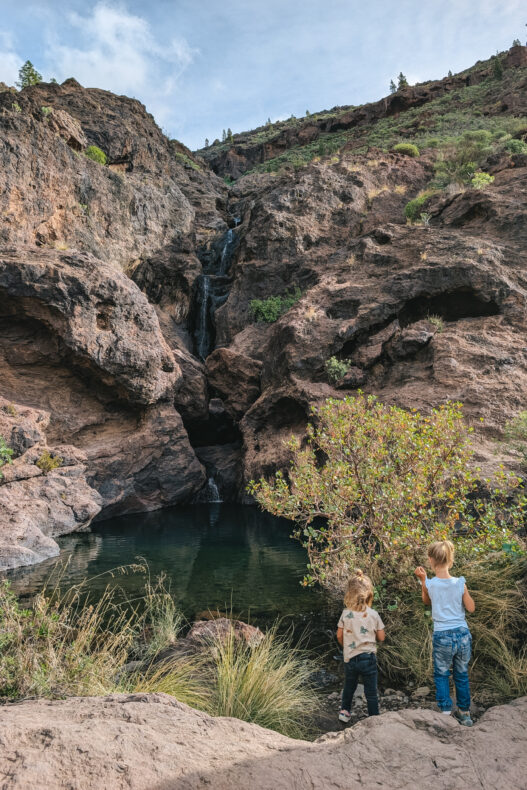
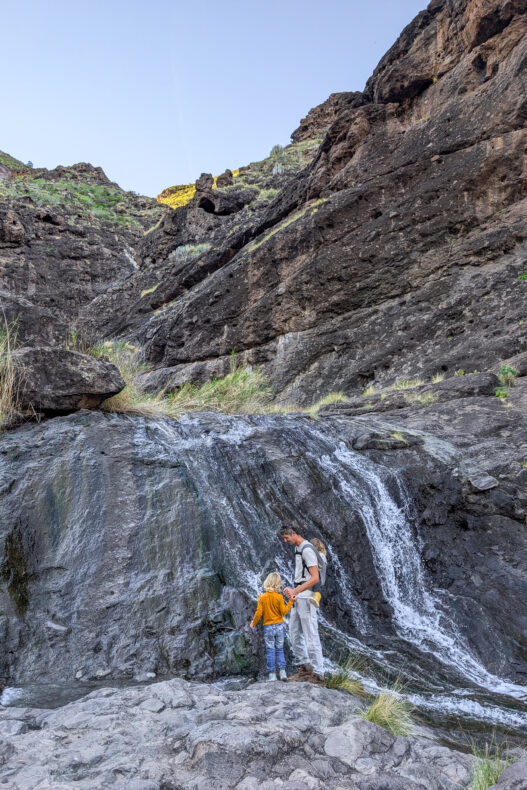
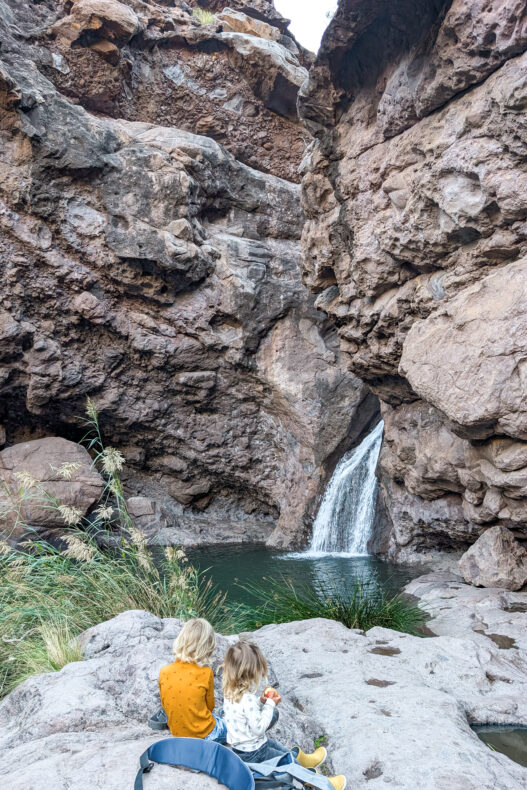
Near El Risco, on the west coast, a green ravine is tucked away with a waterfall and a clear mountain pool at the end: Charco Azul. The walk there is short, but exciting enough for kids who love to climb.
You pass palms and banana plants and step over rocks and narrow paths along the way. We loved it, and it’s very doable with kids who are a little bit brave. The water is cold and crystal clear, so for most kids a paddle is adventure enough.
There’s only a small car park in El Risco. We arrived in good time and still found a spot. Wear good shoes, as the stones by the water are slippery.
#7 Faro de Sardina: sunset with a view of Mount Teide
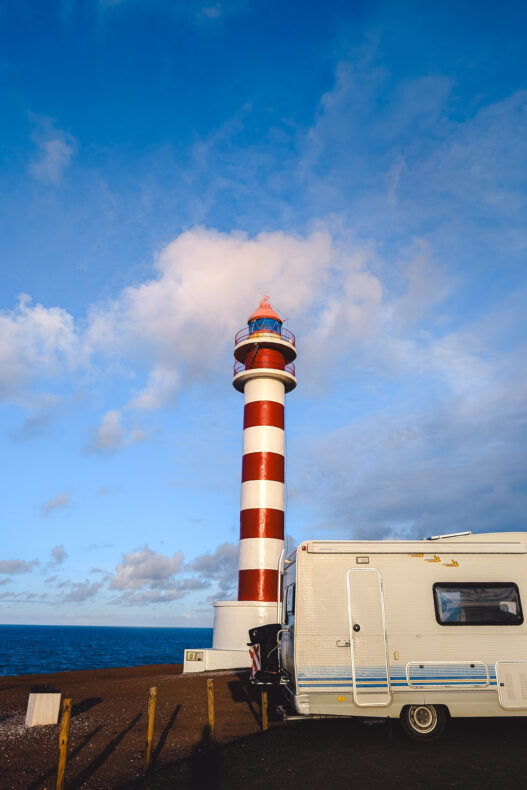
At the lighthouse of Sardina, on the island’s north-western tip, we watched our first sunset in Gran Canaria. Waves crashed against the cliffs, and far in the distance the peak of Mount Teide on Tenerife rose above the clouds.
There’s nothing else to do at the lighthouse, and that’s its charm. Kids can hunt for pretty stones, spot crabs between the rocks and watch the water smash against the shore. Keep them close, though, as the cliffs are steep and the sea can be wild.
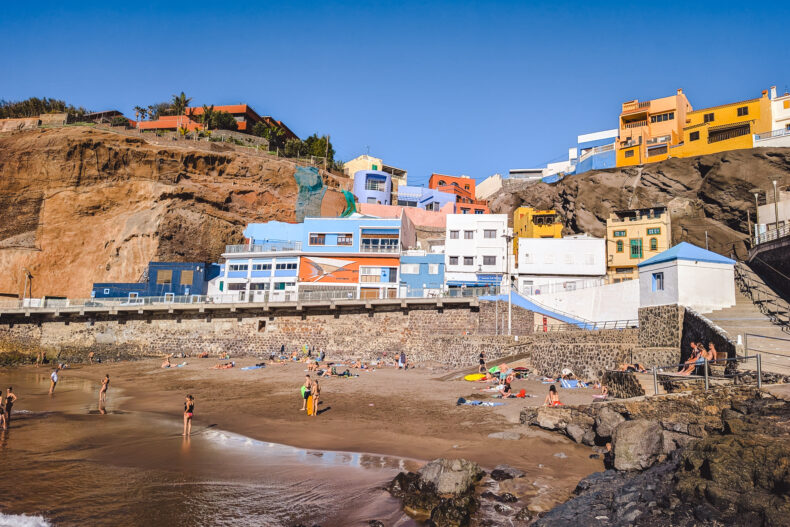
A few minutes away is the fishing village of Sardina del Norte, with a small beach in a bay between the rocks. We came back another day just for that friendly little beach.
#8 Rock pools on the north coast: swimming when the sea is too wild
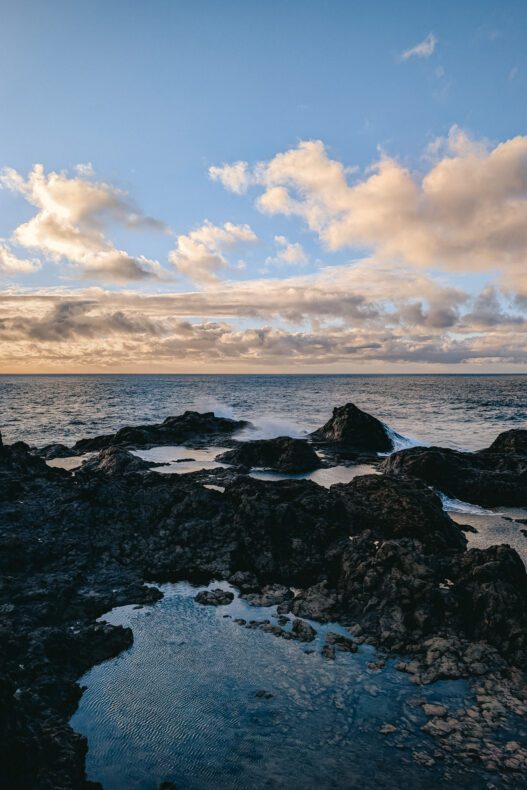
Gran Canaria’s north coast is rugged. High waves, black rocks and a strong wind mean the sea here often isn’t safe for swimming. Luckily the coast is dotted with natural pools in the lava rock, where you can enjoy the seawater in shelter.
You’ll find lovely rock pools at Agaete and Puerto de las Nieves, at Punta de Gáldar and at Bañaderos. Many have been fitted with steps and low walls, and some are shallow enough for little ones to play in. At Gáldar, watching the waves crash onto the rocks was almost as much fun as the swim itself.
Bring water shoes, as the rocks can be sharp and slippery. When the waves are high the sea sometimes spills over the edge, and then the rock pools aren’t safe either.
#9 Cenobio de Valerón: hundreds of caves in a cliff face
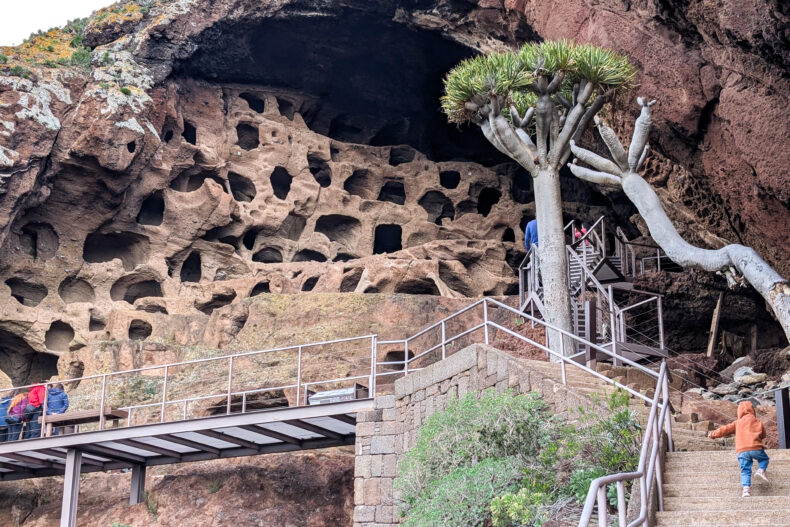
Nearly three hundred little chambers carved into a steep rock face: the Cenobio de Valerón near Santa María de Guía looks like a giant honeycomb. The island’s original inhabitants stored their grain here, high up in the rock and easy to defend.
The name means monastery, but it never was one. An old legend says young girls were locked away here until they married, a story archaeologists have found no evidence for.
A short path with steps takes you right below the caves, with signs explaining how it all worked. You can’t go inside the caves themselves. We visited on a rainy day and combined it with the Finca de Osorio. You’ll find more information on Gran Canaria’s official tourism website.
#10 Finca de Osorio: walking through a green country estate
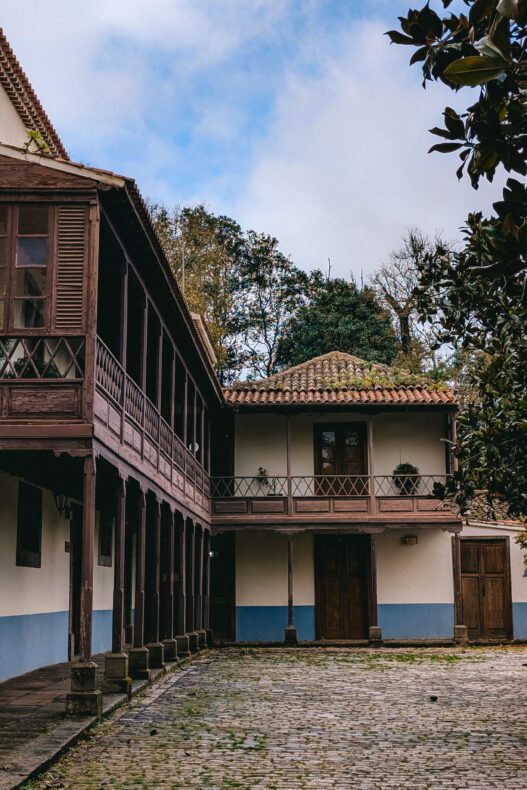
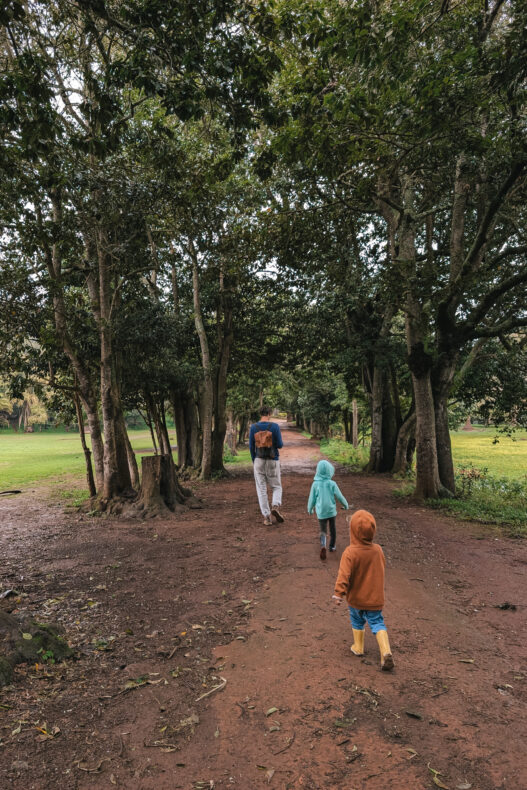
After the dry south coast, the north of Gran Canaria feels like another island. Near Teror lies the Finca de Osorio, an estate of more than two hundred hectares with meadows, fields and one of the few laurel forests left in Europe.
We walked a loop there in the rain, and in that green, misty landscape we didn’t mind one bit. The estate is still farmed, so you might meet sheep and goats along the way. There are picnic tables, and you can choose between short loops or a proper climb up Pico de Osorio.
If you’d like to picnic there all day or hike the longer trails, register in advance with the Cabildo de Gran Canaria, the island council.
#11 Museo Canario: face to face with real mummies
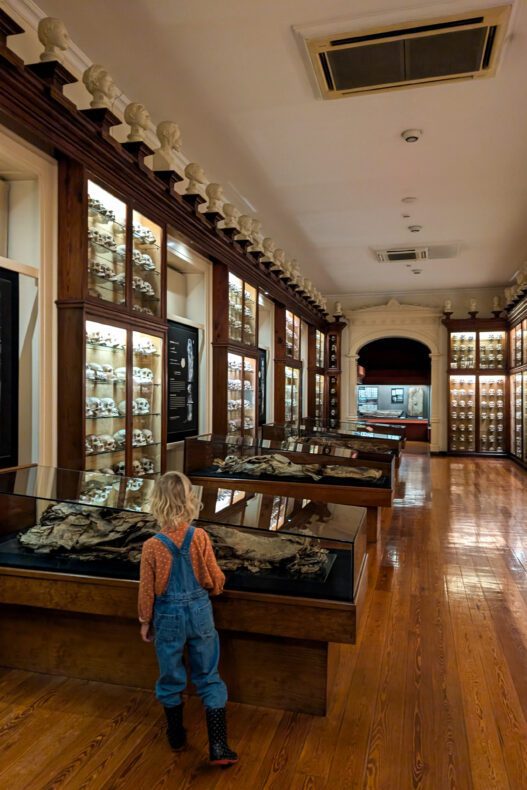
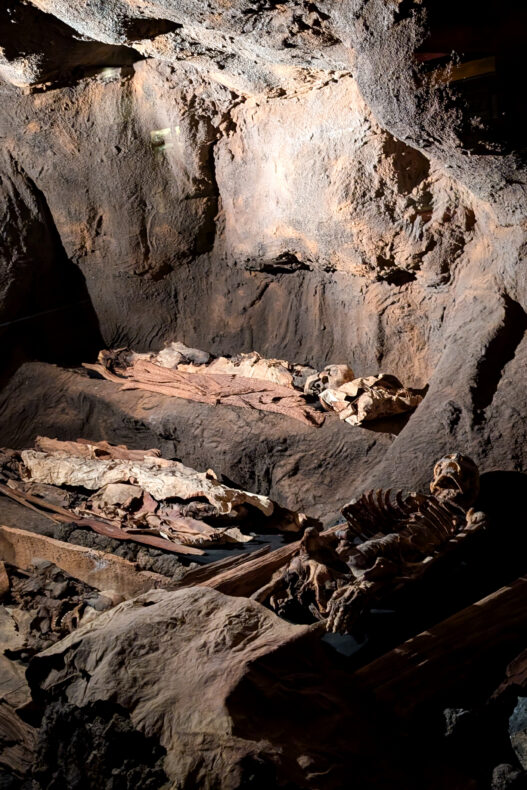
At the Museo Canario in Las Palmas you learn all about Gran Canaria’s original inhabitants, from before the Spanish arrived. The highlight for kids is the room with real mummies and hundreds of skulls in old-fashioned glass cabinets.
Our daughter found it fascinating and wanted to know everything: how these people lived, what they ate and why they were mummified. Most of the signs are in Spanish, so I translated a lot with Google Translate. On a rainy day in Las Palmas, with my brother visiting, it was a real winner for us.
The museum is in Vegueta, the oldest part of Las Palmas. Afterwards it’s a short stroll to the Santa Ana cathedral and the squares with cafés around it.
#12 Museo Elder: hands-on science
If it rains in Las Palmas, the Museo Elder de la Ciencia y la Tecnología is a great plan. The museum’s motto is ‘forbidden not to touch’, so kids turn knobs, do experiments and find out how planes, rockets and the human body work.
There’s a separate area for the littlest ones, and children under three go free. The museum is on Parque Santa Catalina, a few minutes’ walk from Las Canteras city beach.
#13 Las Canteras and La Isleta: city beach and volcanic peninsula
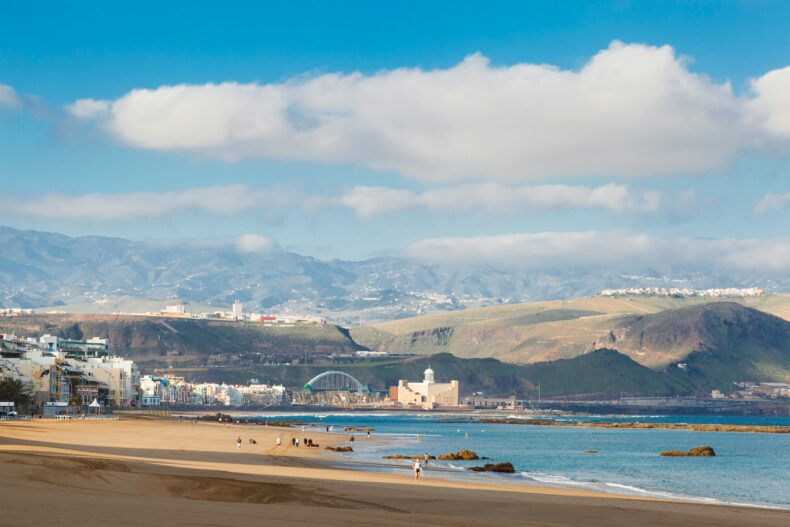
Las Palmas is one of the few capital cities with a proper city beach. Playa de Las Canteras is more than three kilometres long and protected by a natural reef offshore, so the water is calm in many places. At low tide you can snorkel among the rocks looking for little fish.
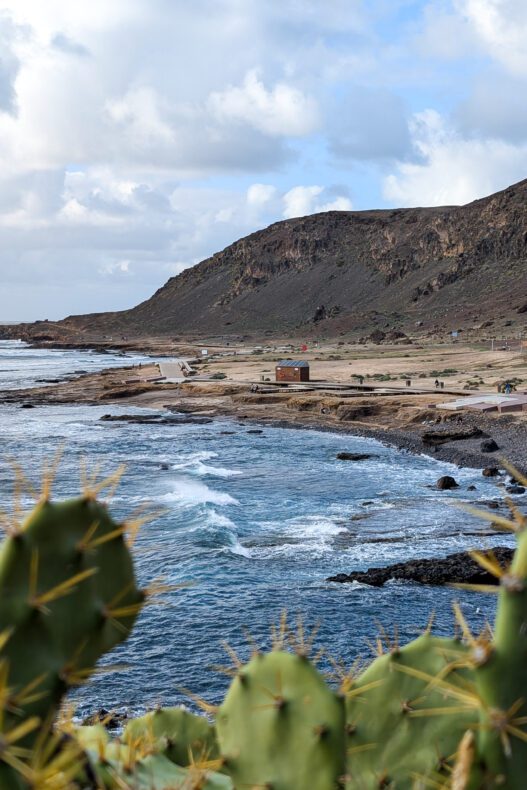
At the northern end of the beach begins La Isleta, a peninsula of bare volcanic cones and rugged coastline. We drove out there on a rainy day and still found some sunshine. The wild landscape is a world away from the busy Las Canteras promenade, yet only a few minutes from it.
#14 Jardín Botánico Canario: Spain’s largest botanical garden
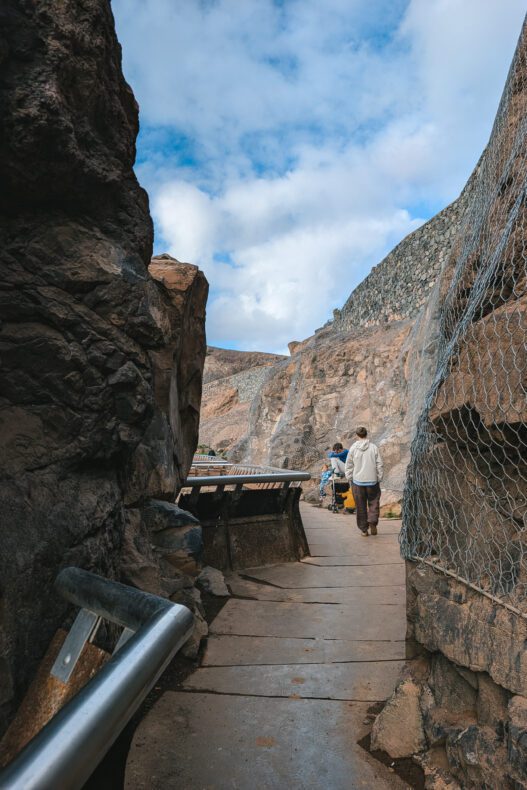
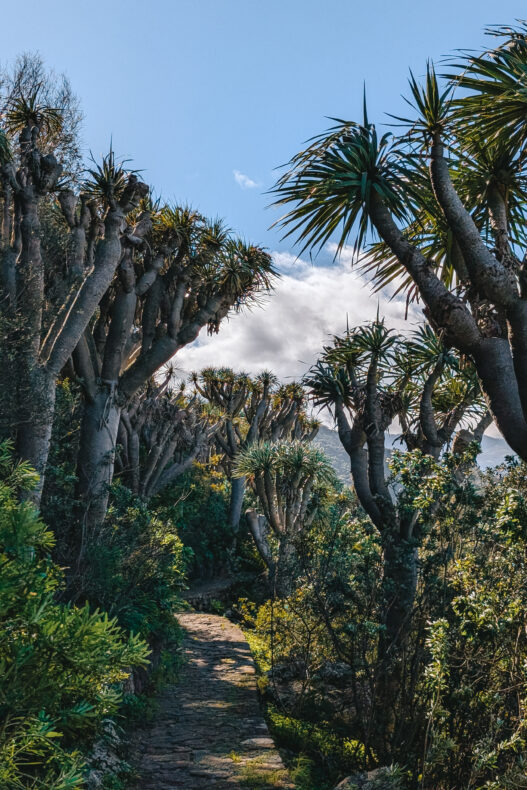
Does a botanical garden sound boring for kids? Not this one. The Jardín Botánico Canario Viera y Clavijo clings to the sides of a ravine near Tafira, just outside Las Palmas, and at around 27 hectares it’s the largest botanical garden in Spain.
What we loved most was exploring every little path. You climb steps, come out at a sort of cave, walk past a waterfall and soon find yourself among the cacti. For kids it feels like a voyage of discovery through a green maze.
The grounds are steep, so leave the pushchair in the car. We combined the garden with a walk around the nearby Bandama crater.
#15 Caldera de Bandama: walking around the rim of a crater
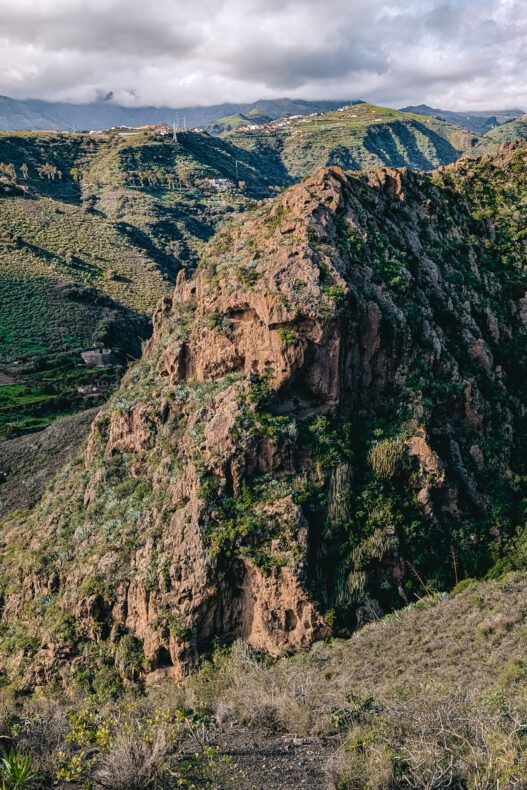
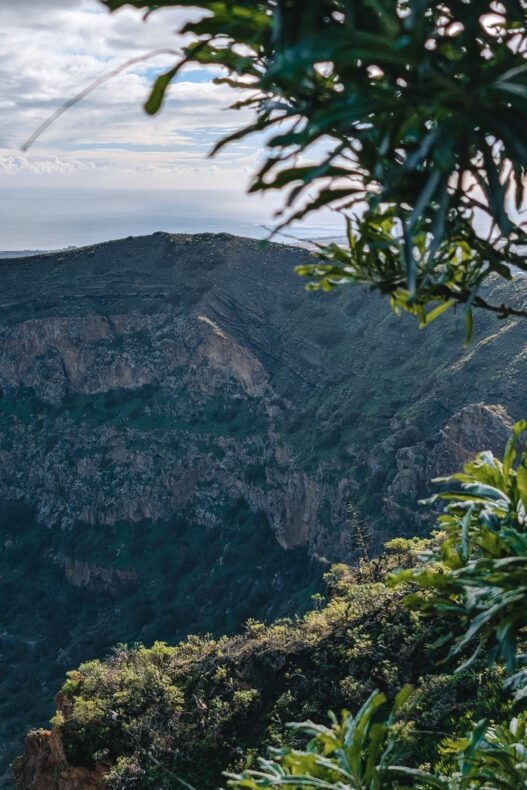
You see fewer volcanoes on Gran Canaria than on the other islands, but the Caldera de Bandama makes up for a lot. The crater is more than a kilometre wide and about two hundred metres deep, and at the bottom there’s still an old farmhouse among the fields.
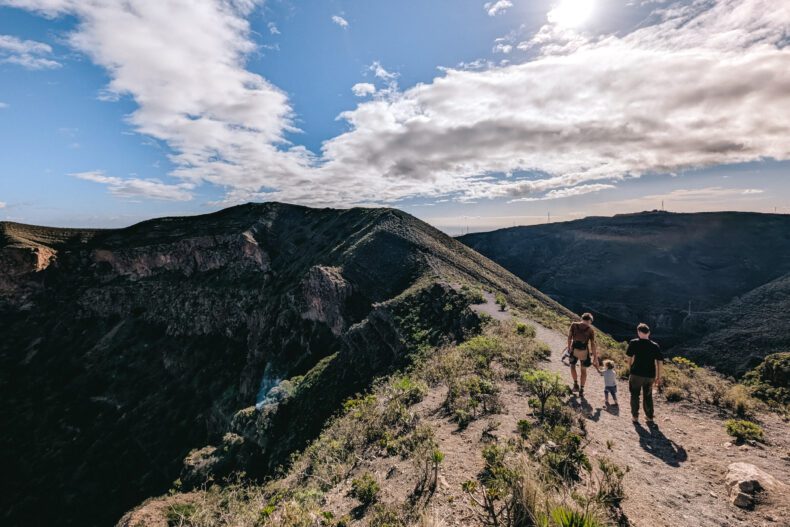
We walked a loop around the crater rim with the kids, with one great view after another into the depths and across the island. For more adventure, you can hike down to the bottom in about half an hour. That path is steep and loose, and the climb back up will make you sweat on a warm day.
For the best view, walk up to the highest point of Pico de Bandama, where a viewpoint looks out over the crater and Las Palmas.
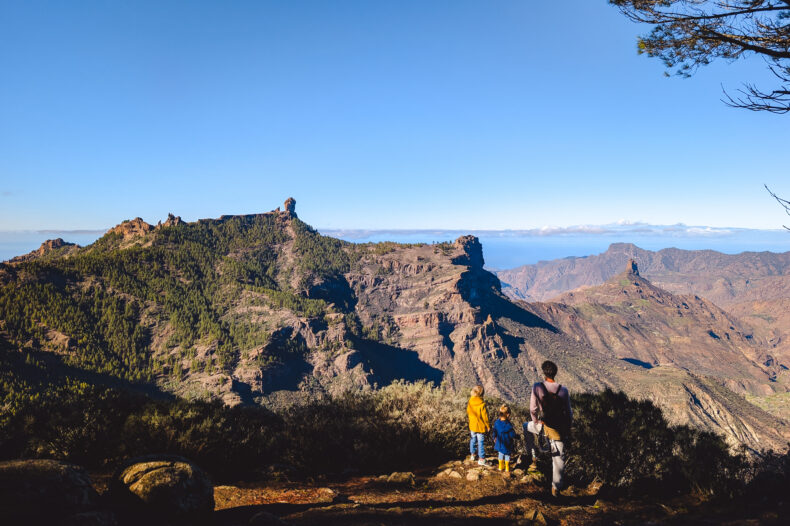
#16 Roque Nublo and Tejeda: on the roof of the island
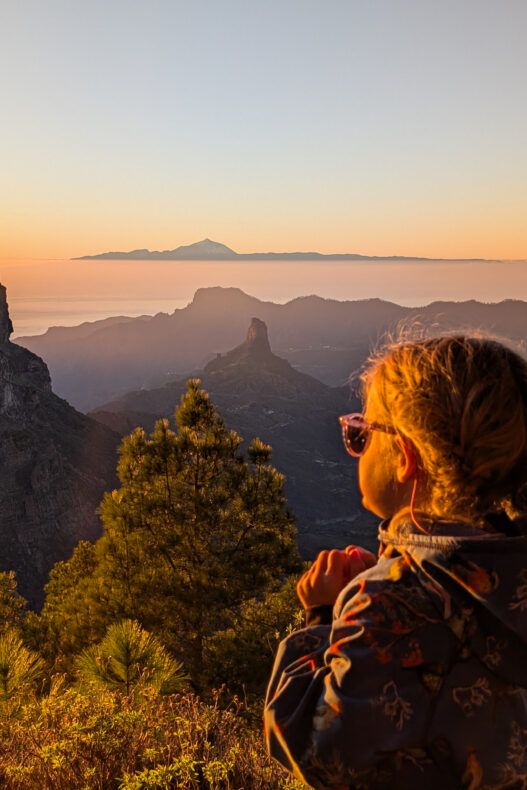
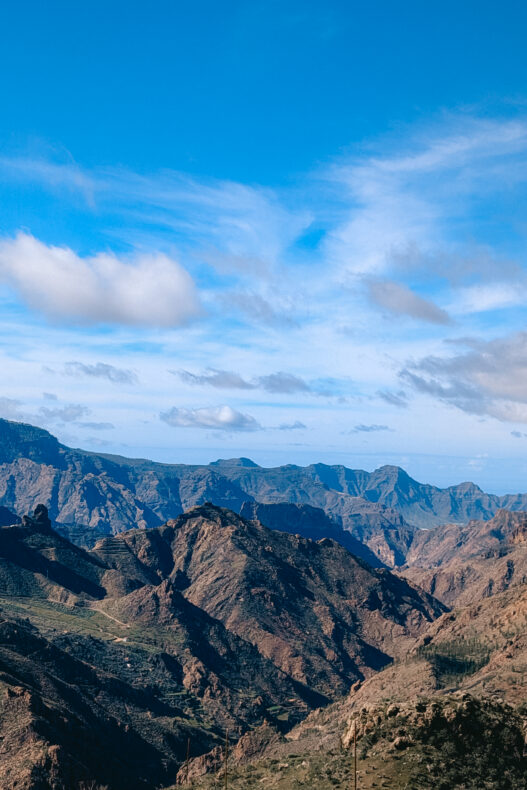
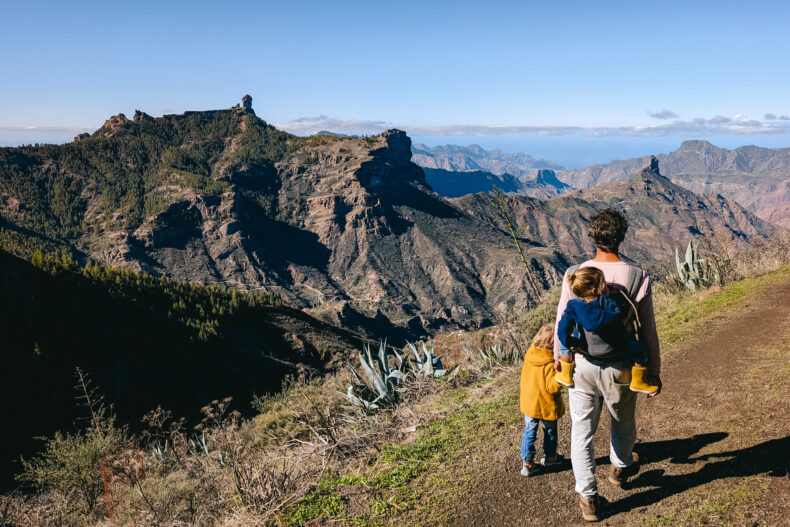
In the middle of Gran Canaria, Roque Nublo rises above the mountains like a stone finger. The rock is about eighty metres tall, the symbol of the island and visible from countless viewpoints.
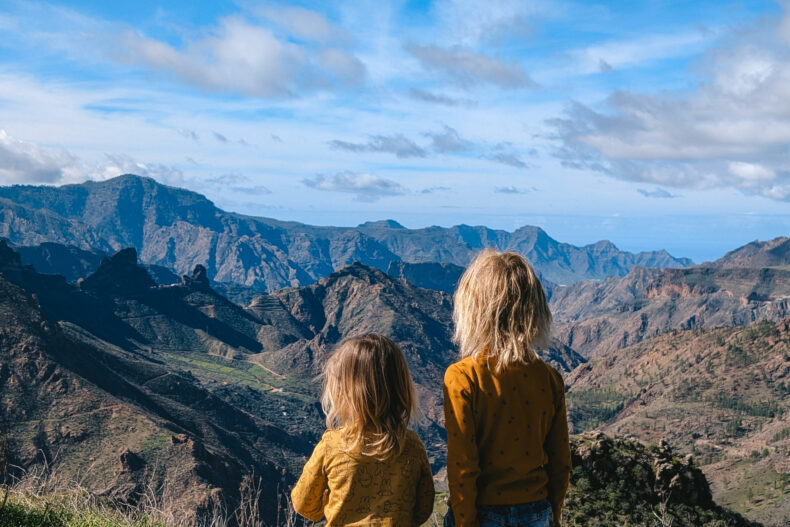
The walk to the foot of the rock takes about an hour there and back and climbs steeply, so we didn’t do it with the kids. Instead, from the Corral de los Juncos recreation area we followed a flat stretch of the GR-131 and GR-138 trails, with Roque Nublo in sight the whole time. From Corral de los Juncos we also watched one of the best sunsets of the whole trip.
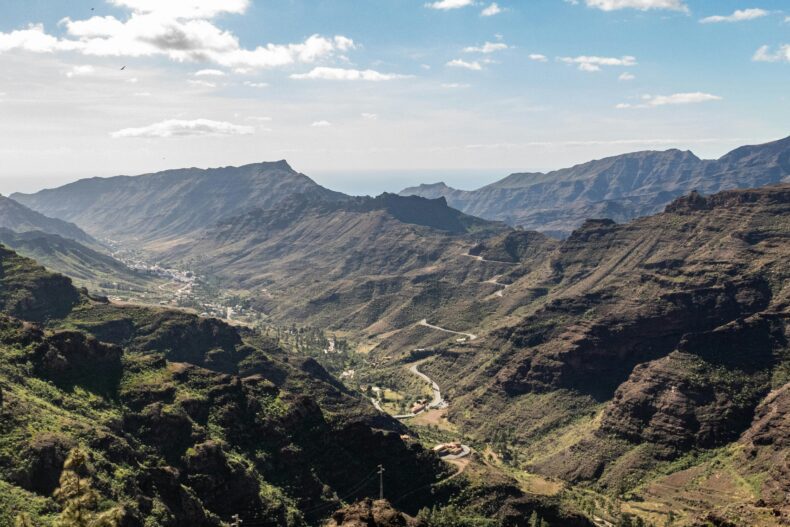
The mountain village of Tejeda sits just below and makes a nice lunch stop. Or a sweet stop, as the village is known for its almond pastries. Do keep an eye on the weather: we drove into Tejeda inside a thick cloud while the sun was blazing on the coast. The roads are narrow and twisty, but the views make up for everything.
#17 Artenara: seeing what it’s like to live in a cave
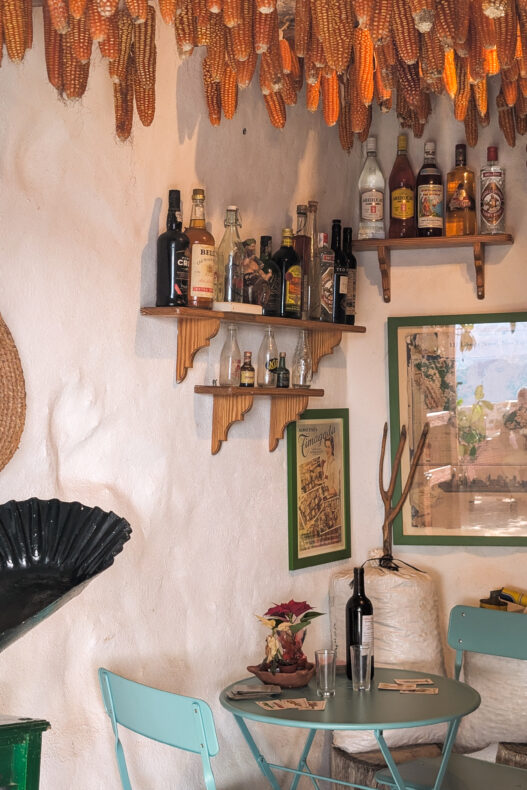
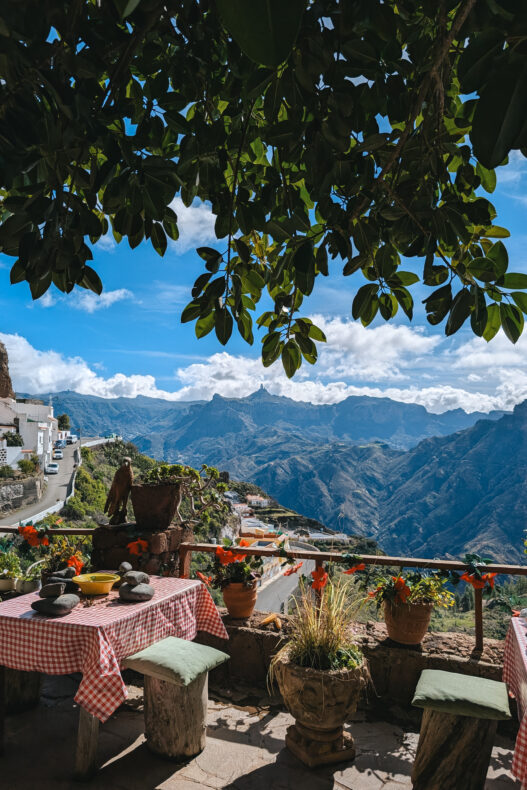
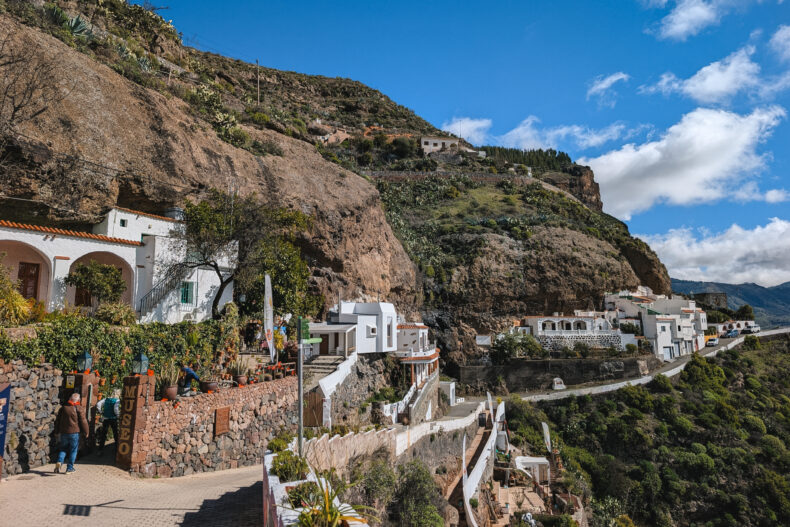
Artenara is the highest village in Gran Canaria, and plenty of its residents still live in cave houses cut into the rock. At the small Museo Casas Cuevas you can see how that used to work: the caves are kitted out with a kitchen, bedrooms and old furniture, just as they looked generations ago.
Kids love walking from room to room through the rock face and seeing how people lived without electricity or running water. Entry is free, and outside there’s a sweeping view over the mountains.
#18 La Fortaleza de Ansite: the last refuge of the island’s original inhabitants
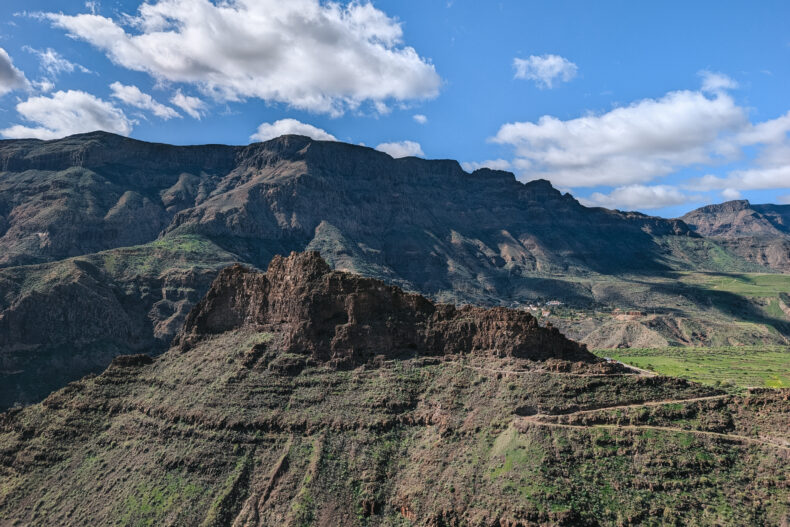
Our favourite drive on the island ran from Agüimes up into the mountains, past La Fortaleza. This huge rock formation full of caves sits in the middle of a valley and was one of the last refuges of Gran Canaria’s original inhabitants during the Spanish conquest.
At the visitor centre you learn more about their history, and from there you walk to the caves in the rock. Kids find it exciting to walk through the passages and discover how people lived here, with a wide view over the valley as a reward.
#19 El Bufadero: where the sea shoots through the rocks
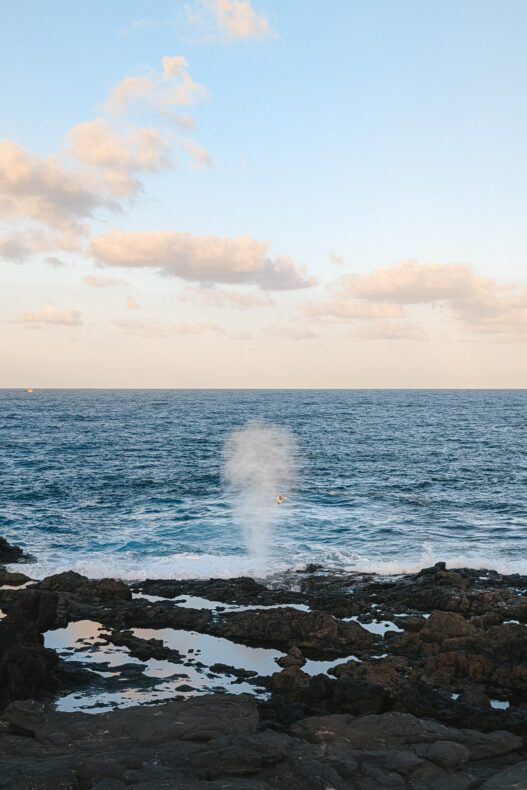
At La Garita, on the east coast near Telde, the ocean forces its way through a hole in the rocks. With every wave the water bubbles and churns in El Bufadero, and when the sea is rough it shoots metres into the air. Kids can stand and watch it for ages.
A path runs along the rocks, but keep your distance when the waves are high. From El Bufadero we walked along the promenade to Playa de la Garita, which has a fun playground, and in the other direction to the quiet beach of Playa del Hombre.
#20 Agüimes: hunting for bronze statues
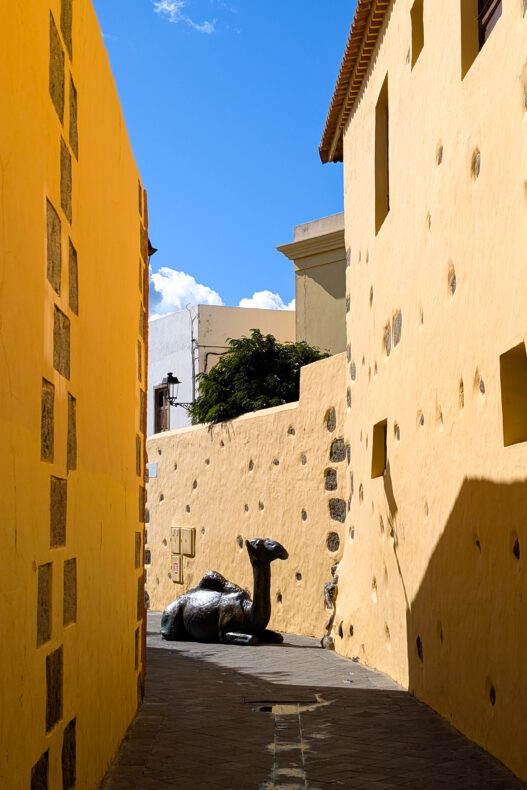
In the old centre of Agüimes, dozens of bronze statues are dotted around the streets: a camel in an alley, a musician on a bench, villagers in traditional dress. For our kids it naturally turned into a treasure hunt through the village.
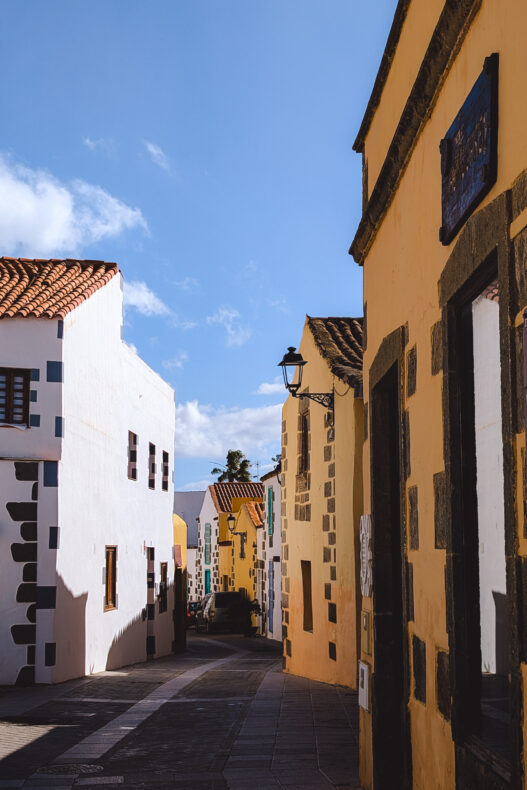
Agüimes is colourful, quiet and far less touristy than the coast. We settled on a terrace on the square. A short walk in the area wasn’t a hit with the kids, but later Sebastiaan and our son did a lovely hike nearby.
#21 Barranco de las Vacas: a mini canyon in orange
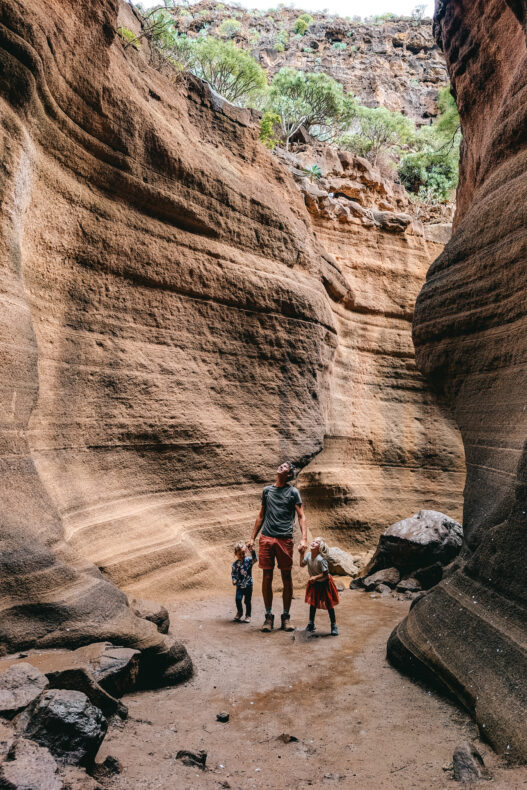
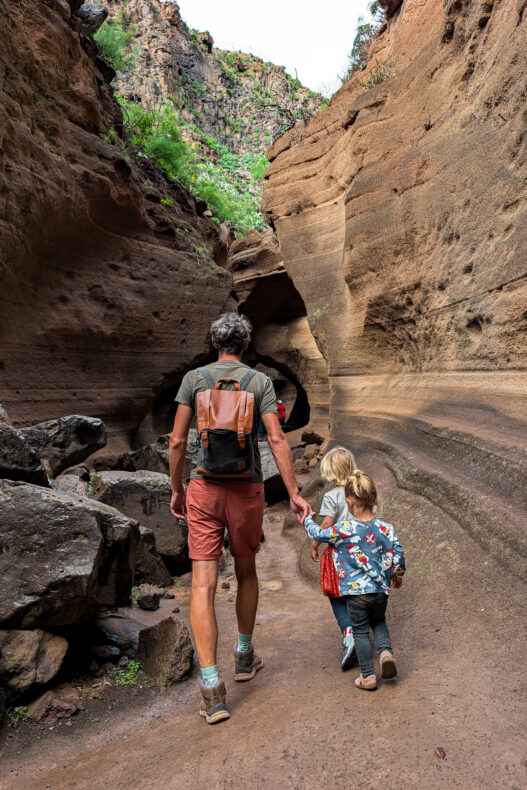
Wavy rock walls in orange and ochre: the Barranco de las Vacas is reminiscent of the famous slot canyons in the US, just smaller. The narrow gorge is close to Agüimes and you’re through it in no time.
You park by the road and walk a short way along it to the path down into the gorge. It’s a quick stop, but kids love squeezing through the narrow gap in the rocks. The walls glow best in sunshine. We had a cloudy day, and it’s still a special place. Come early, as the gorge has become a popular photo spot.
#22 Arinaga: our favourite spot in Gran Canaria
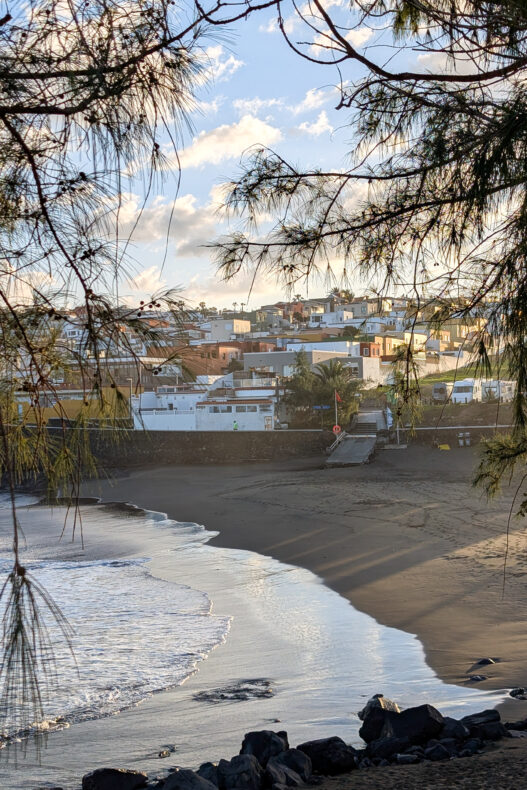
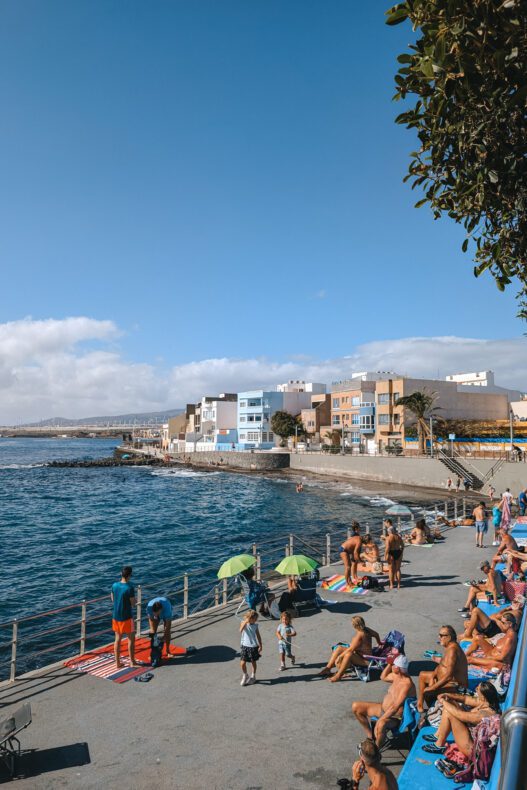
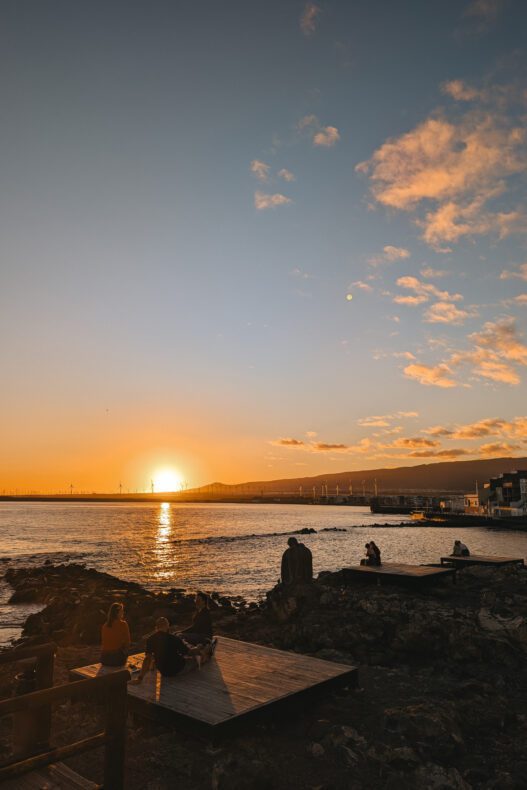
If we had to pick one place in Gran Canaria, it would be Arinaga. This seaside town on the east coast has no big hotels or souvenir shops, but it does have a long promenade, swimming spots and terraces full of Canarian families. We liked it so much we came back twice.
Our days here looked much the same: a dip in the sea, time at the playground, a drink on a terrace and, at the end of the day, watching the sun go down from the wooden decks by the water. Simple, and exactly what made for a relaxed family day.
Bring a snorkel and you’ll see plenty of fish in the clear water. The village has a few simple fish restaurants, and at weekends the promenades fill up with families from the area.
#23 Pozo Izquierdo: windsurfer-watching on a stormy beach
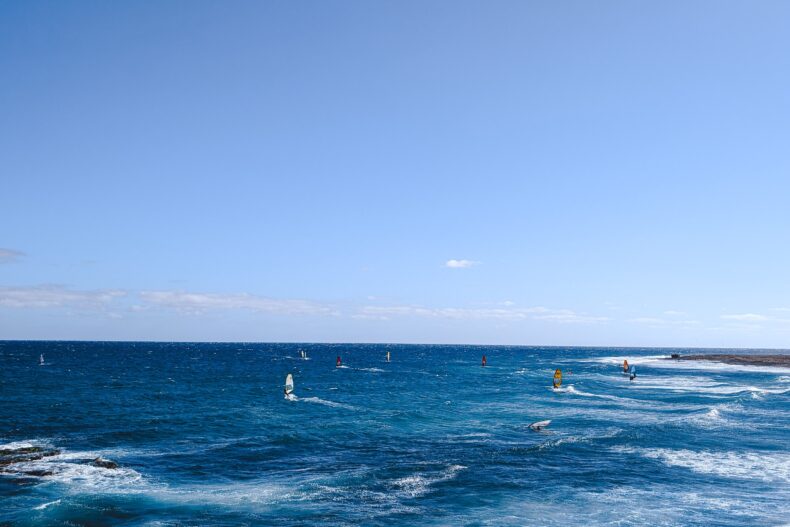
A little south of Arinaga lies Pozo Izquierdo, one of the windiest places in Europe. You notice that straight away. It hosts windsurfing World Cup events, and almost every day surfers race across the waves.
It’s not really a place for swimming, but there’s plenty to watch. We sat on the small stone stands for a while watching the windsurfers, while the kids had fun in the playground. Bring a kite, as it’s rarely calm here.
#24 Bonus tip: dolphin and whale watching from Puerto Rico
Dozens of whale and dolphin species live in the waters around Gran Canaria, and boats leave Puerto Rico’s harbour every day to spot them in the wild. Bottlenose dolphins, spotted dolphins and pilot whales are seen most often. A trip usually takes about two and a half hours.
We didn’t get round to it ourselves in Gran Canaria. If you book a trip, choose an operator that watches the animals from a distance and doesn’t chase them. Prone to seasickness? A catamaran is more stable in the water than a small speedboat.
More tips for your trip to Gran Canaria
 Our pickHotels in Gran Canaria: from a beach hotel by the Maspalomas dunes to a room in the old Vegueta quarter
 Want to stop wherever you like? Rent a car with Discover Cars and compare the big rental companies in one go.
 No flight yet? Compare flights to Gran Canaria.
 A buggy ride through the canyons or your first dive? Book tours in Gran Canaria with GetYourGuide.
 Discover all our blogs about Gran Canaria


