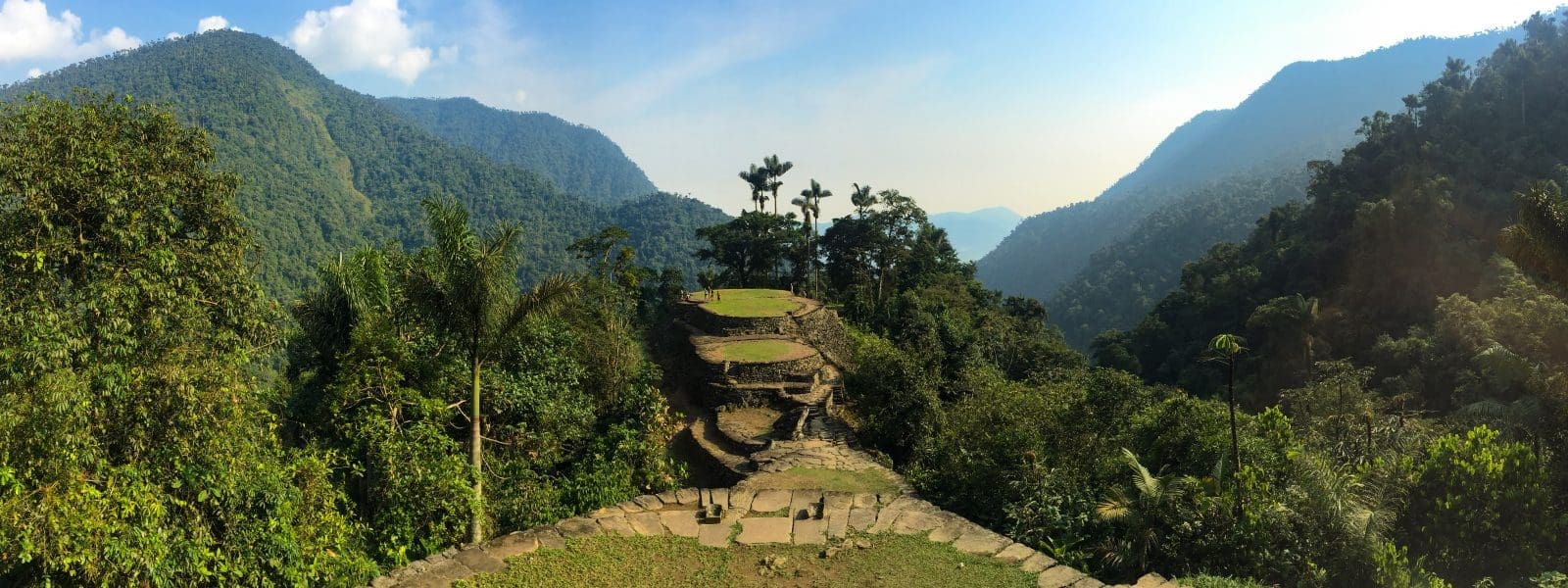
The Lost City Trek is one of Colombia’s most famous hikes, and one of its toughest. Over four to six days you’ll sweat your way through the jungle of the Sierra Nevada to Ciudad Perdida, an ancient city the outside world only rediscovered in the 1970s. Here’s the twist, though: for most hikers the lost city isn’t even the highlight. The trek itself is. In this guide you’ll find out what the Lost City actually is, how the trek works day by day, what it costs and how to prepare.

What is the Lost City in Colombia?
The Lost City, or Ciudad Perdida in Spanish, is an ancient city hidden in the Colombian jungle. It sits at around 1,200 metres in the Sierra Nevada de Santa Marta, right up in the north of the country. The nearest big city is Santa Marta, on the Caribbean coast.
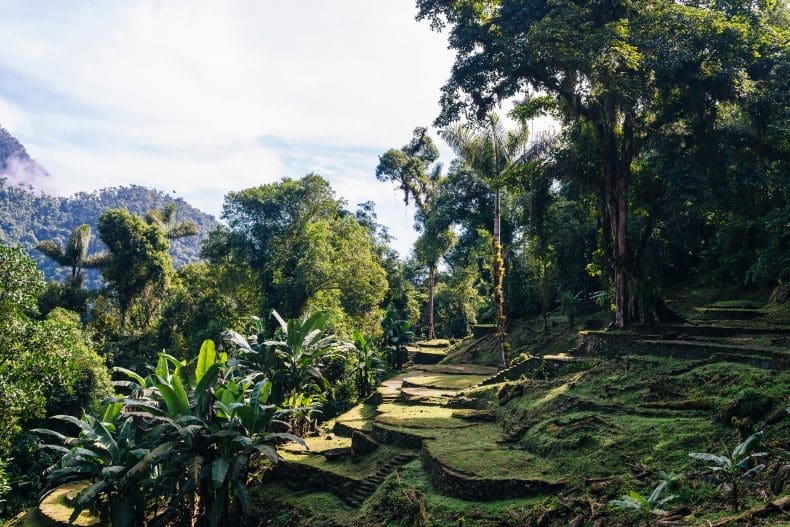
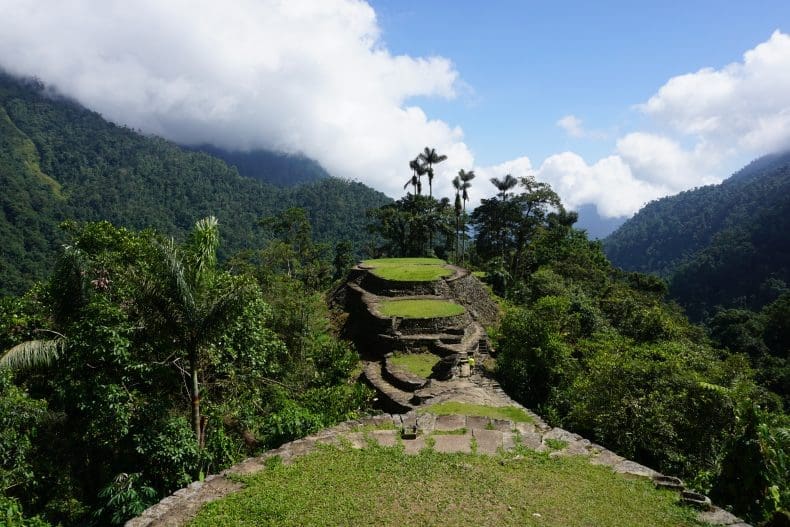
The Tairona built it around 800 AD, which makes it more than six centuries older than Machu Picchu in Peru. The indigenous peoples of the mountains call it Teyuna. The Tairona carved their city straight into the mountainside: more than 160 stone terraces that once held wooden houses, all linked by paths, stairways and water channels. Thousands of people probably lived here.
After the Spanish arrived, the city was abandoned and swallowed up by the jungle. It wasn’t until the 1970s that Teyuna was rediscovered, first by looters and then by archaeologists. Not that it was ever really lost. The Kogi, Wiwa, Arhuaco and Kankuamo, descendants of the Tairona, knew exactly where to find it all along, and to them it’s still a sacred place.
Tip: the area closes for one month every year, so nature can recover and the indigenous communities can hold their ceremonies there. In recent years that’s been September or October, but the exact dates change from year to year, so check with your tour operator before you lock in your plans.
For a long time the jungle around the Lost City was off-limits to tourists, as armed groups were active in the area. These days the trek has been safe for years and it’s one of the country’s most popular adventures. Walking is the only way in, unless you’ve got the budget for a helicopter.

When is the best time to do the Lost City Trek?
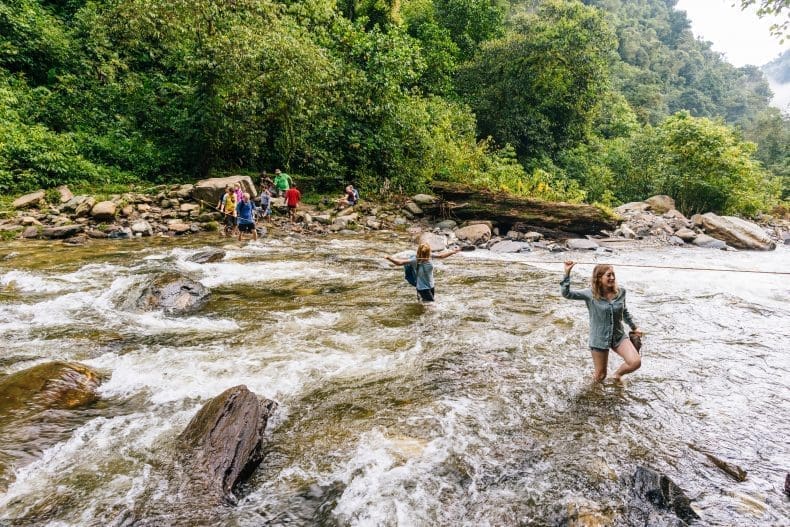
The best time for the Lost City Trek is the dry season, from December to March. The jungle is wet all year round, but in these months it rains less and the Río Buritaca runs lower. That matters, because you’ll be wading across it a few times. July and August are usually fine too. In the wetter months, roughly April and May and again October and November, the trails turn to mud and the rivers run faster.
Also keep the annual closure in mind, along with the crowds around Christmas and Semana Santa, when plenty of Colombians hit the trail as well. Book well ahead for those periods.
Can you do the Lost City Trek without a guide?
Nope. The trail runs through the ancestral lands of the indigenous communities, and they only allow a limited number of licensed tour operators to bring groups in. There are around nine of them now, including Expotur, Magic Tour, Turcol, Teyuna Tours (founded by local guides) and Wiwa Tour, which works with guides from the Wiwa community.
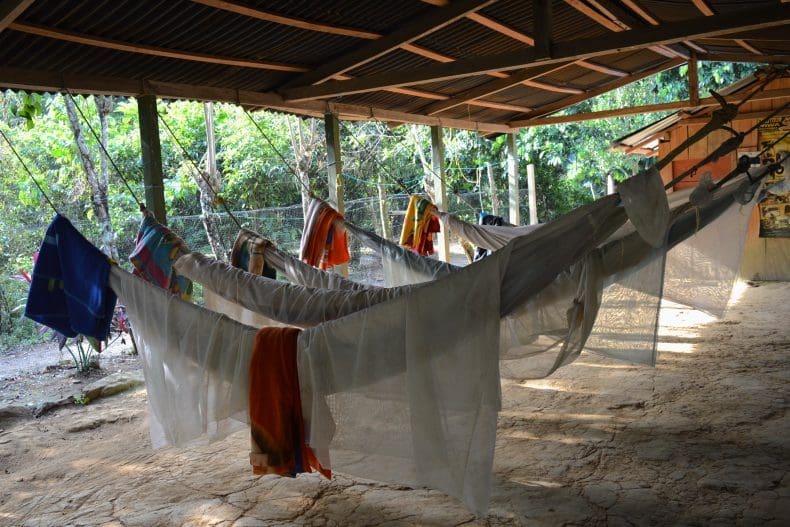
Honestly, there’s not much between them. Everyone follows roughly the same route, eats at the same camps and sleeps in the same hammocks or bunk beds. So pick your operator on reviews, group size and whether your guide speaks English. Do book ahead, though, so you know you’ve got a spot on a departure that fits your itinerary. If you’d like to compare trips, including longer tours that combine the trek with Cartagena or Tayrona, TourRadar is a good place to start.
→ Compare Lost City Trek tours on TourRadar
How much does the Lost City Trek cost?
The price of the trek is fixed nationally, so the licensed operators all charge roughly the same. Budget around US$500 (€450) for the 4-day trek and around US$600 (€500) for five days. International booking sites usually add a bit on top, but you get easy upfront payment and more flexible cancellation in return.
That sounds steep, but everything’s included: transport to and from Santa Marta, your guide, three meals a day, your bed in the camps and the park entrance. The price goes up every year, partly because visitor numbers are capped.
The Lost City Trek: 4 to 6 days in the jungle
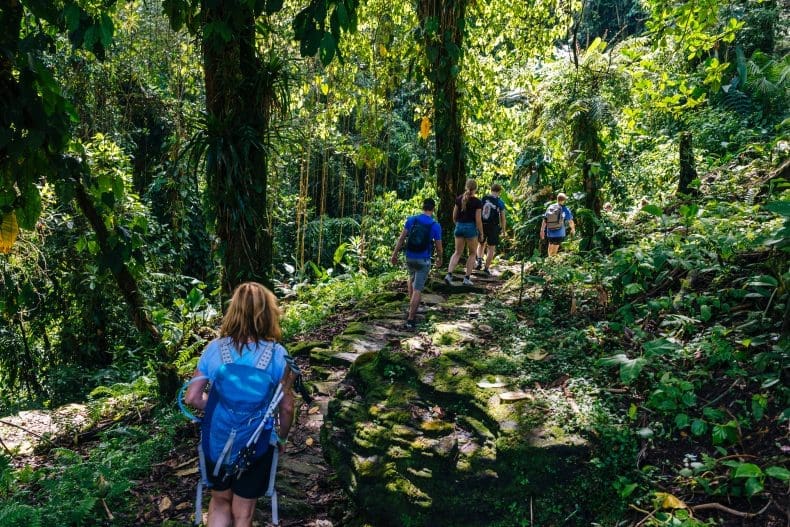
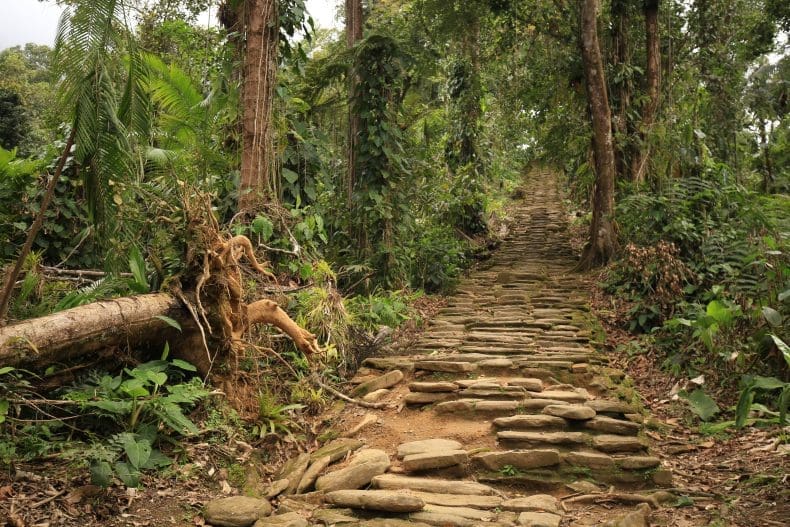
Most hikers go for the 4-day trek, but you can also do it in five or six days. The route is the same, roughly 45 kilometres there and back, you just get more time to swim and recover at the camps. The grand finale comes at the end: 1,200 stone steps up to Ciudad Perdida itself.
Let’s be honest: if you’re expecting a second Machu Picchu, you might be disappointed. What’s left of the city is mostly terraces and stairways, covered in moss and wrapped in jungle. The real adventure is getting there. You’ll swim in rivers, walk past Kogi and Wiwa villages and feel like Indiana Jones on the set of Jurassic Park. We didn’t get round to it on our own trip through Colombia, but it’s still high on our list.
On day 1 a jeep takes you from Santa Marta to the village of El Mamey, the trailhead, which takes two to three hours. After lunch you hike for a few hours to the first camp. All the groups keep to roughly the same schedule, so you’ll bump into other hikers along the way.
Day 2 is the toughest. You’ll walk six to eight hours with plenty of climbing and descending, passing the Wiwa village of Mutanzi. The day ends at a camp about an hour from the lost city.
On day 3 it’s an early start for the last stretch and the climb up the steps. Your guide spends a few hours showing you around the terraces and telling you about the Tairona and the people who live in the Sierra Nevada today. Then you hike back to one of the earlier camps.
On day 4 you walk the final stretch back to El Mamey, where the jeep is waiting to take you to Santa Marta. On the 5-day version, the return is spread over two days.
The trail isn’t technical, but it’s definitely a workout. There’s a lot of up and down, it’s hot and humid, and depending on the season the paths are either dusty or muddy. With a decent level of fitness you’ll be fine. Mules carry the food and water to the camps, so all you carry is your own daypack.
Packing list for the Ciudad Perdida trek
Leave your big backpack at your hotel or hostel in Santa Marta, or with your tour operator if they offer storage. All you take is a daypack with the essentials. Think good hiking shoes with proper grip, a poncho or light rain jacket, quick-dry clothes, a quick-dry towel and flip-flops or sandals for camp and the river crossings. You’ll get wet anyway, whether it’s from the river, the humidity or your own sweat.
The jungle is full of mosquitoes, so bring DEET and long clothes for the evenings. Also handy: sunscreen, a head torch, a water bottle and a power bank or spare batteries. There’s barely any electricity at the camps, and if there is a socket, everyone wants it.
After the trek: travelling on through northern Colombia
After a few days in the jungle you’ll be more than ready to put your feet up, and northern Colombia is the perfect place for it. Palm-fringed beach, an eco-lodge in the cool mountains or a Caribbean city break?
From Santa Marta it’s easy to head on to Cartagena, Colombia’s Caribbean gem. Wander the colourful streets of the old town, eat your way through Colombian cuisine and watch the sunset from the city walls.
Or treat yourself to a few lazy beach days, for example in Tayrona National Park, in the beach village of Palomino or at one of the quirky places to stay along the coast in between.
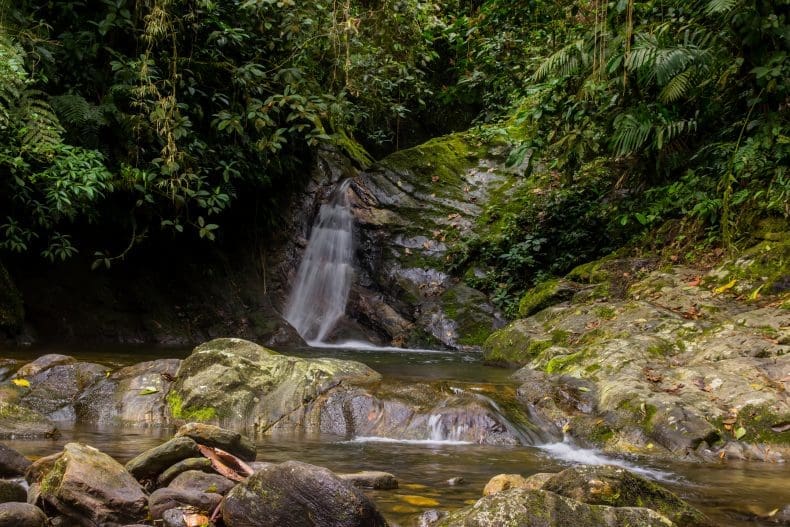
The cool mountain village of Minca is another winner. The hiking is beautiful, but after the trek you might not be in the mood. Swim under a waterfall instead, visit a coffee farm or just soak up the view from one of the gorgeous eco-lodges and hostels around Minca.
Fancy exploring the coast and the mountains at your own pace after the trek? You can pick up a rental car in Santa Marta and book it in advance through Discover Cars.
Enjoy our travel tips? Add The Orange Backpack as a preferred source on Google and you'll see us more often in your search results.
More tips for your Lost City Trek
 Our pickYou can only do the trek with a licensed guide. Book the multi-day trek to the Lost City with GetYourGuide.
 Hotels in Santa Marta: stay the night before and after the trek
 Prefer everything arranged? Browse Lost City Trek tours on TourRadar.
 No flight yet? Compare flights to Bogotá, Medellín or Cartagena.
 Discover all our blogs about Colombia


