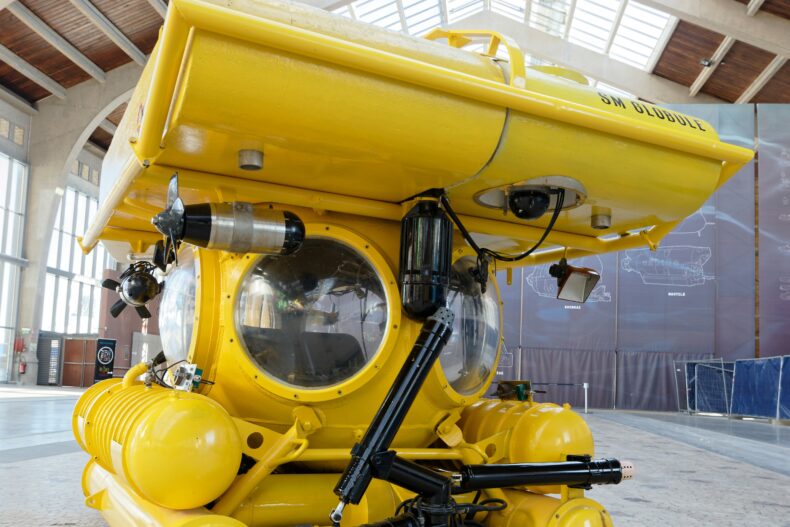
Normandy in France is one of those regions that works incredibly well for a family holiday. It combines wide sandy beaches, dramatic coastal scenery and fascinating historic places with plenty of activities that children can genuinely enjoy. The region feels varied without being overwhelming, which makes it easy to plan days that are fun for both kids and adults.
Children can search for shells on the beach in Deauville, explore a real submarine in Cherbourg or hop on a vélorail and pedal along an old railway line. There are also plenty of beaches, museums, viewpoints and small towns where you can stop without needing a full day to see everything. That makes it easy to keep the pace relaxed and avoid filling every day with long drives.
One of the things we liked most about travelling through Normandy with children is how easy it is to combine very different experiences in a single day. You might start the morning by the sea, stop at a local market for lunch and spend the afternoon visiting a historic site or enjoying a scenic viewpoint. Because many of the main sights are relatively close together, you rarely feel as though you are spending more time in the car than actually exploring.
Normandy is also a great destination if you like having a little flexibility in your plans. Some days can be active and full of sightseeing, while others can be much slower, with time for the beach, a playground or a relaxed walk through a coastal town. That balance made the trip especially enjoyable for us and kept the days feeling varied without becoming too busy.
In this blog, I share the best places to visit in Normandy with children, including personal tips, practical stops along the way and a few places that surprised us in the best possible way. These are the spots we found most enjoyable as a family and the ones we would happily recommend for your own trip.
→ Read about the 12 most beautiful sights in Normandy


Where to stay in Normandy
Normandy is a large and varied region, so choosing the right base can make a big difference to your trip. The best place to stay depends mainly on what you want to see and how often you are happy to move around. We travelled through Normandy in our campervan, which gave us the freedom to explore several different areas without having to return to the same place each night. If you are travelling without a camper, however, choosing one well-located base can make the whole trip feel much easier and more relaxed.
If you want to combine beaches, D-Day history and charming towns, we found the area around Bayeux especially convenient. From here, you can easily reach places such as Omaha Beach, Arromanches, Honfleur and Mont-Saint-Michel without spending hours in the car every day. It is a very practical choice if you want to see a lot of Normandy while still enjoying the comfort of returning to the same accommodation each evening.
If your main focus is the coast and lively seaside towns, Deauville, Honfleur or Étretat are all lovely places to stay. The Côte Fleurie is particularly good for families, with plenty of child-friendly campsites, camper stops and easy access to beaches. If you prefer a little more comfort, a family-friendly hotel or holiday home can also be a great option, especially if you want more space, your own kitchen or a quieter place to unwind at the end of the day.
For peace, nature and outdoor activities, Suisse Normande offers a completely different experience. The landscape here feels greener, hillier and much more rural than the coast, with rivers, small villages and scenic countryside all around. It is a great choice if you enjoy hiking, kayaking, cycling or simply spending more time outdoors away from the busier tourist areas.
Travelling through Normandy by camper gives you even more freedom to change your plans as you go. The region has plenty of attractive camper stops, many of them free or very affordable, and they are often located close to the sea or within walking distance of pleasant towns and villages. That makes it easy to stay somewhere new each night without too much planning, which was one of the things we enjoyed most about exploring Normandy this way.
In the end, the best base really depends on the kind of trip you want. Bayeux is ideal for variety and sightseeing, the coastal towns are perfect for beaches and atmosphere, and Suisse Normande is a better fit if you are looking for nature and a slower pace. Whichever area you choose, Normandy is easy to explore as long as you keep travel times manageable and plan around the places you are most excited to visit.


The 12 best things to see in Normandy
#1 Le Mont-Saint-Michel
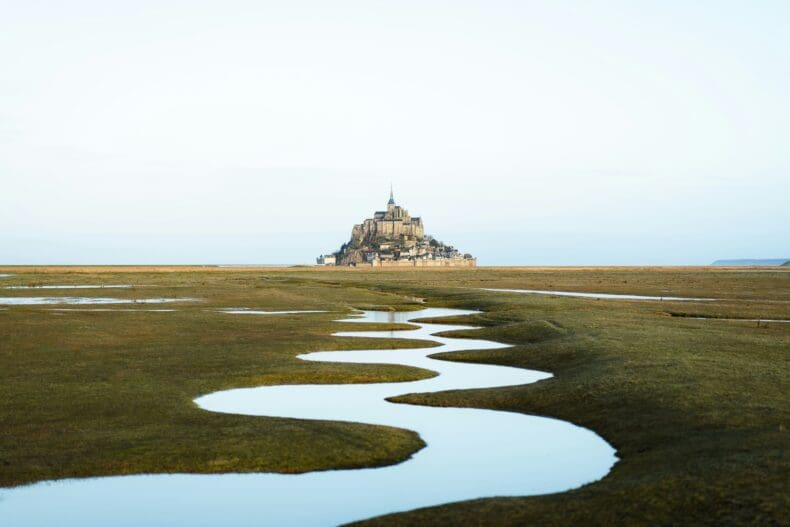
Le Mont-Saint-Michel is one of the most iconic sights in France and easily one of the highlights of any trip to Normandy. This famous tidal island is known for its dramatic changes in sea level, with the tide rising by as much as fifteen metres. The impressive Gothic abbey was built over several centuries, starting in the eleventh century and finally reaching its completed form in the sixteenth. Since 1979, Le Mont-Saint-Michel has been listed as a UNESCO World Heritage Site.
For families, one of the best things to do is walk along the medieval ramparts that wrap around the island. From here, you get wide views over the bay, and the landscape can look completely different depending on the tide. The narrow main street, Grande Rue, winds its way uphill between old stone buildings and half-timbered houses. Along the way, you pass souvenir shops, small restaurants and historic corners that make the walk feel like a journey back in time.
Although the island is not large, it is worth taking your time as you explore. The steep streets, staircases and viewpoints make the visit feel much more varied than a simple walk through a village. It can get busy, especially in the middle of the day, but there are still plenty of moments when you can step away from the main street and enjoy quieter views over the bay.
Visiting with a pushchair is not very practical because of the cobblestones, narrow lanes and many steep steps. If you are travelling with a baby or toddler, I would definitely recommend bringing a baby carrier instead. It makes exploring the upper parts of the island much easier and saves you from having to carry a pushchair up and down the stairs.
You cannot park directly next to Le Mont-Saint-Michel, so cars are left at the large parking area on the mainland. From there, free shuttle buses run towards the island, which is the easiest option if you are travelling with young children. You can also walk across the wooden footbridge, completed in 2014, and this is a lovely way to approach the island if the weather is good.
The walk gives you some of the best views of Le Mont-Saint-Michel as it slowly gets closer across the bay. For us, that first approach is part of what makes the visit feel so special. Whether you arrive by shuttle or on foot, seeing the abbey rising above the water and surrounding landscape is one of those views that is hard to forget.
#2 The Cliffs of Étretat & Côte d’Albâtre
The moment you see the dramatic white cliffs of Étretat, it is easy to understand why Claude Monet was so inspired by this coastline. The towering chalk cliffs of the Côte d’Albâtre were formed millions of years ago during the Cretaceous period and have been shaped ever since by wind, rain and the power of the sea. Over time, this constant erosion created the arches, steep cliff faces and unusual rock formations that make this part of Normandy so instantly recognisable.
→ Discover 10 things to do in Étretat
The coastal village of Étretat is especially famous for its three natural arches, including Falaise d’Aval and Falaise d’Amont. The cliffs rise up to around seventy metres above the sea, creating some of the most impressive coastal views in Normandy. From the beach below, the white rock faces look even more dramatic, especially when the light changes and brings out the different shapes in the cliffs.
For children, the wide pebble beach can be just as much fun as the famous views. There are countless smooth stones to look at, sort and stack into little piles while you enjoy the scenery around you. It is worth knowing, though, that taking pebbles away from the beach is strictly forbidden, so everything you find needs to stay where it belongs.
From the seafront, several well-marked paths and stairways lead up to the tops of the cliffs. The climb is definitely worth the effort, because the views over Étretat, the coastline and the natural arches become more impressive with every step. It is one of the best ways to appreciate the scale of the landscape and see just how dramatic this part of the Côte d’Albâtre really is.
The clifftop walks are especially beautiful on a clear day, when you can follow the coastline far into the distance. There are plenty of places where you can stop for a moment, take photos or simply enjoy the view before continuing along the path. The contrast between the bright white cliffs, green grass and deep blue sea makes this one of the most striking landscapes in Normandy.
If you are visiting with children, however, you do need to be careful at the top. There are no safety fences along many parts of the cliff edge, and the drops are very steep. As long as you keep children close, stay well back from the edge and take your time, the walk is a fantastic way to experience one of Normandy’s most beautiful and memorable coastal landscapes.


#3 The tidal island of Île de Tatihou
Imagine the sea slowly pulling away and revealing a walking route to an island just off the coast. That is exactly what makes Île de Tatihou such a fun place to visit with children. At low tide, you can walk across the exposed seabed all the way to the island, passing close to local oyster farms along the way. It turns the journey itself into part of the adventure, rather than simply being a way to get from one place to another.
If the tide is in, or little legs are getting tired, there is another option that children will probably find even more exciting. A unique amphibious vehicle travels between the mainland and the island, floating like a boat when the water is high and driving across the seabed on wheels when the tide is low. It is such an unusual way to travel that the crossing quickly becomes one of the highlights of the visit.
Once you arrive, there is plenty to explore. Île de Tatihou combines beautiful coastal scenery with an interesting mix of history and nature, making it easy to spend several hours here. The most striking landmark is the seventeenth-century Tour Vauban, built in 1694 as part of the island’s coastal defences. From the fortifications, you also get beautiful views across the sea and towards the Normandy coast.
Children can wander around the historic walls and towers while adults take in the views and learn a little more about the island’s past. The atmosphere feels peaceful and open, with plenty of space to explore at your own pace. It is one of those places where history feels much more enjoyable because you can experience it outdoors rather than only inside a museum.
The island also has a lovely botanical garden and a maritime museum, so there is more to see than the fortifications alone. This variety makes Île de Tatihou especially suitable for families, as you can easily switch between sightseeing, walking and simply enjoying the surroundings. Add in the unusual journey across the tidal flats, and the whole visit feels like a small adventure from beginning to end.
Before setting out on foot, always check the tide tables carefully to make sure the crossing is safe. You can also ask for up-to-date information at the local tourist office. We kept a close eye on the tide ourselves and started walking across as soon as the seabed became accessible. Our preschooler managed the entire walk there and back by herself, while our youngest travelled comfortably with dad or mom in the baby carrier.
→ Read how to visit Île de Tatihou and what to do there


#4 Les Jardins d’Étretat
High above the famous white cliffs of Étretat, you will find the striking Les Jardins d’Étretat. The gardens were first created in the early twentieth century by a well-known French actress, but in 2017 they were completely redesigned and turned into a unique open-air museum. Today, the site feels like a creative mix of landscape design, modern art and dramatic coastal scenery.
What makes the gardens so special is the way nature and contemporary art blend together. The bushes and hedges are trimmed into smooth, rounded shapes that seem to flow across the hillside, creating a landscape that feels almost dreamlike. As you follow the paths, new sculptures and installations keep appearing between the greenery, so there is always something unexpected waiting around the next corner.
One of the best-known artworks is the group of giant faces showing different human emotions. Their expressions are both playful and slightly unusual, and they stand out beautifully against the soft green shapes of the gardens. The mix of sculpture, open sky and sea views makes the whole place feel more like an outdoor art experience than a traditional garden.
For our children, visiting Les Jardins d’Étretat felt almost like a little treasure hunt. They loved following the winding paths, walking through hedge tunnels and discovering new artworks as they went. Because the garden is full of small surprises, it kept them interested in a way that many formal gardens probably would not.
Even if gardens or modern art are not usually at the top of your list, this is still a very enjoyable place to visit. The creative landscaping, unusual sculptures and beautiful setting above the cliffs make it one of the most original stops in Étretat. It is also a nice change of pace after walking along the coast and gives you a completely different view of the area.


#5 Ice cream and caramel in Isigny-sur-Mer
Isigny-sur-Mer is one of Normandy’s real foodie highlights and a great stop for families with a sweet tooth. It is also a place that feels especially personal to me, because I once spent two months here doing seasonal work. The town is famous for its excellent dairy products, thanks to the mineral-rich grasslands around the Bay of Veys. The local cooperative Isigny Sainte-Mère has been making high-quality butter and cream here since 1909, and these ingredients also form the basis of the soft, buttery caramels the area is known for.
Once you know the name, you will start spotting Isigny products everywhere in Normandy. Take a look in a French supermarket and there is a good chance you will find beurre d’Isigny in the butter section, while souvenir shops often sell tins and bags of caramels d’Isigny. These products are such a strong part of the local identity that they are almost impossible to miss once you know what to look for.
For children, a visit to the local caramel factory is a fun and slightly different activity. When I visited, the tour was given in French, but even if you do not understand the language, there is still plenty to see. Kids can watch how the sweets are made and follow the different steps of the production process. That alone makes the visit entertaining, even before you get to the best part: tasting the finished caramels.
The shop next to the factory is perfect for trying a few different flavours or taking some treats home. You will find everything from classic salted butter caramel to versions with hazelnut, apple and other flavours. It is an easy place to spend a little extra time, especially if everyone in the family enjoys sampling local food.
During the summer months, there is another reason to stop here: the soft-serve ice cream. Right next to the factory, you will find a shop where you can buy Isigny products and order freshly made ice cream at the same time. The ice cream is made with the famous local cream, which gives it an incredibly smooth, rich and creamy taste.
There are several flavours to choose from, but for me, simple vanilla is still the best. Because the cream itself has so much flavour, it does not really need anything fancy added to it. On a warm summer day, an ice cream here is one of those small stops that can easily become one of the tastiest memories of your trip.
Tip: I would not especially recommend the campsite in Isigny. If you are travelling by camper, there is a free camper stop close to the dairy factory, the town centre and the campsite. It has a lovely spot beside the water, clean toilets and a large playground, which makes it a very practical and family-friendly place to stay.


#6 Suisse Normande
Suisse Normande, or Swiss Normandy, is one of the greenest and most active parts of Normandy to explore with children. This hilly region lies south of Caen and is known for its rivers, forests, rocky viewpoints and peaceful countryside. Do not expect dramatic Alpine peaks, though. To be completely fair, we did not think it looked especially Swiss, but it is still a beautiful area with a very different feel from the coast.
For families, Suisse Normande is a great choice if you want to add a little more adventure to your Normandy trip. Kayaking on the River Orne is one of the most popular activities here and a lovely way to see the landscape from a different angle. As you paddle along, you pass green hills, steep rock faces and small villages tucked into the countryside. It feels active and adventurous without needing to be too difficult.
There is plenty more to do besides kayaking. Hiking, mountain biking and climbing are all popular in this part of Normandy, so it is easy to fill a full day outdoors. The landscape changes regularly, with wooded paths, river valleys and open viewpoints all close together. That variety makes the region especially enjoyable if your family likes being outside and does not want every day to revolve around museums or towns.
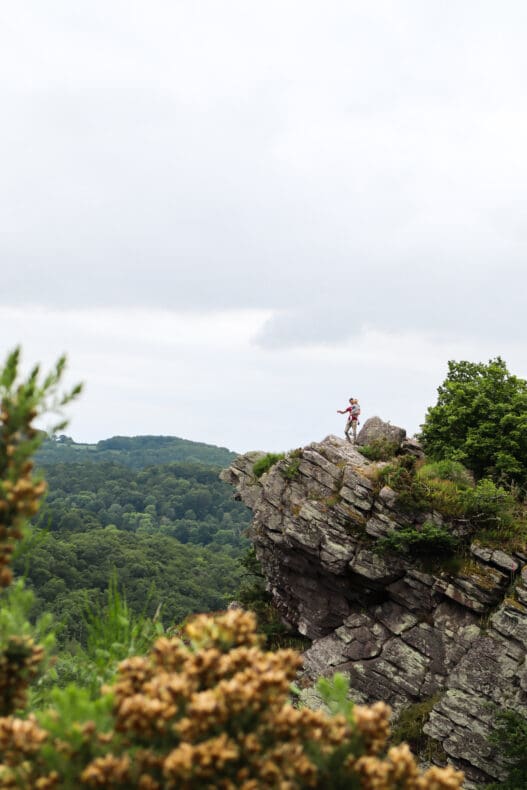
One of the best-known places in Suisse Normande is Roche d’Oëtre. From this striking rock formation, you get a beautiful view over the deep Rouvre Valley below. Several walking trails start in the area, including shorter routes that work well with children. It is a great place to combine a scenic viewpoint with a family walk and perhaps a picnic along the way.
Not far from Roche d’Oëtre is the charming village of Clécy, with half-timbered houses and terraces beside the water. It is a lovely place to slow down after an active morning, have something to eat or simply enjoy the riverside setting. The combination of outdoor activities and relaxed villages gives this part of Normandy a very easygoing atmosphere.
#7 Deauville Beach
Deauville is one of the best-known seaside towns in Normandy and has a very different feel from many of the smaller coastal villages nearby. Located along the Côte Fleurie, or Flower Coast, it is famous for its wide sandy beach, colourful parasols and elegant wooden promenade. The town has a polished and slightly glamorous atmosphere, but it still works very well as a family destination. There is plenty of space, the beach is easy to reach and you can combine a seaside day with a stroll through town.
For families, the beach is easily the biggest attraction. At low tide, the sand stretches out for an impressive distance, creating a huge playground for children. They can spend hours running around, searching for shells, digging in the sand and building castles without feeling crowded. It is the kind of beach where you can settle in for a few hours and keep things wonderfully simple.
Running along the seafront is the famous Les Planches promenade, which dates back to 1923. This long wooden boardwalk has become one of Deauville’s most recognisable sights and is a lovely place for a relaxed walk beside the sea. Rows of beach cabins line the promenade, while elegant hotels and villas rise behind them. Even if you are not spending the whole day on the sand, a walk along Les Planches is definitely part of the Deauville experience.
Just behind the promenade, you will find lively shopping streets, ice cream shops, cafés and plenty of restaurants. It is easy to leave the beach for lunch, grab an ice cream or simply wander through the centre for a while. One of the things that stands out most is the impressive collection of early twentieth-century villas, many with beautiful decorative details. These grand houses give Deauville a much more elegant and luxurious feel than many other seaside towns in Normandy.
That mix of beach, architecture and town life is what makes Deauville such an enjoyable stop. You can spend the morning playing on the sand, walk along the promenade at lunchtime and then explore the streets and villas in the afternoon. For children, there is enough freedom and space to keep the day relaxed, while adults still have plenty to look at and enjoy. It is a good option if you want a beach day that offers a little more than just sea and sand.
Tip: parking in Deauville is paid in many areas, so it is worth checking your options before driving into the busiest part of town. We eventually found a free parking spot near the harbour with our camper. From there, it was an easy walk to both the town centre and the beach. For us, it worked perfectly and saved us the hassle of searching for paid parking closer to the seafront.

#8 The coastal town of Honfleur
Honfleur is without doubt one of the most charming towns in Normandy to visit with children. This colourful harbour town sits at the mouth of the Seine and is known for its half-timbered houses, narrow streets and lively waterfront. Around the old harbour, Le Vieux Bassin, the tall buildings and small boats create a scene that feels almost timeless. It is one of those places where simply walking around is already part of the experience.
The harbour is lined with terraces, crêperies and small shops, so there is always something to look at or somewhere to stop. Children can watch the fishing boats coming and going, while the colourful façades reflected in the water make the whole area especially photogenic. Even though Honfleur is popular with visitors, we still found it full of atmosphere and character. It never felt like a place you only visit for the famous view.
From the harbour, take some time to wander through Rue de la Prison and Rue des Petites Boucheries. These narrow streets are among the prettiest in town and give Honfleur much of its old-world charm. The buildings sit close together, and every turn seems to reveal another interesting doorway, small shop or historic detail. Early in the morning or later in the evening, the streets are noticeably quieter and even more enjoyable to explore.
One of the most unusual sights in town is the Église Sainte-Catherine. This remarkable wooden church was built by shipbuilders, and the interior is shaped like the upside-down hull of a boat. That makes it feel completely different from the stone churches you see elsewhere in Normandy. It is a simple detail, but it gives the building a very special atmosphere and makes the visit easy to remember.
What we liked most about Honfleur is that you do not need a packed schedule to enjoy it. You can stroll around the harbour, stop for a crêpe, wander through the old streets and then sit down by the water for a while. That relaxed pace works especially well with children, because there is always something to see without needing to rush from one attraction to the next.
Tip: if you have a little extra time, a trip from Honfleur to Pont-Audemer is also worth considering. This charming town is sometimes called the Venice of Normandy because of its canals and waterside streets. It is a lovely extra stop and gives you another side of the region beyond the coast.

#9 D-Day beaches & memorials
The D-Day beaches are among the most important historic places to visit in Normandy. On 6 June 1944, the largest amphibious invasion in history began along this stretch of coast, marking a major turning point in the liberation of Western Europe. The best-known landing beaches are Omaha Beach, Utah Beach, Gold Beach, Juno Beach and Sword Beach, and each one tells a slightly different part of the story. For us, Omaha Beach was especially moving because of its enormous open landscape and the quiet that now surrounds it.
Near Omaha Beach, you will also find the American Cemetery, where thousands of white crosses stand in long, perfectly arranged rows overlooking the sea. It is an incredibly peaceful place, but also one that leaves a strong impression once you think about the history behind it. Even a short visit adds much more meaning to the surrounding beaches and helps put the events of D-Day into perspective.
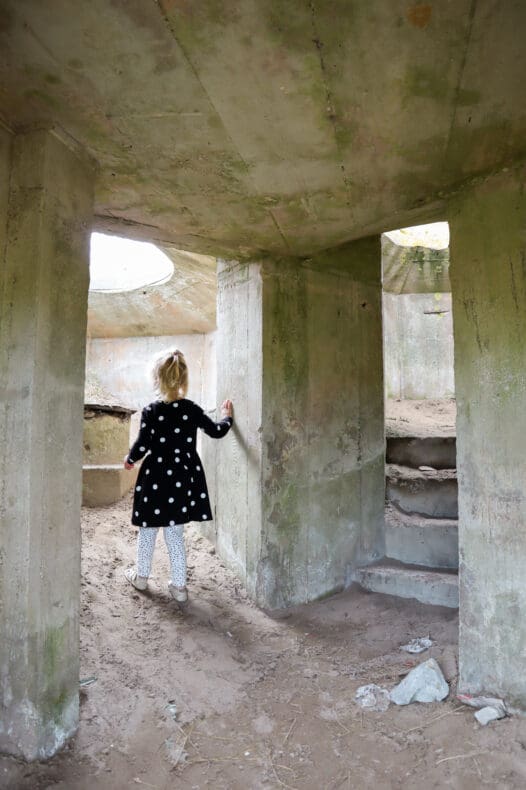
Older children will probably get the most out of the bunkers, museums and military remains along the coast. Our preschooler and toddler were still too young to really understand what happened here, but we still felt these places were too important to leave out of our trip. Many museums are designed in an accessible and interactive way, with films, objects and recreated scenes that make the history easier to follow.
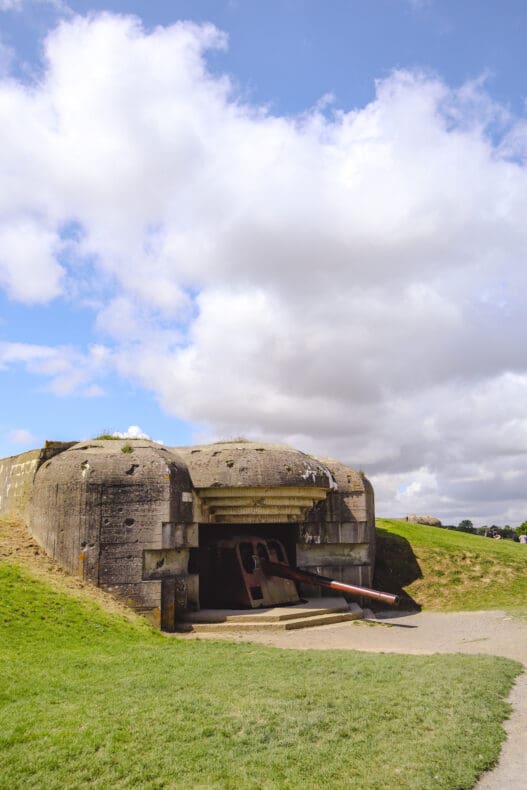
There is also plenty to see outside the museums. Along the coast, you can visit old bunkers, tanks, gun positions and other remains of the Atlantic Wall. At Pointe du Hoc, for example, deep bomb craters are still visible across the clifftop, together with concrete bunkers and defensive structures. Walking through the site makes the history feel much more real than simply reading about it.
Sainte-Mère-Église is another interesting stop during a family trip through Normandy. The village is famous for the story of American paratrooper John Steele, whose parachute became caught on the church tower during the D-Day landings. A parachute still hangs from the church today as a reminder of what happened, and it is the kind of story that older children can often picture very clearly.
Even with young children, we found it worthwhile to include a few D-Day sites in our Normandy itinerary. They add an important historical layer to the trip and offer a very different experience from the beaches, villages and family attractions elsewhere in the region. Visiting just a few of these places already gives you a much better sense of how much history is still present along the Normandy coast.
#10 Granville
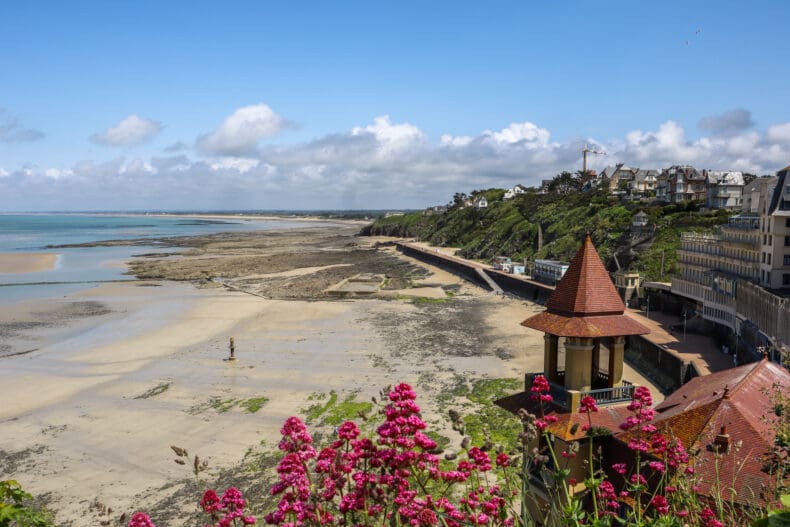
Granville was one of the biggest surprises of our road trip through Normandy. This lively harbour town on the west coast combines sandy beaches, beautiful sea views and a historic upper town, all within a fairly compact area. We especially enjoyed exploring the old Haute-Ville, which sits above the harbour and feels a little quieter and more atmospheric than the lower part of town. It is the kind of place where you can easily spend a few hours just wandering around.
The upper town is surrounded by old fifteenth-century walls, and inside you will find narrow streets, historic houses and small squares lined with cafés and terraces. There is no need for a strict route here, as part of the charm is simply following the streets and seeing where they lead. From several points along the walls, you get beautiful views over the sea and towards the Bay of Mont-Saint-Michel. Those viewpoints make the walk through the old town even more enjoyable.
Granville is also a lovely stop with children thanks to its beach. At Plage du Plat Gousset, you will find a wide stretch of sand and a seawater swimming pool that stays filled even when the tide goes out. That makes it an easy place for children to play while adults enjoy the coastal setting. The beach feels relaxed and spacious, especially when the tide is low.
The promenade running beside the beach is also perfect for a slow family walk. You can easily combine time by the sea with a visit to the harbour or a stroll through the old town, which makes Granville very easy to explore without too much planning. We liked that you can switch between sightseeing and relaxing without having to drive from one place to another.
One of the best-known places in Granville is Pointe du Roc, a rocky headland with wide views over the coastline and the open sea. This is also where you will find the Phare du Cap Lihou, the local lighthouse, which adds even more character to the landscape. The area feels open and peaceful, making it a great place to stop for a while and enjoy the scenery.
For us, Granville was a very pleasant mix of history, coast and family-friendly stops. It may not be as famous as some other places in Normandy, but that is exactly part of its charm. If you are travelling along the western side of the region, it is definitely worth adding to your route.


#11 Vélorail near Étretat
The Vélorail near Étretat is one of the most fun family activities in Normandy, especially if you are looking for something a little different from beaches, museums and historic towns. You ride a special rail bike along an old railway line through the countryside, which makes the experience feel part bike ride, part attraction. It is simple, active and easy to enjoy together as a family.
The route takes you through the Pays de Caux, passing fields, small villages and stretches of woodland along the way. Because the railway line is almost completely flat, the ride never feels especially hard, so you can take your time and enjoy the scenery. There is no need to rush, and that relaxed pace is part of what makes the activity so enjoyable.
For children, the Vélorail can feel a little like a ride at an amusement park. Passing an old station or reaching a railway crossing suddenly makes the journey feel even more exciting. Younger children can simply sit and enjoy the ride while the adults or older children do the pedalling, which means everyone can take part without needing the same level of energy.
The location is another big advantage, as the Vélorail is close to Étretat. That makes it very easy to combine with the famous chalk cliffs, so you can spend part of the day enjoying the dramatic coastline and the rest doing something active. For families, that mix of scenery and fun works especially well.
#12 Cité de la Mer
Cité de la Mer is one of the best museums in Normandy to visit with children. This maritime museum in Cherbourg focuses on the sea, deep-sea exploration and the history of ocean travel, so there is plenty of variety. The absolute highlight, though, is Le Redoutable, a real French nuclear submarine that visitors can walk through from one end to the other.
Inside the submarine, you move through narrow corridors, tiny sleeping cabins and technical spaces packed with buttons, pipes and gauges. It gives you a very clear idea of just how cramped life on board must have been. For children, it feels like stepping into a completely different world, while adults will probably be just as interested in the technology and scale of the vessel.
The submarine is only one part of the museum. There are also exhibitions about deep-sea research, underwater exploration and the history of travelling across the Atlantic. That makes the visit feel varied and keeps things interesting, even if you spend several hours inside.
The building itself is also worth seeing. Cité de la Mer is housed in Cherbourg’s old transatlantic terminal, where huge ocean liners once departed for America. The hall is enormous, and the scale of the space is impressive before you even begin looking at the exhibits.
For us, Cité de la Mer works especially well because there is something for everyone. Children had plenty to explore, while adults could enjoy the history, engineering and maritime stories behind it all. If you are visiting Cherbourg, it is definitely worth setting aside a few hours for this museum.