
Puglia is one of Italy’s most breathtaking and unexpectedly captivating regions. While it may not be as famous as Tuscany or the Amalfi Coast, it offers everything you could dream of for an unforgettable getaway. This sun-drenched gem is a treasure trove of charming villages, fascinating historical sites, and UNESCO-listed wonders. From the fairytale-like trulli houses of Alberobello to the elegant baroque architecture of Lecce, Puglia is a place where history, culture, and natural beauty come together in a way that feels both timeless and uniquely its own.
Strolling through its narrow, sunlit alleyways, you’ll feel the echoes of centuries past. You can taste the richness of freshly pressed olive oil from ancient groves, lose yourself in the warmth of welcoming locals, and soak up the serenity of unspoiled beaches lapped by crystal-clear waters. Puglia’s magic lies in its authenticity—a region where dramatic coastal cliffs, rolling olive-dotted hills, and traditional whitewashed villages remain blissfully untouched by mass tourism.
In this blog, we’ll take you on a journey through Puglia’s most stunning destinations, uncovering the must-see sights and hidden gems that make this region so special. Discover why Puglia deserves a spot on your travel bucket list, and let yourself be inspired by the beauty, history, and irresistible charm of Italy’s best-kept secret.
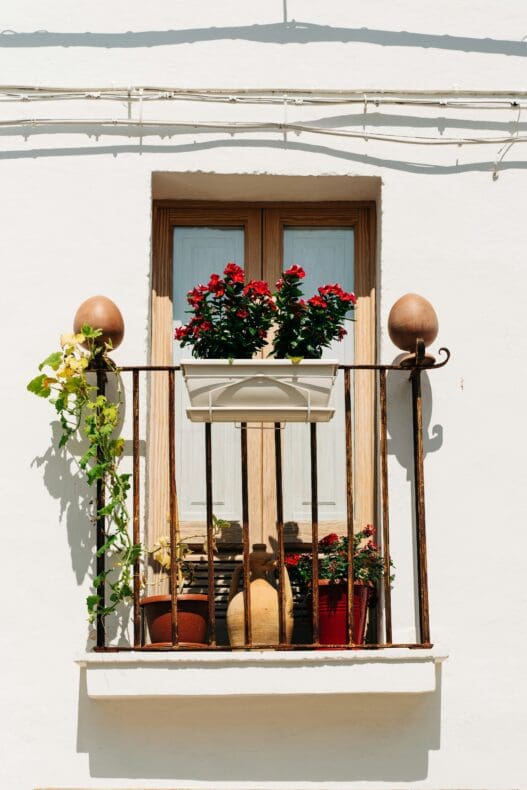


Where is Puglia in Italy?
Tucked away in southeastern Italy, Puglia forms the iconic “heel” of the country’s boot-shaped peninsula. Flanked by the sparkling Adriatic Sea to the east and the tranquil Ionian Sea to the south, this coastal gem is blessed with breathtaking seascapes and an enviable Mediterranean climate. To the north, it borders the lesser-known region of Molise, while Campania and Basilicata lie to the west. Its prime location has shaped Puglia’s history for centuries, making it a key center for trade and a crucial stronghold for defense.
At the heart of the region is Bari, Puglia’s lively capital and a historic port city that has long been a vital link between Italy and the rest of the Mediterranean. Even today, ferries from Bari connect travelers to Albania and Greece, reflecting its enduring role as a cultural and commercial gateway.
Covering approximately 19,000 square kilometers, Puglia is one of Italy’s largest regions, yet it remains refreshingly unspoiled. Its coastline stretches for over 800 kilometers—one of the longest in the country—offering everything from dramatic cliffs and hidden coves to golden sandy beaches. With its picture-perfect seaside villages, sun-soaked landscapes, and a pace of life that invites you to slow down and savor the moment, it’s no wonder that Puglia is a favorite summer escape, not just for international visitors but also for Italians seeking an authentic slice of la dolce vita.
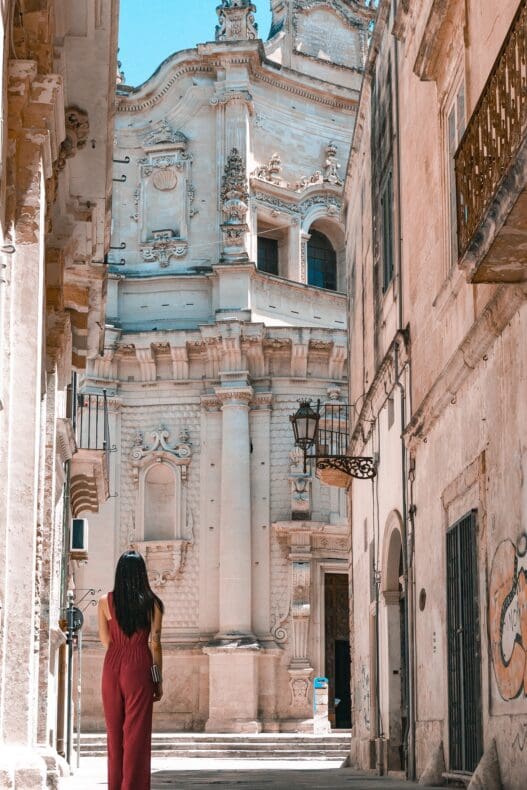
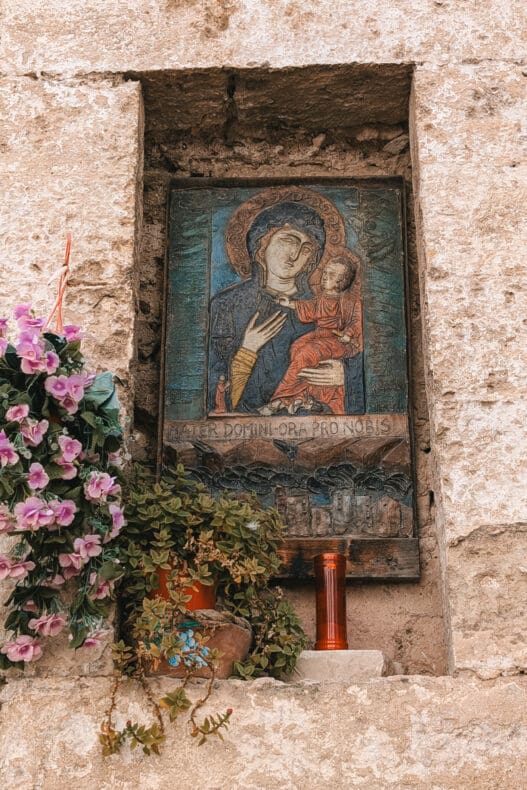

What is Puglia Known for?
Puglia is a land of striking contrasts, where ancient traditions blend seamlessly with breathtaking landscapes. Renowned for its distinctive architecture, historic landmarks, stunning coastline, and exceptional cuisine, this sun-drenched region in Italy’s south offers an enchanting escape in every season.
One of Puglia’s most recognizable sights is the trulli—charming whitewashed stone houses crowned with conical roofs, scattered throughout the idyllic Valle d’Itria. Now a UNESCO World Heritage site, the village of Alberobello is the heart of this architectural marvel. These centuries-old dwellings were originally built without cement, a clever technique believed to have allowed early residents to dismantle them quickly and avoid property taxes. Today, they stand as a symbol of the region’s ingenuity and deep-rooted heritage.
The region’s spectacular coastline, stretching over 800 kilometers, is another of its greatest treasures. Puglia’s shores range from rugged cliffs plunging into the turquoise Adriatic to golden sandy beaches lapped by gentle waves. The dramatic cliffs of Polignano a Mare offer breathtaking sea views, while further south, the seaside town of Monopoli charms visitors with its historic center and secluded coves. To the north, the wild beauty of the Gargano Peninsula and the pristine Tremiti Islands captivate those seeking unspoiled nature and crystal-clear waters.
Puglia’s culinary traditions are just as rich as its landscapes. As Italy’s largest producer of olive oil, the region boasts ancient groves that have flourished since Roman times. Its cuisine is a celebration of simplicity and bold flavors, featuring handmade orecchiette pasta, creamy burrata, and freshly grilled seafood. Puglia is also home to some of Italy’s most robust wines, including the deep, velvety reds of Primitivo and Negroamaro, which perfectly complement the rustic yet refined local dishes.
Puglia’s rich history comes to life in its cities and landmarks, where every street and monument tells a story of the region’s fascinating past. In the heart of Bari, the atmospheric old town is home to the Basilica of Saint Nicholas, an important pilgrimage site that has attracted visitors for centuries. Further south, Lecce—often called the “Florence of the South”—dazzles with its ornate Baroque architecture, where intricately carved facades and grand palaces showcase the city’s artistic heritage. Another of Puglia’s architectural gems is Castel del Monte, an enigmatic 13th-century fortress built by Emperor Frederick II. With its striking octagonal shape and mysterious symbolism, this UNESCO World Heritage site continues to intrigue historians and visitors alike.
Beyond its historical wonders, Puglia’s natural landscapes are equally breathtaking. Vast olive groves stretch as far as the eye can see, rolling hills create a patchwork of green and gold, and dramatic limestone cliffs plunge into the shimmering blue sea. In the north, the Gargano Peninsula offers a stunning contrast of dense forests, rugged mountain peaks, and hiking trails that lead to spectacular panoramic views. Meanwhile, the Valle d’Itria, a lush and fertile region, is renowned not only for its ancient olive trees and sprawling vineyards but also for its vibrant orchards and vegetable farms, which play a vital role in Puglia’s celebrated culinary traditions.


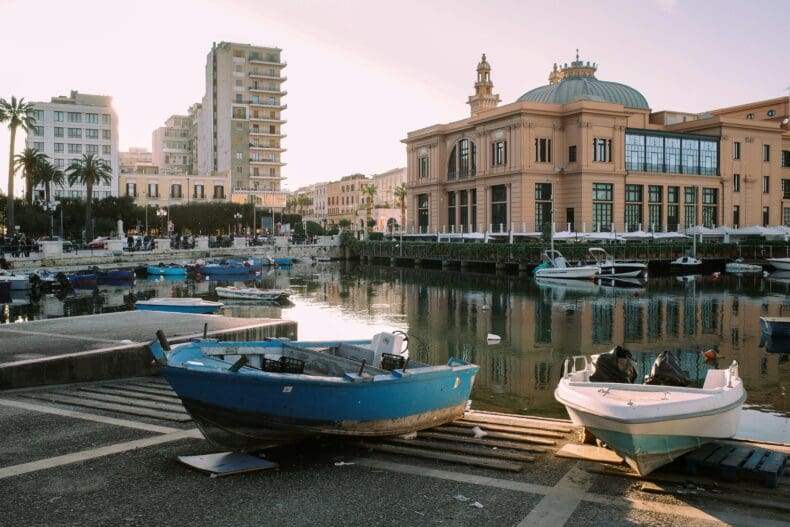
Tourist Map of Puglia
[googlemaps https://www.google.com/maps/d/u/1/embed?mid=1NnPGSFDGg-BgnyIZBlOAkBbY6uWEL3c&ehbc=2E312F&w=790&h=480]Top 10 Places to Visit in Puglia
#1 Alberobello
Alberobello is a captivating town in Puglia, world-renowned for its trulli—charming whitewashed houses crowned with distinctive conical stone roofs. This architectural style emerged in the 15th century when trulli were built without cement, allowing them to be dismantled quickly if necessary. Originally serving as humble shelters and storage spaces for farmers, these remarkable structures have since evolved into an iconic symbol of Puglia. Their historical and cultural significance was officially recognized in 1996 when Alberobello was designated a UNESCO World Heritage site.
The town’s most enchanting trulli can be found in the districts of Rione Monti and Aia Piccola, where hundreds of these traditional dwellings create a magical, almost storybook-like setting. Rione Monti, in particular, is a picture-perfect quarter and the lively center of Alberobello’s tourism scene.
Among the town’s most fascinating landmarks is the Chiesa di Sant’Antonio, a one-of-a-kind church built entirely in the trulli style. Another highlight is the Trullo Siamese, a rare double trullo with an intriguing backstory. As visitors explore Alberobello, they can stroll along its most famous streets, including Via Monte Sabotino, Via Monte San Michele, Via Monte San Marco, and Via Monte Nero. These charming lanes lead uphill from Largo Martellotta, offering beautiful vantage points and an unforgettable glimpse into the town’s unique heritage.
Where to stay : The most memorable way to spend the night in Alberobello is, of course, by staying in one of its iconic trulli—those charming, historic stone houses with conical roofs that the town is famous for. For a truly authentic experience, consider Trulli Holiday Albergo Diffuso or Trulli Antichi Mestieri, where you can soak up the local atmosphere and feel like you’ve stepped back in time. If you’re looking for something a bit more modern and stylish, the beautifully designed and intimate San Marco Boutique Rooms offers a cozy and elegant alternative.


#2 Lecce
Lecce is often called the “Florence of the South” for its breathtaking Baroque architecture. The city flourished in the 17th century, when it was transformed by the construction of grand churches and palaces in the Baroque style. One of the finest examples of this architectural splendor is the Basilica di Santa Croce, with its intricate façade, brimming with decorative details and rich symbolism. At the heart of Lecce lies the Piazza del Duomo, a stunning square framed by the cathedral, the episcopal palace, and a towering bell tower. Strolling through Lecce feels like wandering through an open-air museum of Baroque masterpieces.
Among the most remarkable sights of Lecce are its ancient Roman theaters. The first-century amphitheater, located right in the heart of the city, once drew thousands of spectators for gladiatorial battles and grand public spectacles. Just a short walk away lies the Roman theater, where theatrical performances and musical events once entertained the citizens of ancient Lupiae. These iconic ruins are just a few highlights of Lecce’s rich history and architectural splendor, which also includes ornate Baroque churches, elegant palaces, and sunlit piazzas that reflect the city’s unique southern charm and cultural heritage.
Lecce is also famous for its papier-mâché craftsmanship, an art form that goes far beyond the simple creations we might associate with school projects. In fact, papier-mâché was once used as a lightweight and cost-effective substitute for marble in church decorations. This centuries-old tradition continues to thrive in Lecce, with stunningly crafted pieces scattered throughout the city, showcasing the skill and creativity that define the region’s artistic heritage.
Where to Stay: If you’re dreaming of a luxurious stay in Lecce, Pollicastro Boutique Hotel is a perfect choice. This beautiful hotel offers a refined atmosphere and a truly memorable experience. The city has plenty more of these hidden gems—elegant places full of character—though they often come with a higher price tag. Fortunately, Lecce also offers fantastic options for travelers on a smaller budget. Arryvo Hotel is a great example, combining style and affordability. Or go for one of the charming bed and breakfasts, such as Dimora San Giuseppe or Dimi House, where you can enjoy a warm welcome and a cozy stay without breaking the bank.

#3 Polignano a Mare
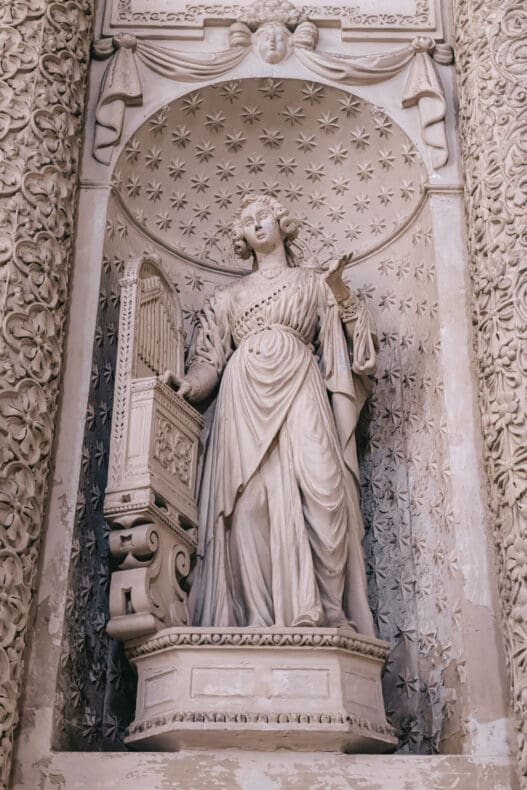
Polignano a Mare is a breathtaking coastal town dramatically perched on steep limestone cliffs. It’s no wonder this stunning location hosts the Red Bull Cliff Diving Championships. The town’s historic center seems to emerge directly from the rocks, offering a labyrinth of narrow streets and passageways, lined with whitewashed houses, cobbled lanes, and plenty of scenic viewpoints that look out over the shimmering Adriatic Sea.
One of the most iconic and striking sights—and undoubtedly one of the most beautiful places in Polignano a Mare is Lama Monachile beach, a small cove tucked between towering cliffs. Visitors flock here for its crystal-clear waters and the unique, almost magical atmosphere created by its dramatic surroundings. While some may not find the beach itself particularly inviting for lounging, the setting is undeniably spectacular. From above, whether you’re standing on the old bridge or enjoying the view from one of the many panoramic viewpoints around town, the scene is absolutely mesmerizing.
Another popular way to experience Polignano a Mare is by taking a boat tour along its rugged coastline. The cliffs surrounding the town are dotted with natural caves and arches, carved by the relentless sea over centuries. While you can catch glimpses of these incredible formations from the town’s viewpoints, it’s only from the water that you can fully appreciate their grandeur and beauty.
A fun little fact: Polignano a Mare is also the birthplace of Domenico Modugno, the legendary singer behind the famous song “Volare.” His name may not be instantly familiar to everyone, but his timeless song is a staple of Italian music. In the town, his statue has become a beloved photo spot, where you’re sure to find many Italian tourists snapping selfies in his honor.
Where to Stay: For a comfortable stay with breathtaking sea views and a perfect location, the elegant Covo dei Saraceni is one of the top choices in town. It’s ideal if you’re looking for a bit of luxury right by the water. If you prefer something more intimate and full of local charm, the delightful B&B Relais Del Senatore is a wonderful alternative. Here, you’ll enjoy a warm, personal welcome and a truly authentic experience that reflects the spirit of the region.

#4 Matera
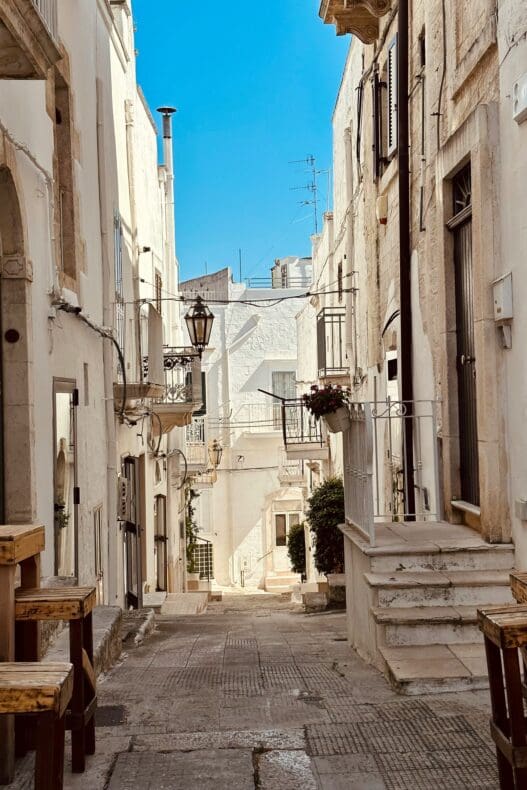
Matera, although technically part of the Basilicata region, is often visited alongside Puglia. As one of the oldest continuously inhabited cities in the world, Matera’s most iconic feature is undoubtedly the Sassi—ancient cave dwellings carved into the limestone cliffs. These unique homes have been inhabited for thousands of years, and their striking beauty has earned the city worldwide recognition. The dwellings stretch across two charming neighborhoods, nestled on the steep slopes of the rocks, with a raised plateau at the center where the majestic Matera Cathedral proudly stands. The view is absolutely breathtaking, and thankfully, there are plenty of viewpoints throughout the city to take it all in.
For much of the 20th century, many of Matera’s residents lived in these caves, enduring poor conditions that eventually led to a large-scale evacuation. The Sassi, once a symbol of hardship, are now one of the most famous and visited landmarks in Italy. After a restoration effort in the 1990s, the cave dwellings were repurposed into a vibrant space filled with hotels, restaurants, and cultural venues, breathing new life into the area.
Designated as a UNESCO World Heritage site in 1993, Matera was named the European Capital of Culture in 2019, further cementing its place in the cultural spotlight. Among the most unforgettable sights of Matera are the ancient Sassi districts, a network of cave dwellings carved into the limestone cliffs. Beyond the Sassi, the city also boasts an impressive array of rock churches, many adorned with stunning frescoes. Together with the cathedral, the dramatic ravine that runs alongside the city, and countless hidden corners, these landmarks create a captivating tapestry of history and culture that makes Matera one of Italy’s most fascinating destinations.
Where to Stay: Matera has no shortage of places to stay, but the most unforgettable options are those nestled within its extraordinary historic setting. For a stay that truly captures the spirit of the city, consider L’Hotel In Pietra, Il Belvedere, or Hotel San Giorgio. Each of these charming hotels offers a unique mix of comfort, character, and atmosphere, all set against the backdrop of Matera’s ancient stone dwellings and timeless architecture. It’s the perfect way to immerse yourself in the magic of this one-of-a-kind destination.
#5 Monopoli
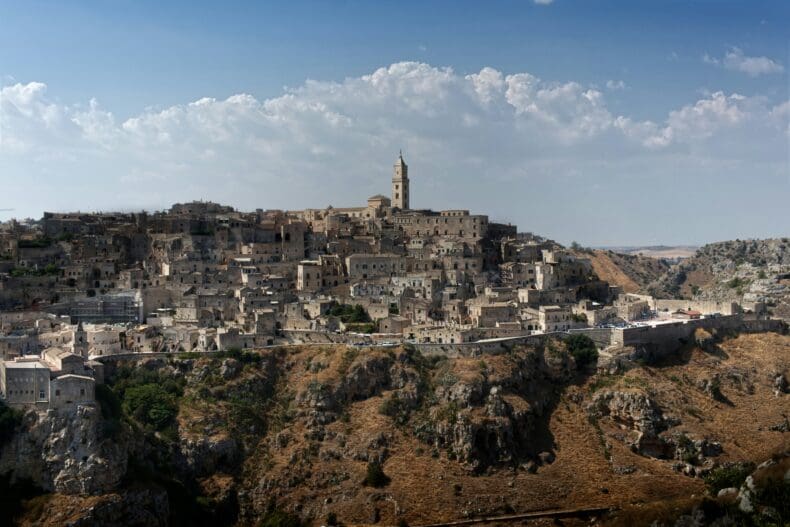
Monopoli is a charming harbor town with a captivating historic center, where the past is alive in its streets and buildings. The town’s history has been shaped by a blend of Byzantine, Norman, and Venetian influences, which are reflected in its varied and fascinating architecture. At the heart of Monopoli, you’ll find a maze of narrow streets and bustling squares, each offering a glimpse of the sparkling sea and framed by centuries-old churches. Among the highlights of Monopoli is the Cathedral of Maria Santissima della Madia, an awe-inspiring structure with a stunning Baroque interior that leaves a lasting impression.
The town’s old harbor continues to be an active and picturesque landmark. Each day, fishermen unload their fresh catch here, which you’ll find proudly displayed on the menus of the town’s restaurants. The harbor is also home to Monopoli’s historic castle, a striking piece of the town’s heritage. During our visit in December, we were treated to a mesmerizing light show projected onto the castle, and we had the unique opportunity to explore its interior in the evening, where we marveled at the beautiful Christmas decorations.
Monopoli is also known for its inviting beaches with crystal-clear waters, like Cala Porta Vecchia, which is conveniently located just steps from the historic center. Though these beaches are popular with locals in the summer, we found them a bit on the smaller side. For those seeking more space and tranquility, heading south of Monopoli reveals larger, quieter beaches—ideal for a peaceful retreat by the sea.
Where to Stay: For a stay in a prime location with breathtaking sea views, Hotel Don Ferrante is hard to beat. This elegant hotel blends coastal charm with refined comfort, making it a standout choice. If you’re after something smaller and more personal, B&B A C-Caste is a lovely alternative, full of warmth, character, and a welcoming local feel. For a truly memorable experience, consider staying in a traditional masseria, a historic farmhouse thoughtfully transformed into boutique accommodation. Masseria Spina and Masseria Garrappa are both fantastic picks, where authentic architecture meets modern luxury in a setting that perfectly captures the spirit of the region.

#6 Ostuni
Ostuni, often called the “White City,” is a picturesque town nestled on a hill in the Valle d’Itria, just eight kilometers from the Adriatic Sea. The name comes from the whitewashed houses that grace its historic center, a tradition that dates back to the Middle Ages. It’s believed that this practice was linked to the plague outbreaks at the time, as people thought the lime helped prevent the spread of disease.
The town is a charming maze of narrow streets, stairways, and arches, creating a delightful labyrinth that’s perfect for wandering and photography. From the higher points, you’re treated to sweeping views of the lush olive groves in the Valle d’Itria and the shimmering sea beyond.
One of Ostuni’s most impressive landmarks is its 15th-century Gothic cathedral, whose striking façade and magnificent rose window catch the eye as you approach. Perched at the highest point of the town, the cathedral towers above the sea of white houses, offering panoramic views of the surrounding area.
Beyond the town, the countryside is dotted with traditional masserie—fortified farmhouses that have been beautifully transformed into cozy restaurants or accommodations. Ostuni is the perfect base for exploring these hidden gems, and while you’re in the area, don’t miss the chance to visit other enchanting towns in the Valle d’Itria, like the world-famous Alberobello, as well as Cisternino and Locorotondo.
Where to Stay: If you’re planning to stay in Ostuni, Hotel La Terra and Il Sogno delle Benedettine are top choices—and quite possibly the most beautiful hotels in the entire Valle d’Itria. These stunning properties offer the perfect mix of elegance, comfort, and local charm, making them ideal for a truly special stay. That said, Ostuni is also home to a number of delightful B&Bs that are just as inviting. Vico Bianco Raro and Casa d’Autore both stand out for their thoughtful design, welcoming atmosphere, and the kind of warm hospitality that makes your visit unforgettable.
#7 Bari
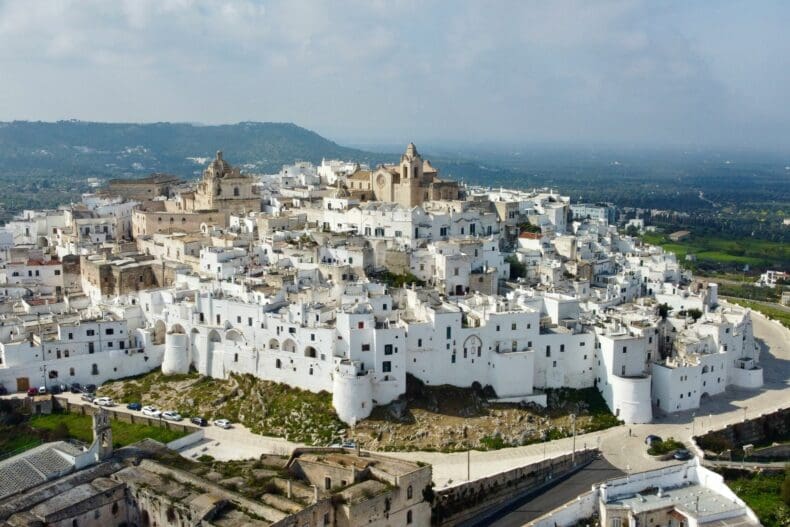
Bari, the vibrant capital of Puglia, is one of the region’s largest cities. While the modern city center dazzles with its lively shopping streets, just a short stroll away lies the charming and historic old town, Bari Vecchia. This maze of narrow, winding streets is still home to many locals, who hang their laundry above the cobblestones and craft traditional orecchiette pasta in their doorways, offering a glimpse into everyday life in this timeless neighborhood.
One of Bari’s standout landmarks is the Basilica of Saint Nicholas, a stunning 11th-century church that houses the revered relics of Saint Nicholas. Pilgrims from all over the world flock to this sacred site. Although Saint Nicholas is known by many names around the globe, he’s perhaps best recognized by his alter ego, Santa Claus. Another well-known place to see in Bari is the Castello Normanno-Svevo, a striking 12th-century castle that was later reinforced by Frederick II into the formidable fortress you see today.
On the modern side, Bari offers lively neighborhoods surrounding Corso Vittorio Emanuele II, where a vibrant shopping scene awaits. The city’s wide Lungomare promenade stretches along the Adriatic Sea, providing beautiful coastal views. Bari is also home to a bustling port, where ferries depart regularly for popular destinations such as Greece and Albania, connecting the city to the wider Mediterranean world.
Where to Stay: For a stylish getaway in the heart of the old town, the trendy Bra Hotel is a fantastic choice. With its modern design, thoughtful details, and unbeatable location, it’s perfect for travelers who appreciate a contemporary touch in a historic setting. If you prefer something smaller and more personal, the warm and inviting B&B Murex is a wonderful alternative. Here, you’ll find a cozy atmosphere, plenty of charm, and that relaxed local feel that makes your stay all the more special.
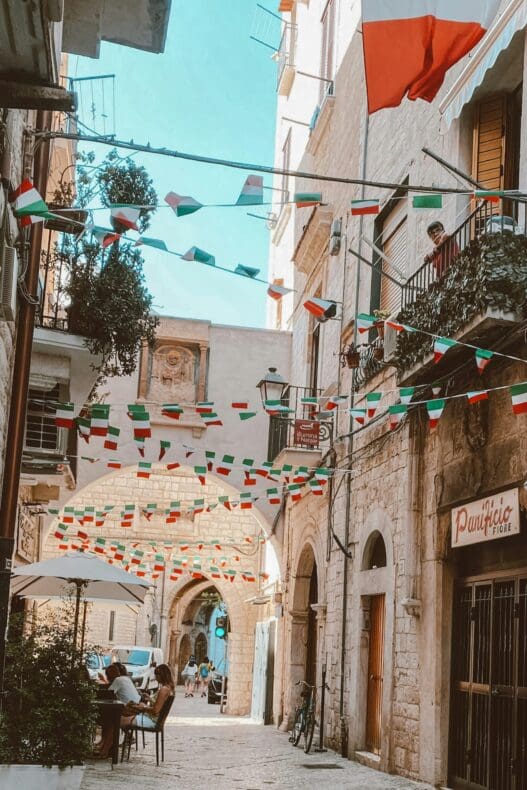

#8 Locorotondo
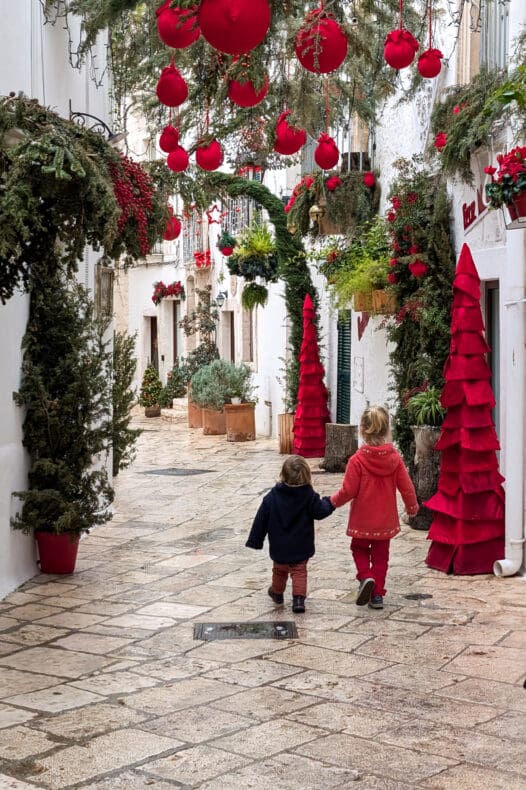
Locorotondo is celebrated as one of Puglia’s most picturesque villages, nestled in the heart of the Valle d’Itria. Its name, which translates to “round place,” perfectly describes the circular layout of its charming historic center. The village is a dream for photographers, with streets paved in limestone tiles and flanked by whitewashed houses, creating a scene so beautiful it has earned a spot among Italy’s most stunning villages.
One of Locorotondo’s most distinctive features is its “cummerse”—rectangular houses with sloping roofs, a unique architectural style found only here. While the village may not boast monumental landmarks or famous attractions, it’s the quiet charm of its streets that draws visitors from all over the world.
From the outskirts of the village, you’ll be treated to sweeping views of the Valle d’Itria, with its iconic trulli and endless vineyards stretching out below. The local wines, especially the white Locorotondo DOC, are renowned, making a wine-tasting experience in the area a must.
Fun fact: Locorotondo is especially popular in December. While it’s a peaceful and tranquil destination for most of the year, it becomes a festive wonderland during the holiday season. The village comes alive with Christmas markets, twinkling lights, and decorations, filling the air with holiday cheer. Just be aware that it can get quite crowded during this time, as visitors flock to experience the festive magic.
Where to Stay: Because places to stay in Locorotondo are limited, it’s a smart idea to book early—especially if you’re visiting during the busier months. For a truly memorable stay, 1783 Dimora d’Epoca is a beautiful option, offering elegant charm in a lovingly preserved historic building. Another great choice is the authentic Albergo Diffuso Sotto le Cummerse, where you can enjoy the unique experience of sleeping in traditional local houses that have been carefully restored to provide modern comfort while preserving their original character.
#9 Giovinazzo
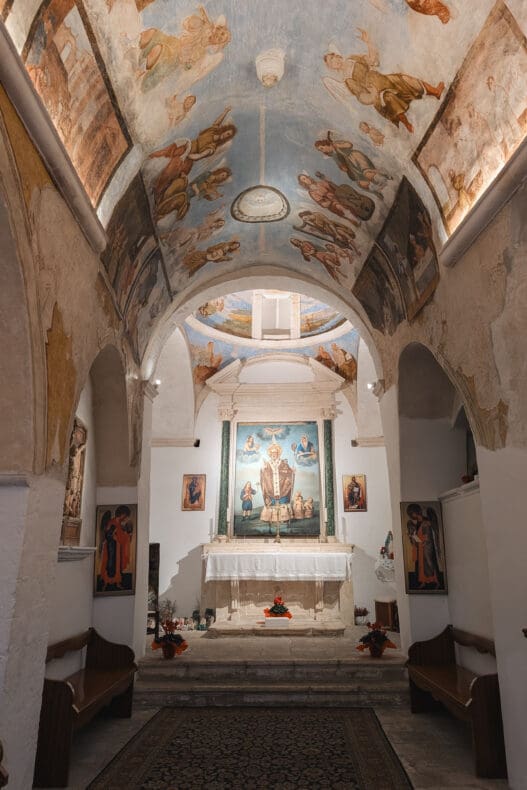
Giovinazzo turned out to be a wonderfully charming coastal town along the Adriatic Sea. We had read about it as a quaint fishing village, but we were pleasantly surprised to discover such a picturesque and historic destination. The old town is small yet full of character, with its cobblestone streets, centuries-old stone buildings, and a delightful harbor still used by local fishermen. One of the town’s standout best places to visit in Giovinazzo is the Cathedral of Santa Maria Assunta, an impressive 12th-century church that beautifully reflects the town’s rich history and timeless appeal.
Just a stone’s throw from the cathedral, you’ll come across the Passarella sul Mare. This narrow bridge leads to a scenic coastal promenade, where you can stroll along the old city walls, enjoying beautiful views of the sea. On the other side, you can wander back into the town, immersed in its timeless charm.
A short walk outside the historic center brings you to Piazza Vittorio Emanuele II, the heart of Giovinazzo. This lively square is home to the impressive Fontana dei Tritoni and a grand church. But perhaps the best part of the square is the abundance of cafés and terraces, perfect for savoring a local espresso paired with a delicious treat while soaking in the town’s relaxed atmosphere.


#10 Grottaglie
We discovered that Grottaglie was one of the most delightful surprises of our time in Puglia. Renowned for its centuries-old ceramic tradition, the town’s legacy began thanks to the excellent clay found in the surrounding area.
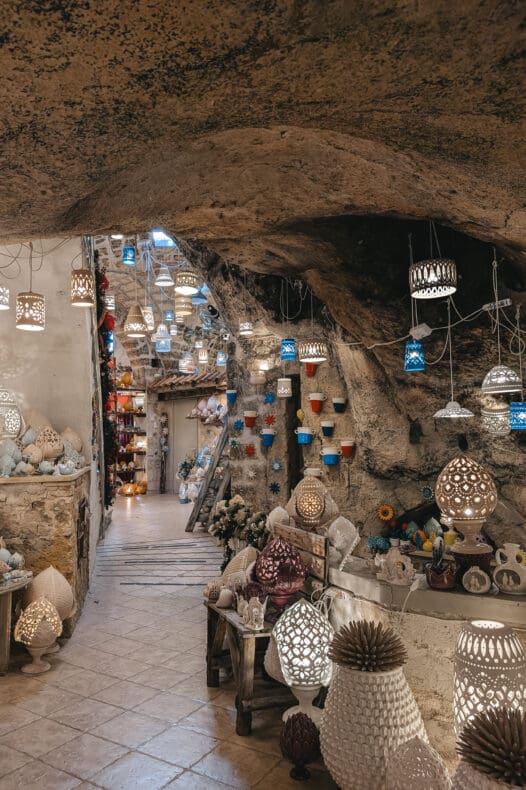
In the Quartiere delle Ceramiche, the famous ceramics district, you’ll find dozens of workshops still operating, where artisans skillfully craft colorful bowls, vases, and the iconic pumo – a flower bud symbolizing prosperity. You can meander through the district, watch the artists at work, and even take part in workshops to create your own ceramic pieces.
What makes this experience even more special is the fact that these ceramic shops and workshops are set in the ancient caves at the base of the castle hill. You can wander from one shop to another, each with its own unique offering – from tableware and pumo to modern art and lamps. We even stumbled upon a shop where everyday items and food had been transformed into ceramics.
The old town of Grottaglie is also well worth exploring. As you wander through its historic streets, you’ll spot traditional pumo decorations adorning the balconies and be surprised by the vibrant street murals throughout the town. This is because Grottaglie once hosted the FAME Festival, inviting international artists to showcase their street art. While we didn’t find the street art particularly breathtaking, it was a fun and unexpected addition to the town’s already charming old center.
Where to Stay: Although Grottaglie can easily be explored in an afternoon, spending the night allows you to experience the town in a more relaxed and meaningful way. You’ll have time to wander its quiet streets, enjoy the local atmosphere, and discover a side of Grottaglie that many day-trippers miss. If you choose to stay overnight, consider the stylish MONUN Hotel or the warm and welcoming B&B Le Maioliche, both offer a comfortable stay with plenty of charm, all in a convenient location close to the heart of town.

#11 Cisternino
Cisternino is tucked away in the heart of the Valle d’Itria, and it’s often celebrated as one of the most picturesque villages in Puglia. Its historic center, though compact, is full of charm and character. Narrow, winding alleyways lead you past whitewashed houses, graceful arches, and stone staircases. Cozy squares invite you to linger at local cafés, where you can sip a fresh espresso or enjoy a glass of regional wine. The central Piazza Vittorio Emanuele, with its timeless clock tower, serves as the vibrant pulse of the village.
One of Cisternino’s most distinctive features is its ‘fornelli pronti’ – butcher shops that transform into casual eateries around lunchtime and dinner. At these spots, you pick out your choice of meat, which is then grilled right before your eyes. This unique dining tradition has made the village a hotspot for food lovers. As vegetarians, we weren’t able to join in, so we opted to skip the restaurants during our visit.
The surrounding countryside is just as captivating as the village itself. Olive groves stretch as far as the eye can see, while vineyards are dotted with charming trulli and dry stone walls. On the outskirts of Ostuni, there’s a scenic viewpoint that offers stunning panoramic views of the landscape. If you look carefully, you’ll notice that the iconic trulli can be found all over the hills, not just in Alberobello.
Where to Stay: Accommodation in Martina Franca, while convenient, doesn’t quite offer the charm and atmosphere you might be looking for. That’s why we suggest staying in a traditional trullo in nearby Alberobello, where you can enjoy a more unique and authentic experience. Another great option is to spend the night in the countryside, just outside the towns, where you’ll find peaceful retreats surrounded by nature. Borgo Canonica, Ottolire Resort, Masseria Cervarolo, and Masseria Trulli e Vigne are all excellent choices. Each one combines beautiful, historic architecture with serene landscapes and modern comfort, creating a stay that feels both special and unforgettable.

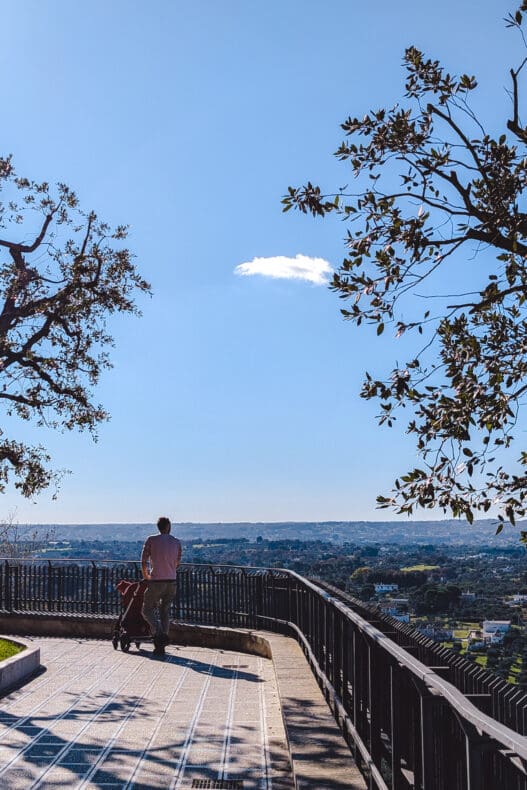
#12 Otranto
Otranto, perched on the Adriatic coast, marks the easternmost point of Italy and is steeped in centuries of history. From ancient Greek and Roman influence to the Byzantine and Norman eras, the town has witnessed the rise and fall of many civilizations, leaving its mark in every corner. The historic center is a charming labyrinth of narrow alleyways, ancient city walls, and stunning viewpoints that offer sweeping vistas of the sparkling sea.
The Castello Aragonese, a formidable 15th-century fortress, dominates the skyline with its thick stone walls and towering turrets, which once protected the town from invasions by sea. When we visited, the castle was open to the public, and we had the chance to climb its sturdy ramparts to enjoy breathtaking panoramic views of the town and its picturesque harbor.
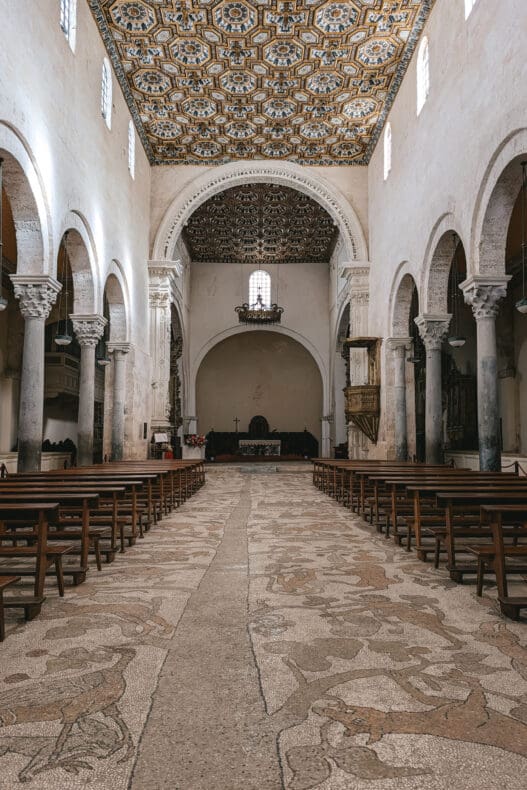
The real jewel of Otranto is its Cathedral, dating back to 1088. Inside, you’ll be captivated by a mesmerizing mosaic floor, depicting the Tree of Life in vivid detail. Each intricate section of the mosaic tells a unique story, from biblical scenes to mythical creatures, inviting you to pause and admire its beauty. The cathedral also holds a more somber treasure – in a chilling chapel, the remains of 800 local residents are displayed, victims of a brutal massacre by the Ottomans in 1480, who were killed for refusing to abandon their faith.
Where to Stay: In the heart of Otranto, two of the most beautiful places to stay are the colorful Hotel Bellavista and the elegant and historic Hotel Palazzo Papaleo. Both offer a wonderful mix of comfort, character, and prime locations that let you soak up the charm of the old town. If you prefer a quieter setting away from the city, there are also several stunning historic farmhouses in the surrounding countryside. Many of them have outdoor swimming pools, perfect for a relaxing break under the southern sun. Masseria Panareo, Masseria dei Monaci, and Masseria Bandino & Spa are all fantastic options, combining traditional style with modern comfort and offering a peaceful atmosphere in the heart of the Salento landscape.

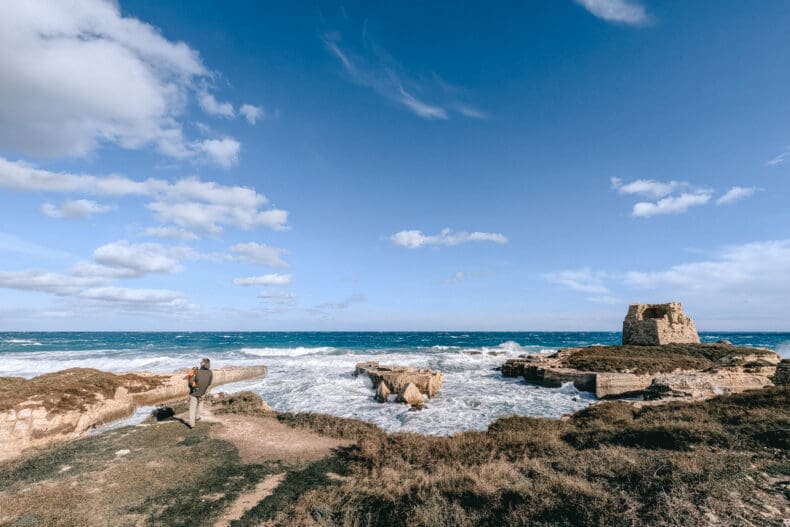
#13 The Rocky Coast at Torre dell’Orso
Torre dell’Orso is a charming coastal town renowned for its dramatic rocky cliffs and crystal-clear waters. The town is home to a stunning sandy beach, nestled between towering cliffs and lush pine forests. Off in the distance, you’ll see ‘Le Due Sorelle,’ two iconic rock formations that rise gracefully from the sea. Legend has it that these rocks are the transformed remains of two sisters who were swallowed by the ocean. The sight of these towering formations is especially breathtaking at sunset, casting a magical glow over the landscape.
Just a short distance from the village is one of Italy’s most spectacular natural swimming pools: the Grotta della Poesia. This beautiful lagoon, carved by centuries of sea erosion, is a popular spot for swimming and daring cliff dives. The name, ‘Cave of Poetry,’ draws from ancient legends, where poets are said to have found inspiration in the tranquil waters and the stunning surroundings.
Located around thirty kilometers from Lecce, Torre dell’Orso is the perfect destination for a day trip. It’s a haven for beach lovers, thrill-seekers, and anyone who appreciates nature in its raw, untamed beauty.

#14 Gallipoli
Gallipoli is a charming coastal gem in Puglia, celebrated for its historical charm, fairy-tale island setting, and stunning sandy beaches. The town truly comes alive in the summer, with lively festivals, bustling markets, and vibrant terraces where you can savor fresh seafood and local wines. Even in the quieter winter months, we found Gallipoli to be a wonderfully atmospheric place, with sun-drenched terraces offering the perfect spot to unwind.
Set along the Ionian Sea, or more accurately, in the sea itself, Gallipoli’s old town sits on an island linked to the mainland by a 16th-century bridge. As you wander through its narrow streets, you’ll discover whitewashed houses, elegant baroque churches, and inviting squares. Among the town’s most iconic landmarks are the striking Cattedrale di Sant’Agata and the medieval Castello Angioino-Aragonese, both offering glimpses into Gallipoli’s rich history.
Gallipoli’s maritime heritage is woven into its fabric, seen in the Porto Antico and the underground olive oil mills, where premium lamp oil was once produced for export. For those who love the beach, Gallipoli is an absolute paradise. Spiaggia della Purità lies just beside the city walls, while nearby beaches like Baia Verde and Punta della Suina are renowned for their soft white sand and crystal-clear waters.
Camping tip: We had a wonderful stay at Camping La Masseria, a beautiful spot with its own private stretch of beach, a large outdoor pool, and a free shuttle service to the old town.
Where to Stay: In the heart of Gallipoli, you’ll find some truly lovely places to stay, including Relais Corte Palmieri & Il Chiostro and Biancodonda Greenblu Hotel & SPA. Both offer elegant surroundings and a fantastic location, perfect for exploring the charm of the old town. If you prefer something a bit more intimate and personal, Gallipoli also has a number of delightful B&Bs. Relais La Casa del Poeta and Il Giardino Della Regina are especially worth considering. Each offers a warm welcome, a cosy atmosphere, and the kind of thoughtful hospitality that makes your stay feel extra special.
#15 Porto Selvaggio
Porto Selvaggio e Palude del Capitano is a breathtaking nature park nestled along the Ionian coast of Puglia. This protected gem stretches across more than a thousand hectares, featuring dense pine forests, jagged cliffs, and hidden coves with sparkling blue waters. From the heights of the cliffs, you’ll be treated to panoramic views of the dramatic coastline, while the shade of the trees provides a welcome retreat from the summer heat.
We were lucky enough to experience wild camping for a night in one of the park’s most picturesque spots. The coastline was rugged and untamed, with sharp rocks forming natural seawater pools. The name Porto Selvaggio, which translates to “wild harbor,” is the perfect reflection of this wild and untouched landscape.
Located just twenty kilometers from Gallipoli, the park is easy to reach by car. Whether you’re up for a scenic hike or simply want to unwind on the beach, Porto Selvaggio offers the ideal blend of adventure, serenity, and natural beauty.
#16 Martina Franca
Nestled in the heart of the Valle d’Itria, Martina Franca is celebrated for its stunning baroque architecture and lively festivals. The town earned its city rights back in 1310, and over the centuries, it blossomed into a vibrant cultural and economic center in this charming part of Puglia. You can see the echoes of this rich history in its elegant palaces and grand mansions. The historic center, surrounded by city walls and four main gates, invites you to wander through a maze of narrow alleys, picturesque squares, and impressive old residences.
One of the town’s most striking landmarks is the 17th-century Palazzo Ducale. Once the residence of royalty, the palace now houses the town hall, with parts of it open to the public for exploration. Another must-visit is the Basilica of San Martino, whose breathtaking baroque façade stands as a true masterpiece.
Martina Franca also holds a special place on the cultural map for its annual Festival della Valle d’Itria, an internationally renowned opera festival that fills the summer with music and art. Located just twenty kilometers from Alberobello, Martina Franca is the perfect spot to pause and soak in the charm of Puglia.
Where to Stay: we found that the accommodation options in Martina Franca are not especially charming or full of character. For a more memorable stay, we recommend spending the night in a traditional trullo in nearby Alberobello, where the unique setting adds something special to your trip. Another great option is to stay in the countryside just outside the towns, where you can unwind in beautiful surroundings. Places like Borgo Canonica, Ottolire Resort, Masseria Cervarolo, and Masseria Trulli e Vigne offer a wonderful mix of historic architecture, peaceful landscapes, and all the modern comforts you need for a relaxing and authentic experience.
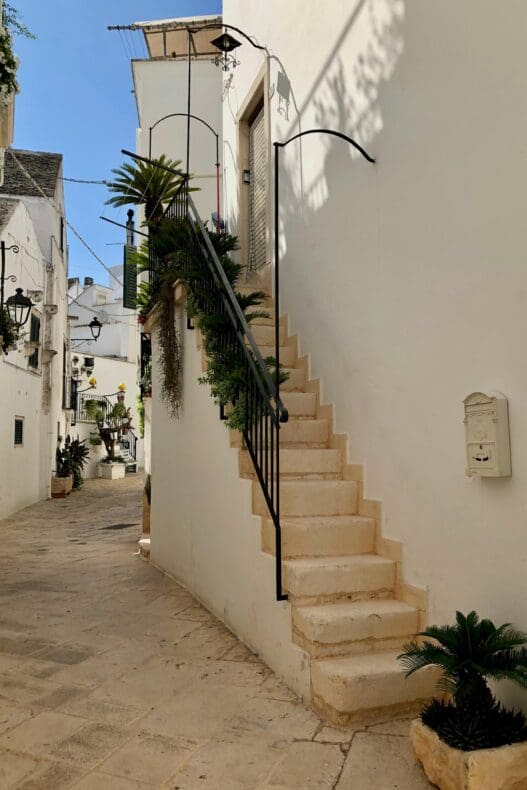

#17 Dune di Campomarino (Campomarino Dunes)
The Dune di Campomarino is a charming and tranquil natural area located along the Ionian coast, just a short distance from the village of Campomarino. While much of Puglia’s coastline is known for its rugged cliffs and pebble-strewn shores, this spot stands out with its wide, sandy beaches and gently rolling dunes.
The sand dunes stretch along the coast, interrupted only by stretches of soft golden sand, creating a peaceful and picturesque landscape. This area is part of a protected ecosystem, where rare plants and bird species thrive. As visitors from the Netherlands, we’re accustomed to larger, more imposing sand dunes, but we were pleasantly surprised by the serene beauty of this lesser-known gem in Italy.
#18 Trani
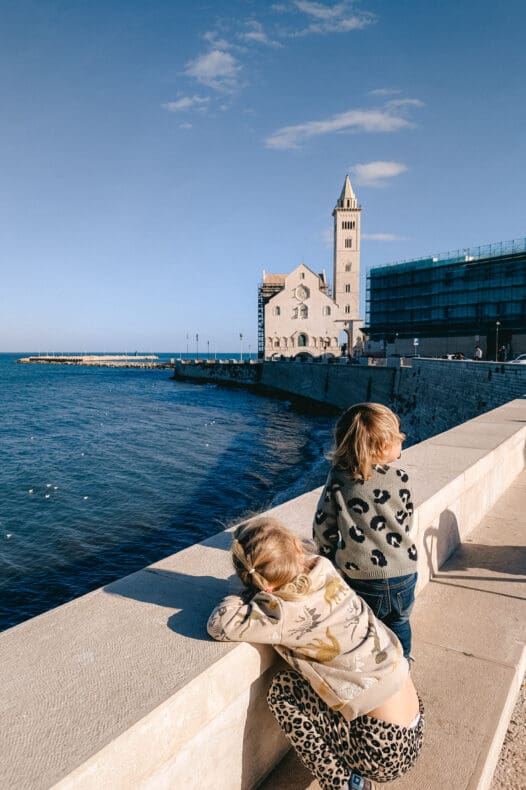
Trani is a delightful harbor town on the Adriatic Sea, celebrated for its stunning cathedral that rises right at the water’s edge. The Cattedrale di San Nicola Pellegrino, constructed between the 11th and 13th centuries, is widely regarded as one of Italy’s most beautiful Romanesque churches. Its bell tower and white limestone façade stand out brilliantly against the deep blue of the sea, offering an awe-inspiring view. Inside, you’ll discover a crypt and remnants of an early Christian basilica, adding to its historical allure.
Trani’s harbor remains lively and functional, with colorful fishing boats bobbing in the water and inviting terraces lining the shore, perfect for enjoying fresh seafood. Overlooking the harbor, the Castello Svevo, built by Frederick II in the 13th century, once served as a fortress and now offers sweeping panoramic views of the town and sea, further enhancing Trani’s rich, historical charm.

#19 Cava di Bauxite
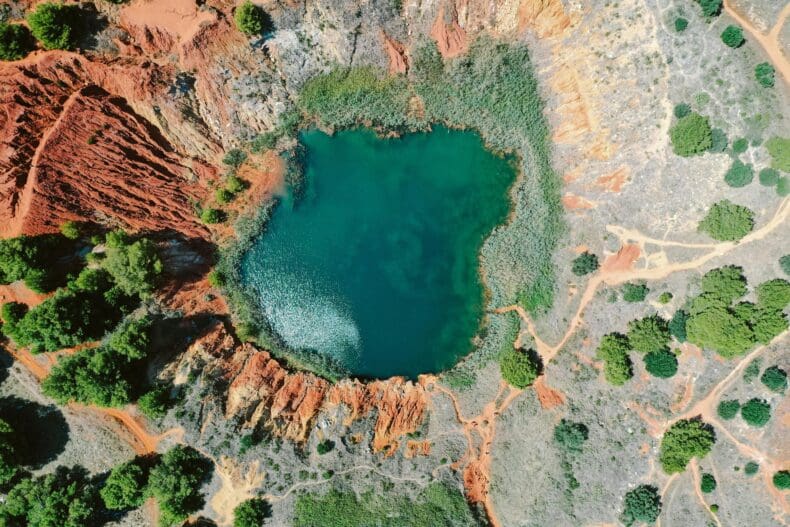
One of the most surreal sights in Otranto is this breathtaking spot just outside the town. Only a short walk from the historic center, we visited the Cava di Bauxite, a former bauxite mine that has transformed into one of the most photogenic locations in the region. The mine operated until 1976, extracting bauxite, an ore used in aluminum production. Once it closed, nature slowly reclaimed the area, and rainwater filled the pit, creating a striking turquoise lake. The vivid contrast between the blue-green water and the surrounding red-orange rocks is nothing short of spectacular.
The combination of the rust-colored landscape, the vibrant green water, and the rich vegetation along the shore gives this place an almost otherworldly feel. Visitors can wander through the site freely, though sturdy shoes are recommended because the paths can be slippery. There are no cafes or restrooms, but there’s a convenient parking lot nearby. From there, it’s just a short five-minute walk to the edge of the pit, where the view takes your breath away.

#20 Grotte di Castellana
The Grotte di Castellana is an underground marvel that immerses you in a hidden world of stunning limestone formations, mysterious chambers, and stories that have been centuries in the making. Discovered in 1938, this immense cave system lies just outside the village of Castellana Grotte, about forty kilometers from Bari. Spanning three kilometers in length and plunging sixty meters deep, stepping into the first chamber feels like entering an entirely new world.
The entrance, known as the Grave, immediately captivates visitors. Sunlight pours in through a natural opening in the ceiling, casting a magical glow on the stalactites and stalagmites below. This first breathtaking sight is just the beginning—venture deeper into the caves and you’ll encounter majestic rooms such as the Sala dell’Altare, where the limestone formations take on the appearance of intricate sculptures, and the Grotta Bianca, renowned for its ethereal white walls.
With a consistent temperature of 16°C year-round, the caves offer a refreshing escape from the summer heat. Daily tours are available, ranging from shorter routes for a quick glimpse to more extensive excursions for those seeking a deeper adventure.


