Looking for more than just Alicante’s beaches? The area around the city is bursting with places that will surprise you, and together they show exactly why the Costa Blanca is one of Spain’s most popular coastlines. Imagine strolling past rows of brightly painted seaside houses, watching flocks of flamingos in pink salt lakes, crossing dramatic gorges on swaying suspension bridges, or stumbling upon ancient Roman ruins right in the heart of the city. You could even wander through a historic gentlemen’s club inside a grand baroque palace.
Every destination in this guide is less than 90 minutes from Alicante and can be easily reached by car or public transport. We have handpicked ten day trips that are absolutely worth adding to your itinerary, whether you are dreaming of laid-back beach towns, adventurous walks, lively city breaks, or awe-inspiring natural scenery. Each suggestion comes packed with useful tips, background stories, and plenty of ideas for things to see and do. It is the perfect starting point for anyone craving a day full of variety, all just a short journey away from Alicante.

Why Alicante is the ideal base on the Costa Blanca
Alicante lies right in the heart of the Costa Blanca and is one of those cities where everything falls perfectly into place. There are golden beaches, a picturesque old town, bustling markets, and excellent restaurants, all within easy walking distance. The city feels compact and welcoming, yet it is lively and varied enough to keep you entertained for days. From the center you can wander down to the harbor, stroll along the palm-lined Explanada, or lose yourself in the steep, winding streets of the Santa Cruz neighborhood. High above it all, the Castillo de Santa Bárbara crowns the hilltop, offering what may well be the most breathtaking view along the entire coast.
What struck us most about Alicante was its laid-back atmosphere, the inviting city beaches, and the many things to do in Alicante that make the city such an enjoyable place to explore. It really is a destination that has it all. After a few days, though, you might feel the urge to discover more of the region. That is when Alicante’s location becomes even more attractive. The city is extremely well connected, making it easy to venture out in any direction. With an international airport, direct train links to cities like Murcia and Valencia, a reliable bus network, and a coastal tram heading north, you can explore far and wide without stress. To top it off, boats to the island of Tabarca depart straight from the city itself.
So whether you are in search of culture, nature, sandy beaches, or simply a convenient base for exploring the wider Costa Blanca, Alicante is in our eyes the perfect choice.

Best Things to Do near Alicante: 10 fun day trips
#1 Murcia
Murcia is about eighty kilometers from Alicante and makes a wonderful destination for anyone in search of a lively city filled with history. At its center stands the impressive Cathedral of Murcia, built over several centuries between the fourteenth and eighteenth. The building blends different styles into one remarkable whole, with a Gothic foundation, a richly decorated Baroque interior, and a bell tower that soars ninety meters above the rooftops. The square in front of the cathedral is always alive with energy, where outdoor terraces fill with people and street musicians create a joyful backdrop.
One of the city’s most surprising highlights is the Real Casino de Murcia. Despite the name, it is not a gambling hall but a breathtaking city palace dating from the late nineteenth century. It was built as a gentlemen’s society, which still gathers here today, though part of the building is open for visitors to explore. The façade resembles that of a grand theater, yet once inside you pass from a Moorish courtyard into an opulent reading room, from a glittering ballroom into an ornate library. Each space feels more impressive than the last, and wandering through its halls is like stepping back in time.
If you would like to see even more of what Murcia has to offer, you can visit the Roman Theater, the remains of the old Arab wall, or the San Esteban district, where archaeologists have uncovered the remains of a twelfth-century Moorish settlement preserved beneath the ground. Between sightseeing stops, take time to taste the city’s specialties such as pastel de carne, a savory meat pie, or the sweet paparajote, a fried lemon leaf dusted with sugar and cinnamon.
Murcia may be compact in size, but it is overflowing with culture, charm, and character. It is an ideal choice for a cultural day trip from Alicante, and with a direct train that brings you there in less than an hour, visiting could not be simpler.

#2 Elche
Less than thirty kilometers from Alicante you will find Elche, a city that combines palm groves, Moorish heritage, and religious traditions in a way that feels completely unique. Its most iconic attraction is El Palmeral, the largest palm grove in Europe and a UNESCO World Heritage Site.
This extraordinary landscape dates back to the time of the Arabs, who introduced an irrigation system that still functions today. More than two hundred thousand date palms stretch across the city, filling parks, lining avenues, and shading gardens. We found it nothing short of remarkable and chose to explore by bike to truly appreciate the vast scale of this palm-filled oasis. At the heart of it lies the Huerto del Cura botanical garden, home to the Imperial Palm, an astonishing tree with seven trunks growing from a single root.
But Elche is not only about palm trees. Among the most beautiful attractions in Elche is the Basilica of Santa María, which provides the stage for the Misteri d’Elx, a medieval religious play performed for centuries and added to UNESCO’s list of Intangible Cultural Heritage in 2001. Another highlight is the Palacio de Altamira, a fortress dating back to the eleventh through thirteenth centuries that now serves as the city museum, offering fascinating insight into Elche’s long and layered past. With its relaxed atmosphere and compact historic center, the city invites you to slow down and discover all its sights on foot, making every corner of Elche easy to enjoy.


#3 Isla de Tabarca
Isla de Tabarca is the only inhabited island in the Valencia region, sitting just off the coast of Santa Pola. The ferry makes the short journey several times a day, bringing visitors to an island that may be no more than two kilometers long but is overflowing with charm and character.
For centuries, Tabarca was a notorious refuge for pirates, until King Carlos III decided in the eighteenth century that order had to be restored. He had the island fortified with stone walls and ordered the construction of a small village to house fishing families from Tunisia, who had themselves been freed from pirate captivity. These walls are still standing today, along with the church, the harbor, and a handful of whitewashed houses trimmed with blue that together form the island’s only settlement.
In 1986, Tabarca was declared a protected marine reserve, a status that has helped preserve its underwater landscapes. The surrounding waters are crystal clear and carpeted with meadows of posidonia seagrass, making the island one of the best snorkeling spots along the Mediterranean coast. On land, visitors can follow rocky paths that wind across the island, swim in hidden coves, or linger over plates of fresh seafood on a sunlit terrace.
During winter the island feels quiet and authentic, while in summer it comes alive with energy yet never loses its laid-back charm. A trip to Tabarca is the kind of excursion that feels like a holiday within your holiday.


#4 Jávea
Jávea is a little over an hour’s drive from Alicante, yet the moment you arrive it feels like another world. Instead of high-rise buildings and crowded boulevards, you are greeted by an old town full of charm and a coastline that seems made for slow exploration. In the historic center, narrow streets wind between whitewashed houses and golden sandstone walls, leading you to the sixteenth-century Gothic church of San Bartolomé. On Thursday mornings the town bursts with color and energy at its weekly market, where stalls overflow with fresh produce, handmade ceramics, and local crafts. Even with its popularity among international visitors, Jávea manages to hold on to a relaxed, village-like atmosphere.
The coast here is just as appealing as the town itself. Coves such as Cala Blanca, Cala Granadella, and Cala Portitxol offer sheltered bays of clear turquoise water, perfect for snorkeling or simply lying back on the flat rocks to soak in the sun. For a livelier scene, Playa del Arenal delivers a long sandy beach and a bustling promenade filled with cafés and restaurants. At Cabo de la Nao, the highest viewpoint on the coast, you can stand on the cliffs beside the lighthouse and, on clear days, gaze all the way to Ibiza on the horizon. Hikers will find plenty to enjoy as well, with trails winding through Montgó Natural Park just outside the town. Taken together, these highlights make Jávea an ideal choice for a day trip from Alicante.
#5 Villajoyosa
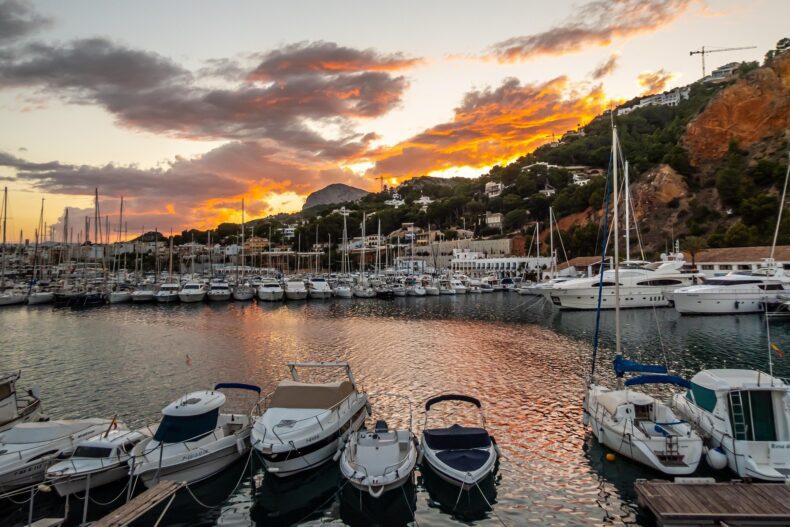
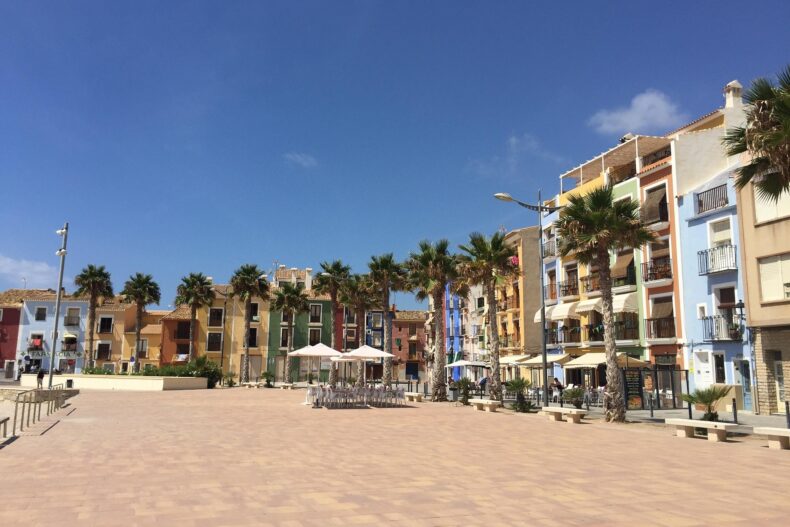
Villajoyosa sits just 35 kilometers from Alicante, yet arriving here feels like stepping into a completely different world. The first thing you notice is the line of brightly painted houses along the seafront, the same colorful view that graces countless postcards and travel photos. Long ago, fishermen painted their homes in vivid shades so they could recognize them from the sea. Today, the cheerful façades create a picture-perfect backdrop that draws photographers and visitors alike. Behind these iconic houses lies the old town, where sixteenth-century city walls still stand, narrow lanes twist uphill, and the atmosphere remains as relaxed and village-like as it has for centuries.
What surprises many visitors is that Villajoyosa is also known for its chocolate. The town is the birthplace of Valor, one of Spain’s oldest and most beloved chocolate brands. A visit to the Valor Chocolate Museum reveals how cocoa has been transformed here since the nineteenth century, with historic machinery, captivating stories, and, naturally, plenty of tastings to enjoy. Afterwards, make your way down to the fishermen’s beach, where the boats are still hauled up onto the sand in the traditional way. Along the promenade, simple yet welcoming restaurants serve freshly caught fish, often grilled and seasoned with nothing more than olive oil and sea salt.
Villajoyosa may not boast grand monuments, but that is exactly what makes it so appealing. This is a town meant for wandering at an easy pace, soaking up its charm, and letting curiosity lead you wherever it may.
#6 Cartagena
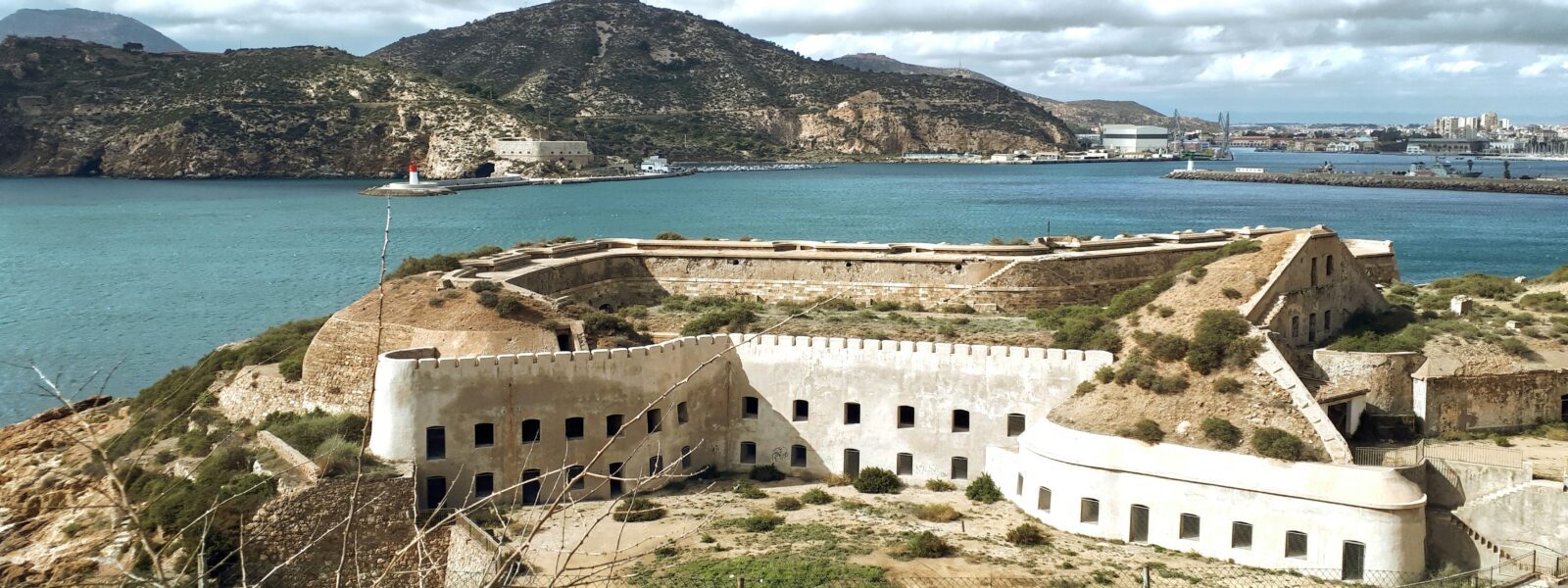
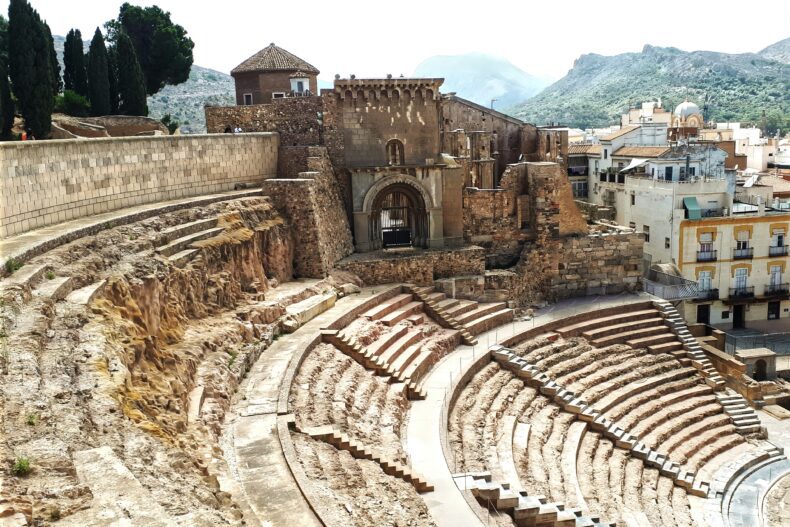
Cartagena lies further south, just over an hour’s drive from Alicante, and it is the kind of city where every street seems to peel back another layer of history. The Romans built a grand theater here in the first century BC, a remarkable structure that stayed hidden for centuries beneath an old market until it was rediscovered in 1988. Today it has been carefully restored and shines as one of the most impressive Roman theaters in all of Spain.
Yet the story of Cartagena stretches far beyond its Roman roots. The city was rebuilt by the Arabs, fortified with castles under the Catholic Monarchs, and later scarred by heavy bombings during the Spanish Civil War. At the Museo Refugio you can step into that chapter of history by walking through the underground bunkers and shelters, where the past feels close and real. For a wider perspective, take the cable car up to the castle on the hill, where sweeping views reveal the bay, the city, and the historic harbor below.
The old town is free of traffic and full of elegant modernist buildings from the nineteenth century, especially along the grand Calle Mayor. And Cartagena still has more to offer: you can explore a submarine dating back to 1888, marvel at intricate Roman mosaics, and discover scattered ruins across the city. With so many stories layered together, Cartagena is a place that rewards wandering and makes for a truly memorable day trip from Alicante.
#7 Pasarela de Relleu
If you feel like doing something different from an ordinary walk, the Pasarela de Relleu is a refreshing and memorable choice. Just an hour’s drive from Alicante, you’ll find yourself stepping onto a wooden walkway fixed directly to the rock face, hanging high above a dramatic gorge near Relleu’s old reservoir. The walkway is not especially long (or even rather short), yet the feeling of walking here is so striking that you will almost certainly want to capture it on camera. Beneath you stretches a dry riverbed, and around you there is nothing but rugged cliffs, wide open sky, and a stillness that makes the moment even more powerful.
The dam itself was built at the end of the seventeenth century to supply water for farming in the region, but the pasarela is a recent addition designed to let visitors safely experience the gorge in a spectacular way.
The full trail is around two kilometers, with information boards along the way that tell you about the local plants, wildlife, and geology. The path begins and ends at a small parking area, and because it is easy to follow and not too demanding, it can be enjoyed even by those who would not normally set out on a tough hike. We even did this with two little kids. The entry fee is €3.50.


#8 Benidorm
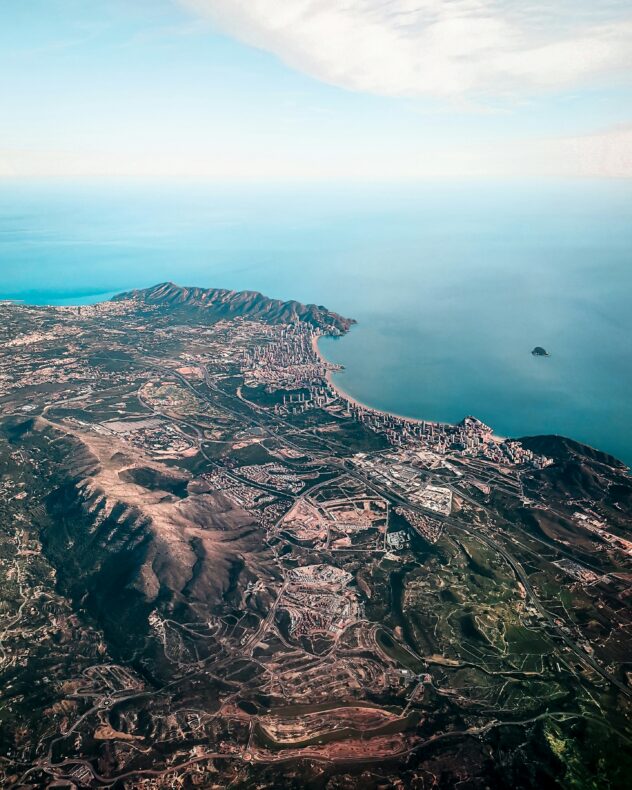
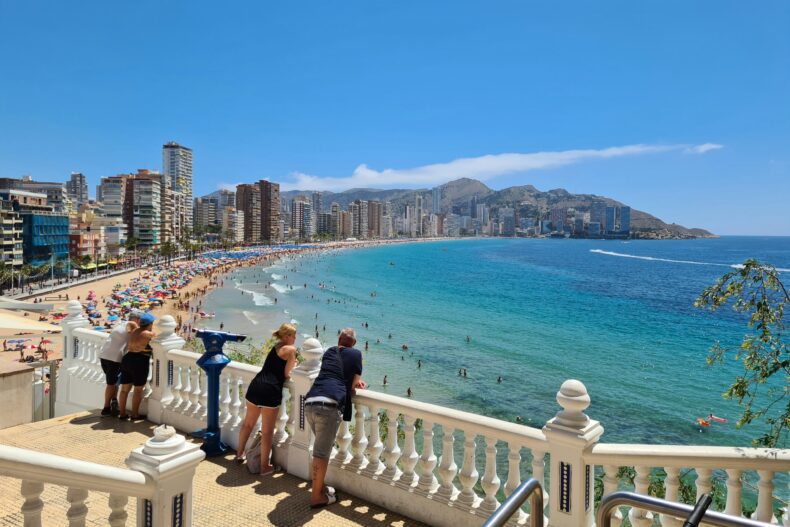
Say the name Benidorm and most people immediately picture beaches and skyscrapers, and they are not wrong. But there is much more to this city than its famous image suggests. Less than a 45-minute drive from Alicante, Benidorm stretches along two wide sandy beaches. Levante is the lively one, buzzing with beach bars and energy, while Poniente has a more relaxed vibe and is especially loved by locals. Between the two lies the old town, perched on a rocky headland with white balustrades, sweeping sea views, and narrow streets that feel as though they have carried you back to the eighteenth century.
If you want to see the city from above, the walk up to the viewpoint at La Cruz is well worth the climb. From here the entire coastline unfolds before you, stretching from the mountains inland all the way across the Mediterranean horizon. Not far beyond, the Serra Gelada Natural Park begins, where a beautiful trail follows limestone cliffs leading towards the lighthouse of Albir.
And yes, Benidorm is also the Benidorm everyone has heard of. It has sky bars with panoramic views, bustling shopping centers, streets filled with tapas bars, a lively nightlife, and endless entertainment options. Yet it still holds quieter spots if you know where to look. It is the perfect destination for anyone who wants a city that blends beaches with stunning views, history with comfort, and all the conveniences you could wish for right at your fingertips.
#9 Salt Flats of Torrevieja and La Mata
Less than an hour from Alicante lie the salt flats of Torrevieja and La Mata, one of the most photogenic natural landscapes in the region. The highlight is without doubt the pink lagoon of Torrevieja, its striking color the result of a unique combination of bacteria, algae, and high salt levels in the water. On bright sunny days the shades of pink seem to shine even more intensely, and if you visit at the right time of year, you may even see flamingos wading gracefully in the shallow waters, their reflections rippling across the surface.
The salt flats form part of a protected natural park that stretches across more than 3,700 hectares. A network of walking and cycling routes takes you through the area, with the five-kilometer Yellow Route leading past viewpoints and clusters of woodland. At the visitor center in La Mata you can pick up maps, find details about the trails, and discover more about the fragile ecosystem that makes this park so remarkable. If you have a little extra time, it is well worth continuing on to the salt lakes of San Pedro del Pinatar, where you will come across not only more birdlife but also natural mud baths and striking white salt mountains rising from the landscape.


#10 Mirador de los Barrancos de Gebas and Embalse de Algeciras
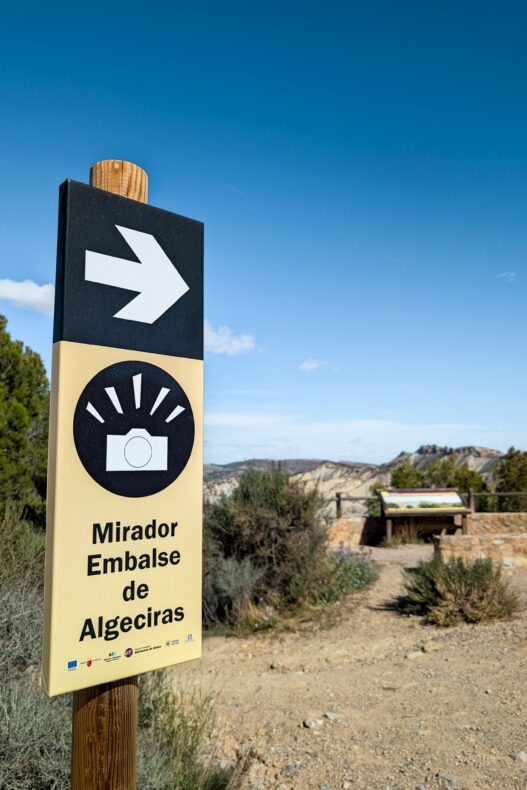
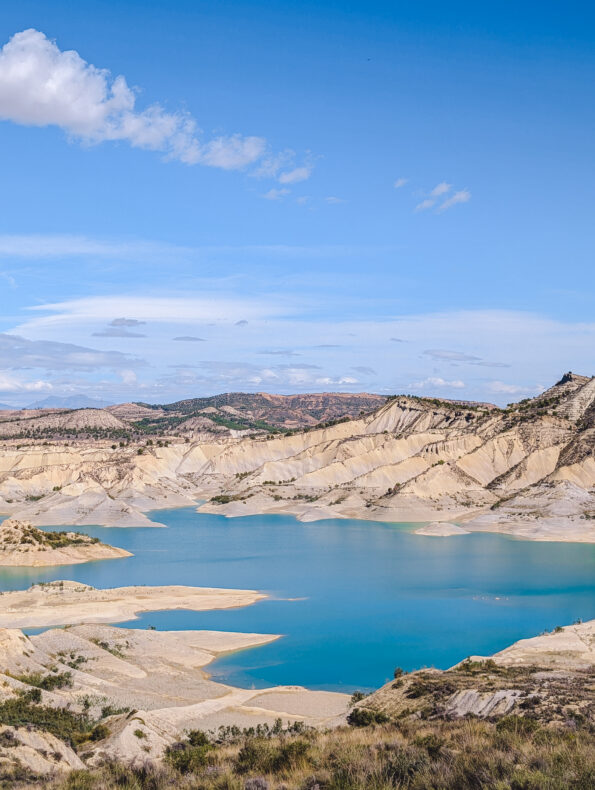
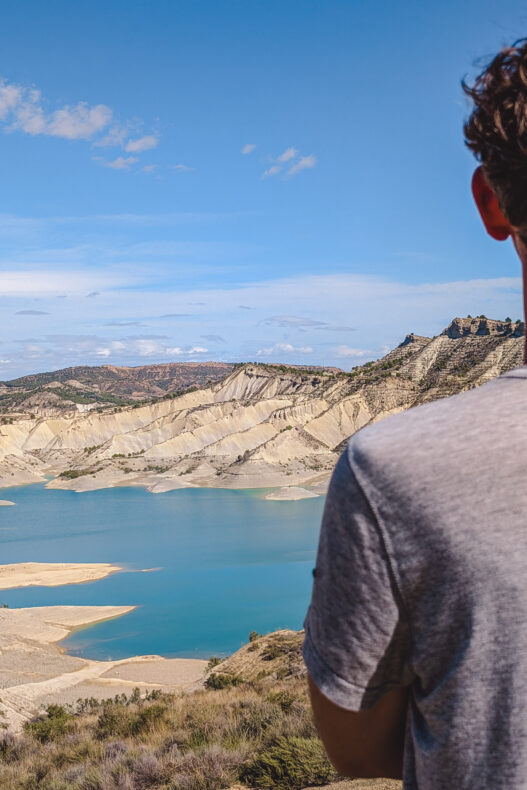
Just across the border in Murcia, about an hour and a half from Alicante, you will find one of the most striking landscapes in southeastern Spain: the Barrancos de Gebas. This dramatic badlands terrain feels almost like another planet, with steep ravines, pale gray ridges, and deep gullies shaped over centuries by wind and rain. From the Mirador de los Barrancos de Gebas the view stretches across this surreal landscape, with the shimmering blue waters of the Algeciras reservoir adding a striking contrast in the distance.
It is the kind of place where you can set out on a hike, explore by bike, or simply stop at several viewpoints to admire the scenery. The mix of jagged rock formations, sparkling water, and patches of pine forest creates a landscape that is truly one of a kind. The official PR-MU92 hiking trail is highly recommended for those who want to explore more deeply, although we decided to skip it during our visit with small children.
This may not be the best-known day trip from Alicante, but it is without doubt one of the most rewarding. There are no crowds and no carefully manicured trails here, only raw nature and some of the most breathtaking scenery Spain has to offer.