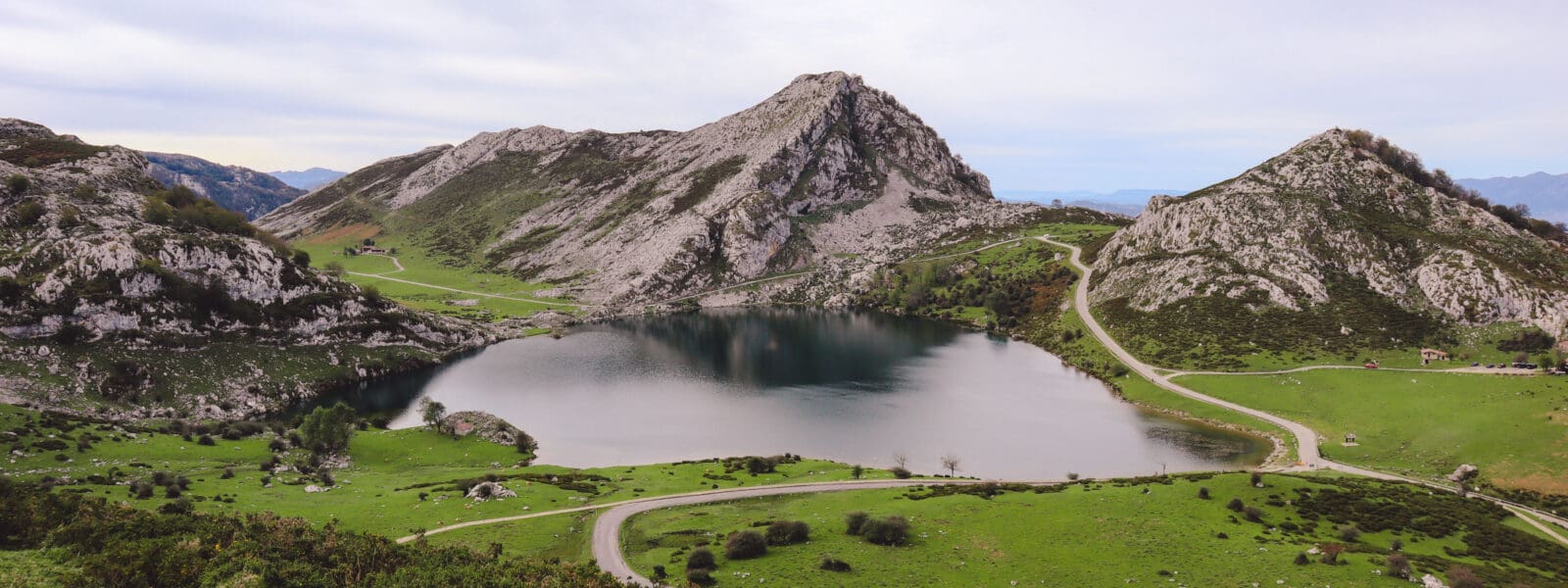
The Covadonga Lakes in Picos de Europa National Park are without a doubt one of the most beautiful places in northern Spain. High in the mountains, surrounded by rocky cliffs and wide green meadows, you will find two glacial lakes that have attracted visitors for generations. People come for the views, of course, but also for the atmosphere, which feels raw, pure and surprisingly welcoming.
I have visited the lakes twice now. The first time was with my family, travelling with a baby, a toddler and my parents. The second time was during a press trip through Asturias. They were two completely different visits, yet both unforgettable. What I remember most is how easily you step into nature here, without needing long or difficult hikes to reach it.
Whether you come to walk, take photos, enjoy the landscape or learn a bit about the local culture, the Lagos de Covadonga never disappoint. In this blog you will find everything you need to plan your visit to this iconic place. You will find fun facts, background information, practical tips and a clear walking map to help you make the most of your day.
Where are the Covadonga Lakes located?
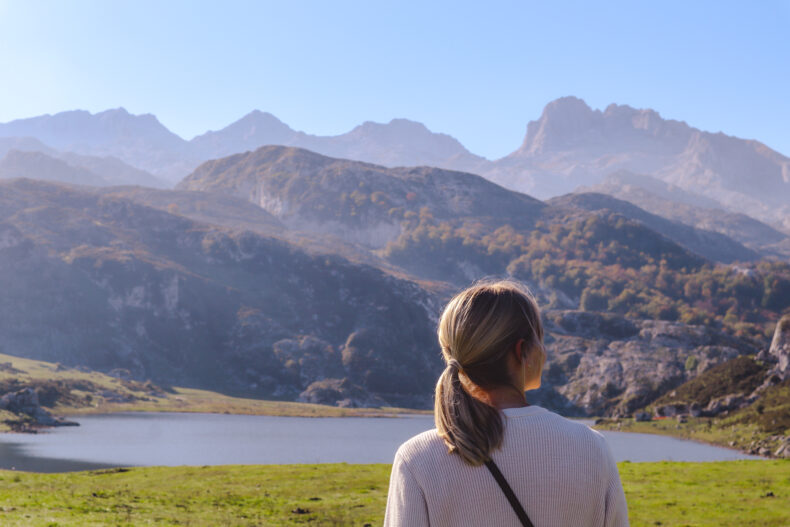
The Covadonga Lakes are found in northern Spain, in the region of Asturias, right in the heart of the Picos de Europa National Park. They are two glacial lakes, Lago Enol and Lago Ercina, sitting more than 1,000 metres above sea level in the park’s western mountain range. Up here you are surrounded by sharp rocky peaks, soft green meadows and a sense of silence that has become hard to find.
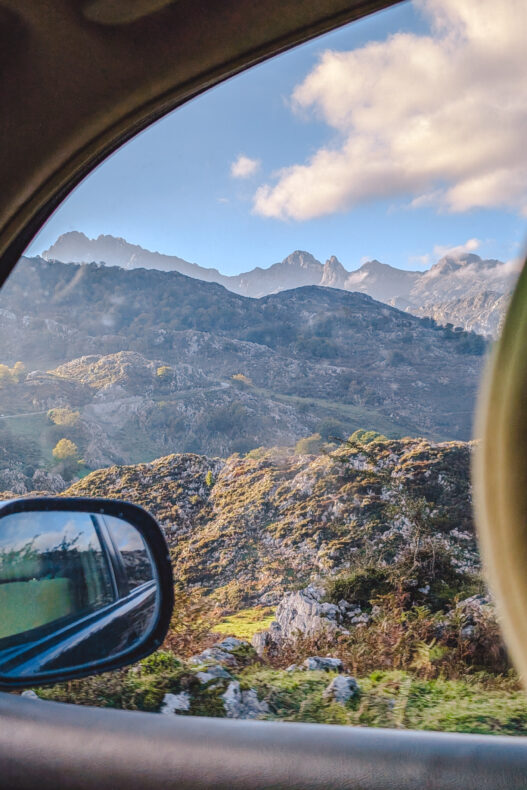
The lakes may seem remote, but they are surprisingly easy to reach. The nearest town is Cangas de Onís, about a twenty-minute drive away, and even closer lies the pilgrimage site of Covadonga. From there the road begins to rise, following a narrow and winding route with steep climbs and tight hairpin bends. As you make your way up, wide views open over deep valleys and hillsides where cows graze freely. The scenery becomes more impressive with every kilometre.
Hotel tip: stay, as I did, at the beautiful monastery hotel Parador de Cangas de Onís, a stay that truly feels like a bucket-list moment. From Cangas you can easily explore the Covadonga Lakes as well as the rest of the Picos mountains.

Picos de Europa NP in a Nutshell
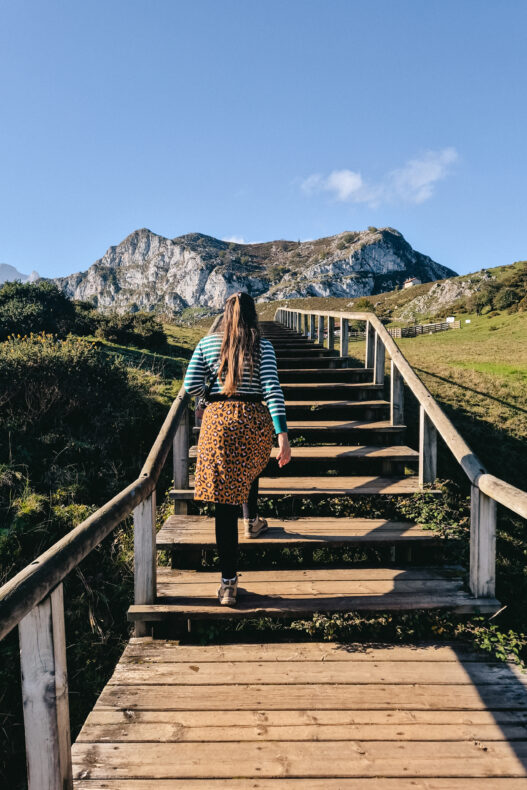
The Picos de Europa is the oldest national park in Spain and one of the oldest in the world. It was created in 1918, first known as Parque Nacional de la Montaña de Covadonga. In 1995 it received its current name, when the protected area was expanded into what it is today: a wide mountain region with high peaks, steep gorges and long stretches of alpine meadows.
Read more: 15 Best Places to Visit in Picos de Europa
What makes this park so special is not only the dramatic scenery, but also the life that still takes place within it. Instead of a completely closed-off landscape, as you see in many other national parks, you will find active villages, farms and shepherds throughout the area. Local farmers bring their cows and sheep to higher ground in summer. This is transhumance, an old way of livestock farming where animals move with the seasons. The tradition has remained strong in these mountains.
When you walk here, you do not just experience wild nature. You also come across cows with bells around their necks, old stone huts scattered across the grasslands and footpaths that have been used for many generations. The landscape is still part of daily life for the people who live here.
The northern side of the park, in Asturias, is the easiest point of access. Coming from this direction, you will also reach the Covadonga Lakes, one of the most famous locations in the park and a perfect first introduction to this beautiful region.

Over the Covadonga Lakes, a Literal Highlight in the Picos
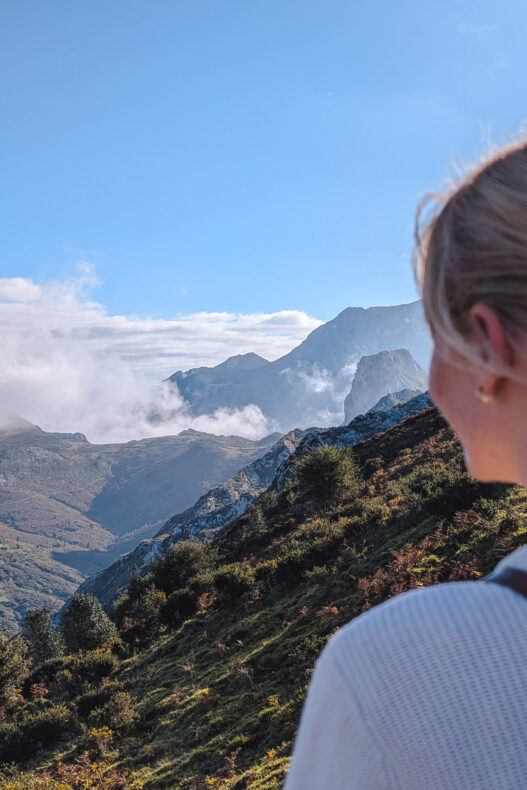
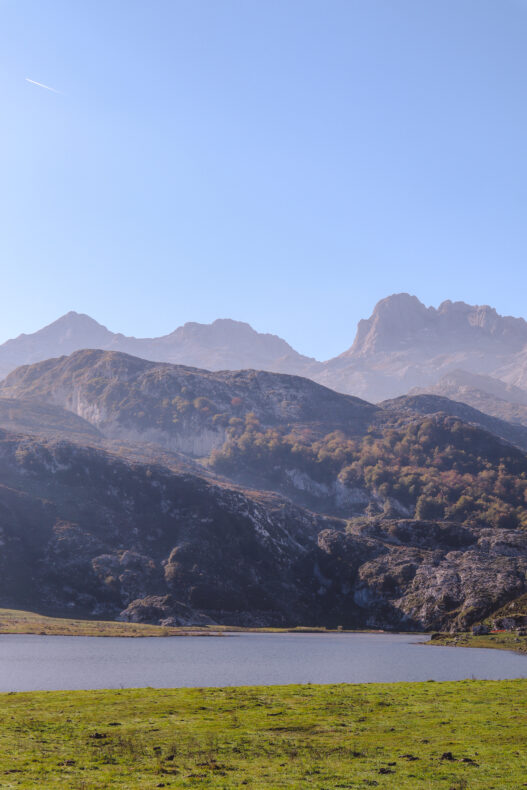
Most people visit the Covadonga Lakes for the views, and it is easy to see why. From the main viewpoint you look out over two bright blue lakes surrounded by soft green hills, rocky mountain peaks and cows grazing quietly in the fields. It feels as if you have stepped straight into a postcard.
The best-known lakes are Lago Enol and Lago Ercina. Together they form the Lagos de Covadonga, set more than 1,000 metres above sea level in an ancient glacial valley. They were shaped during the last Ice Age, when glaciers carved deep hollows into the limestone landscape. You can still see this geological history in the steep edges around the lakes and the rugged shapes of the surrounding rocks. A third lake, Lago Bricial, is usually dry and only fills after heavy rain or melting snow.
Lago Enol is the largest and deepest of the lakes, reaching almost 25 metres. On its shore stands a small chapel dedicated to the Virgen de Covadonga. During bad weather the statue of Mary is brought up from the valley, a tradition that is still honoured today.
The Lagos de Covadonga are loved because they offer so much at once: striking scenery, accessible walking routes, living cultural traditions and a location that is easy for visitors to reach. You do not need to be an experienced hiker to enjoy this place, which makes it appealing to a wide range of people. From nature lovers and seasoned walkers to day-trippers and families, everyone finds something special here.

Hiking at the Covadonga Lakes
The area around the Covadonga Lakes is ideal for a walk. The short loop trail around the lakes is well marked and suitable for almost everyone. You do not need a guide, only comfortable shoes and a little basic fitness.
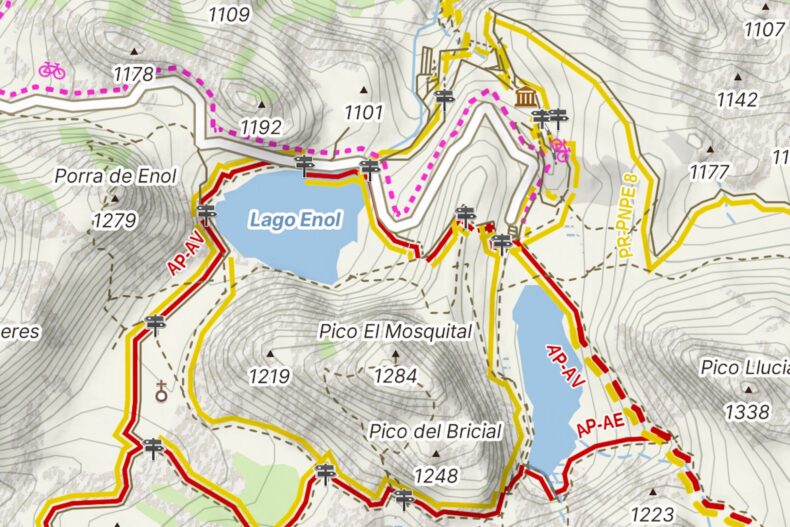
The most popular route begins at Lago Enol and passes the Pedro Pidal Visitor Centre and the former Buferrera mine before continuing to Lago de la Ercina. Make sure to pause at Mirador del Príncipe, which offers a lovely view over a green valley filled with grazing cows. From Lago de la Ercina you climb to Mirador de Entrelagos, the viewpoint where both lakes appear in a single frame. After that, the path leads you back down toward the parking area at Lago Enol. This walk is about three kilometres long and follows mostly wide, easy-to-follow trails.
Did you know: the cattle are only here in summer! In autumn they move down to the lower valleys before the snow arrives. If you listen carefully, you will notice that each animal has a different bell. Every farmer uses a unique bell for his herd so he can recognise them by sound and find them quickly.
If you want something more demanding, you can follow the longer loop around Pico El Mosquital and Pico del Bricial. This route passes south of the lakes through rougher terrain, with greater height changes and narrow mountain paths. You can choose to include the loop past the visitor centre and the old mines, or go straight from Entrelagos toward the southern slopes. The landscape opens up here, and the chance of walking for long stretches without seeing anyone is quite high.
If you want to explore even deeper into the high mountains, this is also the starting point for tougher hikes, such as the route to Refugio de Vega de Ario, where you can stay overnight. Prefer to sleep near the lakes without a demanding hike? Refugio Vega de Enol sits almost right beside the water. Any journey into the higher peaks requires more experience and fitness, but the reward is extraordinary views of the central massif of the Picos de Europa. This is the wild core of the park, with jagged rock formations, deep valleys and very little shelter. It is suitable only for well-prepared hikers.
Whatever route you choose, keep in mind that the weather changes quickly, especially at higher elevations. Bring enough water, wear sturdy shoes and dress for all conditions.

How to Get to the Covadonga Lakes?
The route to the Covadonga Lakes starts in Cangas de Onís, a small town in Asturias that many travellers use as a base for visiting the Picos de Europa. From here it is about ten kilometres to the sanctuary of Covadonga. The road to this point is wide, well maintained and open all year. Only from Covadonga does the mountain road to the lakes begin. This road is narrower, climbs steeply and has limited access on busy days.
From April to early October, and on public holidays, this mountain road is closed to private cars during the day. The exact dates in spring and autumn change each year, depending on when the holidays fall, so it is best to check the official Asturias website before you go. The closure is very clear: a staffed gate blocks the road. During these periods a shuttle bus runs from Cangas de Onís to the lakes via Covadonga. Along the way the bus stops at several large parking areas, where visitors can hop on. The final stop is the car park at Lago Enol, right at the start of the walking trails.
If you prefer not to depend on the bus, there are other options. Taxis wait in Covadonga, but even in low season there was already a line at the taxi stand. It is better to arrange one in advance, which you can usually do through your hotel in Cangas de Onís. This way you are picked up directly at your accommodation and do not have to search for one of the very limited parking spots in Covadonga. A guided tour is another great option. It is more comfortable, you receive explanations along the way, you can stop at viewpoints during the drive up and you can start your visit at a time that suits you.
Tip: make a stop at Mirador de la Reina, where on a clear day you can enjoy views that reach all the way down into the valley.
Outside the main season you can usually drive up in your own car. The road stays open unless it becomes extremely busy. In that situation the gate may close for a short time until there is room again at the top. In winter the road can also be closed because of ice or snow. Always check the latest conditions before you go.
Walking or cycling up to the lakes is possible all year. The climb is popular with cyclists, and in every season you will see people making their way up on foot or by bike without being affected by the access rules. Those restrictions apply only to motorised vehicles.
I have travelled this route both with a guide and in my own car, depending on the season. Both options worked well, but going with a guide gives you a bit more comfort and helpful background information along the way.
Also Visit the Sanctuary of Covadonga
Before reaching the lakes, you pass a place you genuinely should not miss: the Sanctuary of Covadonga. This historic and religious site lies in a green valley at the foot of the mountains and has been an important symbol for Asturias and for Spain as a whole for centuries.
According to tradition, this is where the resistance against Islamic rule began in the eighth century. Pelayo, a local nobleman, is said to have defeated a Moorish attack here with only a small army. That victory is seen as the beginning of the Reconquista, the long process of reclaiming Spain from the Moors, and also as the start of the Kingdom of Asturias, the first Christian state on the Iberian Peninsula. From this early kingdom, modern Spain would eventually develop.
Pelayo’s presence is still visible throughout the region. His name appears on street signs, statues and school buildings, and the Cross of Pelayo, a cross inside a circle, is everywhere: on flags, building façades, T-shirts and even on small posts along the roadside.
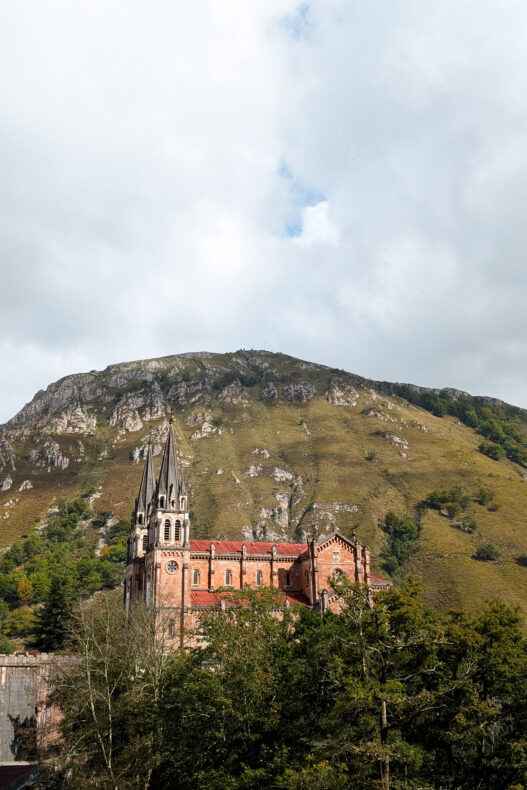
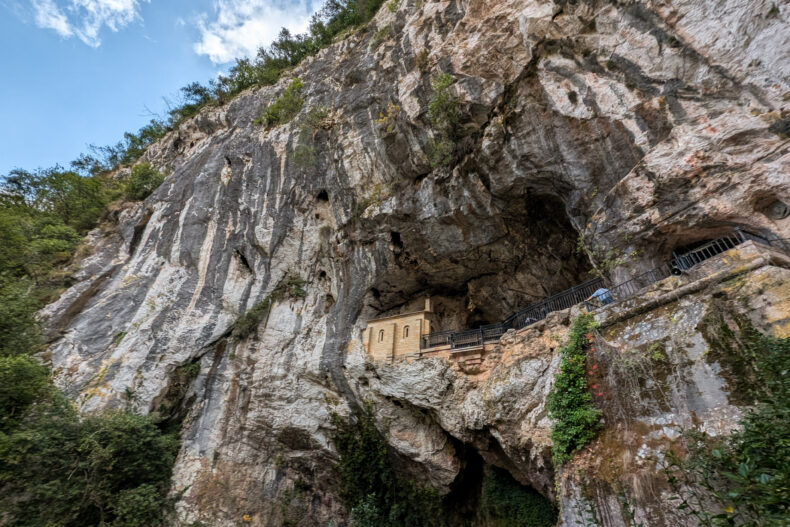
The sanctuary has two main parts. At the top of the hill stands the basilica, a striking pink church built from local limestone. You can reach it by a footpath or a short tunnel cut through the rock. Below it, set into a niche in the cliff, lies the Santa Cueva, the holy cave. Inside the cave stands a small statue of the Virgen de Covadonga, who is deeply important in Asturias. Even in sports she is remembered. When the local football team wins a championship, the players bring her one of their shirts. People also come here at personal milestones to ask for guidance or to express thanks.
The whole site has a special atmosphere, even if you have no religious background at all. The combination of rock, water, tradition and silence leaves a strong impression. And because it sits directly on the route up to the lakes, you can visit without making any detour.
Parking at the sanctuary itself can be tricky. There are parking areas, but they tend to fill up fast. A better option is to park a little lower along the route at one of the larger lots and take the shuttle bus up. You can also arrange a taxi or book a tour in advance, which means you do not have to think about logistics and can simply relax and enjoy your visit.
Practical Tips for Your Visit
A visit to the Covadonga Lakes is manageable for almost everyone, but a bit of preparation does help, especially if you want to do more than the short loop.
For the small loop around Lago Enol and Lago de la Ercina you do not need hiking boots. The paths are wide and very well maintained. If you want to walk the larger loop or explore the higher parts of the area, sturdy shoes are highly recommended. Those routes have more stones and more variation in height.
The weather is a story on its own. Forecasts are not very reliable here. Conditions at the top can be completely different from those in the valley, and the weather in the high Picos can change very quickly. It is best to check the live cameras near the lakes before you go. Even then, the weather can still shift during your visit. Our guide gave us a simple rule of thumb: mornings usually offer the best chance of clear views. The later it gets, the more likely you are to encounter clouds or mist.
When it comes to facilities, the area is surprisingly well prepared. There are two large car parks, one at each lake, and you will also find cafés and toilets. If the weather turns bad, you can take shelter in the visitor centre. Inside there is a 3D map of the Picos mountains and models showing the different landscapes across the range. The visitor centre near Lago Enol also has a spacious picnic field, perfect for a relaxed lunch break.
Swimming or fishing in the lakes is not allowed. The area is protected and these rules are strictly enforced.
Finally: if you enjoy a quieter and more peaceful visit, start as early as you can. Early mornings are not only calmer but also give you the best chance of clear views across the landscape.
Best Time to Visit the Covadonga Lakes
The best time to visit the Covadonga Lakes is from May to October. During these months you have the highest chance of good weather, the walking paths are in great condition and the landscape looks its best. July and August can be busy, especially around midday and on weekends. If you start early, you will avoid most of the crowds.
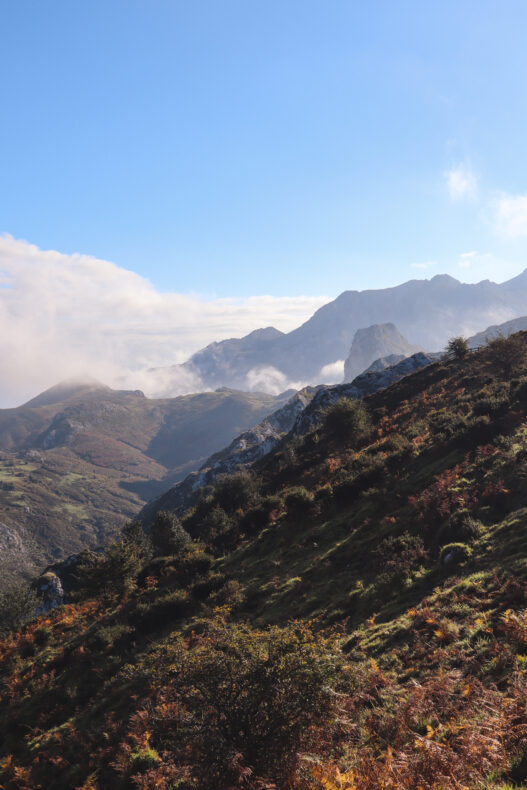
I have visited twice in October and both times I was lucky with the weather. Clear skies, good visibility and pleasant temperatures. The season is technically nearing its end by then, but October can still turn out beautifully if the conditions are right.
Spring, especially May and June, is another wonderful time to come. The mountain meadows are full of flowers and it is often still quiet. September is also lovely. The landscape stays green, but the biggest wave of visitors has already passed.
Winter and early spring are more unpredictable. The road up to the lakes is sometimes closed due to snow or ice, and the temperatures at the top can be very cold. Even so, the area has its own charm during these months. Mist, silence and bare mountain slopes create a completely different mood.
No matter which month you choose, mornings offer the best chance of clear weather. Clouds and mist often roll in later in the day. If you set out early, you will not only enjoy more peace and space, but also the best chance of wide, open views.

I first visited the Covadonga Lakes on my own and returned two years later as part of a collaboration with Turismo Asturias.