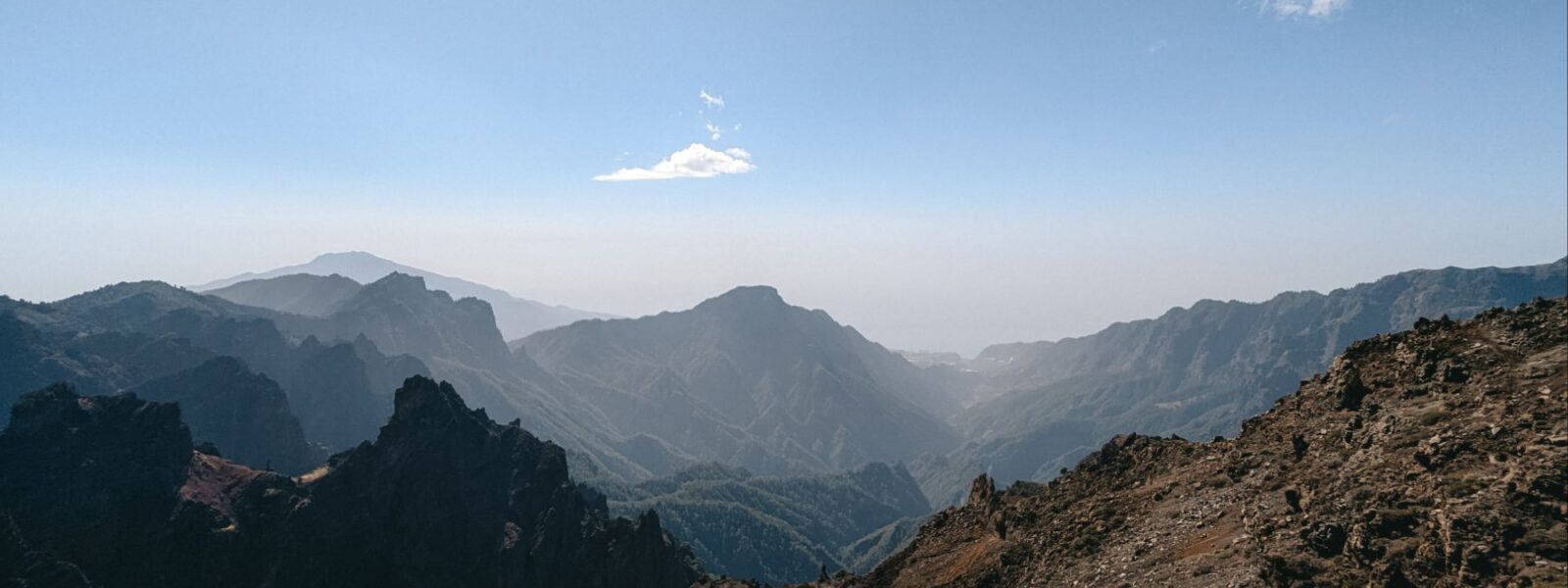
La Palma is a wonderful destination for families who love discovering nature together. This beautiful Canary Island is green, rugged, and full of variety, with dense forests, volcanic landscapes, natural swimming pools, and striking black-sand beaches that are perfect for a little adventure. One moment, you can be high in the mountains, and not long after, you can find yourself by the coast. Along the way, you’ll pass volcanic lava fields, lush forests, and landscapes that almost feel tropical. And the best part? You don’t have to leave the kids at home to enjoy everything La Palma has to offer.
Throughout the island, there are plenty of places where children can play, walk, swim, and discover something new. You can walk together along the edge of a volcanic crater, float in clear water between the rocks, or play hide-and-seek among the trees of a misty forest. The distances between different parts of the island are relatively short, so you can easily combine several experiences in one day. Nature is often right on your doorstep, too, and wherever you go, there always seems to be another beautiful place waiting to be discovered.
In this blog, we share our 12 favorite places and activities to enjoy on La Palma with kids. From safe and enjoyable swimming spots and short, family-friendly walks to fascinating natural phenomena, there is plenty to keep young travelers interested and excited. These are some of the places and experiences that can make a family trip to La Palma truly memorable.


Is La Palma a Good Destination for Families?
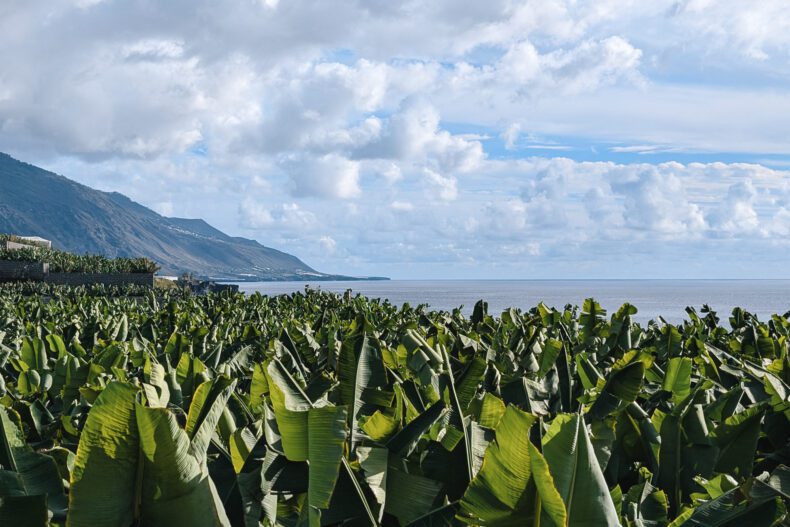
Absolutely, especially for families who enjoy being active and love spending time in nature. La Palma is a peaceful and relatively compact island where you can go from laurel forests to volcanic lava fields, and from dramatic crater landscapes to the coast, all within a fairly short drive. This incredible variety is one of the things that makes La Palma so much fun for children. One day can feel completely different from the next, which is ideal if your kids quickly get bored with seeing the same kind of surroundings. You won’t find mass tourism, busy seaside promenades, or endless rows of large hotels here. Instead, you’ll discover forests covered in ferns and mist, natural swimming pools where you can take a refreshing dip, volcanoes where you can walk right up to the edge of a crater, and hiking trails where you may hardly see another person. For children who love running, climbing, scrambling over rocks, and discovering new places, La Palma can feel like one big outdoor adventure.
At the same time, La Palma is not the most family-oriented island if your main priority is convenience, entertainment, and lots of activities designed specifically for children. There are fewer playgrounds and not many long, sandy beaches. The beaches that you do find are often set along rugged coastline and can have strong waves, so they are not always ideal for a relaxed day of swimming with small children. You won’t find large water parks or zoos on the island either. La Palma is much more focused on hiking, nature, and outdoor adventures than on traditional family entertainment. If you are looking for lots of attractions, organized activities, and entertainment for children, islands such as Tenerife or Gran Canaria can offer more options.
But that certainly doesn’t mean La Palma is difficult to visit with children. In our experience, the island is actually a very enjoyable place to explore as a family. There are short walks that are manageable even for young children, swimming spots with calm water, fascinating volcanic landscapes, and fun museums that are suitable for younger visitors. And sometimes, you don’t need a special attraction at all: there is simply plenty of space to run around, play, and enjoy being outside together. Because the island is relatively small, you don’t have to spend hours in the car getting from one place to another. It is also easy to combine several completely different landscapes and experiences in a single day. The pace of life feels slower here, traffic is generally calm, and nature often starts right outside your accommodation.
If your children are used to active days and you don’t necessarily need a kids’ club or a packed entertainment program, La Palma can be a surprisingly enjoyable and original choice for a family holiday. Instead of spending your days at a large resort, you can explore forests, walk through volcanic landscapes, swim in natural pools, and discover quiet corners of the island together. It offers something a little different from the typical family beach destination, with plenty of opportunities to explore, play, swim, and experience nature as a family.
Travel tip: 20 Best Hikes and Places to Visit in La Palma


Top Things to Do in La Palma: 12 Family-Friendly Tips
#1 La Fajana: Swimming in Natural Pools
La Fajana is one of the nicest places on La Palma to enjoy a swim with children. These natural pools are located along the island’s northeast coast and are surrounded and protected by dark volcanic lava rocks. This creates a sheltered spot where the water in the pools is often much calmer than the open ocean, even when the sea outside is rough. You can swim in the clear seawater while, only a few meters away, waves roll in and crash against the rocks. It is a lovely way to experience the Atlantic Ocean while still having a more sheltered place to enjoy the water.
For children, La Fajana is a particularly fun place to explore. The pools can be reached easily using the steps and platforms, so getting into and out of the water is fairly straightforward for families. The water is often clear enough to see the bottom, and small fish can be spotted swimming between the rocks. Our children loved looking for little fish and crabs and seeing what they could discover in the water. The natural pools are also easy to keep an eye on from the surrounding areas, and the atmosphere is relaxed and laid-back. Around the pools, there are sunny terraces where you can sit and enjoy the view, as well as a small café where you can get something to eat or drink during your visit.
Keep in mind that access to the pools can sometimes be closed when the waves are particularly high or the sea conditions are considered unsafe. It is therefore a good idea to check the conditions before heading into the water and to follow any local warnings or signs. On calmer days, though, this is the kind of place where you can easily spend several hours. Swim for a while, explore the rocks, watch the fish, or simply sit in the sunshine and enjoy the coastal scenery. Even with young children, La Fajana can be a wonderful place to experience the sea, provided the conditions are suitable and you keep a close eye on the kids at all times. And don’t forget to pack your swimwear and a towel, because once you arrive, there is a good chance you’ll want to stay much longer than you originally planned.


#2 Playa de Nogales: A Wild Black-Sand Beach Between the Cliffs
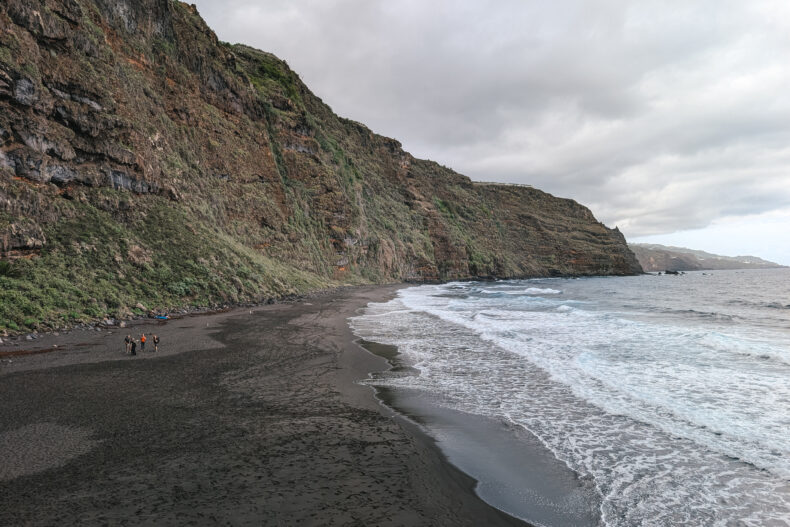
Playa de Nogales is a spectacular black-sand beach on the northeast coast of La Palma. To reach it, you follow a walking path that winds down along the steep cliffs and takes around fifteen minutes. As you make your way towards the beach, you’ll be treated to beautiful views of the ocean and the dramatic cliffs rising around you. The rock faces show off all kinds of natural colors and textures, making the walk surprisingly beautiful in its own right. In fact, the journey down is already part of the experience, so it’s worth taking your time and enjoying the views along the way.
At the bottom, a wide stretch of dark sand opens up between the towering cliffs. The beach feels remote, peaceful, and wonderfully untouched. There are no facilities, no busy promenade, and no rows of sun loungers waiting for visitors. Instead, there is simply the black sand, the rocks, and the wide open sea. Children can run around, play in the soft sand, dig little holes, and build small dams along the water’s edge. It is a great place for them to let off some energy and enjoy the freedom of being outside. Swimming, however, is only suitable when the sea is calm, as the waves and surf can often be quite powerful.
When we visited, the beach was almost completely empty, so the children had plenty of room to run, play, and explore. There was no need to worry about disturbing other beachgoers, and they could simply enjoy the space around them. There is even a simple beach shower along the path, connected to a water hose, which is useful for rinsing the sand off before making your way back up. Apart from this, there are no other facilities at the beach, so make sure you bring everything you need for your visit, including food, drinks, swimwear, towels, and anything else you might want for a few hours by the sea. But that lack of facilities is also exactly what makes Playa de Nogales so special. It feels like a wild and peaceful corner of La Palma where you can simply enjoy the black sand, towering cliffs, crashing waves, and the freedom of spending time outdoors together.

#3 Salinas de Fuencaliente: Colorful Salt Pans by the Sea
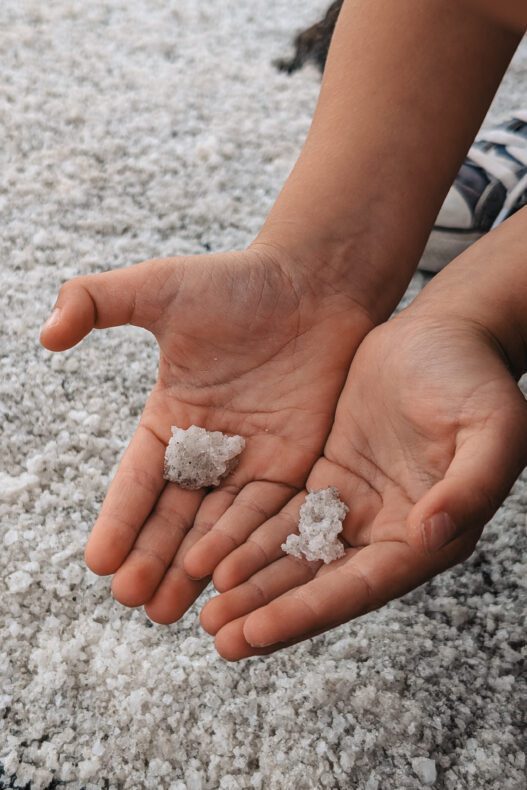
At the very southern tip of La Palma, you’ll find the Salinas de Fuencaliente, a traditional saltworks where sea salt is still produced in much the same way it has been for generations. The bright white salt flats create a beautiful contrast with the dark volcanic lava fields around them, giving the landscape a striking and almost otherworldly look. When the sun is shining, the shallow pools become even more colorful, with shades of pink and orange appearing in the water depending on the salt concentration. It’s a fascinating place to explore, and the changing colors make it especially fun to look at on a bright, sunny day.
You can follow the flat paths that wind between the different salt ponds and learn more about how the salt is produced from the information boards along the way. For children, this turns a simple walk into an interesting little nature and science lesson. They can see how seawater is gradually turned into salt and take a closer look at the crystals that are left behind. Our children were particularly fascinated by the unusual colors, shapes, and patterns created by the combination of salt, water, and sunlight. Admission to the salt pans is free, and there is a restaurant near the entrance where you can stop for something to eat or drink while taking in the views across the salt fields and out towards the sea.
Right beside the salt pans, you’ll also find a lighthouse and a small black-sand beach, making it easy to combine several stops in one outing. After exploring the saltworks, you can head down to the beach for some time by the water or take a short walk through the surrounding volcanic landscape. The area is easy to navigate, and the walk through the salt pans is not very long, so even younger children can explore it without too much difficulty. With colorful salt ponds, dark lava fields, wide ocean views, and a lighthouse all close together, Salinas de Fuencaliente makes a lovely addition to a family day exploring the southern tip of La Palma.


#4 Volcán de San Antonio: Walking Along the Crater Rim
Volcán de San Antonio is one of the easiest volcanoes to visit on La Palma, making it a great stop for families who want to experience the island’s volcanic landscape without taking on a long hike. The volcano is located near the village of Los Canarios and has a short but impressive walking route along the crater rim. The path is well maintained and gently curves around the edge of the volcano, giving you plenty of opportunities to stop and take in the views. As you walk, you can look down into the deep crater below, while the southern coast stretches out in front of you towards the ocean. On a clear day, the views are even more impressive, and you can see all the way to the island of El Hierro in the distance.
For children, there is something quite exciting about walking along the edge of a real volcano. The route is short and the path is easy to follow, so you can enjoy the experience without having to plan a demanding hike. At the same time, the dramatic crater and wide views make the walk feel like a real adventure. During the walk, you can also spot Volcán Teneguía, another volcano located a little farther away in the same volcanic landscape. Before heading onto the trail, you can visit the visitor center at the entrance, which has a small exhibition about the volcanoes in the southern part of La Palma. Younger children may not find the exhibition particularly exciting, but it is a useful starting point and helps explain the volcanic landscape you are about to explore. And there is one part you definitely shouldn’t skip: the earthquake simulator! Our children absolutely loved stepping onto the vibrating platform and feeling what it is like when the ground starts shaking beneath your feet.
There is an entrance fee to visit the site, but children can enter for free. Volcán de San Antonio is an excellent stop to include in a road trip around the southern part of La Palma. It is not only a chance to learn more about the island’s volcanic activity, but also an opportunity to experience this unusual landscape from very close by. You’re not simply standing somewhere and looking at a volcano in the distance. You are walking along its crater, surrounded by volcanic rock and dramatic scenery, and quite literally standing in the middle of La Palma’s volcanic landscape.

#5 La Zarza: Ancient Rock Carvings and a Mysterious Forest
La Zarza lies in the lush, green north of La Palma, tucked away in a valley where the forest is so thick that sunlight can barely make its way through the trees. The area is best known for the ancient rock carvings left behind by the island’s original inhabitants. Along the walking paths, you can discover centuries-old spirals and circles carefully carved into the rock, giving you a fascinating glimpse into the island’s distant past. At the visitor center, you can learn more about these mysterious symbols, what they may have meant, and the history of the Benahoarites, the indigenous people who lived on La Palma before the Spanish conquest.
But the ancient carvings are only part of what makes La Zarza so special. The surrounding forest is an experience in itself. The trail leads you through a cool, damp woodland filled with ferns, soft moss, and old trees, with mist often hanging between the branches. As you walk deeper into the forest, you may hear the gentle sound of water nearby, adding to the peaceful and slightly mysterious atmosphere. Our children thought it looked like a real fairy-tale forest, complete with little streams and hidden waterfalls tucked away among the trees. Even when the waterfalls were dry during our visit, the forest still had a magical feeling that made the walk enjoyable from beginning to end.
The route is well marked and suitable for children who are already comfortable walking for a while. The terrain changes as you go, with different views and small features along the trail keeping things interesting. It feels adventurous enough to keep children engaged without becoming too difficult or demanding. La Zarza is therefore much more than a quick history lesson or a stop to see some ancient carvings. It brings together fascinating traces of La Palma’s past and beautiful, atmospheric nature, making it a wonderful place to explore, slow down, and enjoy the outdoors together as a family.


#6 Charco Azul: Swimming Safely Between the Rocks
Charco Azul is a beautiful natural seawater pool on the north coast of La Palma, near the small town of San Andrés. Just like at La Fajana, the pool is sheltered by natural lava barriers that protect it from the open ocean. The sea is right beside you, with waves rolling in and crashing against the rocks, while the water inside the pool can stay calm, clear, and inviting. This sheltered setting makes Charco Azul a popular place for families who want to enjoy a swim and spend some time by the water with their children.
The pool is easy to reach, with steps and platforms that make getting into the water simple, as well as places to sit and relax around the pool. You can splash and paddle in the shallower areas, float peacefully in the clear water, or put on a snorkel and see if you can spot little fish swimming beneath you. Younger children can enjoy playing and paddling near the edge, while older kids can have fun exploring the deeper parts of the pool. With different areas to enjoy, everyone can find a comfortable spot and spend as much time in the water as they like.
Charco Azul is clean, well laid out, and well maintained, with changing rooms, toilets, and a small café nearby. On a warm, sunny day, it is a lovely place to cool down, relax, and enjoy the coastal surroundings. If the ocean becomes particularly rough, access to the pool can be closed for safety reasons, although this does not happen very often. For families looking for a swimming spot that combines clear seawater, easy access, and a relaxed setting, Charco Azul is a wonderful option to add to your La Palma itinerary. It is the kind of place where you can plan to stay for a quick swim and then find yourself happily spending much longer by the water.
#7 Puerto Naos: Sun, Sea and Black-Sand Beaches
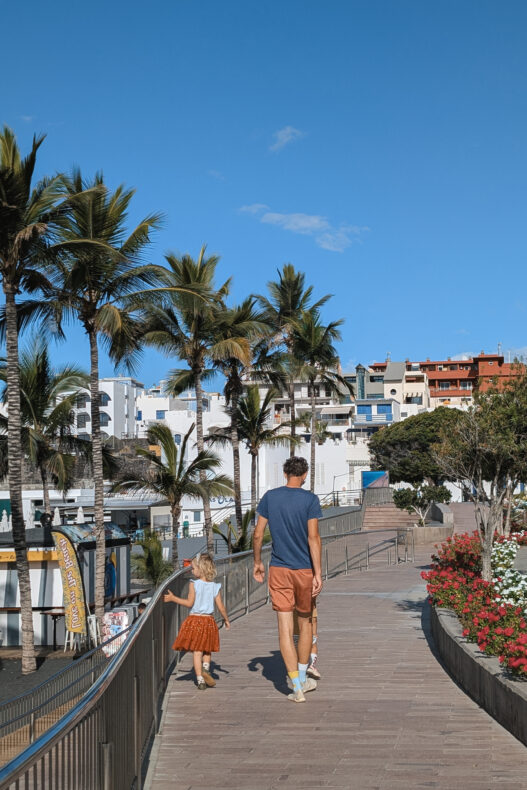
Puerto Naos lies on the southwest coast of La Palma and is known for its sunny and pleasant climate. The village is home to one of the island’s largest beaches, where fine black volcanic sand stretches along the coast. Just behind the beach, a palm-lined promenade creates a relaxed and welcoming atmosphere, with restaurants, cafés, and outdoor terraces where you can sit down for a drink, grab something to eat, or simply enjoy watching the world go by. The atmosphere is laid-back and wonderfully summery, making Puerto Naos a lovely place to spend a day by the sea with children. It is an easy-going beach destination where you can slow down, enjoy the sunshine, and let the kids have plenty of space to play.
The beach slopes gently towards the water, making it easy for children to walk into the sea. The water can be pleasant for swimming, although sea conditions can change, so it is always important to pay attention to the flags, waves, and any local warnings before going into the water. During our visit, what stood out most was how warm it felt here, even when other parts of the island were noticeably cooler. The black volcanic sand absorbs and holds onto the warmth of the sun, which makes Puerto Naos especially inviting when you want to spend a few hours enjoying the beach. On a sunny afternoon, you can easily settle down on the warm sand while the children play nearby, making the most of the sunshine and the sound of the ocean.
There are showers and toilets at the beach, as well as plenty of places nearby where you can sit down, enjoy a drink, or have something to eat. Parking is available close to the beach, so you do not have to walk far with beach bags, towels, and everything else you need for a day by the sea. You can park nearby, walk straight down to the sand, and have everything you need within easy reach. This makes Puerto Naos particularly convenient for families, especially when you are travelling with younger children and do not want to carry your beach gear too far. For families looking for an accessible and comfortable beach day without too much planning or travelling back and forth, Puerto Naos is a convenient and enjoyable place to spend a few hours by the sea. You can simply arrive, find a spot on the black sand, take a swim when the conditions are suitable, and finish the day with something to eat or drink along the promenade.

#8 Barco de la Virgen: A Pirate Ship in the Heart of Santa Cruz
Right in the heart of Santa Cruz de La Palma, you’ll come across one of the city’s most unusual sights, and it is one that children are likely to notice immediately: the Barco de la Virgen. This impressive wooden ship stands in Plaza de La Alameda, right in the middle of the city, looking as though it has somehow sailed straight out of the ocean and come to rest in the heart of the capital. The ship is a replica of the Santa María, the famous caravel associated with Christopher Columbus, and was built in 1940 for the island’s traditional Bajada de la Virgen celebrations. Today, the ship is home to the Naval Museum, and visitors can actually step inside and explore it. It is a fun and unexpected sight to find while walking around the historic city center.
For children, the chance to climb aboard a real-looking sailing ship in the middle of a city already feels like a little adventure. They can walk across the decks, explore the wooden interior, and let their imaginations run wild as they picture themselves sailing across the ocean centuries ago. Inside the ship, the museum displays navigation instruments, ship models, historical maps, and other objects connected to the maritime history of La Palma. The collection tells the story of the island’s long and important relationship with the sea and its seafaring traditions. The museum itself is not particularly large, but the fact that it is located inside an actual ship makes the experience much more interesting for children than visiting a traditional museum. Instead of simply looking at objects behind glass, they can explore the different parts of the ship while learning a little about sailors, explorers, navigation, and what life at sea was once like.
The location in the historic center also makes the Barco de la Virgen an easy and enjoyable stop while exploring Santa Cruz de La Palma. After wandering through the old streets and charming squares of the city, you can head towards Plaza de La Alameda and suddenly find this enormous ship standing right in front of you. It is the kind of sight that can turn an ordinary walk through the city into something a little more exciting for children. While the kids explore the ship and imagine themselves as sailors, pirates, or adventurous explorers, parents can enjoy the atmosphere of the square and take in this unusual landmark. There are also cafés and other places to stop nearby, so it is easy to combine a visit to the museum with a coffee, a drink, something to eat, or simply a short break during your city walk. The Barco de la Virgen is therefore more than just a small maritime museum. It is one of those quirky and unexpected sights that children can enjoy while also giving the whole family a chance to discover a little more about the history and seafaring traditions of Santa Cruz de La Palma.
#9 Caldera de Taburiente: Hiking in a Giant Volcanic Landscape
The Caldera de Taburiente lies at the heart of La Palma and is one of the most spectacular natural areas on the island. This vast landscape is surrounded by towering mountain walls and filled with deep ravines, green pine forests, and rugged slopes that stretch as far as you can see. From the viewpoints around the caldera, you can look deep into this enormous natural basin and get a real sense of just how wild and mountainous the interior of La Palma is. The scenery is truly impressive, with layer upon layer of mountains, valleys, forests, and rocky cliffs creating a landscape that feels wonderfully untouched. It is one of those places where you can stand still for a moment and simply take in the sheer size of the landscape around you.
When travelling with children, you do not necessarily have to take on a long or difficult hike to experience the beauty of the caldera. One of the easiest ways to enjoy the scenery is to drive up to Mirador de la Cumbrecita, one of the most beautiful viewpoints in the national park. From here, several shorter walking routes lead through the surrounding landscape and offer wonderful views over the enormous valley and its steep ravines. The trails give you the chance to explore the area without committing to a full-day hike, which makes this a great option for families with younger children. Our children loved walking along the edge of the caldera and stopping again and again to look at the valleys, mountain peaks, and forests spread out below them. Every turn seemed to reveal another beautiful view, so even a relatively short walk felt like a little adventure. Instead of simply arriving at a viewpoint, taking a photo, and leaving again, you can take your time, follow the trail, and let the children discover the landscape along the way.
If you have more time and are travelling with older children who are comfortable with longer and more demanding walks, there are plenty of opportunities to explore deeper inside the national park. Some of the hiking routes lead down towards the riverbed and the famous Cascada de los Colores. This small but striking waterfall is known for its unusual natural colours, with shades of green, yellow, and orange appearing on the rocks and around the water. The colours are created by a combination of minerals, algae, and moss, giving the waterfall a very different appearance from the usual white-water cascades you might expect. The national park has a network of marked hiking trails, allowing you to explore different parts of this impressive landscape. However, conditions in the mountains can change, so it is always a good idea to check the current trail conditions and any local information before setting out, especially when travelling with children.
There is also one practical detail to keep in mind when visiting Mirador de la Cumbrecita. Access by private car is regulated during certain daytime hours because the parking area at the viewpoint is very small. During the controlled hours, you need a parking reservation to drive up, while access is possible without a reservation after 16:00. If you are planning to visit by car, it is therefore worth checking the current access rules and arranging your reservation in advance. This is especially useful for families, as it means you can plan your visit around the time you have available and avoid arriving at the entrance only to find that you cannot drive up.
A visit to the Caldera de Taburiente gives the whole family an impressive introduction to the wild and mountainous side of La Palma. Even with younger children, you can enjoy some of the most spectacular views without having to complete a long hike, while older children can take on longer trails and discover more of the national park. The combination of towering mountains, deep valleys, pine forests, and rugged volcanic scenery makes it easy to understand why this area is such an important part of the island. It is a place where children can see just how large, powerful, and wild nature can be, while parents can enjoy some truly unforgettable scenery. Whether you visit for a short family walk or spend several hours exploring the trails, the Caldera de Taburiente is a wonderful place to experience the natural beauty of La Palma together.


#10 Refugio de Pilar: Picnic Spot and Starting Point for Hikes
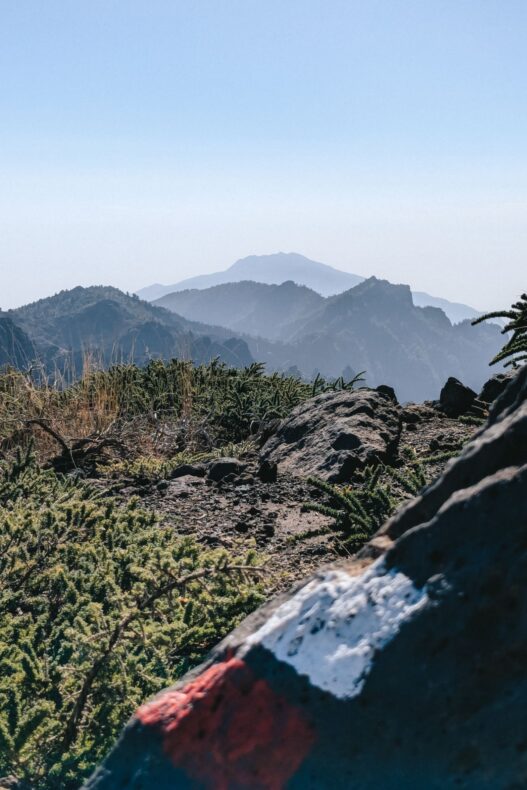
Refugio de Pilar is located in the central part of the Cumbre Vieja mountain range and is one of the best-known starting points for hiking on La Palma. What makes this spot particularly appealing for families is that you can enjoy the beautiful mountain scenery without having to immediately set off on a long or demanding hike. Shorter paths run through the surrounding pine forest, while the area around the picnic site offers plenty of open space to enjoy. This means that even families with young children can get a taste of the mountain landscape, stretch their legs, and explore the surroundings without committing to a challenging walking route.
We came back here several times during our time on La Palma, mainly because it is such a peaceful, cool, and easy-going place to spend some time outdoors. The picnic tables are tucked among the tall pine trees, offering welcome shade on sunny days, and there is also a fun playground where children can play. There is plenty of room for kids to run around, kick a ball, play games, or simply wander around and see what they can discover. The atmosphere can be especially lively at weekends, when many local families come here to enjoy a picnic and spend time together in the fresh mountain air. It has a very relaxed, local feel, and it feels less like a tourist attraction and more like a place where families come to enjoy a simple day outdoors.
Several longer hiking routes also start from Refugio de Pilar, including the famous Ruta de los Volcanes. This spectacular route takes you through some of the most striking volcanic landscapes on La Palma, with volcanic peaks, black slopes, and wide mountain views along the way. It is a much bigger adventure and is better suited to older children and families who are comfortable with a longer and more challenging hike. But you certainly do not need to take on the full route to enjoy Refugio de Pilar. Even if you are simply looking for a pleasant place to stretch your legs, have a picnic, or let the children play for a while, this is a lovely stop to add to a day of exploring the island.
The combination of shady pine trees, open space for children to play, picnic facilities, and beautiful mountain scenery makes Refugio de Pilar a particularly useful family stop. It is also a great place to take a proper break during a road trip around La Palma, especially when everyone could use some fresh air and a chance to get out of the car. You can bring a picnic, find a table beneath the trees, let the children burn off some energy in the fresh mountain air, and simply enjoy the peaceful surroundings for a while before continuing your journey. For families travelling around La Palma, Refugio de Pilar is therefore much more than just a starting point for hikers. It is a relaxed and welcoming place where you can slow down, enjoy the forest and mountain scenery, give the kids some freedom to play, and spend some unhurried time together in nature.

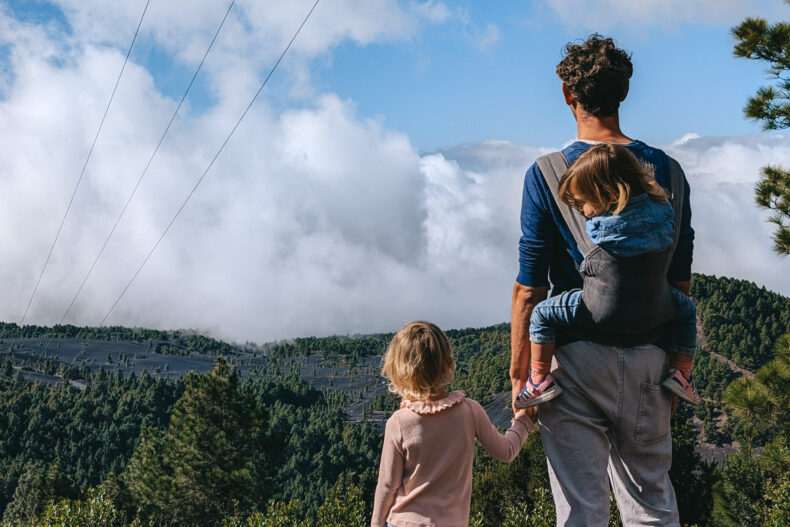
#11 Volcán Teneguía: Hiking Through a Young Volcanic Landscape
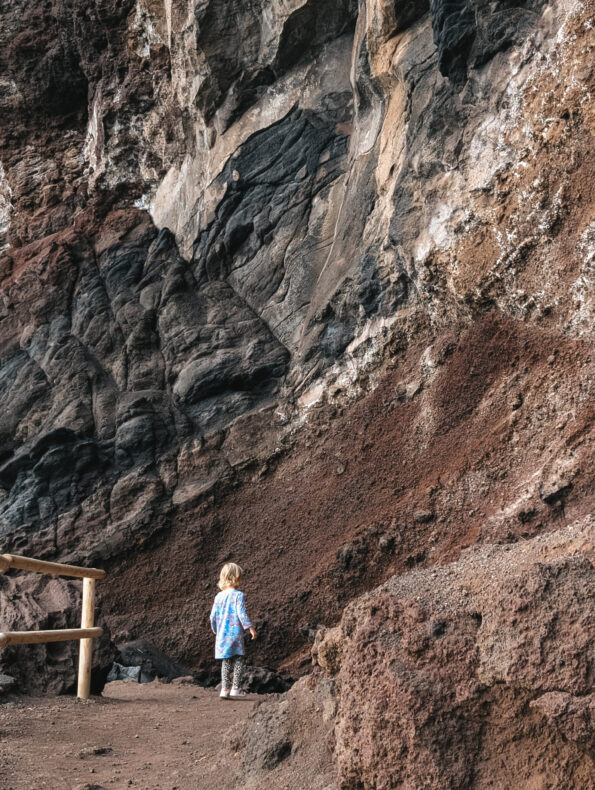
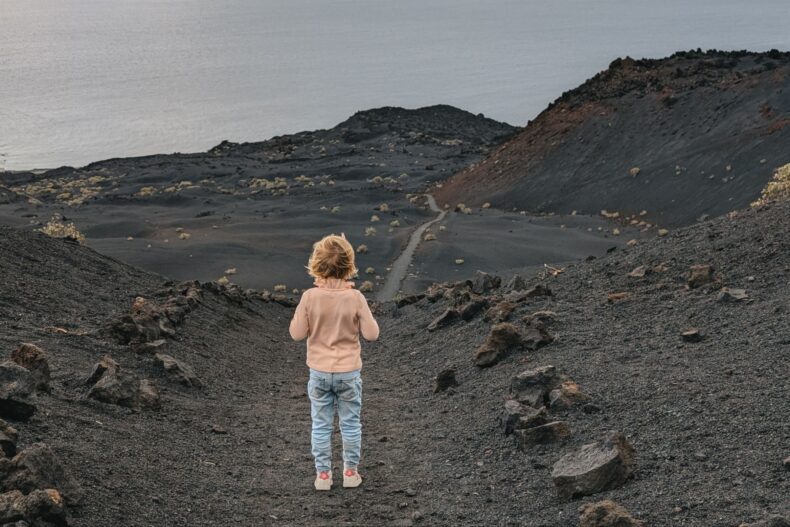
Volcán Teneguía lies at the very southern tip of La Palma and is one of the youngest volcanoes on the island. It erupted in 1971, and the landscape around it still has that strikingly young and rugged appearance. Dark-grey and black lava fields cover the slopes, with volcanic craters, hardened lava flows, and rough rocky ground where only a little vegetation has managed to take hold. It feels completely different from the lush forests and green mountain landscapes found elsewhere on La Palma. A hiking route starts in the village of Los Canarios and makes its way downhill towards the coast and the salt pans of Fuencaliente. The route is around six kilometres long, depending on the exact trail you follow, and along the way you get wonderful views of the Teneguía crater. From the path, you can see the crater from surprisingly close by, giving you a fascinating look at a landscape that was created by a volcanic eruption only a few decades ago.
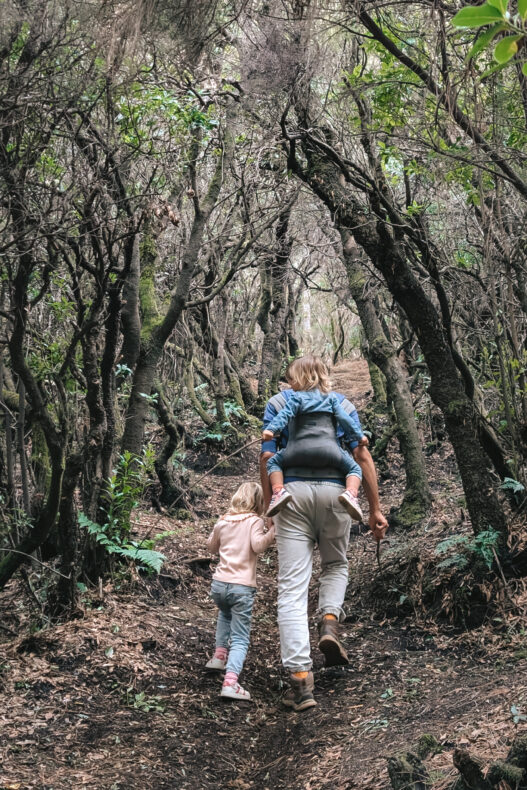
The hike feels adventurous and can be quite steep in places, but it is not technically difficult, and the route mainly takes you downhill. For children who are already comfortable with longer walks, this can actually make the experience even more enjoyable. The landscape looks almost otherworldly, and our children loved the feeling of walking through what seemed like a giant volcanic desert. Under your feet, you’ll find rocks, hardened lava flows, and uneven volcanic ground, so you do need to watch your step, especially when walking with younger children. But all those unusual shapes and textures also give kids plenty to look at along the way. The scenery changes as you walk, with the ocean often visible in the distance and the volcanic landscape stretching out around you. The Teneguía volcano itself is never far away, creating an impressive backdrop for the hike. You’ll also pass vineyards growing on the dark volcanic slopes, which is a fascinating contrast to the barren-looking landscape around them. For parents, it can be fun to buy a bottle of local wine from one of the wineries in the area, or simply pick one up at a local supermarket and take it home as a souvenir of your time on the island.
I walked this route with my four-and-a-half-year-old, and she managed the hike surprisingly well. My husband and our toddler picked us up at the bottom, which made the one-way walk much easier for our family. It was nice to know that we did not have to turn around and walk the entire route back uphill after reaching the coast. If you do not have someone who can collect you, you can also look into public transport options for getting back towards Los Canarios. However, it is a good idea to check the current bus timetable before setting out, as services and schedules can change. This is an important detail to consider when planning the hike with children. Being able to walk downhill through this fascinating volcanic landscape makes the route much more manageable than having to finish the hike with a long climb back up.
For families who enjoy being outdoors and want to experience a completely different side of La Palma, the Teneguía hike is a memorable adventure. Instead of walking through green forests or along a typical mountain trail, you get to explore a landscape shaped by one of the island’s most recent volcanic eruptions. You can see the crater from close by, walk across dark lava fields, look out towards the Atlantic Ocean, and spot vineyards growing among the volcanic slopes. For children, it is a wonderful opportunity to see how powerful volcanic activity can be and how dramatically it can transform the landscape. At the same time, the downhill route, unusual scenery, and sense of adventure make the walk feel like much more than an ordinary family hike. It is the kind of experience that can stay with you long after you have left La Palma.


#12 Parque Infantil Centro de Ocio Polivalente: A Fun Playground in Santa Cruz
On the northern edge of Santa Cruz de La Palma, you’ll find Parque Infantil Centro de Ocio Polivalente, a relatively new playground where children can run around, climb, slide, and burn off some energy. The playground is spacious and colourful, with a good mix of play equipment, climbing frames, slides, and swings to keep children entertained. It is part of the larger Parque de Ocio Polivalente and has plenty of room for kids to play and explore without feeling too crowded. The play area is enclosed, which makes it a comfortable spot for families, while benches and picnic tables give parents a place to sit down, relax, and keep an eye on the children at the same time. It is a simple setup, but it has everything you need for a fun little break during a day in Santa Cruz.
Our children had a great time here and were able to run around and use up some of their energy while we sat on a bench in the shade. After spending several hours sightseeing, walking through the city, or visiting attractions, a playground like this can be a very welcome change of pace. Instead of asking the kids to keep walking or look at yet another building, you can simply let them play for a while. They can climb, swing, race around, and decide for themselves what they want to do, while parents get a chance to sit down and take a breather. The playground has a relaxed, local feel, and you may also see families from Santa Cruz coming here with their children. It does not feel like a major tourist attraction, and that is exactly what makes it such a useful place to know about when travelling with kids. You can let the children enjoy some unstructured playtime while you take a quieter moment nearby.
The playground is located a little away from the busiest part of the historic center, in the northern part of the capital. We simply walked there during our visit, although the exact walking time will of course depend on where you are staying or where you start your walk through Santa Cruz. If you are travelling by car, it is also worth checking the available parking around the area before you go, especially if you are visiting at a busy time. The playground itself is free to visit, so there is no entrance fee to worry about and you can easily add it to your plans for a day in Santa Cruz. It can be particularly handy to have a free activity like this in mind when travelling with children, as you can stop whenever the kids need a break without having to buy another ticket or plan an entire visit around it.
For families spending time in Santa Cruz de La Palma, this is therefore a handy place to keep in mind when the children need a break from sightseeing. A city day can involve quite a lot of walking for little legs, even when the distances do not seem very far to adults. Instead of asking the kids to walk through another street or visit another attraction, you can give them some time to climb, slide, swing, run around, and simply play. Meanwhile, parents can sit down in the shade, enjoy a little rest, and let the children have fun at their own pace. It may only be a playground, but sometimes that is exactly what you need to make a day exploring Santa Cruz more enjoyable for the whole family.


